


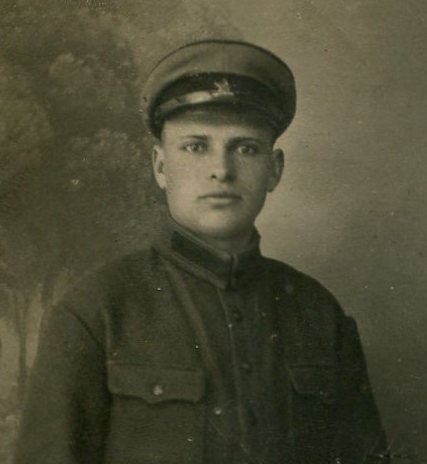

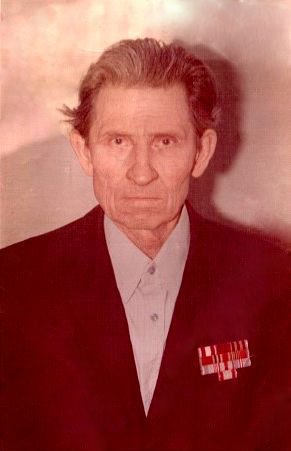

Vasily Baklanov
Rank: First lieutenant.
Branch of Service: Army, Air Force (except for Naval Aviation), Coast Guard, NKVD troops, Border Guard.
Unit: 121st Rylsko-Kiev Red Banner Orders of Suvorov and Bogdan Khmelnitsky Rifle Division.
Vasily Baklanov was born in 1923 in the village of Kirpilskaya.
He graduated from Kirpilskaya Secondary School in 1941.
Here is what Vasily Baklanov himself told:
"The school held a graduation party on June 20, 1941. Since this was the first graduation, the evening was very solemn. There were many different performances, parting words and good wishes. The dancing and games lasted well into the night.
I returned home at dawn, and at home - a summons for conscription. I went to the military enlistment office on horseback. The foreman of the collective farm gave me a horse. At 6 o'clock in the morning, at the Ust-Labinskaya freight station, I saw that it all was occupied by the military. It was June 21, 1941…
I passed the draft board, and was told that I was enrolled in the artillery school and in 3-4 days will be sent there. On the morning of June 22, I went with my school friends to the village of Vostochnaya to see off our classmate Nikolai Korobov, who was leaving for Sevastopol to attend one of the military schools. There I learned that the war had begun.
There was a mobilization in the village on June 23. Almost every men left for the army, and many horses and carts were taken from collective farms. The harvest was coming up, and the harvest has been exceptionally good. After all men left for the army, there were not enough workers on the collective farm, and all conscripts born in 1922-1923 were sent to harvest crops. I worked as a coachman, took grains to the Elevator and waited for conscription.
They called me to the military enlistment office ten-twelve times. Commission after commission, and on October 19, 1941, I was called up and sent somewhere, but they did not tell where. We moved to the East. Walked. We arrived in Salsk on October 30. From Salsk, our commanders were urgently called to Stalingrad, our documents were sent back to the Ust-Labinsk District Military Commissariat, and we were offered to go back.
I was called up for the second time on November 5, 1941 and sent to the Vinnytsia Military Infantry School, which was located in Krasnodar.
I took the military oath on January 1, 1942. I became a Lieutenant on May 3, 1942 and was sent to Tambov, in the 107th Rifle Division, the 504th Rifle Regiment, where became a platoon leader.
In June, I was transferred to the Army Second Lieutenant Courses and appointed platoon leader. There I was successfully and intensively engaged in tactics, fire training, tank destruction, topography, and everything necessary for the rifle platoon leader at the front.
From the end of 1942 — Platoon Leader of the 574th Rifle Regiment of the 121st Rifle Division of the 60th Army. It was commanded by Major General Chernyakhovsky.
I was promoted to the rank of First Lieutenant in mid-May 1943. The regiment was on the defensive.
We received an order for the offensive on the night of August 28, 1943. It was scheduled to begin at 8 am. The platoon was assigned the task to destroy the pillbox and, moving forward, go to the outskirts of the farm Altukhovka and gain a foothold. The platoon rushed forward, oblivious to the danger, acting as if on a drill. The platoon had to cross the ravine. We were met by the devastating fire of a fascist machine gun. Catching a pause, the platoon dashed forward and silenced the pillbox, but the mines prevented us from moving further forward…
After the mines were removed, at about 6 PM we broke into the enemy trenches and occupied the farm. This was my first fight. During the battle for the village of Anatolyevka, a sniper pinned me to the ground, and if not for the shield of the machine gun, I would have died. Our company leader was killed in this battle, and I was appointed to this position.
I received my first order of the Red Star for the previous battles and for the liberation of the district center of Smela. Near the village, the enemy was well entrenched and had an organized fire system. The path to the village was blocked by a deep ravine in addition. The battle was hot and raged for four hours. We had a hard time, but at dusk, the enemy fled and we got large warehouses of provisions.
We concentrated on the left Bank of the Dnieper River near the village of Svaramye in the evening of September 23, 1943. In the pitch darkness, the boats came up, and we moved to the right Bank. By the end of the night, the entire regiment had crossed, but the artillery and baggage trains remained behind the Dnieper. The next four days we were fighting to expand the bridgehead. We did not receive any food. Only the wounded were transported back, and only ammunition was transported to the bridgehead. The fighting was very heavy, the enemy tried to push us into the Dnieper, but his attacks choked. Both the enemy and we suffered heavy losses in manpower. The enemy never left us alone for a minute, the German artillery and aircraft were working hard. Especially strong was the struggle for the dominant height #120.2. The enemy did not reckon with anything. They tried to take and hold this height by any means possible, as the Germans could see our crossings on the Dnieper from it and smashed them. The height #120.2 changed hands two-three times a day for several days in a row. Finally, we captured it.
For skilful command of the company in the battles for this height and holding the bridgehead on the right Bank of the Dnieper, I received the Order of the Patriotic War 2nd degree. In previous and subsequent battles, I was repeatedly wounded and concussed, including in the elbow joint of my right hand, and on December 10, 1943, a shell fragment that hit a tank hit me in the right eye. After the operation in the hospital, I was left without my right eye."
However, Baklanov continued to serve in the army until December 10, 1945.
Arrived home on December 24.
Graduated from Yeisk Agricultural Technical School.
He came to Ladogaskaya and worked as a teacher at Ladogaskaya Technical School for 52 years before retiring due to disability.
V. Baklanov died in 1996.
Vasily Baklanov
Rank: First lieutenant.
Branch of Service: Army, Air Force (except for Naval Aviation), Coast Guard, NKVD troops, Border Guard.
Unit: 121st Rylsko-Kiev Red Banner Orders of Suvorov and Bogdan Khmelnitsky Rifle Division.
Vasily Baklanov was born in 1923 in the village of Kirpilskaya.
He graduated from Kirpilskaya Secondary School in 1941.
Here is what Vasily Baklanov himself told:
"The school held a graduation party on June 20, 1941. Since this was the first graduation, the evening was very solemn. There were many different performances, parting words and good wishes. The dancing and games lasted well into the night.
I returned home at dawn, and at home - a summons for conscription. I went to the military enlistment office on horseback. The foreman of the collective farm gave me a horse. At 6 o'clock in the morning, at the Ust-Labinskaya freight station, I saw that it all was occupied by the military. It was June 21, 1941…
I passed the draft board, and was told that I was enrolled in the artillery school and in 3-4 days will be sent there. On the morning of June 22, I went with my school friends to the village of Vostochnaya to see off our classmate Nikolai Korobov, who was leaving for Sevastopol to attend one of the military schools. There I learned that the war had begun.
There was a mobilization in the village on June 23. Almost every men left for the army, and many horses and carts were taken from collective farms. The harvest was coming up, and the harvest has been exceptionally good. After all men left for the army, there were not enough workers on the collective farm, and all conscripts born in 1922-1923 were sent to harvest crops. I worked as a coachman, took grains to the Elevator and waited for conscription.
They called me to the military enlistment office ten-twelve times. Commission after commission, and on October 19, 1941, I was called up and sent somewhere, but they did not tell where. We moved to the East. Walked. We arrived in Salsk on October 30. From Salsk, our commanders were urgently called to Stalingrad, our documents were sent back to the Ust-Labinsk District Military Commissariat, and we were offered to go back.
I was called up for the second time on November 5, 1941 and sent to the Vinnytsia Military Infantry School, which was located in Krasnodar.
I took the military oath on January 1, 1942. I became a Lieutenant on May 3, 1942 and was sent to Tambov, in the 107th Rifle Division, the 504th Rifle Regiment, where became a platoon leader.
In June, I was transferred to the Army Second Lieutenant Courses and appointed platoon leader. There I was successfully and intensively engaged in tactics, fire training, tank destruction, topography, and everything necessary for the rifle platoon leader at the front.
From the end of 1942 — Platoon Leader of the 574th Rifle Regiment of the 121st Rifle Division of the 60th Army. It was commanded by Major General Chernyakhovsky.
I was promoted to the rank of First Lieutenant in mid-May 1943. The regiment was on the defensive.
We received an order for the offensive on the night of August 28, 1943. It was scheduled to begin at 8 am. The platoon was assigned the task to destroy the pillbox and, moving forward, go to the outskirts of the farm Altukhovka and gain a foothold. The platoon rushed forward, oblivious to the danger, acting as if on a drill. The platoon had to cross the ravine. We were met by the devastating fire of a fascist machine gun. Catching a pause, the platoon dashed forward and silenced the pillbox, but the mines prevented us from moving further forward…
After the mines were removed, at about 6 PM we broke into the enemy trenches and occupied the farm. This was my first fight. During the battle for the village of Anatolyevka, a sniper pinned me to the ground, and if not for the shield of the machine gun, I would have died. Our company leader was killed in this battle, and I was appointed to this position.
I received my first order of the Red Star for the previous battles and for the liberation of the district center of Smela. Near the village, the enemy was well entrenched and had an organized fire system. The path to the village was blocked by a deep ravine in addition. The battle was hot and raged for four hours. We had a hard time, but at dusk, the enemy fled and we got large warehouses of provisions.
We concentrated on the left Bank of the Dnieper River near the village of Svaramye in the evening of September 23, 1943. In the pitch darkness, the boats came up, and we moved to the right Bank. By the end of the night, the entire regiment had crossed, but the artillery and baggage trains remained behind the Dnieper. The next four days we were fighting to expand the bridgehead. We did not receive any food. Only the wounded were transported back, and only ammunition was transported to the bridgehead. The fighting was very heavy, the enemy tried to push us into the Dnieper, but his attacks choked. Both the enemy and we suffered heavy losses in manpower. The enemy never left us alone for a minute, the German artillery and aircraft were working hard. Especially strong was the struggle for the dominant height #120.2. The enemy did not reckon with anything. They tried to take and hold this height by any means possible, as the Germans could see our crossings on the Dnieper from it and smashed them. The height #120.2 changed hands two-three times a day for several days in a row. Finally, we captured it.
For skilful command of the company in the battles for this height and holding the bridgehead on the right Bank of the Dnieper, I received the Order of the Patriotic War 2nd degree. In previous and subsequent battles, I was repeatedly wounded and concussed, including in the elbow joint of my right hand, and on December 10, 1943, a shell fragment that hit a tank hit me in the right eye. After the operation in the hospital, I was left without my right eye."
However, Baklanov continued to serve in the army until December 10, 1945.
Arrived home on December 24.
Graduated from Yeisk Agricultural Technical School.
He came to Ladogaskaya and worked as a teacher at Ladogaskaya Technical School for 52 years before retiring due to disability.
V. Baklanov died in 1996.
0 comment




2026 © Russian Military Historical Society Developed by Jetmix