


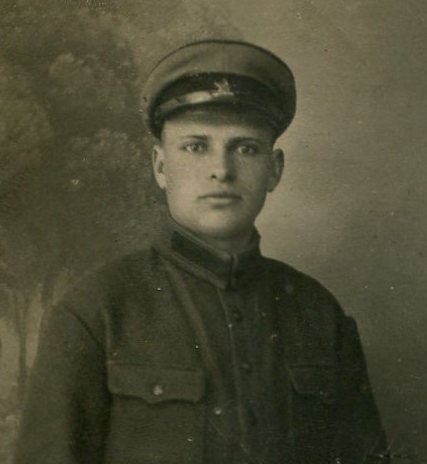

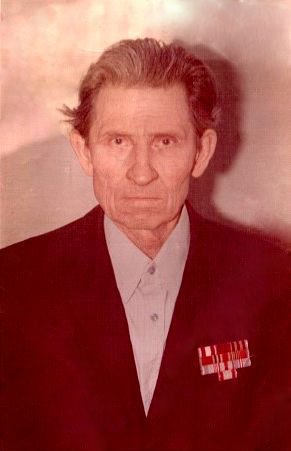


Shapi Bakriev
Rank: Second Lieutenant
Branch of Service: Land Forces, Air Force (except for Naval Aviation), Coast Guard, NKVD troops, Border Guard
Second Lieutenant Shapi Bakriev - Assistant Commander of a fighter platoon of a Separate Special Battalion of the Military Council of the Moscow Military District. Received the medal For Bravery. He died in 1942.
He met the war at dawn on June 22, 1941 in Brest. The town was already being bombed, the first dead and wounded appeared. There were roar, dust, smoke, destroyed buildings, the howl of planes. This was how the Great Patriotic War began for Shapi Bakriev. He was from the village of Tsovkra-1, Kulinsky District of the Dagestan ASSR. He was born in 1916. He would have turned 100 years old in 2016. He was just 24 years old in 1941, and had already participated in the war with Finland in 1939-1940. The military unit where Shapi served was transferred to Brest 1940. There he graduated from the regimental intelligence school. The newspaper "Sentries of the Motherland" (Issue #83, April 11, 1940) wrote about him "...Communist Sh. Bakriev has a great reputation in the unit as one of the best shooters fluent in the shooting techniques. He provides a great help to soldiers in shooting training. Cadet Bakriev is clearly aware that the school is preparing a future commander from him...” Shapi was born in a large family of Magomed Bakriev. After graduation from rural school in 1936, he worked as a senior pioneer leader in the village of Tsovkra I. He graduated from the regional propaganda school in Buinaksk in 1938, and then worked as a teacher at an elementary school in the village of Tsovkra I. He was drafted into the Red Army by the Lakskiy District Military Commissariat in 1939. It was very difficult for our troops in the initial period of the war.The enemy was strong, insidious, cruel, and mobile. Our troops retreated with fighting, came out of the encirclements, from the semi-circles, and again entered into battle. This was evident from his letters home, written on random scraps of paper, on wrappers. These letters were preserved.
Shapi Bakriev
Rank: Second Lieutenant
Branch of Service: Land Forces, Air Force (except for Naval Aviation), Coast Guard, NKVD troops, Border Guard
Second Lieutenant Shapi Bakriev - Assistant Commander of a fighter platoon of a Separate Special Battalion of the Military Council of the Moscow Military District. Received the medal For Bravery. He died in 1942.
He met the war at dawn on June 22, 1941 in Brest. The town was already being bombed, the first dead and wounded appeared. There were roar, dust, smoke, destroyed buildings, the howl of planes. This was how the Great Patriotic War began for Shapi Bakriev. He was from the village of Tsovkra-1, Kulinsky District of the Dagestan ASSR. He was born in 1916. He would have turned 100 years old in 2016. He was just 24 years old in 1941, and had already participated in the war with Finland in 1939-1940. The military unit where Shapi served was transferred to Brest 1940. There he graduated from the regimental intelligence school. The newspaper "Sentries of the Motherland" (Issue #83, April 11, 1940) wrote about him "...Communist Sh. Bakriev has a great reputation in the unit as one of the best shooters fluent in the shooting techniques. He provides a great help to soldiers in shooting training. Cadet Bakriev is clearly aware that the school is preparing a future commander from him...” Shapi was born in a large family of Magomed Bakriev. After graduation from rural school in 1936, he worked as a senior pioneer leader in the village of Tsovkra I. He graduated from the regional propaganda school in Buinaksk in 1938, and then worked as a teacher at an elementary school in the village of Tsovkra I. He was drafted into the Red Army by the Lakskiy District Military Commissariat in 1939. It was very difficult for our troops in the initial period of the war.The enemy was strong, insidious, cruel, and mobile. Our troops retreated with fighting, came out of the encirclements, from the semi-circles, and again entered into battle. This was evident from his letters home, written on random scraps of paper, on wrappers. These letters were preserved.
0 comment



2026 © Russian Military Historical Society Developed by Jetmix