


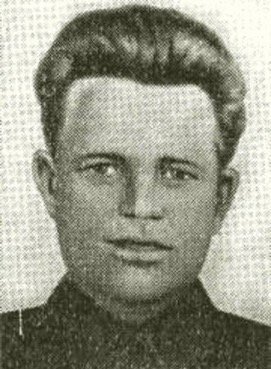


Grigory Bazhutin
Grigory Bazhutin was my own grandfather - a native of the village of Sukhoi Log Kishertsky District of the the Molotov (Perm) Region. When the war began, he was 40 years old. He was called up by the Kishertsky District Military Commissariate on August 30, 1941.
He was sent to the 379th Rifle Division (according to the District Military Commissariat). It was found out that the division was formed in the fall of 1941. There were many of our countrymen in this division.
The division was relocated to the Western Front by early December 1941, where it became a part of the 30th Army. The division participated in the Red Army counteroffensive near Moscow. It protected the approaches to the capital from the Northwest. As a result of the offensive, the enemy was defeated and the threat of bypassing Moscow from the North was eliminated, favorable conditions were created for a further offensive to the West.
He fought on the Kalinin Front, after being wounded and hospitalized, he caught up with his regiment, but was enlisted in another rifle division (253rd Rifle Division, 523rd Rifle Regiment). He liberated the city of Kalinin. Persistent fighting with the enemy was now going on in the Rzhev area. Grigory Mikhailovich was seriously wounded by a shrapnel in the left knee joint with bone damage on April 2, 1942. It happened during the attack on the village of Pogoreloe in the Gorodishchensky District of the Kalinin Region.
The consequence of such a severe injury was the amputation of the left leg above the knee joint. He was treated for a long time in the hospital - there was also a hand, and a contusion, and pneumonia.
He returned home in the summer of 1942 on one leg with crutches. Instead of the other leg, there was now a prosthetic leg. It was difficult for him to walk, as his left leg did not bend at all. But this did not prevent him from working for the collective farm and doing all the work he could. He treated his work conscientiously. In addition, he was assigned to take care of a collective farm apiary, which was a few kilometers from the village, in the forest. It was necessary to get there on foot, sometimes by cart and horse. He kept bees at his home after the war also for the rest of his life. He was engaged in beekeeping with knowledge of business. He was awarded the Order f the Red Star for injury in 1946,. He died in 1977.
Grigory Bazhutin
Grigory Bazhutin was my own grandfather - a native of the village of Sukhoi Log Kishertsky District of the the Molotov (Perm) Region. When the war began, he was 40 years old. He was called up by the Kishertsky District Military Commissariate on August 30, 1941.
He was sent to the 379th Rifle Division (according to the District Military Commissariat). It was found out that the division was formed in the fall of 1941. There were many of our countrymen in this division.
The division was relocated to the Western Front by early December 1941, where it became a part of the 30th Army. The division participated in the Red Army counteroffensive near Moscow. It protected the approaches to the capital from the Northwest. As a result of the offensive, the enemy was defeated and the threat of bypassing Moscow from the North was eliminated, favorable conditions were created for a further offensive to the West.
He fought on the Kalinin Front, after being wounded and hospitalized, he caught up with his regiment, but was enlisted in another rifle division (253rd Rifle Division, 523rd Rifle Regiment). He liberated the city of Kalinin. Persistent fighting with the enemy was now going on in the Rzhev area. Grigory Mikhailovich was seriously wounded by a shrapnel in the left knee joint with bone damage on April 2, 1942. It happened during the attack on the village of Pogoreloe in the Gorodishchensky District of the Kalinin Region.
The consequence of such a severe injury was the amputation of the left leg above the knee joint. He was treated for a long time in the hospital - there was also a hand, and a contusion, and pneumonia.
He returned home in the summer of 1942 on one leg with crutches. Instead of the other leg, there was now a prosthetic leg. It was difficult for him to walk, as his left leg did not bend at all. But this did not prevent him from working for the collective farm and doing all the work he could. He treated his work conscientiously. In addition, he was assigned to take care of a collective farm apiary, which was a few kilometers from the village, in the forest. It was necessary to get there on foot, sometimes by cart and horse. He kept bees at his home after the war also for the rest of his life. He was engaged in beekeeping with knowledge of business. He was awarded the Order f the Red Star for injury in 1946,. He died in 1977.
0 comment




2026 © Russian Military Historical Society Developed by Jetmix