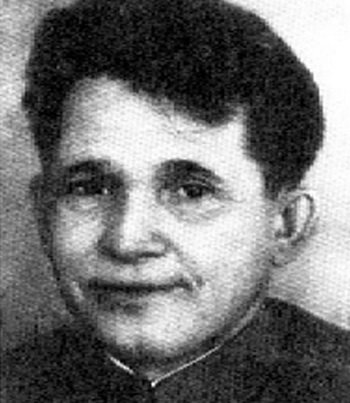
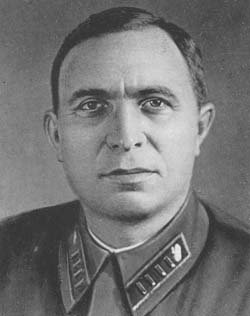
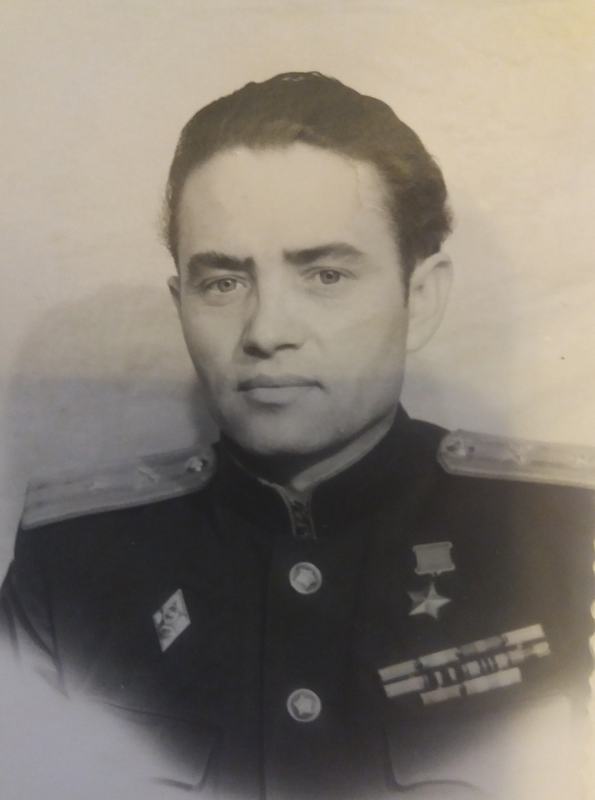
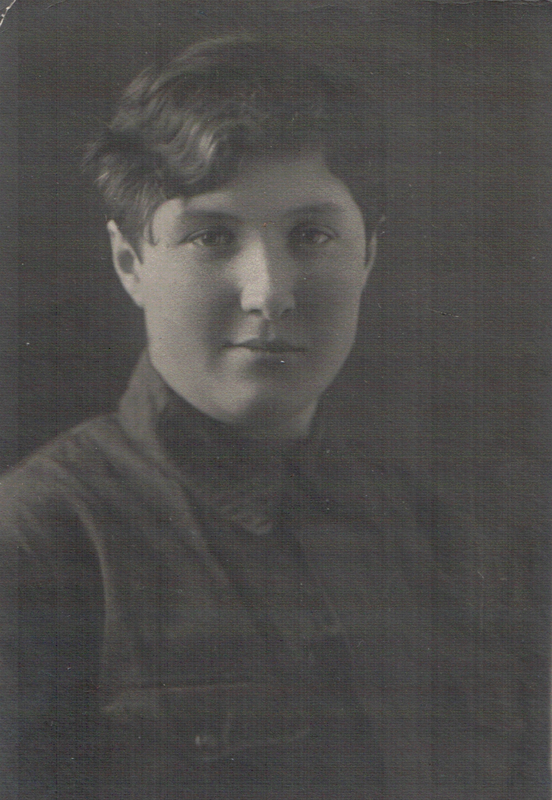
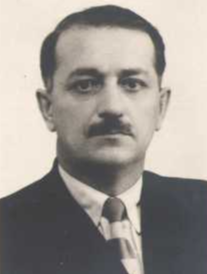
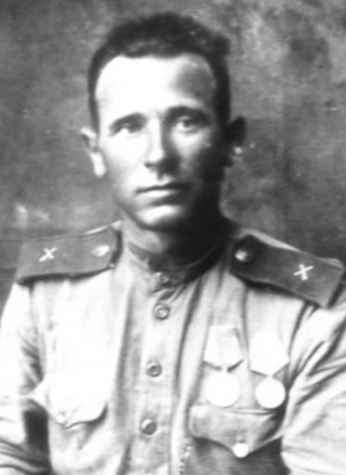
Magomed-Gerey Zulpukarov
Magomed-Gerey was born in 1917, in Port-Petrovsk (the current name of Makhachkala) in a family of architects. The father of Mohammed- Gerey, the Abdulmajid Zulpukarov, was a native of Tsudahara Dargin District. In 1910, he graduated from the Kharkov Institute of Technology. He worked for the construction Department of the administration of the Dagestan Region. In 1914, he became the architect of one of the most ancient cities in the world - Derbent. Abdulmajid Zulpukarov was a colleague of Makhach Dakhadaeva, Said Gabiev, Alibek Takho-Godi, Dzhamalutdin Korkmasov. Fame came to him incredibly early._x000D_
His mother, Nazhavat, came from the Korkmasov family, one of the most educated women of her time, with a strong will and a determined character. All her brothers were officers of the tsarist army, served in the Imperial Regiment. The difficulties associated with the revolutionary character of her husband, Nazhavat endured bravely and courageously. After his death, she devoted her entire life to her only son, Magomed-Gerey. Nazhavat not only taught her son to read and count, but also managed to instill in him the concepts of kindness, honesty, and love for people. Magomed-Gerey's attitude towards his mother was tender and reverent, he was afraid to cause her the slightest trouble. He was grateful for everything. Perhaps it was just his persistent character and will that have helped him on the difficult path of life. He lived in a fast-paced, passionate, bright, curious, talented way._x000D_
After the 7th grade of school, Magomed-Gerey left for the capital to continue his studies at the Moscow Architectural Faculty – to follow in the footsteps of his father. And since his age did not correspond to the age of the student, his documents were not accepted. But a friend and colleague of his father Jamaludin Korkmasov helped him with admission. After finishing classes in Moscow, Magomed-Gerey entered the Azerbaijan Industrial Institute in Baku._x000D_
In the middle of his studies, in 1941, the Great Patriotic War broke out, and the Institute was evacuated from Baku to Leningrad to the facility of Leningrad Aviation Institute. After listening to Stalin's speech on the radio, Magomed-Gerey voluntarily went to the front as part of the people's militia, which consisted of intellectuals and students._x000D_
An interesting incident occurred on September 4, 1941. Viktor Zalgaller in his book "Everyday Life in the War" devoted an entire Chapter to Magomed-Gerey and just mentioned this episode: "...We arrived at the battery in the village of Voronino. Against the battery, on the rise behind the ravine, a tank has arrived and is standing. Black against the already low sun. Scout Magomed Zulpukarov was sent to find what kind of people were there. The tank is slowly coming at us. And shoots tracers to the West, i.e. from us. Then it suddenly turns the turret around and smashes the lower gun at point-blank range with the first shell, and the truck with the second one. The injured driver is on fire in the truck. From the top gun, the tank is no longer visible. It is in a ravine. I throw myself to the gun. Together with the crew, we shoot over the tank, keep it in the ravine. The battalion commander was wounded by a shrapnel in the mouth. He was taken to the rear. Magomed Zulpukarov came running and said that 50 German machine gunners had passed us on the left._x000D_
When Magomed-Gerey returned from a short reconnaissance mission, he said that the Germans saw him and began to shout: "Rus, Rus!", and they began to call with gestures, patting themselves on the stomach and promising to feed him._x000D_
After breaking the Siege of Leningrad, he was transferred to the 3rd Baltic Front, formed by the decision of the Supreme Command from the troops of the left wing of the Leningrad Front in the second half of 1944. The troops of the 3rd Baltic Front liberated the city of Ostrov on July 21, 1944, and the city of Pskov on July 23. The Pskov-Ostrovskaya Operation ended on July 31, as a result of which the troops advanced to the West from 50 to 100 km and inflicted serious damage to the 18th German Army._x000D_
The Tartu offensive operation of the 3rd Baltic Front began on August 10. It lasted until September 6. As a result of this operation, the troops broke through the main line of the enemy's defense and advanced 10 km, they liberated the cities of Vyru and Angele on August 13, the city of Aluksne on August 19, and they liberated the city of Tartu and cut the Tartu-Valga railway on August 23._x000D_
Together with the soldiers of the Leningrad and Belorussian Fronts and the forces of the Baltic Fleet, they defeated a significant force of German fascist troops in the Baltic States on September 14, 1944. The Riga offensive operation of the 3rd, 2nd and 1st Baltic Fronts began on the same day. As a result of this operation, the enemy received a crushing blow. Soviet troops liberated the towns of Tyrva and Valga on the night of September 20, Smiltene on September 23, and Valmer on September 24._x000D_
Magomed-Gerey was dismissed to the reserve with the rank of Second Lieutenant of Artillery to continue his studies in January 1946, in accordance with the order of the Commander of the Red Army artillery. He continued his studies at the Azizbekov Azerbaijan Industrial Institute from March 1946 to March 1949. After compliting his graduation project, he received a diploma of mining engineer in oil industry._x000D_
He began his career as the Chief of the Makhachkala oil field, which soon led from the lagging industry to the very advanced one. He was quickly noticed by the government and was appointed a Head of Department of Industry of the regional party Committee. On his initiative, in 1951, the Institute of Geology with an oil laboratory was opened at the Dagestan Branch of the Soviet Academy of Sciences._x000D_
He was appointed Director of the Makhachkala oil field in 1949. He became Chief of the Department of Heavy Industry of the Dagestan Regional Commity of the CPSU (b) in 1950. Director of the drilling office #2 - in 1951, Manager of the Dagestan Oil Trust - in 1952. Four times he was elected a Deputy of the Supreme Council of the DASSR.