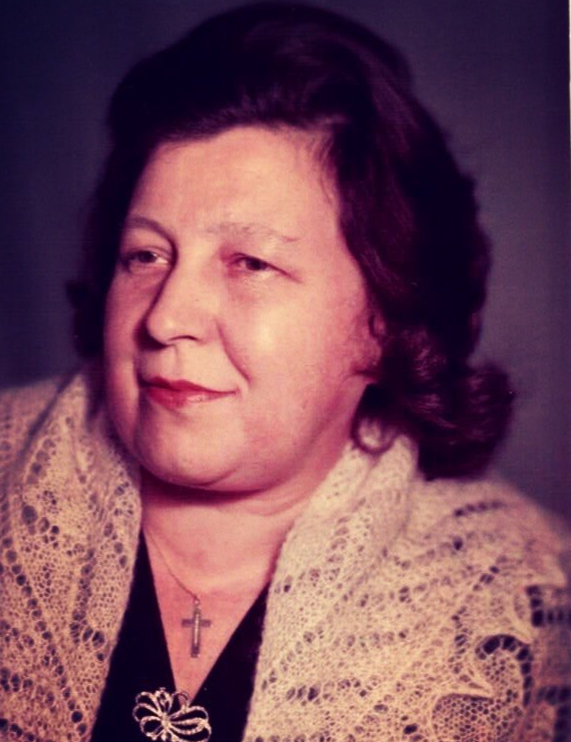
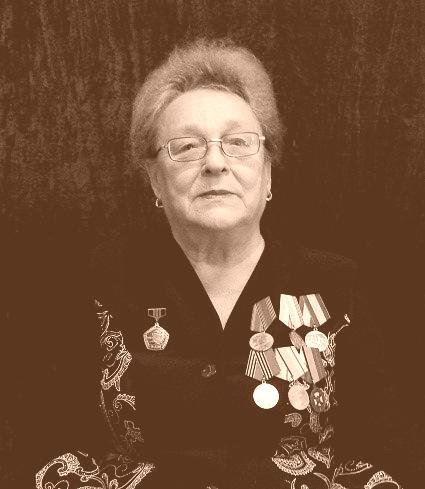
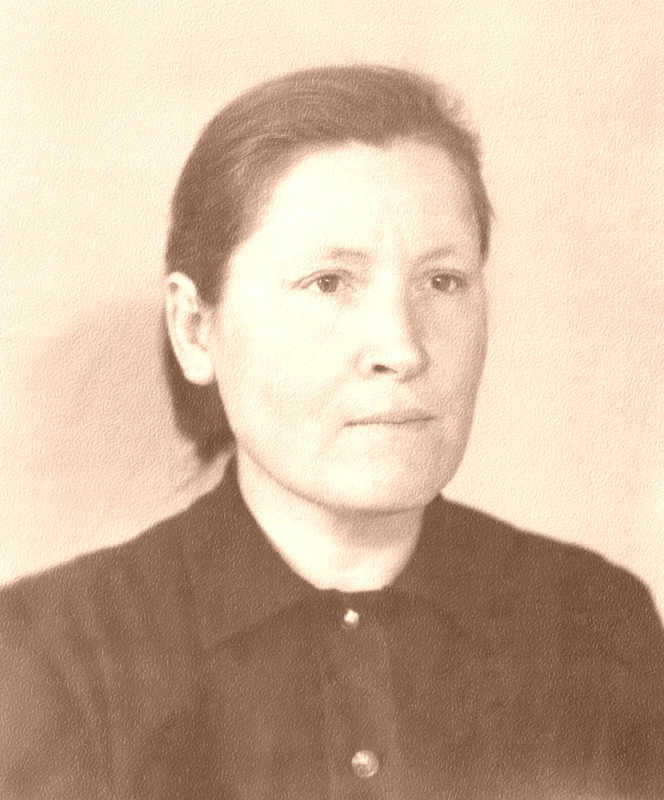
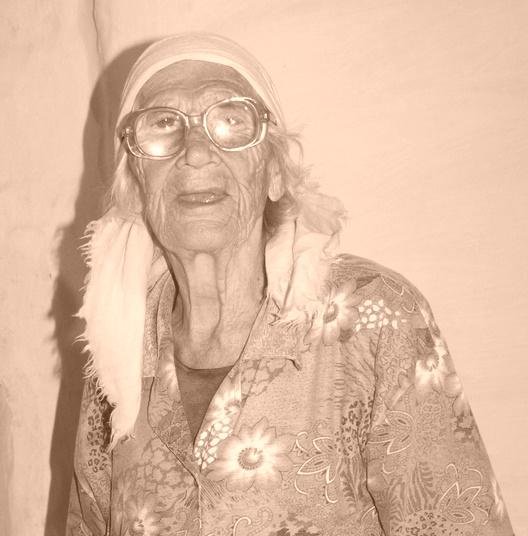
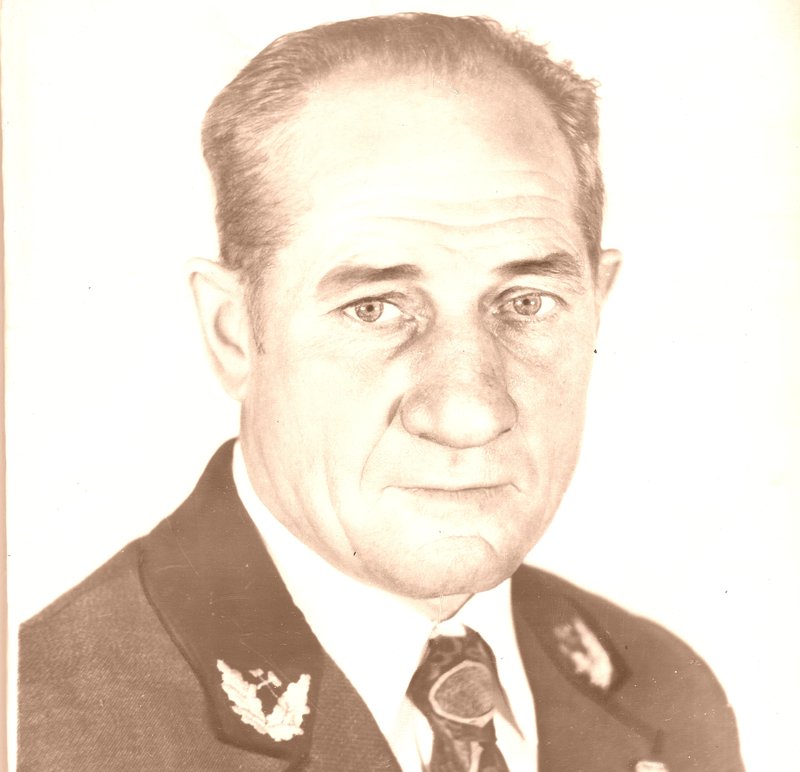
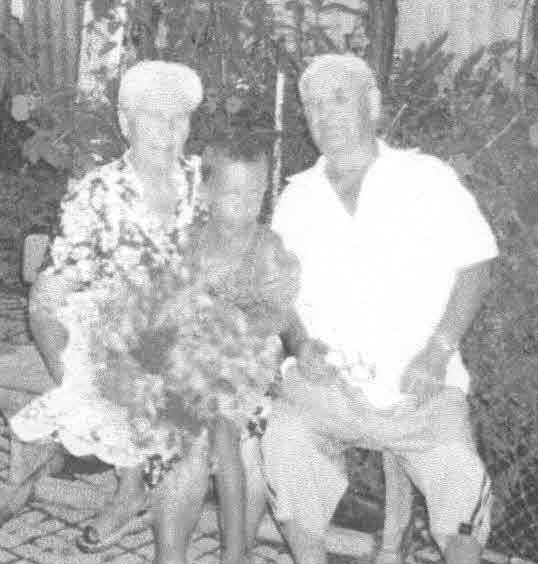
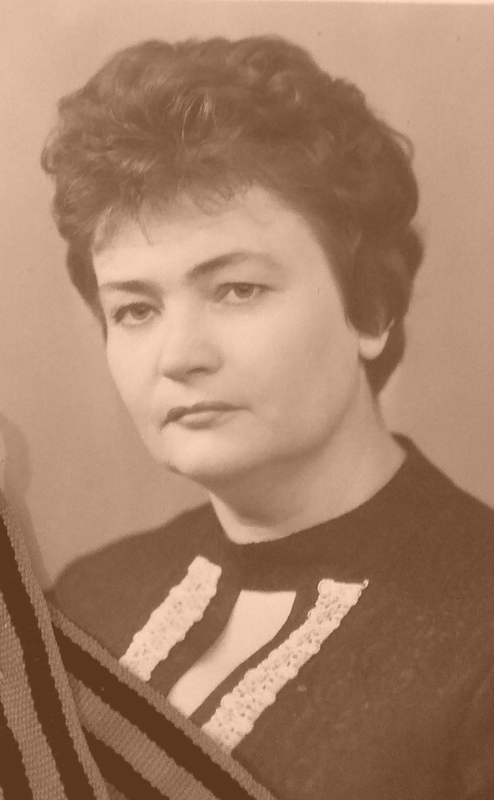
Valentina Moskova
History:_x000D_
Memories of Valentina Moscova (Prikhodko). Born on April 9, 1931, in Stalingrad. Lived at Railway Street, #5. Our street was not far from the crossing station Elshanka._x000D_
It was August 1942. Books and a briefcase were already bought (brand new). I had to go to study in the 4th grade. But more and more often the air-raid sirens were blaring. And in September, we didn't get out of the bomb shelter. The Germans bombed every day. The Kuibyshev plant was on fire. At the Yelshanka station, trucks with grain and refugees were on fire. The smoke made it dark and smelled of burnt grain and corpses._x000D_
One day our military came to our street in trucks with guns behind them. They put them along the houses and masked them with branches. On this day, it was quiet and it was no bombing. But the whole evening the plane, which was called a "frame" was flying overhead. It photographed everything. And early in the morning they began to bomb so that nothing remained of this artillery battery._x000D_
The soldiers were either wounded or killed. The houses of our street were on fire. It was very scary. We run across the railway track of the Kuibyshev factory, whose territory was pitted with trenches that connected one bomb shelter to another. We jumped into these trenches, and there were our signalmen. They jumped out to meet us with machine guns, they thought we were Germans. They asked us: "Are there any Germans on the streets?" We said no, but our houses are on fire and we are running from the fire._x000D_
When all was quiet, we returned to our trench. And in the morning, the Germans were riding motorcycles through the Yelshansky crossing, there were a lot of them, and there was a strong crash. I saw it for the first time. Although the autumn of 1942 was warm, it was cold to stay in the trench, so we went to my grandmother's house on 13 Armyanskaya Street. We were thinking of spending the winter there. But the Germans drove us out of the house, and everyone, including us, was driven to Kalach._x000D_
We reached Tishanka (the village of Maxim Gorky), went to a house that was empty, and stayed there for the winter. The winter was very cold. We almost never left the house, it was good that there was a pond nearby, from which we carried water, and in the attic we found dung, which was used to heat the stove. At night, you could hear "Hooray!" And we were waiting for our soldiers to come. The front line was getting closer and closer every day. Already it was scary to be in the house, and we went down to the basement._x000D_
Ours, advancing, fired from "Katyusha". This is a very scary sight when flying fire horns over their heads. And once there was such a strong battle, right in the village itself. The wall of our hut had been torn away by the explosions of shells, and we were afraid it would block us in a basement. Then all was quiet, and we crawled out from under the floor. Suddenly there was a knock on the door, and the Germans, who were in the hut and locked the door, suddenly rushed to the basement. And my mother and aunt Anya rushed to open the door. We hear them scream: "Dear ones, we have finally waited for You..."_x000D_
Then we, all who were in the hut, ran out into the street. The Germans were captured and taken away. It was night, but the rockets made it light outside. People from all over the village hugged each other with tears in their eyes that they had lived to be released._x000D_
Siberians liberated us. Such strong guys, real heroes! Dressed in white fur coats, with earflaps and felt boots. The battalion commander ordered the soldiers to feed us, first of all children. They brought from the kitchen a bucket of dumplings with meat and potatoes, four loaves of white bread, and gave the children a large lump of sugar. The next day we returned to my grandmother's house on Armenian Street._x000D_
This is how the unforgettable day of liberation came for us – February 2, 1943._x000D_
I do not specify the dates or days of the week, as I did not keep a diary, I did not know at the time that this was necessary. We looked death in the eye every day. I can't believe we're still alive. And while I was writing these memoirs, I stirred up my memory, so I don't sleep for a week and take blood pressure pills to calm my nerves._x000D_
18.02. 2002, V. Moskova
Valentina Moskova
History:_x000D_
Memories of Valentina Moscova (Prikhodko). Born on April 9, 1931, in Stalingrad. Lived at Railway Street, #5. Our street was not far from the crossing station Elshanka._x000D_
It was August 1942. Books and a briefcase were already bought (brand new). I had to go to study in the 4th grade. But more and more often the air-raid sirens were blaring. And in September, we didn't get out of the bomb shelter. The Germans bombed every day. The Kuibyshev plant was on fire. At the Yelshanka station, trucks with grain and refugees were on fire. The smoke made it dark and smelled of burnt grain and corpses._x000D_
One day our military came to our street in trucks with guns behind them. They put them along the houses and masked them with branches. On this day, it was quiet and it was no bombing. But the whole evening the plane, which was called a "frame" was flying overhead. It photographed everything. And early in the morning they began to bomb so that nothing remained of this artillery battery._x000D_
The soldiers were either wounded or killed. The houses of our street were on fire. It was very scary. We run across the railway track of the Kuibyshev factory, whose territory was pitted with trenches that connected one bomb shelter to another. We jumped into these trenches, and there were our signalmen. They jumped out to meet us with machine guns, they thought we were Germans. They asked us: "Are there any Germans on the streets?" We said no, but our houses are on fire and we are running from the fire._x000D_
When all was quiet, we returned to our trench. And in the morning, the Germans were riding motorcycles through the Yelshansky crossing, there were a lot of them, and there was a strong crash. I saw it for the first time. Although the autumn of 1942 was warm, it was cold to stay in the trench, so we went to my grandmother's house on 13 Armyanskaya Street. We were thinking of spending the winter there. But the Germans drove us out of the house, and everyone, including us, was driven to Kalach._x000D_
We reached Tishanka (the village of Maxim Gorky), went to a house that was empty, and stayed there for the winter. The winter was very cold. We almost never left the house, it was good that there was a pond nearby, from which we carried water, and in the attic we found dung, which was used to heat the stove. At night, you could hear "Hooray!" And we were waiting for our soldiers to come. The front line was getting closer and closer every day. Already it was scary to be in the house, and we went down to the basement._x000D_
Ours, advancing, fired from "Katyusha". This is a very scary sight when flying fire horns over their heads. And once there was such a strong battle, right in the village itself. The wall of our hut had been torn away by the explosions of shells, and we were afraid it would block us in a basement. Then all was quiet, and we crawled out from under the floor. Suddenly there was a knock on the door, and the Germans, who were in the hut and locked the door, suddenly rushed to the basement. And my mother and aunt Anya rushed to open the door. We hear them scream: "Dear ones, we have finally waited for You..."_x000D_
Then we, all who were in the hut, ran out into the street. The Germans were captured and taken away. It was night, but the rockets made it light outside. People from all over the village hugged each other with tears in their eyes that they had lived to be released._x000D_
Siberians liberated us. Such strong guys, real heroes! Dressed in white fur coats, with earflaps and felt boots. The battalion commander ordered the soldiers to feed us, first of all children. They brought from the kitchen a bucket of dumplings with meat and potatoes, four loaves of white bread, and gave the children a large lump of sugar. The next day we returned to my grandmother's house on Armenian Street._x000D_
This is how the unforgettable day of liberation came for us – February 2, 1943._x000D_
I do not specify the dates or days of the week, as I did not keep a diary, I did not know at the time that this was necessary. We looked death in the eye every day. I can't believe we're still alive. And while I was writing these memoirs, I stirred up my memory, so I don't sleep for a week and take blood pressure pills to calm my nerves._x000D_
18.02. 2002, V. Moskova
0 comment



2026 © Russian Military Historical Society Developed by Jetmix