Back to
album
album

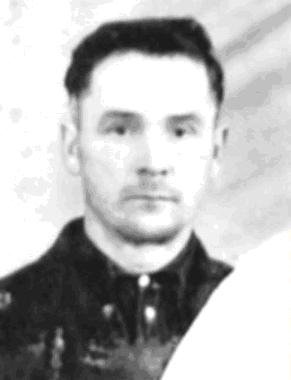

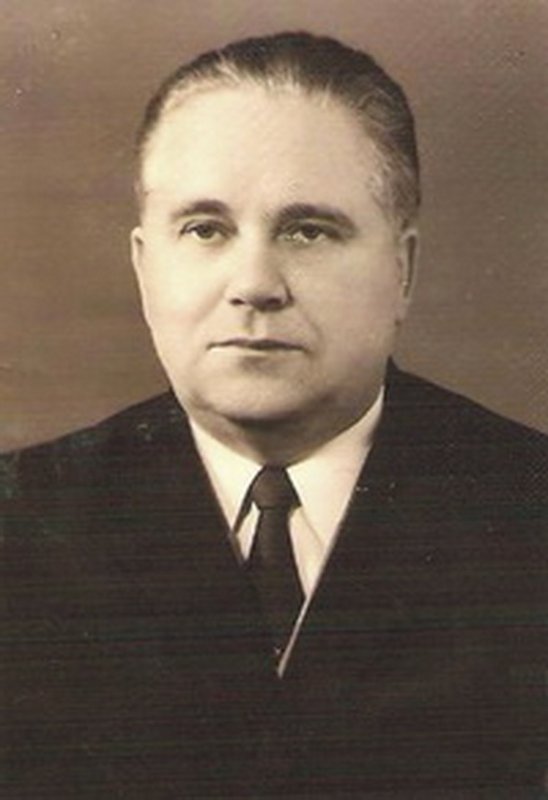


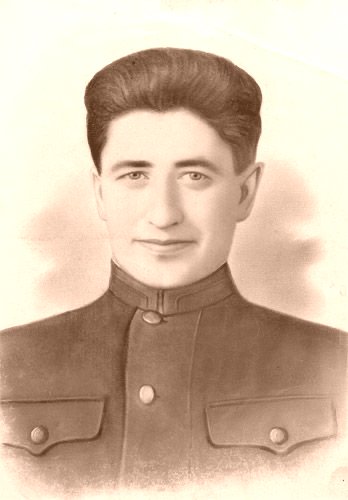


Karseev Anatoly Maksimovich
Rank: Sergeant. Branch of service: Artillery. Anatoly Maksimovich Karsaev came from an ordinary peasant family. He was born on January 04, 1924, in the village of Mokrovka, Saratov region. He had three brothers and a younger sister, and when they moved to the village of Borono-Mikhaylovka during the hungry year of 1933, his father married into a family with three more children. Thus, they lived: as a large family, indulged in labor and worries. To help the household, my grandfather added an extra year to his age to get a job. He started with the simplest work: collected sacks for sowing, then became a tractor refueller, and in the spring of 1941 my grandfather finished the tractor driver's course and mastered the "iron horse". In the spring of 1942, the Red Army soldier Karseev took up arms. He took up just one line in the red army book: "called up by the Makarov District Military Commissariat on April 28, 1942". My grandfather was sent from Balashov to Borisoglebsk, where the field school of sergeants was established. "About 400 guys were chosen - those who were younger. We lived in tents in the woods. We were trained to be commanders of machine-gun crews. Every day, from morning to evening, classes following a crash course." And again, he was in Balashov, from here on August 26, 1942, the newly minted machine-gun sergeants were sent to Stalingrad. We went on foot, at night time, and even carrying a machine gun on our backs – that was almost 70 kilograms of weight: the machine gun rack was 32 kg., the barrel was 26 kg., a box with bullets was 9 kg. My grandfather recalled: "On September 8, we were on the outskirts of Stalingrad. We did not even have time to get to the starting line when we were bombed. It was hell for us, eighteen-year-olds, who haven't been under fire. It made our hair stand on end." Anatoly Karseev, a sergeant in an independent machine-gun battalion of the Red Banner 99th guards’ division of the 66th army, fought as part of the Don frontline troops commanded by General Konstantin Rokossovsky. The frontline occupied a defensive line along the Don river to Yerzovka on the Volga. "When we entered Stalingrad at the end of January 1943, it was nothing but ruins." My grandfather survived these battles, having received only two scratches from bullets. But he was not as lucky in the summer of 1943, when a new offensive began: "The "Messer" spotted our servicing division and slammed us with shrapnel shells. The commander - a guy from the Zhytomyr region – died. Both my legs were broken. One of them was saved by medics. And the other was cut off. Afterwards, it was amputated knee-deep in a field hospital. " In the spring of 1944, Guard Sergeant Anatoly Karseev, with two military orders - of the Patriotic War and the Red Star - on his tunic, returned to his dear Borono-Mikhailovka. In May, he already got a job at the state farm as a driver on a powerplant. Here he met his soulmate, my grandmother, Valentina. At the time, she was 17 years old. A week before her birthday in July 1944, they got married. They lived together for 60 years, lived to see their “diamond” wedding. They created a big strong family: raised 5 children. There were twice as many grandchildren: 10. And 18 great-grandchildren! Despite the fact that my grandfather lost a leg during the war, he worked all his life both on the collective farm, and at home, where they had a large farm with cows, goats, sheep, chickens, geese, ducks. He had to swing a scythe, dig a vegetable garden, and there were many things to do in the yard as well. My grandfather had a very cheerful character, he was a master storyteller, played the balalaika. He was very fond of fishing. My grandfather died shortly before the 60th anniversary of the Great Victory. He died at the age of 81 in March 2005.
Karseev Anatoly Maksimovich
Rank: Sergeant. Branch of service: Artillery. Anatoly Maksimovich Karsaev came from an ordinary peasant family. He was born on January 04, 1924, in the village of Mokrovka, Saratov region. He had three brothers and a younger sister, and when they moved to the village of Borono-Mikhaylovka during the hungry year of 1933, his father married into a family with three more children. Thus, they lived: as a large family, indulged in labor and worries. To help the household, my grandfather added an extra year to his age to get a job. He started with the simplest work: collected sacks for sowing, then became a tractor refueller, and in the spring of 1941 my grandfather finished the tractor driver's course and mastered the "iron horse". In the spring of 1942, the Red Army soldier Karseev took up arms. He took up just one line in the red army book: "called up by the Makarov District Military Commissariat on April 28, 1942". My grandfather was sent from Balashov to Borisoglebsk, where the field school of sergeants was established. "About 400 guys were chosen - those who were younger. We lived in tents in the woods. We were trained to be commanders of machine-gun crews. Every day, from morning to evening, classes following a crash course." And again, he was in Balashov, from here on August 26, 1942, the newly minted machine-gun sergeants were sent to Stalingrad. We went on foot, at night time, and even carrying a machine gun on our backs – that was almost 70 kilograms of weight: the machine gun rack was 32 kg., the barrel was 26 kg., a box with bullets was 9 kg. My grandfather recalled: "On September 8, we were on the outskirts of Stalingrad. We did not even have time to get to the starting line when we were bombed. It was hell for us, eighteen-year-olds, who haven't been under fire. It made our hair stand on end." Anatoly Karseev, a sergeant in an independent machine-gun battalion of the Red Banner 99th guards’ division of the 66th army, fought as part of the Don frontline troops commanded by General Konstantin Rokossovsky. The frontline occupied a defensive line along the Don river to Yerzovka on the Volga. "When we entered Stalingrad at the end of January 1943, it was nothing but ruins." My grandfather survived these battles, having received only two scratches from bullets. But he was not as lucky in the summer of 1943, when a new offensive began: "The "Messer" spotted our servicing division and slammed us with shrapnel shells. The commander - a guy from the Zhytomyr region – died. Both my legs were broken. One of them was saved by medics. And the other was cut off. Afterwards, it was amputated knee-deep in a field hospital. " In the spring of 1944, Guard Sergeant Anatoly Karseev, with two military orders - of the Patriotic War and the Red Star - on his tunic, returned to his dear Borono-Mikhailovka. In May, he already got a job at the state farm as a driver on a powerplant. Here he met his soulmate, my grandmother, Valentina. At the time, she was 17 years old. A week before her birthday in July 1944, they got married. They lived together for 60 years, lived to see their “diamond” wedding. They created a big strong family: raised 5 children. There were twice as many grandchildren: 10. And 18 great-grandchildren! Despite the fact that my grandfather lost a leg during the war, he worked all his life both on the collective farm, and at home, where they had a large farm with cows, goats, sheep, chickens, geese, ducks. He had to swing a scythe, dig a vegetable garden, and there were many things to do in the yard as well. My grandfather had a very cheerful character, he was a master storyteller, played the balalaika. He was very fond of fishing. My grandfather died shortly before the 60th anniversary of the Great Victory. He died at the age of 81 in March 2005.
0 comment



2026 © Russian Military Historical Society Developed by Jetmix