Back to
album
album
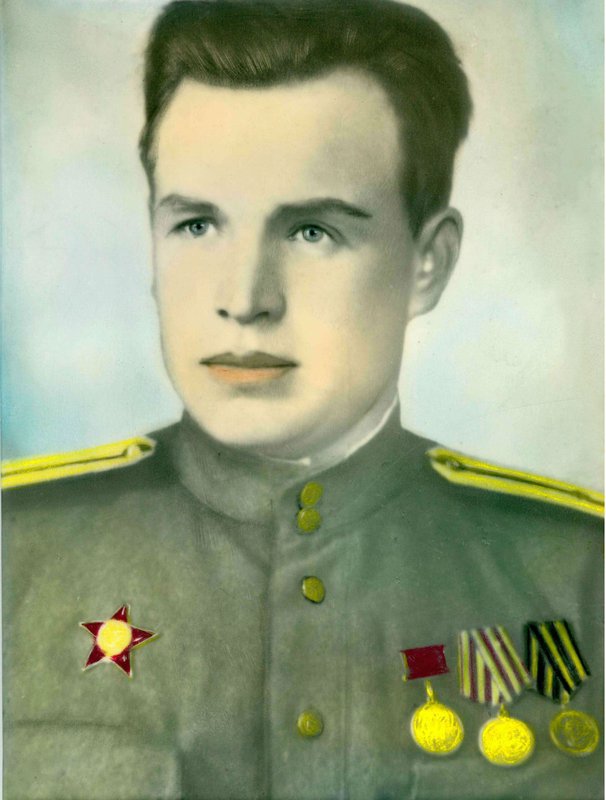
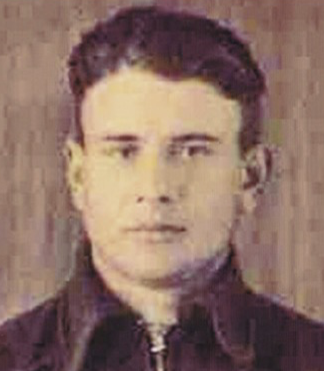
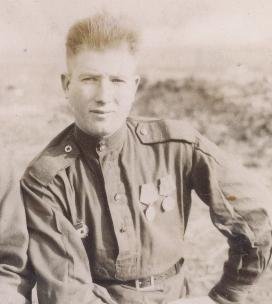
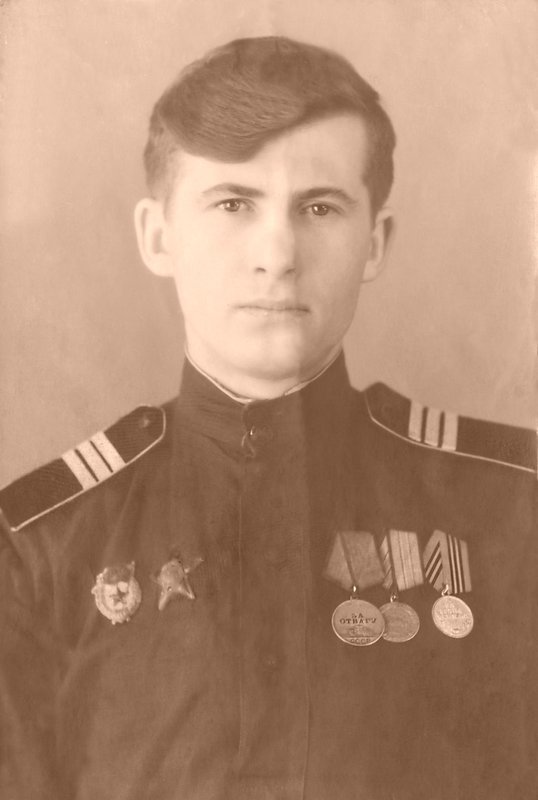


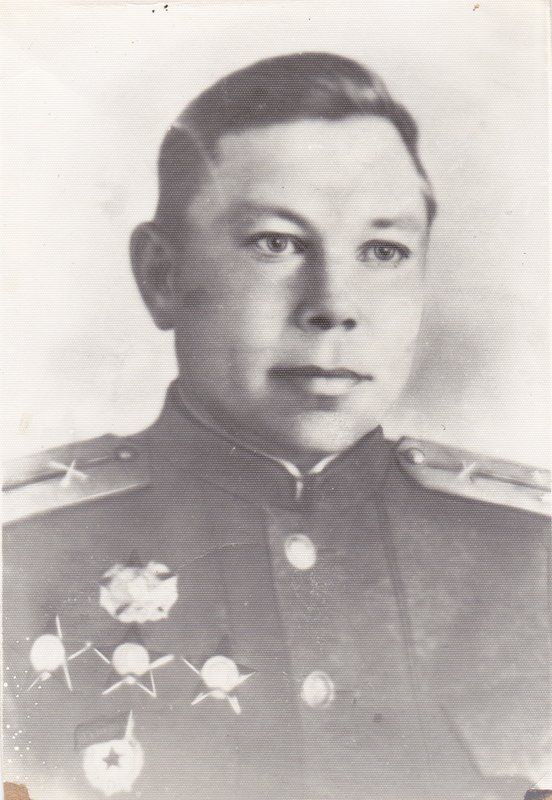


Tashkin Mikhail Alexandrovich
The newspaper "Znamya Oktyabrya" No. 29 (9712) dated April 15, 2015 reported: "The future Hero was born in the village of Syrtinsky, Kizil district in 1918. Soon the family moved to the Kochkarskie goldworks, where Mikhail Tashkin spent his childhood and youth. A graduate of Plast School No. 9 Tashkin was drafted into the Red Army in 1940. By the beginning of the Great Patriotic War, he was already a career military man: a cadet in the artillery school of junior commanders. The cadets, along with the guns, were included in the artillery division of the 31st Mountain Rifle Brigade, which was defending the Karelian city of Kandalaksha. On the fifth day of the war, he receives the rank of junior sergeant. Three days later, he was appointed as the gunner of the 76-mm mountain gun. At the end of the second month of fighting, he becomes the commander of the gun crew. And in this capacity, he will go through almost the entire war, reaching the heights of artillery skill. In the Arctic, the gun commander Tashkin fought for three years, was wounded twice, but did not leave the battery, refusing treatment in the hospital. His military orders show how he fought, which are almost impossible to be earned by an ordinary sergeant - the Order of the Battle Red Banner and the Patriotic War of the 1st degree. In the summer of 1944, Finland, against which the Karelian front fought, withdrew from the war, and hostilities ceased. Front troops began to be transferred to other fronts. So the 31st brigade was included in the composition of the 4th Ukrainian Front. On March 24, 1945, during the attack, one of the brigade's battalions came under heavy machine-gun fire. German firing points were in brick buildings, and they could only be destroyed by artillery fire - direct fire. Tashkin decided on a desperate act. The cannon was carried by a horse team. Mikhail gave a signal to the rider, and the horses with a cannon rushed towards the Nazis. At 200 meters from the enemy positions, the horses were deployed, the cannon was unhooked and opened fire. To destroy the machine guns, Tashkin needed four shells. A few days later (April 2), the advanced units of the brigade crossed the Oder River and captured the bridgehead. The Nazis, bringing up tanks and self-propelled guns, began to counterattack in order to eliminate the bridgehead. The Soviet infantry with small arms required artillery support. It was necessary to transport at least one cannon from the east bank of the river to the west. The choice fell on the crew of senior sergeant Tashkin. Under German fire, the gunners dragged logs to the shore and built a raft. The Nazis concentrated all their fire on the crossing. But fate often gives the brave a chance - the weapon has been ferried! For ten days, the infantry with the crew of Tashkin held the bridgehead. With the personal participation of senior sergeant M.A. Tashkin's entire battery crossed the Oder. In these battles, Tashkin's gun destroyed three tanks, 15 machine guns, no less than a company of Hitler's infantry, and helped the Soviet infantry to repulse more than thirty German attacks. The Order of Glory III degree and the Order of the Red Star have been added to the two orders! The senior sergeant Tashkin did not fight at all until the Victory - on April 30, 1945, a fragment of an enemy shell cut his life off. The Hero was buried in the mass grave of the Soviet soldiers' cemetery in a Czech town near the town of Ostrava. On May 15, 1945, by the Decree of the Presidium of the Supreme Soviet of the USSR, Senior Sergeant M.A. Tashkin was awarded the title of Hero of the Soviet Union. Posthumously". A street in the town of Plast, Chelyabinsk Region, is named after him. From the description of the feat: “During his stay in the battery from April 1942, Comrade Tashkin showed himself to be a capable junior commander. With his tireless work, he achieved good combat coordination in his crew, good discipline in it, despite the fact that the personnel of the crew changed several times. During this period, he trained 4 gunners and one of them is currently working as a gun commander. Comrade Tashkin repeatedly participated in battles with the German fascist invaders, where he showed personal courage, and endurance and the ability to lead his subordinates well. So, in the battle on July 27, 1942, being wounded, he did not leave his place in the crew and was in the ranks until the end of the battle, despite the massive artillery shelling of firing positions from the enemy and the raid of German aircraft. Five times he participated in combat exits to the rear and to the deep flanks of the enemy. In a combat operation from 13 to 19 July 1943, he was ordered to deliver ammunition and 2 guns to the area where the battery was located. During the day, the convoy under his leadership made a 60-kilometer march in difficult terrain and the task was completed successfully. In battles from June 15 to June 19 and from June 25 to June 29, 1944, Comrade Tashkin, working as a gun commander, ensured timely delivery of the gun to the battle area (to Lake Shulgul-Yavr, Bolshoy Karikvaivish and 264.2 heights), clear command execution of his crew, timely opening and accurate firing. At the time of the shelling of firing positions by enemy artillery, Comrade Tashkin, with an example of personal courage, inspired the crew and batteries and his gun, without stopping, fired at the enemy.In these battles, the battery, which also included the gun of senior sergeant Tashkin, destroyed up to 30 German enemy soldiers and officers. Battery fire disrupted the enemy's organized withdrawal from the battle area. Comrade Tashkin works tirelessly to improve his military knowledge. His calculation has excellent performance in shooting. As a junior commander and party organizer of the battery, Comrade Tashkin enjoys business authority among the personnel. Worthy of the government award - the Order of the Red Star. " From the description of the feat: “During his stay in the battery, Comrade Tashkin showed himself to be a disciplined, executive junior commander who knew his special job. Repeatedly participated in combat missions to the rear of the enemy, where he was twice wounded. For successful military operations, comrade Takshin was awarded the Order of the Red Star. In a battle at a road fork, deep behind enemy lines, Comrade Tashkin successfully delivered his gun to the battle area and was the first to open fire on the enemy, supporting a rifle subunit. Wounded, Comrade Tashkin did not leave his place, continuing to repulse the enemy's counterattacks to the last round. In this battle, the gun destroyed up to 40 Germans and 5 enemy firing points. " He was awarded the Order of the Patriotic War, 1st degree. From the description of the feat: “For excellent escort by fire, during a campaign behind enemy lines, he was awarded the Order of the Red Star. In the period from 6 to 10/30/1944, the gun of senior sergeant Tashkin operated as part of the vanguard of the brigade, passed a distance of up to 600 kilometers through swamps and highly rugged terrain, destroyed up to 220 Nazis and 6 heavy machine guns. 10/10/1944, reaching a fork in the road deep into the rear of the enemy, senior sergeant Tashkin set his cannon on the move on an open firing position and began to shoot the enemy convoy moving along the road with direct fire. The suddenness and well-aimed fire of his guns confused the Germans, which allowed the rifle units to quickly occupy a road fork and firmly gain a foothold on it. Within two days, the enemy fiercely launched 11 counterattacks in order to return the road fork at any cost. In this battle, Tashkin, firing direct fire, saving ammunition, struck the advancing Nazis with each shot, throwing them back to their original position. 10/13/1944, continuing the offensive, the gun of senior sergeant Tashkin covered the open flank. Setting the cannon to an open position, he opened accurate fire on the counterattacking groups of Germans. The enemy, having found a cannon, opened a concentrated 105-mm battery artillery fire on it. A direct hit of a projectile knocked out the entire crew of the gun, Comrade Tashkin was wounded in the head. Left alone, overcoming pain, Comrade Tashkin, working for the entire crew, beat off attacks until the last shell. In this battle, with the fire of his guns and in hand-to-hand combat, senior sergeant Tashkin destroyed 75 fascists, and ensured the battalion had a solid hold on its positions. He continued the fight despite being wounded, requiring evacuation to the hospital. Senior Sergeant Tashkin insisted on leaving the ranks. He made a 300-kilometer off-road march into the deep rear of the enemy and took part in the battle for the road fork, where he again heroically fought in the battle formation of a rifle company, pursuing the retreating enemy. " He was awarded the Order of the Red Banner. From the description of the feat: “03/24/45, at the edge of the forest, 2 enemy machine guns were installed in two houses. Comrade Tashkin, with his gun crew, rolled out the gun for direct fire and destroyed them from the first shots, thereby enabling the infantry to advance 2 kilometers forward. With his gun, he was all the time in the battle formations of the infantry, clearing the way for it to attack. On 03/30/45, the battery commander was killed and senior sergeant Tashkin took over command of the battery, organized the people and on the night of the same date with artillery and machine gun fire helped our infantry repel 2 enemy attacks, destroying 10 German soldiers and officers. In battle, he proved himself to be a capable and managerial commander, worthy of the title of a Soviet officer. On 1.4.45, together with the infantry and 1 gun, he escaped to the Oder River, suppressed 3 machine-gun points with artillery fire, provided the infantry could cross to the western bank of the river. Using improvised means, under heavy mortar fire, Senior Sergeant Tashkin ferried two guns of his battery to the opposite bank of the river, helped the infantry to gain a foothold on the occupied bridgehead, together with it, repulsed 2 enemy counterattacks, supported by tanks and a self-propelled gun. In battle he behaved boldly and decisively. " Mikhail Alexandrovich Tashkin was awarded the Order of Glory, III degree. From the description of the feat: “03/21/45, during the breakthrough of the German defense in the area of Zorau, with his gun, he advanced in battle formations and came under cross machine-gun fire, which the Germans were firing from their homes. The battalion was caught by this fire in an open area and lay down. There was no convenient firing position for the gun.Senior sergeant Tashkin with a gun, under machine-gun fire, jumped out at a gallop at a distance of 200 meters from the enemy machine guns and, leading the gun into battle, with 4 shells broke 2 enemy machine-gun points. The enemy's fire ceased and the battalion rose to attack. They quickly took possession of the settlement. In this battle, the gun shield was pierced in many places, and the wounded appeared in the crew. At the same time, the platoon commander and the battery commander were wounded. Senior Sergeant Tashkin took over command. The courage and effectiveness of the fire of Tashkin's battery aroused the admiration of the attackers. 2.4.45, a small group of our soldiers and officers, reaching the Oder, crossed the river in a narrow section. The enemy, using tanks and self-propelled guns, began to violently counterattack. Nevertheless, Comrade Tashkin decided to immediately cross over to the left bank of the Oder. Having overcome from a kilometer of an open area, fired by artillery and machine-gun fire, he ferried a gun and ammunition. For the set up of the raft comrade Tashkin with his crew carried logs under fire. The place of the crossing was visible from a distance of 190 meters, and was fired upon from a machine gun. Despite this, the gun was ferried across the river. On this day, 3 fierce enemy counterattacks were repulsed. Lacking sub-caliber shells, Tashkin entered the battle with tanks and set fire to 3 German tanks. Under extremely difficult conditions, with the participation of Comrade Tashkin, the entire battery was ferried across the river. It was possible to expand the bridgehead. 2.4.45 to 12.4.45 T. Tashkin, with his crew, repelled 2-3 enemy counterattacks every day. At the same time, Comrade Tashkin destroyed up to 200 Nazis, burned 3 enemy tanks and by his actions ensured the expansion of the bridgehead beyond the Oder. For exceptional courage, dedication and high combat skill, Comrade Tashkin deserves a government award - the title of "Hero of the Soviet Union." Posthumously.
Tashkin Mikhail Alexandrovich
The newspaper "Znamya Oktyabrya" No. 29 (9712) dated April 15, 2015 reported: "The future Hero was born in the village of Syrtinsky, Kizil district in 1918. Soon the family moved to the Kochkarskie goldworks, where Mikhail Tashkin spent his childhood and youth. A graduate of Plast School No. 9 Tashkin was drafted into the Red Army in 1940. By the beginning of the Great Patriotic War, he was already a career military man: a cadet in the artillery school of junior commanders. The cadets, along with the guns, were included in the artillery division of the 31st Mountain Rifle Brigade, which was defending the Karelian city of Kandalaksha. On the fifth day of the war, he receives the rank of junior sergeant. Three days later, he was appointed as the gunner of the 76-mm mountain gun. At the end of the second month of fighting, he becomes the commander of the gun crew. And in this capacity, he will go through almost the entire war, reaching the heights of artillery skill. In the Arctic, the gun commander Tashkin fought for three years, was wounded twice, but did not leave the battery, refusing treatment in the hospital. His military orders show how he fought, which are almost impossible to be earned by an ordinary sergeant - the Order of the Battle Red Banner and the Patriotic War of the 1st degree. In the summer of 1944, Finland, against which the Karelian front fought, withdrew from the war, and hostilities ceased. Front troops began to be transferred to other fronts. So the 31st brigade was included in the composition of the 4th Ukrainian Front. On March 24, 1945, during the attack, one of the brigade's battalions came under heavy machine-gun fire. German firing points were in brick buildings, and they could only be destroyed by artillery fire - direct fire. Tashkin decided on a desperate act. The cannon was carried by a horse team. Mikhail gave a signal to the rider, and the horses with a cannon rushed towards the Nazis. At 200 meters from the enemy positions, the horses were deployed, the cannon was unhooked and opened fire. To destroy the machine guns, Tashkin needed four shells. A few days later (April 2), the advanced units of the brigade crossed the Oder River and captured the bridgehead. The Nazis, bringing up tanks and self-propelled guns, began to counterattack in order to eliminate the bridgehead. The Soviet infantry with small arms required artillery support. It was necessary to transport at least one cannon from the east bank of the river to the west. The choice fell on the crew of senior sergeant Tashkin. Under German fire, the gunners dragged logs to the shore and built a raft. The Nazis concentrated all their fire on the crossing. But fate often gives the brave a chance - the weapon has been ferried! For ten days, the infantry with the crew of Tashkin held the bridgehead. With the personal participation of senior sergeant M.A. Tashkin's entire battery crossed the Oder. In these battles, Tashkin's gun destroyed three tanks, 15 machine guns, no less than a company of Hitler's infantry, and helped the Soviet infantry to repulse more than thirty German attacks. The Order of Glory III degree and the Order of the Red Star have been added to the two orders! The senior sergeant Tashkin did not fight at all until the Victory - on April 30, 1945, a fragment of an enemy shell cut his life off. The Hero was buried in the mass grave of the Soviet soldiers' cemetery in a Czech town near the town of Ostrava. On May 15, 1945, by the Decree of the Presidium of the Supreme Soviet of the USSR, Senior Sergeant M.A. Tashkin was awarded the title of Hero of the Soviet Union. Posthumously". A street in the town of Plast, Chelyabinsk Region, is named after him. From the description of the feat: “During his stay in the battery from April 1942, Comrade Tashkin showed himself to be a capable junior commander. With his tireless work, he achieved good combat coordination in his crew, good discipline in it, despite the fact that the personnel of the crew changed several times. During this period, he trained 4 gunners and one of them is currently working as a gun commander. Comrade Tashkin repeatedly participated in battles with the German fascist invaders, where he showed personal courage, and endurance and the ability to lead his subordinates well. So, in the battle on July 27, 1942, being wounded, he did not leave his place in the crew and was in the ranks until the end of the battle, despite the massive artillery shelling of firing positions from the enemy and the raid of German aircraft. Five times he participated in combat exits to the rear and to the deep flanks of the enemy. In a combat operation from 13 to 19 July 1943, he was ordered to deliver ammunition and 2 guns to the area where the battery was located. During the day, the convoy under his leadership made a 60-kilometer march in difficult terrain and the task was completed successfully. In battles from June 15 to June 19 and from June 25 to June 29, 1944, Comrade Tashkin, working as a gun commander, ensured timely delivery of the gun to the battle area (to Lake Shulgul-Yavr, Bolshoy Karikvaivish and 264.2 heights), clear command execution of his crew, timely opening and accurate firing. At the time of the shelling of firing positions by enemy artillery, Comrade Tashkin, with an example of personal courage, inspired the crew and batteries and his gun, without stopping, fired at the enemy.In these battles, the battery, which also included the gun of senior sergeant Tashkin, destroyed up to 30 German enemy soldiers and officers. Battery fire disrupted the enemy's organized withdrawal from the battle area. Comrade Tashkin works tirelessly to improve his military knowledge. His calculation has excellent performance in shooting. As a junior commander and party organizer of the battery, Comrade Tashkin enjoys business authority among the personnel. Worthy of the government award - the Order of the Red Star. " From the description of the feat: “During his stay in the battery, Comrade Tashkin showed himself to be a disciplined, executive junior commander who knew his special job. Repeatedly participated in combat missions to the rear of the enemy, where he was twice wounded. For successful military operations, comrade Takshin was awarded the Order of the Red Star. In a battle at a road fork, deep behind enemy lines, Comrade Tashkin successfully delivered his gun to the battle area and was the first to open fire on the enemy, supporting a rifle subunit. Wounded, Comrade Tashkin did not leave his place, continuing to repulse the enemy's counterattacks to the last round. In this battle, the gun destroyed up to 40 Germans and 5 enemy firing points. " He was awarded the Order of the Patriotic War, 1st degree. From the description of the feat: “For excellent escort by fire, during a campaign behind enemy lines, he was awarded the Order of the Red Star. In the period from 6 to 10/30/1944, the gun of senior sergeant Tashkin operated as part of the vanguard of the brigade, passed a distance of up to 600 kilometers through swamps and highly rugged terrain, destroyed up to 220 Nazis and 6 heavy machine guns. 10/10/1944, reaching a fork in the road deep into the rear of the enemy, senior sergeant Tashkin set his cannon on the move on an open firing position and began to shoot the enemy convoy moving along the road with direct fire. The suddenness and well-aimed fire of his guns confused the Germans, which allowed the rifle units to quickly occupy a road fork and firmly gain a foothold on it. Within two days, the enemy fiercely launched 11 counterattacks in order to return the road fork at any cost. In this battle, Tashkin, firing direct fire, saving ammunition, struck the advancing Nazis with each shot, throwing them back to their original position. 10/13/1944, continuing the offensive, the gun of senior sergeant Tashkin covered the open flank. Setting the cannon to an open position, he opened accurate fire on the counterattacking groups of Germans. The enemy, having found a cannon, opened a concentrated 105-mm battery artillery fire on it. A direct hit of a projectile knocked out the entire crew of the gun, Comrade Tashkin was wounded in the head. Left alone, overcoming pain, Comrade Tashkin, working for the entire crew, beat off attacks until the last shell. In this battle, with the fire of his guns and in hand-to-hand combat, senior sergeant Tashkin destroyed 75 fascists, and ensured the battalion had a solid hold on its positions. He continued the fight despite being wounded, requiring evacuation to the hospital. Senior Sergeant Tashkin insisted on leaving the ranks. He made a 300-kilometer off-road march into the deep rear of the enemy and took part in the battle for the road fork, where he again heroically fought in the battle formation of a rifle company, pursuing the retreating enemy. " He was awarded the Order of the Red Banner. From the description of the feat: “03/24/45, at the edge of the forest, 2 enemy machine guns were installed in two houses. Comrade Tashkin, with his gun crew, rolled out the gun for direct fire and destroyed them from the first shots, thereby enabling the infantry to advance 2 kilometers forward. With his gun, he was all the time in the battle formations of the infantry, clearing the way for it to attack. On 03/30/45, the battery commander was killed and senior sergeant Tashkin took over command of the battery, organized the people and on the night of the same date with artillery and machine gun fire helped our infantry repel 2 enemy attacks, destroying 10 German soldiers and officers. In battle, he proved himself to be a capable and managerial commander, worthy of the title of a Soviet officer. On 1.4.45, together with the infantry and 1 gun, he escaped to the Oder River, suppressed 3 machine-gun points with artillery fire, provided the infantry could cross to the western bank of the river. Using improvised means, under heavy mortar fire, Senior Sergeant Tashkin ferried two guns of his battery to the opposite bank of the river, helped the infantry to gain a foothold on the occupied bridgehead, together with it, repulsed 2 enemy counterattacks, supported by tanks and a self-propelled gun. In battle he behaved boldly and decisively. " Mikhail Alexandrovich Tashkin was awarded the Order of Glory, III degree. From the description of the feat: “03/21/45, during the breakthrough of the German defense in the area of Zorau, with his gun, he advanced in battle formations and came under cross machine-gun fire, which the Germans were firing from their homes. The battalion was caught by this fire in an open area and lay down. There was no convenient firing position for the gun.Senior sergeant Tashkin with a gun, under machine-gun fire, jumped out at a gallop at a distance of 200 meters from the enemy machine guns and, leading the gun into battle, with 4 shells broke 2 enemy machine-gun points. The enemy's fire ceased and the battalion rose to attack. They quickly took possession of the settlement. In this battle, the gun shield was pierced in many places, and the wounded appeared in the crew. At the same time, the platoon commander and the battery commander were wounded. Senior Sergeant Tashkin took over command. The courage and effectiveness of the fire of Tashkin's battery aroused the admiration of the attackers. 2.4.45, a small group of our soldiers and officers, reaching the Oder, crossed the river in a narrow section. The enemy, using tanks and self-propelled guns, began to violently counterattack. Nevertheless, Comrade Tashkin decided to immediately cross over to the left bank of the Oder. Having overcome from a kilometer of an open area, fired by artillery and machine-gun fire, he ferried a gun and ammunition. For the set up of the raft comrade Tashkin with his crew carried logs under fire. The place of the crossing was visible from a distance of 190 meters, and was fired upon from a machine gun. Despite this, the gun was ferried across the river. On this day, 3 fierce enemy counterattacks were repulsed. Lacking sub-caliber shells, Tashkin entered the battle with tanks and set fire to 3 German tanks. Under extremely difficult conditions, with the participation of Comrade Tashkin, the entire battery was ferried across the river. It was possible to expand the bridgehead. 2.4.45 to 12.4.45 T. Tashkin, with his crew, repelled 2-3 enemy counterattacks every day. At the same time, Comrade Tashkin destroyed up to 200 Nazis, burned 3 enemy tanks and by his actions ensured the expansion of the bridgehead beyond the Oder. For exceptional courage, dedication and high combat skill, Comrade Tashkin deserves a government award - the title of "Hero of the Soviet Union." Posthumously.
0 comment




2026 © Russian Military Historical Society Developed by Jetmix