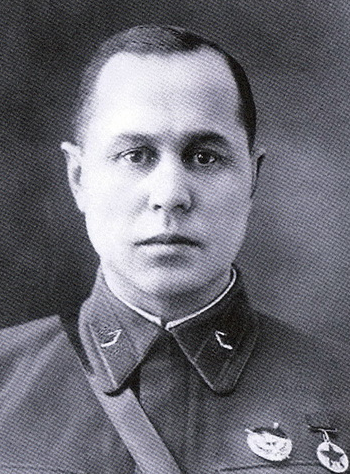
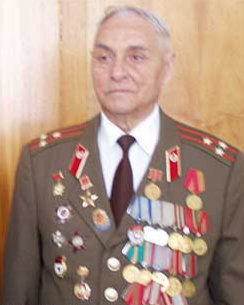
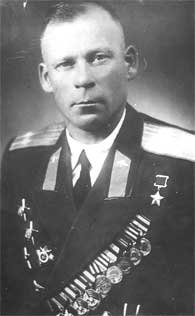
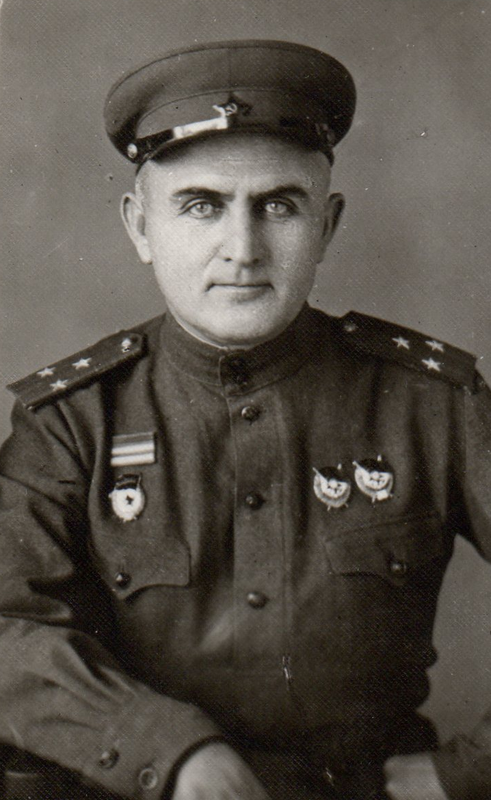
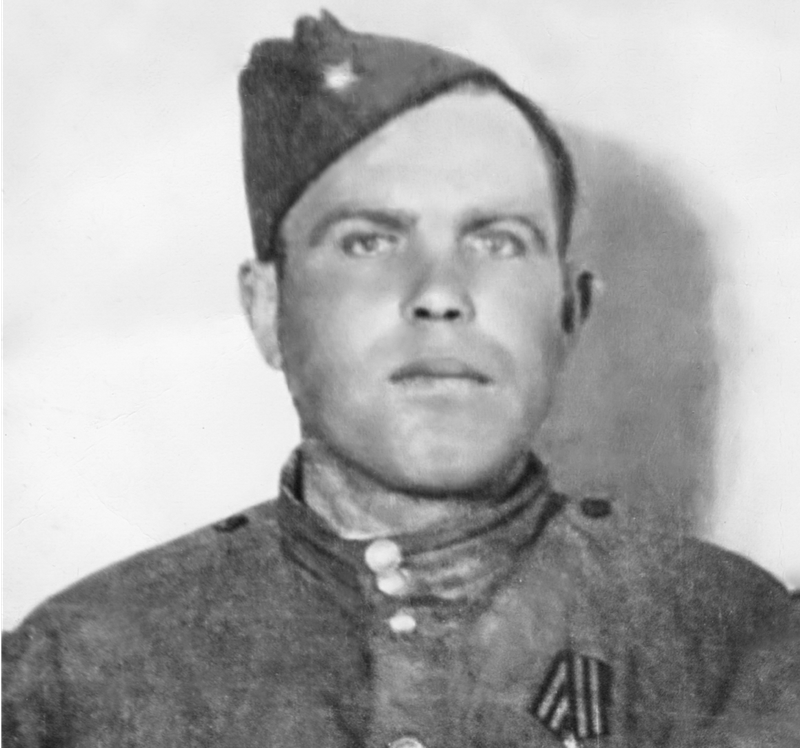
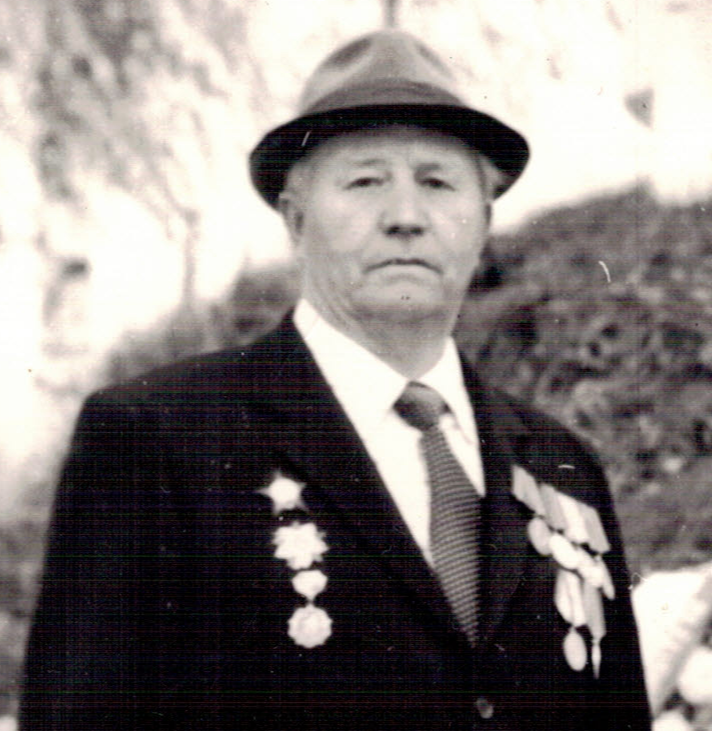
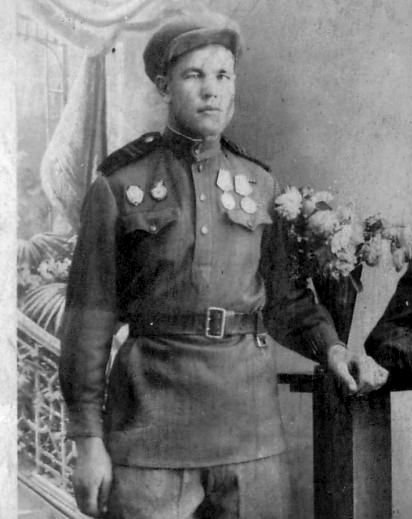
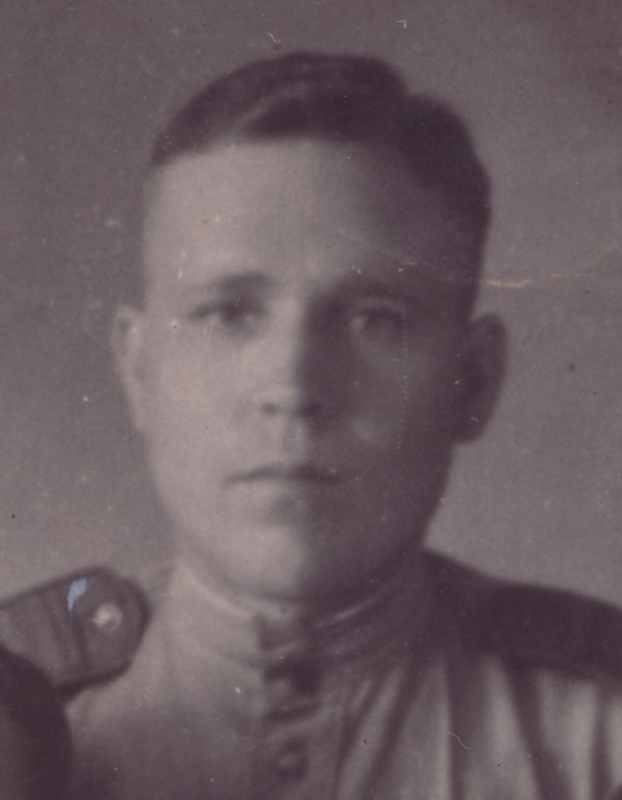
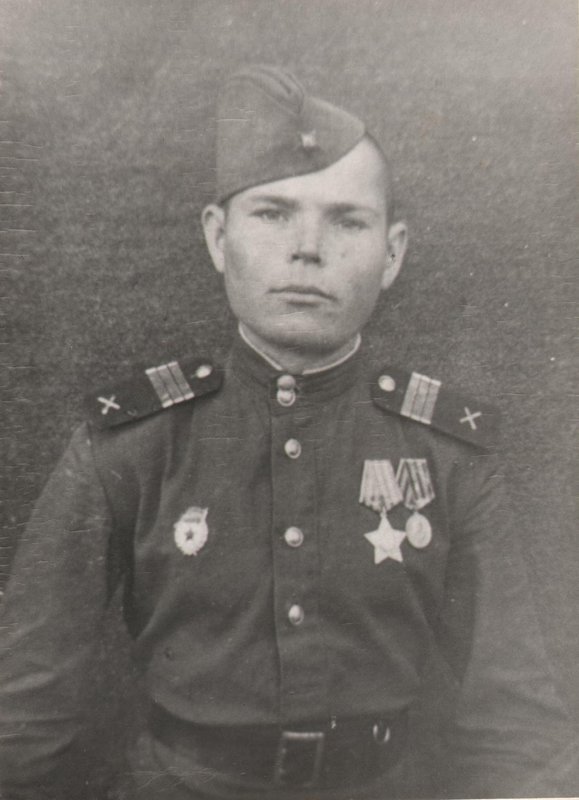
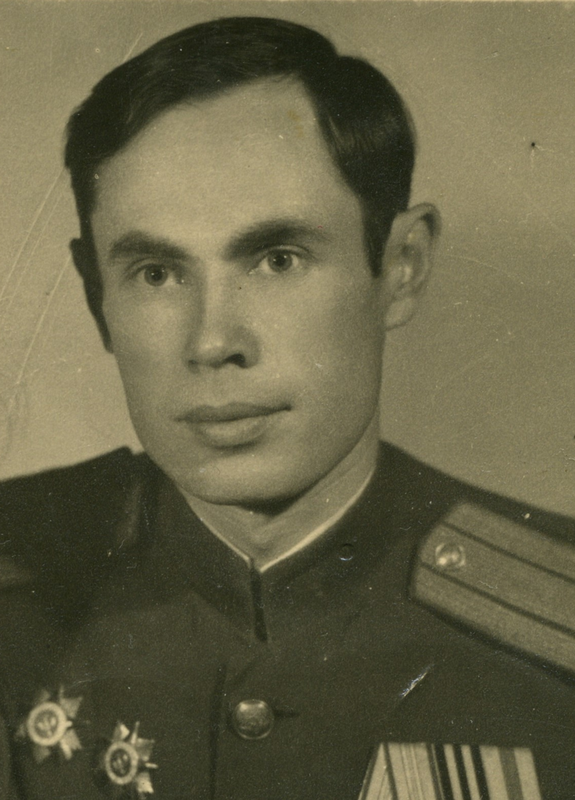
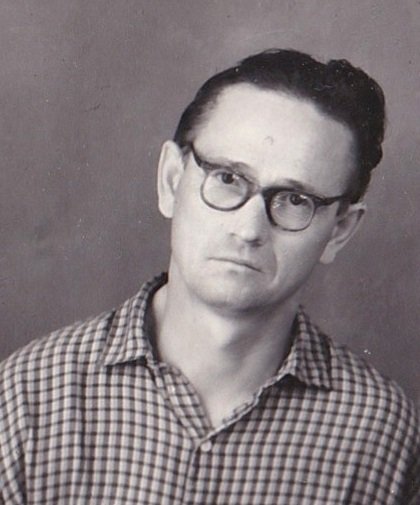
Derevyanko Semyon Mikhailovich
Derevyanko Semyon Mikhailovich
Rank: Red army soldier Type of troops: Armored and mechanized troops Division: 1 tank red banner division war Veteran retired Colonel. He was born into a poor peasant family. In 1912, Semyon's parents Mikhail Filippovich and Maria Minaevna moved from the village of Takhty in the Stavropol territory to the village of Irinovka in Kazakhstan, where they lived and worked all their lives, acquiring a second homeland. After finishing primary school in Irinovka, young Senya entered and attended high school in the district center of Urjar. In connection with the shortage of teachers, the education Department of the district appointed a 10-grader Seeds Derevyanko, like student learning, teacher, place middle school, and two years later head of the educational part of the irinovskaya school. At the same time, a young teacher Derevyanko Sm, along with adult farmers, worked in Irinovka in the collective farm "New life". In January 1941, an 18-year-old boy was drafted into the Red Army by the Urdzhar district military Commissariat of the Semipalatinsk region and enlisted as a red army soldier in the 49th tank brigade in the city of Stanislav in Ukraine. As a young, educated, grasping and agile red army tankman, Semyon Mikhailovich Derevyanko quickly mastered the Suvorov "science of winning", comprehended the formidable technique-the tank, its weapons, so as to hit the enemy without a miss, and in the simplicity of his soul helped his fellow comrades in mastering the tactical and technical data of the tank. Here, in this city, he was caught by the war with Nazi Germany, which turned and crossed out all his plans and dreams, changed the fate of a person. In August 1941, the command of the tank brigade sent a tankman Sm. Derevyanko, as an excellent student of combat training in the military officer school in Nizhny Novgorod (Gorky city), where for about a year he studied at the radio Telegraph Department. But, shortly before the end of the accelerated course of training, in 1942, cadet Derevyanko was seconded to the Kalinin front, where he fought as part of the 1st guards tank brigade under the command of the famous major General of the tank forces M. E. Katukov. Young red army tankman Semyon Derevyanko in 1942, while on the Kalinin front, learned a lot from the guards, especially in the battles near the city of Bely, where there were fierce battles with Hitler's troops. This combat experience was useful to him in further battles to beat the enemy in the guards, especially on the Kursk bulge. In 1941-1942, after the expulsion of the Nazis from the territory of the Kalinin and Moscow regions, in January-February 1943, the 1st tank army was formed, which included the 64th tank brigade, where Semyon Derevyanko served. - The tank army arrived at the Kursk bulge, - tankman Derevyanko recalls, - from the reserve of the Supreme high command headquarters from the North-West near Kursk, where it was located on the Psel river in the second echelon after the 6th guards army of General I. M. Chistyakov, as part of the Voronezh front. The 1st tank army was assigned a combat task by the higher command: to defeat the advancing German-fascist troops in the Belgorod direction. As expected, early in the morning on July 5, 1943, the enemy launched an offensive on the Kursk bulge according to the "Citadel" plan. Against the 6th guards army and the 1st tank army in our defense zone, the 48th tank corps under the command of the experienced and treacherous General Manstein led the offensive. "For ten days and nights, our 64th tank brigade, like the entire tank army," recalls S. M. Derevyanko, " fought fierce, persistent defensive battles with a powerful strong enemy. But I especially remember the tank battles in the area of the city of Yakovlevo in the Kursk (now Belgorod) region, where literally there were duels between our and German tanks at close range. Tanks were ablaze from shell bursts, and the ground was on fire. The sky was black, the clanking of tank tracks and the roar of shells made the tankmen deaf, but they, despising death, bravely fought for their Homeland, defending every inch of their land. — The complexity of tank battles was also in the fact, - adds the brave tankman Semyon Derevyanko, - that the Nazis used new tanks "Tigers" and "Panthers", which had powerful armor and weapons. For example, the Tiger tank had 80 mm armor, and 100 mm in the frontal part, and was armed with an 88 mm gun that could penetrate the armor of the main Soviet tanks. Our tank shells did not penetrate the armor of German tanks, so we had to shoot only sub-caliber shells, and they were extremely lacking, since our industry was just mastering the production of these shells. However, our tankers managed to get into the vulnerable places of German tanks, through the viewing slots and at close range to disable them. And only on July 16, our troops forced the enemy to go on the defensive in stubborn battles. After a short respite, a tankman from Kazakhstan of the 64th tank brigade of the 1st tank army, Semyon Derevyanko, bravely fought the enemy for almost the entire month of July, knocked out two German tanks, and completed his combat mission. For bravery, fortitude and skill in the battle of Yakovlev, the command of the 64th tank brigade awarded S. M. Derevyanko the military rank of senior Sergeant and awarded him the medal "for bravery". "This was my first and therefore my most expensive award," he said. A great and memorable event in the life of a front-line tankman S. M. Derevyanko was his meeting 30 years later with the citizens of the city of Yakovlevo, which he was liberating from the Nazis. This meeting of tankmen of the 64th tank brigade resulted in a big and joyful city holiday of citizens and their liberators, which had a great educational value for the younger generation. Semyon Mikhailovich was invited to this meeting by the former commander of the 64th tank brigade, twice Hero of the Soviet Union, retired Colonel I. N. Boyko, whose Derevyanko was the head of the radio station. There was no end to their joy. At this exciting, unforgettable meeting, he also met and talked for the first time in 30 years with his fellow soldier in the brigade I. T. Efremov, with whom they fought together on the Kursk bulge, and then, without parting, reached Berlin, experiencing the bitterness of defeats and the joy of victories. The battle of Kursk did not end with a battle biography for the tankman S. M. Derevyanko, he and his glorious 64 tank brigade and 1 tank army, which in subsequent operations served as a sword that cut through the enemy's grouping, passed the battle path from the Kursk salient to Berlin, where he signed on the Reichstag! As part of the 1st Ukrainian front (former Voronezh), combat tankman S. Derevyanko liberated the cities of Kharkiv, Vinnytsia, Zhytomyr, Chertkov, Chernivtsi, crossed the Dniester, bug, San, Vistula rivers, participated in the battles on the Sandomierz bridgehead, stormed the Seelow heights in Germany. For successful battles with Hitler's troops, the 1st tank army was renamed the 1st guards tank army on April 25, 1944, which has a certain contribution from our countryman-Kazakhstani S. M. Derevyanko. "Once to my tank crew," S. M. recalls. Derevyanko — - the command set a combat task: to force the Dniester river under water, to break in from the North of the railway station of Chernivtsi, to seize a bridgehead, to take control of the station and prevent the departure of German echelons with equipment and people to the West. A brigade and a tank army followed the crew across the river. The assigned combat task for the crew was completed successfully. For this feat, Semyon Derevyanko was awarded the order of the red Star by the command of the 64th tank brigade and appointed commander of a tank platoon. And here is how the city of Chertkov in the Ternopil region was liberated, says S. Derevyanko: "at dawn on March 23, 1944, our 64th tank brigade suddenly approached the city for the enemy, rapidly attacked the fascists so that they did not even understand where such a breakthrough of the tankers came from. As a result of a short but fierce battle with the enemy, the city of Chertkov was liberated from the Nazis. Citizens warmly and cordially thanked the tankers for their liberation from German slavery." In 1976, war veteran Semyon Mikhailovich Derevyanko was lucky enough to attend a meeting of war veterans with the residents of this city. — With what great joy, - recalls Semyon Mikhailovich, - the war veterans saw the huge changes that took place on the liberated Ukrainian land: many new buildings were built: residential buildings, hospitals, schools, kindergartens, cultural centers, cinemas… War veterans visited factories, construction sites, fields of the Progress collective farm, and livestock farms. And everywhere they were welcomed as relatives. Especially exciting were the meetings of the tank driver-teacher with school students, to whom he told about the war, about the exploits of the front-line soldiers. Victory day — may 9, 1945 - the commander of the guard company, senior Lieutenant S. M. Derevyanko, met in the defeated Berlin for treatment in the sanitary part of the brigade after two wounds in the battles for Berlin. In the battle for the capture of Berlin guards senior Lieutenant S. M. Derevyanko was awarded the medal "for military merit", the certificate of command of the 1st guards tank army and received a commendation from the Supreme Commander of the country. Almaty section of participants in the assault and capture of Berlin, where Sm. Derevyanko, annually celebrates may 2 as the day of the capture of Berlin, as a great celebration of the Victory of our troops and as a tribute to the memory of fallen soldiers in the fight against Nazi Germany. In December 1945, tank officer S. M. Derevyanko was discharged from the army as a specialist teacher and returned to his native village of Irinovka in the Semipalatinsk region. Already in March 1946, he was appointed head teacher of the irinovskaya secondary school, and in 1948 became its Director. When in 1957 he became the headmaster of Urjar secondary school, he also showed a positive side in this field. On the recommendation of the Ministry of education of the Kazakh Soviet Socialist Republic, Semyon Derevyanko was transferred to Alma-ATA in 1971 and appointed Director of secondary school No. 52. At this school, he worked as a principal for about thirty years. Semyon Mikhailovich has a total teaching experience of more than 60 years. That's really someone to take an example from. It is characteristic that S. M. Derevyanko not only taught and educated the younger generation, but also studied himself. In 1952, he successfully graduated from the pedagogical Institute, and in 1954 from the Kazakh State University on-the-job. He also constantly worked on himself in order to keep up with the modern requirements of pedagogy, to be above his subordinates in order to successfully lead the school team. S. M. Derevyanko was awarded the order of the red banner of Labor for many years of conscientious work and skilful upbringing of the young generation. Is it a worthy addition to the three medals and 18 medals. Semyon Mikhailovich has the title of Honorary teacher of the Kazakh Soviet Socialist Republic school and was awarded a diploma Of the Supreme Council of the Kazakh Soviet Socialist Republic and a diploma of an Honorary citizen of Almaty.