Back to
album
album
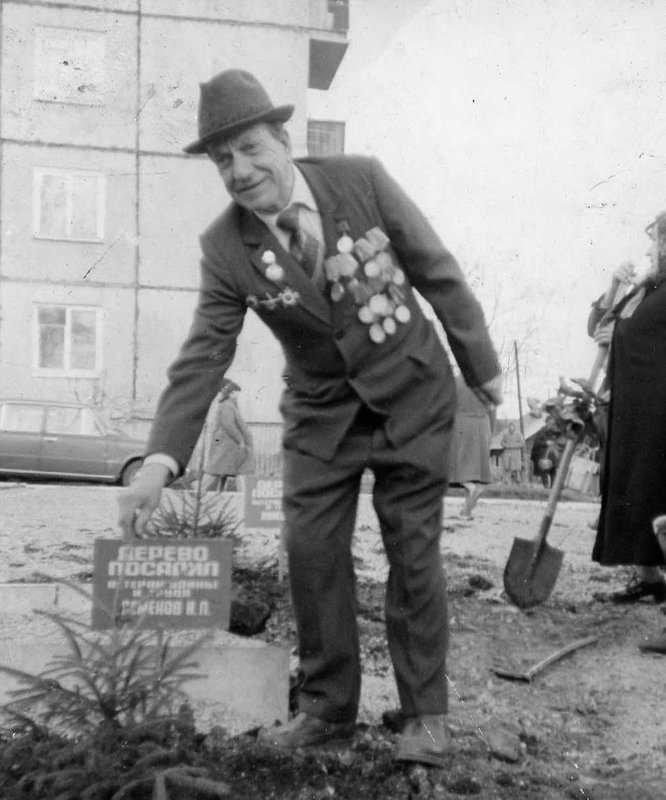
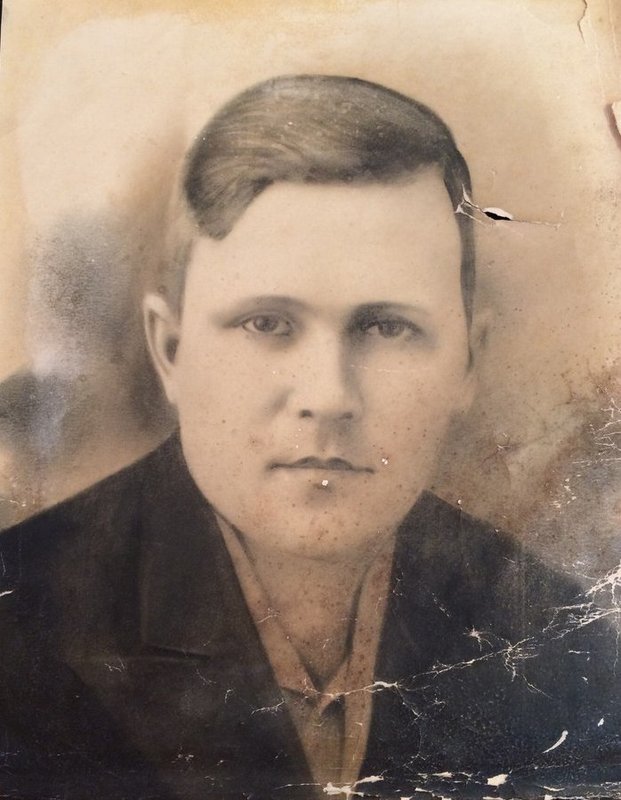
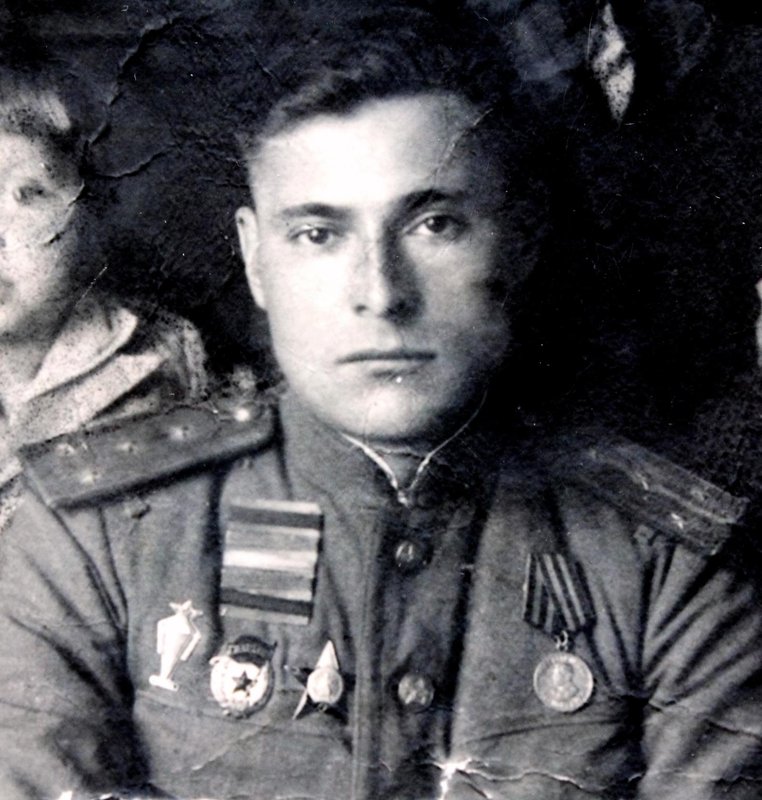

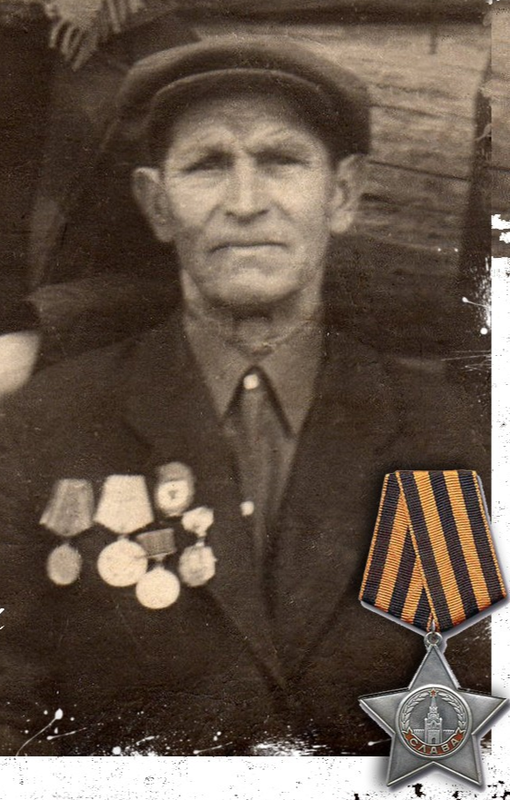
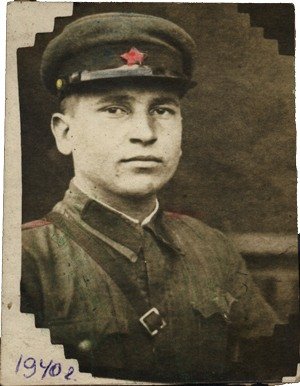
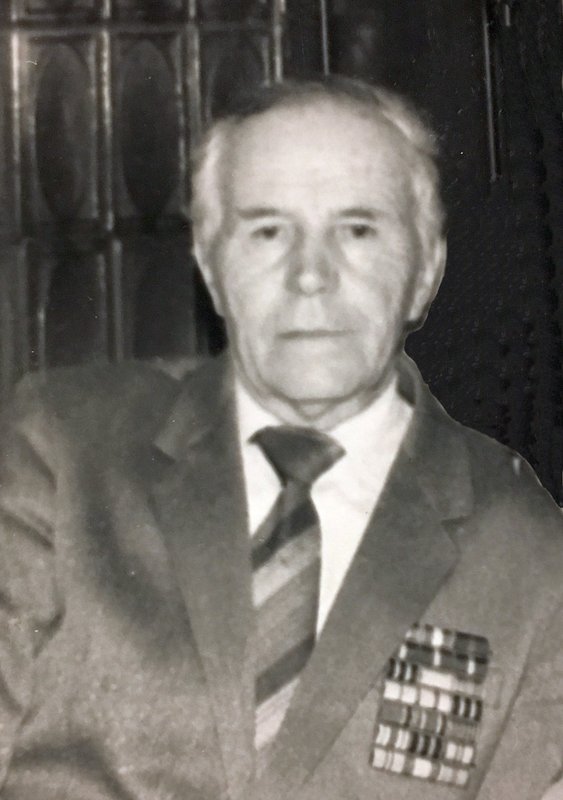
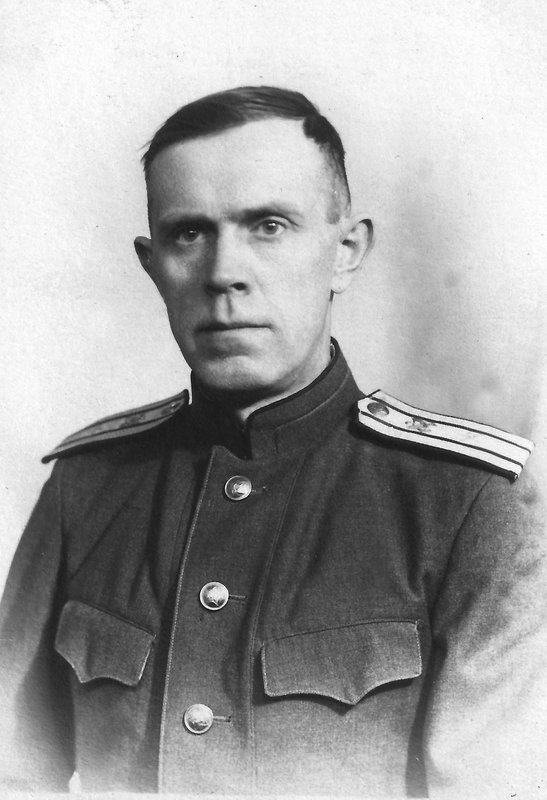
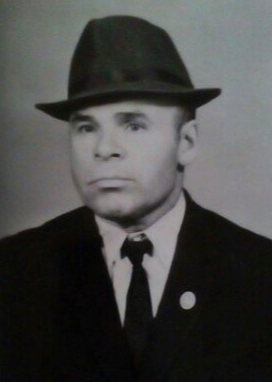
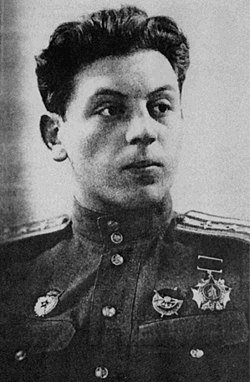
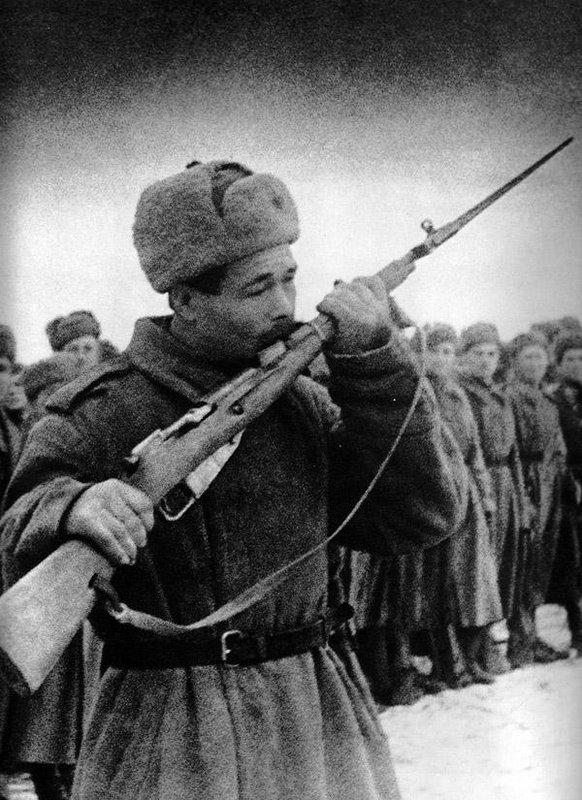
Tolstov Valentin Vasilievich
My grandfather was born in 1918 in the village of Filippovka, Utevsky district, Kuibyshev Region in a peasant family. He loved to study, was a competent specialist. Before the army he worked as a kolkhoz Accountant, head of the village club and secretary of the village council. In January 1940, he was drafted into the Red Army. The place of service was 209 Corps Artillery Regiment, the headquarters of the 3rd Division, where Tolstov Valentin acted as a Senior Clerk, having the rank of Sergeant. The Regiment was in the village Shklo, Yavorsky district of Lviv Region, near the border with Poland. The regiment was armed with 122-mm and 152-mm howitzers, had double staff, 1999 personnel. At first, the guns were only horse-drawn, but then diesel ChTZ and GAZ vehicles arrived. The regiment had 4 divisions, each with four four-gun batteries. 209 Artillery Regiment until 06/22/1941 was part of the 6th SK (Rifle Corps) of the 6th Army of the Ukrainian Military District; from 06/22/1941 as part of the 6th SK (Rifle Corps) of the 6th Army of the South-Western Front. Factually, during all of 1940, there was practically no military and political preparation, as there was simply no time for this. On this site, the construction of military camps and a fortified area began. _x000D_
The defensive line stretched for almost 50 km. Construction was carried out very intensively and all available forces were involved. In the midst of construction work, the Division was visited by the People's Commissar of Defense Marshal of the Soviet Union S.K. Timoshenko, who checked and assessed military and political training without any discounts for employment in construction. Combat training had to be done in an emergency, so as not to lose face. Since the spring of 1941, the 41st Division was already in better conditions. The divisional camp was basically built and equipped, which ensured the normal deployment of troops and the deployment of combat training. In addition to the ongoing arrangement and construction, there were other difficulties. _x000D_
The situation in Western Ukraine was very tense. There were cases when the Red Army soldiers disappeared or servicemen were killed at the hands of Ukrainian nationalists. The commanding staff were allowed to move only accompanied by orderlies. Towards the beginning of the war, the area was increasingly saturated with various saboteurs and spies. _x000D_
With the beginning of the summer of 1941, rumors began to circulate about the imminent start of the war. The Germans, not really hiding, concentrated serious forces near the borders. Intelligence was carried out constantly. Small aircraft of the "Shtorkh" type in the open appeared over the area of the Division, and then deepened in the direction of Lvov. The corps and Division commanders received strict instructions from above, which basically boiled down to not causing any inappropriate actions to conflict on the border located not far from the border, live-fire exercises in order to avoid accidental shots towards the Germans. _x000D_
Moreover, it was forbidden to open fire on planes with German identification marks, even if they violate the state border and appear in the airspace over our territory. The Regiment had its share of military repressions. In the spring of 1941, the Commander of the Regiment, Major Koryakin, and the commissar of the Regiment, Major Bilakhodze, were repressed on a false denunciation. _x000D_
At the beginning of June 1941, my grandfather's regiment left the camps for an artillery training session. _x000D_
As you know, on June 14, 1941, a week before the war, the well-known TASS report was published, denying the possibility of a German attack on the Soviet Union. The main forces were at training camps and training grounds. Despite it, two days before the war, the Division Commander, Major General N.G. Mikushev ordered the unit commanders to return all personnel from special training camps and training grounds, as well as from work on the defensive line and completely concentrate in the camps. _x000D_
This decision, in the future, allowed not only to save many lives, material and technical base, but also to hold the fortified area for a relatively long time. Whether this decision was a personal initiative or not, we will never know, so General Mikushev died near Kiev in the same year._x000D_
On June 22, the Division's forces managed to occupy pillboxes, including those that were not completed. On the same day, the 209 cap entered the order of the 41st Division and took up a firing position near Rava-Russkaya. It was this circumstance that greatly contributed to the success of the division. _x000D_
After a while, my grandfather became the gunner of a 152-mm howitzer and took on his first battle. The 209th Artillery Regiment, was the only one of 28 Artillery regiments of the RGK located in our border district, which managed to fully turn around for battle. According to grandfather's recollections, the first battle took place near the village of Shklo. He was assigned as the 152mm howitzer gunner. According to the General Staff's plan, the 41st Infantry Division of the 6th Army KOVO, together with the 209 cap, was located southeast of Sedlisk and defended the legendary Rava-Russian fortified area. This fortified area was held for a long time and only by June 29 the front of the 6th Army retreated to the western outskirts of Lvov. The state of the main forces of the army was deplorable. There was almost no support from the aviation, there were problems with supplies, and the evacuation of the wounded. Losses in manpower and equipment were very large. On the night of June 29-30, the enemy captured Lvov and the 6th Army as a whole and the 41st SD retreated towards Dubno White church. (July 1941). _x000D_
Since July 1941, the 6th Army's main problem was the threat of encirclement. By the morning of 5.7.41, the forces of the 6th Army were to withdraw to the Ostrug, Cape Lanovce, Volochisk line with the combat mission of occupying and firmly defending Izyaslavsky and Starokonstantinovsky fortified areas. Thus, the 6th Army continued its retreat to the east. Enemy forces tried to drive a wedge into the 6th Army and encircle the Soviet forces. The fighting was fierce. There is no information about 41 SD and about the 6th SC for this period. _x000D_
On July 10, the main forces of the 6th Army fought for Berdichev. On July 15, the enemy occupied Belaya Tserkov. It is known that on 12.07 it was withdrawn to the reserve and replenished in the area of Belaya Tserkov, and from 14.07 they began combat actions in the area of Belaya Tserkov. In battles for town Belaya Tserkov Valentin Tolstov was wounded and shell-shocked, but later returned to service. The 6th Army was part of the South Front. From 28.07.41. 209 regiment was part of the 26th Army of the SWF. Defense of the Dnieper. _x000D_
Since August 1941, 209 Artillery Regiment (as part of the 26th Army) defended the river Dnieper near the city of Kanev. Directly the 3rd Division of 209 Artillery Regiment was located near the station Zolotonoshi. Throughout the month, the forces of the 26th army fought hard defensive battles to protect the Kiev fortified area in the Kanev Region.The enemy was preparing a breakthrough in the Kremenchug area and to the north (between Kiev and Chernigov) of the Kanev foot strong. According to the memoirs of V.V. Tolstoy : “It was calm for five days, and then the fighting began. The few guns of the 209 Artillery Regiment were already hitting the east ... "._x000D_
Most likely, what is described can be dated to the beginning of September Kiev entrapment (end of August—September 1941). It is known that from the middle of August reconnaissance operations took place on this foot strong, no large-scale hostilities were conducted. The enemy was preparing a breakthrough in the Kremenchug area and to the north (between Kiev and Chernigov) of the Kanev footstrong. There is no exact information about the second half of August and the beginning of September, but it is known that from September 10 to 26, the process of encircling and destroying the forces of the 26th Army in the "Kiev Cauldron" took place. 26th Army fought fierce battles and tried first to hold the foot strong, and later to break out of the encirclement. _x000D_
From September 16 to September 20, the troops of the 26th Army were dismembered into Separate centers. 209 Artillery Regiment, apparently, was 20-30 km from Zolotonosha. From September 17, according to the order, the forces of the 26th Army concentrated their attack in the Lubna area. According to some documents, the forces of 209 Artillery Regiment tried to break through in the Orzhitsy area. _x000D_
According to the memoirs of V.V. Tolstoy : “209 Artillery Regiment was completely surrounded and tried to break out of the encirclement for 3 days. On the third day, an order followed: to blow up the guns, to burn the materiel. " Most likely, these events took place in the first half of September. _x000D_
_x000D_
When leaving the encirclement near the station Lubny Valentin Tolstov was wounded in the arm and taken prisoner. The most probable date of the capture is September 23-24. A more accurate place of capture is near the village of Denisovka (not far from Lubna). It is known that 209 Artillery Regiment was completely destroyed in the Kiev entrapment in the structure of the 26th Army and on 10/28/41 was excluded from the lists of the Red Army._x000D_
Before reaching Kremenchug Valentin Tolstov fled from a column of prisoners of war. He was hiding in the village of Domantovo, Zolotonosha district, Kiev Region, in the Pashchenko family (Alexey Vasilyevich, Maria Petrovna and their daughter Vera). Local policeman, Austrian Valyukh, discovered V.V. Tolstov. and handed him over to the Germans. Tolstov was sent to the station Zolotonosha, but again fled from the column to the village of Domantovo in the family to Pashchenko. On the way to Domantovo Valentin fell ill with croupous pneumonia. The Pashchenko family diligently nursed V.V. Tolstov. hiding at home, but the same policeman discovered a Soviet soldier. The policeman was going to shoot V.V. Tolstov. in Pashchenko's house, but Maria Petrovna Pashchenko persuaded not to do it for a bottle of vodka. Alexey Vasilievich Paschenko gave a receipt stating that V.V. Tolstov having recovered will not "run away". _x000D_
After 2 months of illness Tolstov V.V. was sent to the station Zolotonosha and from there on a train with prisoners of war to Germany. _x000D_
Concentration camp. There he was placed first in a concentration camp near Essen (the exact name of the camp is unknown), then near Dusseldorf (Stalag 326 (VI-K). According to V.V. Tolstov's memoirs, he was in the infirmary camp, where besides the Soviet prisoners of war, there were British, Americans and Germans in the camp. _x000D_
In the camp, VV Tolstov made rings, bracelets, which he exchanged with other prisoners for bread. According to his recollections, the bracelet "cost" 3-4 loaves, a ring—2 loaves. Tolstov V.V. recalled that his surname he was "rescued" because of his last name associated with the Great Noble Russian writer Leo Tolstoy. So in Dusseldorf one of the guards took him to the city to repair his apartment. There he said that the camp authorities and guards knew him not only "as a master jeweler ", but they also believe that he has a" distant belonging "to the" offspring of Count Tolstoy. "Perhaps this fact saved Tolstov V.V.'s life though his last name had nothing with the Count Tolstoy. _x000D_
In April 1945, a mutiny was raised in the camp. Some of the guards had chosen a side of prisoners and arrested the Commandant. Some hours later after the self-liberation of the camp, regular units of the allied American army arrived. _x000D_
Return. All Soviet prisoners of war from the camps around Dusseldorf were grouped and repatriated to the location of Soviet troops stationed along the banks of the Elbe River. _x000D_
In Regiment No. 326 Tolstov V.V. passed a medical examination and interrogation by the NKVD. For health reasons Tolstov V.V. was demobilized from the ranks of the Red Army with deregistration. (certificate of exemption from military service No. 100, which indicates that V.V. Tolstov was examined by a commission at 326 assembly and dispatch depot on November 14, 1945). _x000D_
After the war he worked in the agricultural management structures of the Stavropol district of the Kuibyshev Region as an economist and Accountant. Tolstov V.V. passed away on April 23, 1984 in the city of Togliatti.
Tolstov Valentin Vasilievich
My grandfather was born in 1918 in the village of Filippovka, Utevsky district, Kuibyshev Region in a peasant family. He loved to study, was a competent specialist. Before the army he worked as a kolkhoz Accountant, head of the village club and secretary of the village council. In January 1940, he was drafted into the Red Army. The place of service was 209 Corps Artillery Regiment, the headquarters of the 3rd Division, where Tolstov Valentin acted as a Senior Clerk, having the rank of Sergeant. The Regiment was in the village Shklo, Yavorsky district of Lviv Region, near the border with Poland. The regiment was armed with 122-mm and 152-mm howitzers, had double staff, 1999 personnel. At first, the guns were only horse-drawn, but then diesel ChTZ and GAZ vehicles arrived. The regiment had 4 divisions, each with four four-gun batteries. 209 Artillery Regiment until 06/22/1941 was part of the 6th SK (Rifle Corps) of the 6th Army of the Ukrainian Military District; from 06/22/1941 as part of the 6th SK (Rifle Corps) of the 6th Army of the South-Western Front. Factually, during all of 1940, there was practically no military and political preparation, as there was simply no time for this. On this site, the construction of military camps and a fortified area began. _x000D_
The defensive line stretched for almost 50 km. Construction was carried out very intensively and all available forces were involved. In the midst of construction work, the Division was visited by the People's Commissar of Defense Marshal of the Soviet Union S.K. Timoshenko, who checked and assessed military and political training without any discounts for employment in construction. Combat training had to be done in an emergency, so as not to lose face. Since the spring of 1941, the 41st Division was already in better conditions. The divisional camp was basically built and equipped, which ensured the normal deployment of troops and the deployment of combat training. In addition to the ongoing arrangement and construction, there were other difficulties. _x000D_
The situation in Western Ukraine was very tense. There were cases when the Red Army soldiers disappeared or servicemen were killed at the hands of Ukrainian nationalists. The commanding staff were allowed to move only accompanied by orderlies. Towards the beginning of the war, the area was increasingly saturated with various saboteurs and spies. _x000D_
With the beginning of the summer of 1941, rumors began to circulate about the imminent start of the war. The Germans, not really hiding, concentrated serious forces near the borders. Intelligence was carried out constantly. Small aircraft of the "Shtorkh" type in the open appeared over the area of the Division, and then deepened in the direction of Lvov. The corps and Division commanders received strict instructions from above, which basically boiled down to not causing any inappropriate actions to conflict on the border located not far from the border, live-fire exercises in order to avoid accidental shots towards the Germans. _x000D_
Moreover, it was forbidden to open fire on planes with German identification marks, even if they violate the state border and appear in the airspace over our territory. The Regiment had its share of military repressions. In the spring of 1941, the Commander of the Regiment, Major Koryakin, and the commissar of the Regiment, Major Bilakhodze, were repressed on a false denunciation. _x000D_
At the beginning of June 1941, my grandfather's regiment left the camps for an artillery training session. _x000D_
As you know, on June 14, 1941, a week before the war, the well-known TASS report was published, denying the possibility of a German attack on the Soviet Union. The main forces were at training camps and training grounds. Despite it, two days before the war, the Division Commander, Major General N.G. Mikushev ordered the unit commanders to return all personnel from special training camps and training grounds, as well as from work on the defensive line and completely concentrate in the camps. _x000D_
This decision, in the future, allowed not only to save many lives, material and technical base, but also to hold the fortified area for a relatively long time. Whether this decision was a personal initiative or not, we will never know, so General Mikushev died near Kiev in the same year._x000D_
On June 22, the Division's forces managed to occupy pillboxes, including those that were not completed. On the same day, the 209 cap entered the order of the 41st Division and took up a firing position near Rava-Russkaya. It was this circumstance that greatly contributed to the success of the division. _x000D_
After a while, my grandfather became the gunner of a 152-mm howitzer and took on his first battle. The 209th Artillery Regiment, was the only one of 28 Artillery regiments of the RGK located in our border district, which managed to fully turn around for battle. According to grandfather's recollections, the first battle took place near the village of Shklo. He was assigned as the 152mm howitzer gunner. According to the General Staff's plan, the 41st Infantry Division of the 6th Army KOVO, together with the 209 cap, was located southeast of Sedlisk and defended the legendary Rava-Russian fortified area. This fortified area was held for a long time and only by June 29 the front of the 6th Army retreated to the western outskirts of Lvov. The state of the main forces of the army was deplorable. There was almost no support from the aviation, there were problems with supplies, and the evacuation of the wounded. Losses in manpower and equipment were very large. On the night of June 29-30, the enemy captured Lvov and the 6th Army as a whole and the 41st SD retreated towards Dubno White church. (July 1941). _x000D_
Since July 1941, the 6th Army's main problem was the threat of encirclement. By the morning of 5.7.41, the forces of the 6th Army were to withdraw to the Ostrug, Cape Lanovce, Volochisk line with the combat mission of occupying and firmly defending Izyaslavsky and Starokonstantinovsky fortified areas. Thus, the 6th Army continued its retreat to the east. Enemy forces tried to drive a wedge into the 6th Army and encircle the Soviet forces. The fighting was fierce. There is no information about 41 SD and about the 6th SC for this period. _x000D_
On July 10, the main forces of the 6th Army fought for Berdichev. On July 15, the enemy occupied Belaya Tserkov. It is known that on 12.07 it was withdrawn to the reserve and replenished in the area of Belaya Tserkov, and from 14.07 they began combat actions in the area of Belaya Tserkov. In battles for town Belaya Tserkov Valentin Tolstov was wounded and shell-shocked, but later returned to service. The 6th Army was part of the South Front. From 28.07.41. 209 regiment was part of the 26th Army of the SWF. Defense of the Dnieper. _x000D_
Since August 1941, 209 Artillery Regiment (as part of the 26th Army) defended the river Dnieper near the city of Kanev. Directly the 3rd Division of 209 Artillery Regiment was located near the station Zolotonoshi. Throughout the month, the forces of the 26th army fought hard defensive battles to protect the Kiev fortified area in the Kanev Region.The enemy was preparing a breakthrough in the Kremenchug area and to the north (between Kiev and Chernigov) of the Kanev foot strong. According to the memoirs of V.V. Tolstoy : “It was calm for five days, and then the fighting began. The few guns of the 209 Artillery Regiment were already hitting the east ... "._x000D_
Most likely, what is described can be dated to the beginning of September Kiev entrapment (end of August—September 1941). It is known that from the middle of August reconnaissance operations took place on this foot strong, no large-scale hostilities were conducted. The enemy was preparing a breakthrough in the Kremenchug area and to the north (between Kiev and Chernigov) of the Kanev footstrong. There is no exact information about the second half of August and the beginning of September, but it is known that from September 10 to 26, the process of encircling and destroying the forces of the 26th Army in the "Kiev Cauldron" took place. 26th Army fought fierce battles and tried first to hold the foot strong, and later to break out of the encirclement. _x000D_
From September 16 to September 20, the troops of the 26th Army were dismembered into Separate centers. 209 Artillery Regiment, apparently, was 20-30 km from Zolotonosha. From September 17, according to the order, the forces of the 26th Army concentrated their attack in the Lubna area. According to some documents, the forces of 209 Artillery Regiment tried to break through in the Orzhitsy area. _x000D_
According to the memoirs of V.V. Tolstoy : “209 Artillery Regiment was completely surrounded and tried to break out of the encirclement for 3 days. On the third day, an order followed: to blow up the guns, to burn the materiel. " Most likely, these events took place in the first half of September. _x000D_
_x000D_
When leaving the encirclement near the station Lubny Valentin Tolstov was wounded in the arm and taken prisoner. The most probable date of the capture is September 23-24. A more accurate place of capture is near the village of Denisovka (not far from Lubna). It is known that 209 Artillery Regiment was completely destroyed in the Kiev entrapment in the structure of the 26th Army and on 10/28/41 was excluded from the lists of the Red Army._x000D_
Before reaching Kremenchug Valentin Tolstov fled from a column of prisoners of war. He was hiding in the village of Domantovo, Zolotonosha district, Kiev Region, in the Pashchenko family (Alexey Vasilyevich, Maria Petrovna and their daughter Vera). Local policeman, Austrian Valyukh, discovered V.V. Tolstov. and handed him over to the Germans. Tolstov was sent to the station Zolotonosha, but again fled from the column to the village of Domantovo in the family to Pashchenko. On the way to Domantovo Valentin fell ill with croupous pneumonia. The Pashchenko family diligently nursed V.V. Tolstov. hiding at home, but the same policeman discovered a Soviet soldier. The policeman was going to shoot V.V. Tolstov. in Pashchenko's house, but Maria Petrovna Pashchenko persuaded not to do it for a bottle of vodka. Alexey Vasilievich Paschenko gave a receipt stating that V.V. Tolstov having recovered will not "run away". _x000D_
After 2 months of illness Tolstov V.V. was sent to the station Zolotonosha and from there on a train with prisoners of war to Germany. _x000D_
Concentration camp. There he was placed first in a concentration camp near Essen (the exact name of the camp is unknown), then near Dusseldorf (Stalag 326 (VI-K). According to V.V. Tolstov's memoirs, he was in the infirmary camp, where besides the Soviet prisoners of war, there were British, Americans and Germans in the camp. _x000D_
In the camp, VV Tolstov made rings, bracelets, which he exchanged with other prisoners for bread. According to his recollections, the bracelet "cost" 3-4 loaves, a ring—2 loaves. Tolstov V.V. recalled that his surname he was "rescued" because of his last name associated with the Great Noble Russian writer Leo Tolstoy. So in Dusseldorf one of the guards took him to the city to repair his apartment. There he said that the camp authorities and guards knew him not only "as a master jeweler ", but they also believe that he has a" distant belonging "to the" offspring of Count Tolstoy. "Perhaps this fact saved Tolstov V.V.'s life though his last name had nothing with the Count Tolstoy. _x000D_
In April 1945, a mutiny was raised in the camp. Some of the guards had chosen a side of prisoners and arrested the Commandant. Some hours later after the self-liberation of the camp, regular units of the allied American army arrived. _x000D_
Return. All Soviet prisoners of war from the camps around Dusseldorf were grouped and repatriated to the location of Soviet troops stationed along the banks of the Elbe River. _x000D_
In Regiment No. 326 Tolstov V.V. passed a medical examination and interrogation by the NKVD. For health reasons Tolstov V.V. was demobilized from the ranks of the Red Army with deregistration. (certificate of exemption from military service No. 100, which indicates that V.V. Tolstov was examined by a commission at 326 assembly and dispatch depot on November 14, 1945). _x000D_
After the war he worked in the agricultural management structures of the Stavropol district of the Kuibyshev Region as an economist and Accountant. Tolstov V.V. passed away on April 23, 1984 in the city of Togliatti.
0 comment



2026 © Russian Military Historical Society Developed by Jetmix