Back to
album
album
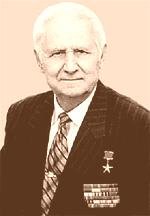
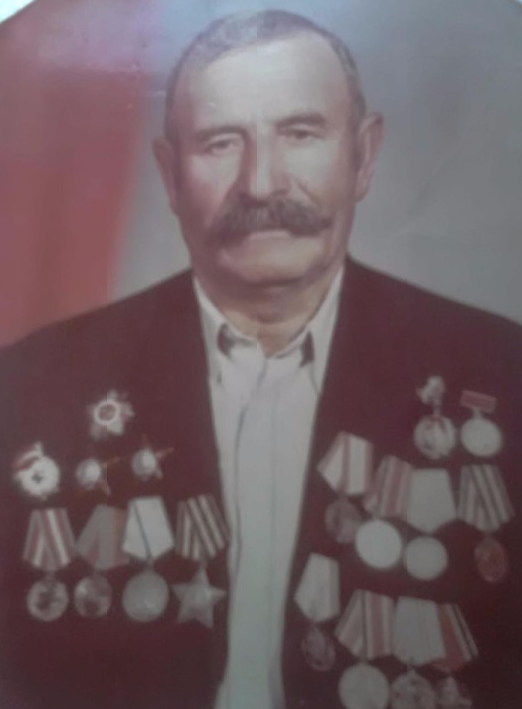
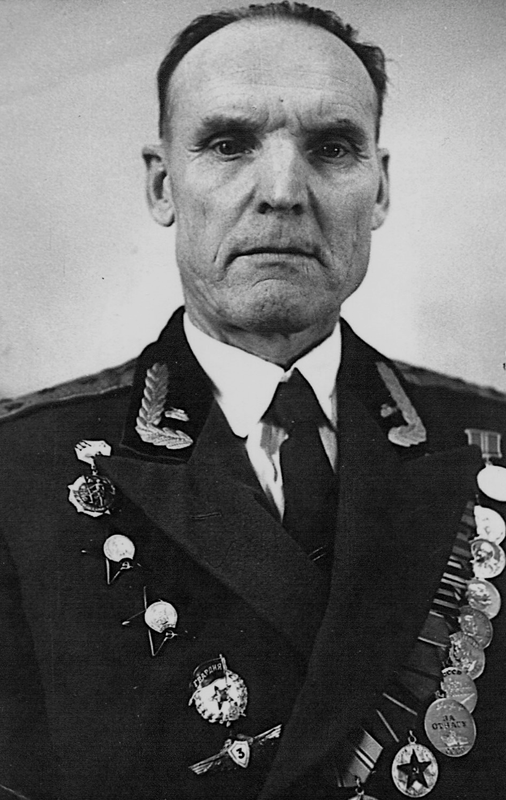
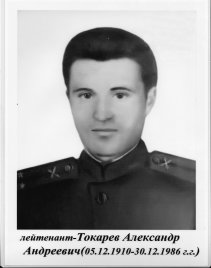
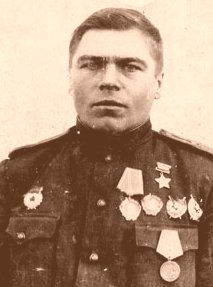
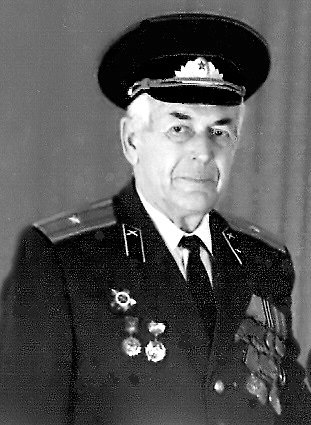
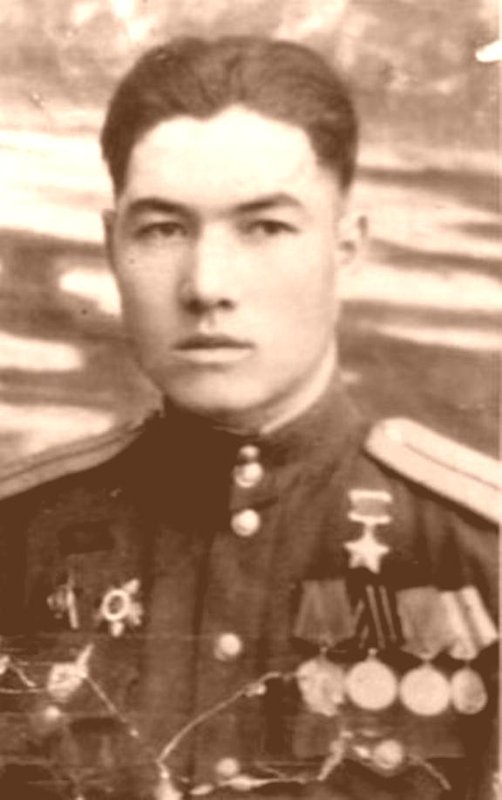
Alexander Tokarev
Rank: Lieutenant._x000D_
Branch of service: Army, Air Force (except Marine Aviation), Coast Guard, NKVD troops, Border Guards._x000D_
Duty station: 10th Reserve Rifle Division._x000D_
To my shame, I do not know much about my grandfather's martial path, so I will use his personal memories._x000D_
“On November 7, 1941, I was sent to the area of Nevskaya Dubrovka to replenish the reconnaissance company. This place was called "Piglet": a small area was strategically important for us and the Germans. We tried to connect with the Volkhov Front from this bridgehead, and the Fritzes wanted to capture it in order to tie the knot of the blockade of Leningrad even more tightly. Despite the fact that we were under fire of heavy guns, mortars, and air bombs, our soldiers still held on._x000D_
From here, we, scouts, went to the enemy's rear, got valuable information about the location of firing points, and took weapons. I was wounded three times on Nevskaya Dubrovka. One of the wounds was serious. February of the 42nd year came-cold, snowy. The beginning of the second year of the war in Leningrad was marked by two opposite facts. The positive thing is that our military units were sufficiently armed. Submachine guns, self-loading rifles, large-caliber guns and mortars appeared, but the situation with food had become much worse. There were times when we did not get a crust of bread or a cracker for two or three days. I was starving._x000D_
Food situation for the city's civilian population was even worse. Each resident received no more than 200 grams of surrogate bread. Thousands of people died of hunger and cold every day: in cold rooms, on snow-covered sidewalks, near the ice-holes of the Neva River. I have seen all this, and even now, this sad, terrible picture often rises before my eyes._x000D_
At the beginning of March 1942, I was discharged from the hospital and sent to the military-political school on Vasilievskiy Island. Here I had to see the horrors of war even more. With the onset of warm weather the removal of the corpses in the city began. Corpses were loaded onto trucks like firewood._x000D_
It was only in the second half of 1943 that the situation on the front line of defense and in the city changed for the better. There were more weapons and food stuff. This made it possible not only to defend, but also to attack. We took the towns of Tikhvin, Pushkin, and Pulkovo height. Finally, Leningrad was completely liberated from the Nazi blockade at the end of January 1944. It was a joy for all the people of Leningrad, but a joy with tears in their eyes.
Alexander Tokarev
Rank: Lieutenant._x000D_
Branch of service: Army, Air Force (except Marine Aviation), Coast Guard, NKVD troops, Border Guards._x000D_
Duty station: 10th Reserve Rifle Division._x000D_
To my shame, I do not know much about my grandfather's martial path, so I will use his personal memories._x000D_
“On November 7, 1941, I was sent to the area of Nevskaya Dubrovka to replenish the reconnaissance company. This place was called "Piglet": a small area was strategically important for us and the Germans. We tried to connect with the Volkhov Front from this bridgehead, and the Fritzes wanted to capture it in order to tie the knot of the blockade of Leningrad even more tightly. Despite the fact that we were under fire of heavy guns, mortars, and air bombs, our soldiers still held on._x000D_
From here, we, scouts, went to the enemy's rear, got valuable information about the location of firing points, and took weapons. I was wounded three times on Nevskaya Dubrovka. One of the wounds was serious. February of the 42nd year came-cold, snowy. The beginning of the second year of the war in Leningrad was marked by two opposite facts. The positive thing is that our military units were sufficiently armed. Submachine guns, self-loading rifles, large-caliber guns and mortars appeared, but the situation with food had become much worse. There were times when we did not get a crust of bread or a cracker for two or three days. I was starving._x000D_
Food situation for the city's civilian population was even worse. Each resident received no more than 200 grams of surrogate bread. Thousands of people died of hunger and cold every day: in cold rooms, on snow-covered sidewalks, near the ice-holes of the Neva River. I have seen all this, and even now, this sad, terrible picture often rises before my eyes._x000D_
At the beginning of March 1942, I was discharged from the hospital and sent to the military-political school on Vasilievskiy Island. Here I had to see the horrors of war even more. With the onset of warm weather the removal of the corpses in the city began. Corpses were loaded onto trucks like firewood._x000D_
It was only in the second half of 1943 that the situation on the front line of defense and in the city changed for the better. There were more weapons and food stuff. This made it possible not only to defend, but also to attack. We took the towns of Tikhvin, Pushkin, and Pulkovo height. Finally, Leningrad was completely liberated from the Nazi blockade at the end of January 1944. It was a joy for all the people of Leningrad, but a joy with tears in their eyes.
0 comment




2026 © Russian Military Historical Society Developed by Jetmix