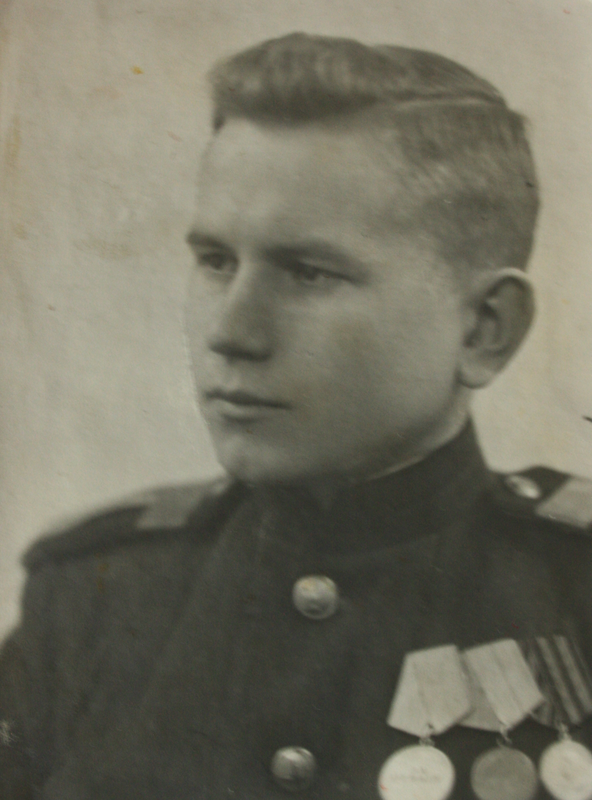
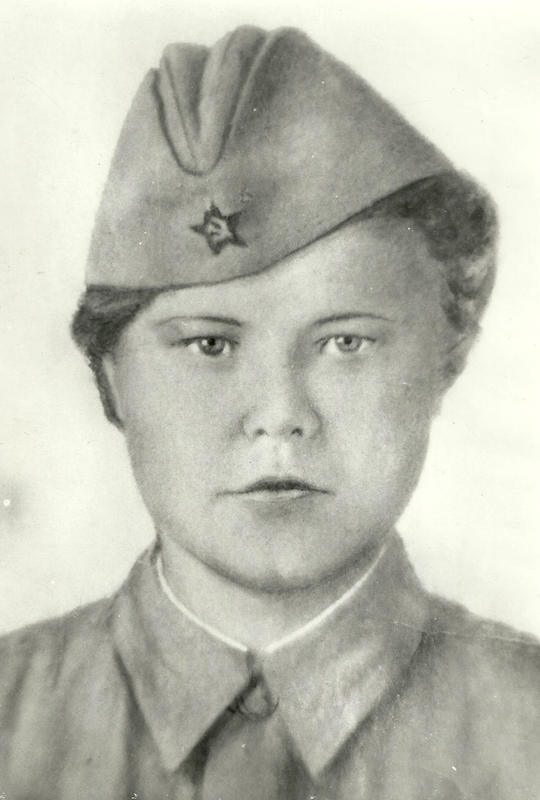
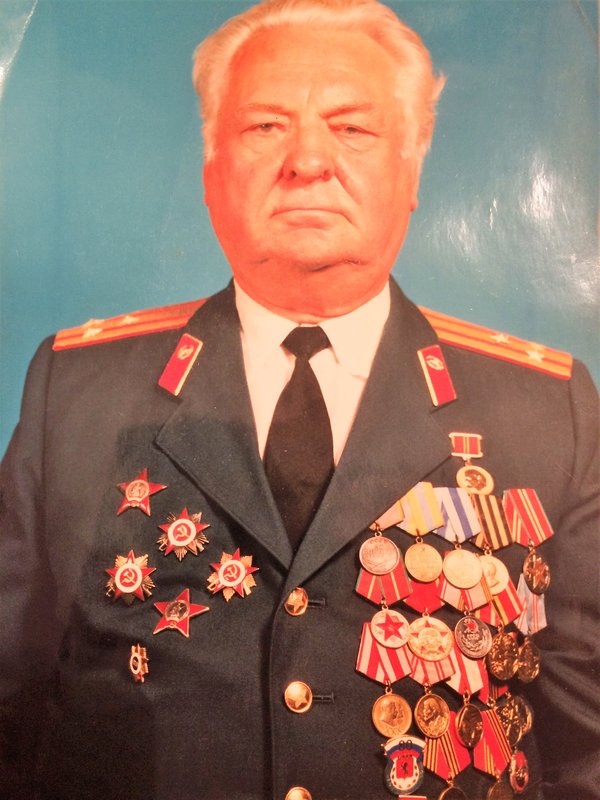
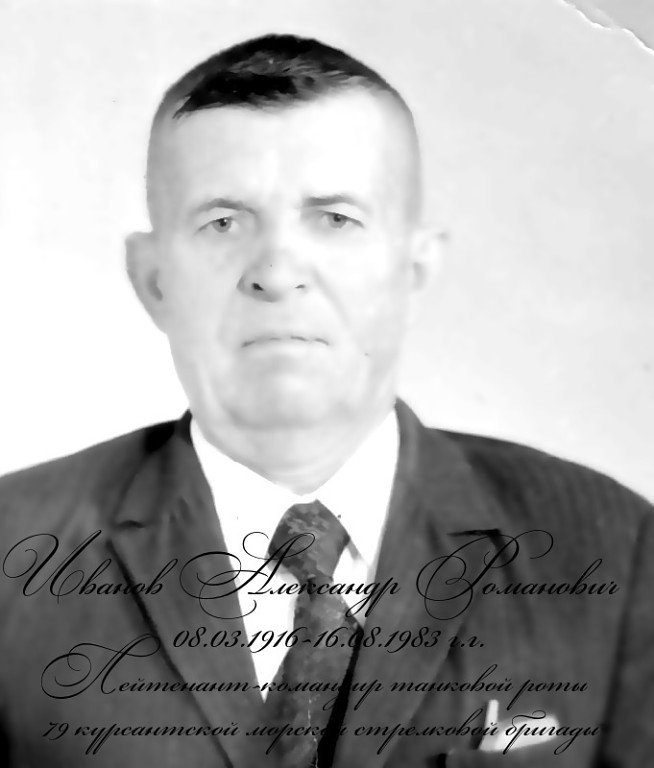
Israelova Tatiana Georgievna
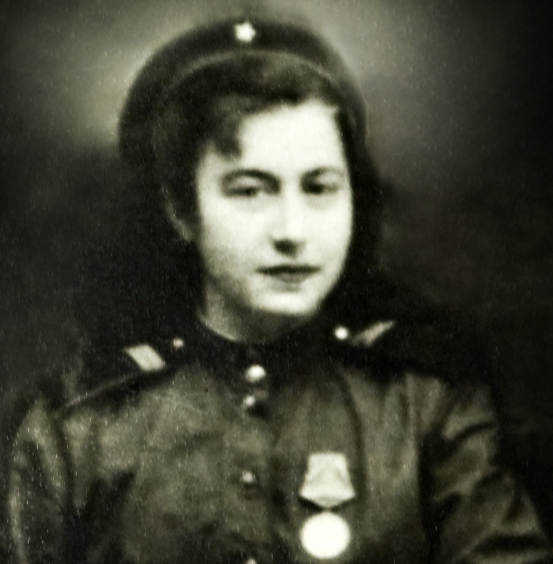
Rank: Junior Sergeant Type of Troops: Ground Forces, Air Force (except naval aviation), coastal service, NKVD troops, border troops Subdivision: 230th Infantry Division (1st formation) To the 70th anniversary of the Great Victory. The girl went through the whole war Photo: communa.ru A letter on the page of the "Commune" in social networks prompted the newspaper journalist to search for the data of a front-line grandmother. This letter came to the site of "Commune". “My name is Nadezhda Mikhailova. My grandfather died near Voronezh in 1942. He was a fire spotter. My grandmother was never able to find his grave. His name was Petr Aleksandrovich Mikhailov. A native of the Borovichi district of the Novgorod region. Maybe you can help me "? Tamara Gashimova “scattered” the letter on social networks - and thought: what do I know about my grandmother? Where did you fight, where did you meet the Victory? Medals and a guards badge, and those for childhood-stupidity lost. This photo shows Tatiana Israilova, a twenty-three-year-old girl with a medal "For Courage". August 1945. Czechoslovakia. How many times, looking at the picture, remembering the rare and laconic stories of my grandmother about the war, in essence the answers to my sister's and my questions, I thought: could I leave my parents, study at the institute, my beloved city, and go to the front at the age of 19? To be radio operator. To the front line. In the worst hell - to lay and provide communication on the front line. To know that at any moment I can die, be captured or go missing. And still leave. I do not know. Granny lived in the center of Tbilisi. Her parents managed to get rid of the prefix "Ter" to their family name in time and painlessly merged into a new, Soviet life. She, the only daughter, was cared for and cherished. Rejoiced when she entered medical. The doctor is the most feminine profession. Always in a clean office, in a white coat. And for the family, the benefit is great. I am nine or ten years old. Grandma comes into the room. I kiss her and feel the subtle smell of cigarettes. Having heard enough at school that smoking is poison, I preach and categorically declare: - Quit smoking, or I will no longer love you! Grandmother in response strokes my head and says that this will not happen again. In the evening, my mother said that my grandmother had learned to smoke during the war. When, retreating or, conversely, advancing, part of them broke away from the rear, then the field kitchen had to wait for two or three days. First, they stretched the crackers, and then turned out the duffel bag in search of bread crumbs ... In August 1941, she was sent to the 10th separate linear reserve communications regiment for a three-month course for radio operators. In November 19-year-old Tatyana Israilova went to the front. Until December 1942, judging by the entry in the military card, she was a radio operator in the 966 rifle regiment. No division number, no army or front name. According to my mother, I knew that my grandmother was twice wounded and shell-shocked. But where and under what circumstances did this happen? A few weeks ago on the website "People's feat" I found a sheet about her awarding the medal "For Courage" in the city of Gyor, dated July 31, 1945. It says: “To reward the radio operator of the control company of junior sergeant Israilova Tatyana Georgievna. Being in battles on the Southwestern Front on January 20, 1942, at night, under heavy enemy fire, she conducted a communication line, restored the broken line within two hours, which made it possible to present an urgent report. On 08/25/1942, under heavy enemy fire, when leaving the encirclement, she timely submitted the order of the commander to the battalion headquarters. Lightly wounded on 20 January 1942, severely shell-shocked on 25 August 1942. The military ID only contained the numbers of the regiments and the hospital. In the award - only the front. Two days of searching on various sites to restore the combat path. I didn't want to drink, eat, or sleep. If only to find. Found it. Introduced. It became scary. I read: “On January 18, 1942, Soviet troops made the first attempt to liberate Kharkov. The shock group of the Southwestern Front broke the stubborn resistance of the enemy in the areas of Balakliya and Slavyansk. " On January 20th, a nineteen-year-old girl with a huge, heavy coil makes a connection. Then he rebuilds it after the bombing. Night. Bullets. Explosions. Earth from under your feet. The first wound ... Where exactly? Now you don't know. Again I throw requests into the search engine. Again I scan dozens of Internet pages with my eyes. Outside the window is night. Suddenly, a line flashes - "966th Infantry Regiment". The same one, grandmother! I open it and see: “On August 23, 1942, the 26th division fought in Dneprodzerzhinsk together with the 966 regiment of the 230th rifle division. On August 24, they emerged from the encirclement and crossed to the left bank of the Dnieper. At half past one in the night of August 25, Soviet troops left Dnepropetrovsk under the onslaught of the enemy, ferrying people and equipment to the left bank of the Dnieper. " It was on that night that Tatyana Israilova, delivering the report, was severely shell-shocked. After the hospital, she was granted leave in Tbilisi. This is evidenced by a miraculously preserved copy of the certificate of the Tbilisi Garrison Polyclinic dated September 5, 1942. It contains a record: service in connection is contraindicated.But my grandmother returned to her regiment and served in it until December 1942. Before his second shell shock ... A film about the war is on the TV screen. My sister and I watch without stopping. And the grandmother says: there were no soldiers in the trenches in new, ironed gymnastics and boots polished to a shine. And there were no songs. What songs, when there are lice and dirt all around? And the soul-taking whistle of bombs. And the pain of losing her friends, squeezing a girl's heart in an iron vice? The main thing is to complete the task and return alive. Write to mom. Time to whisper a prayer before the fight. Yours. The simplest one. To go home. And if you die, so immediately. No torment, no captivity. How, a prayer ?! - we round our eyes. - There is no God! The teacher told us. - No, no, - soothes us. I learned that she was baptized only after her death. Further on the military card reads: December 1942 - August 1943 - evacuation hospital 3121. Finding it was the easiest. The 375-bed hospital was located at the Gorkoye Lake resort, nine kilometers from the Alakul station of the Shchuchansky district of the Kurgan region. Here she was for eight months. Here I met my twenty-first birthday. In August 1943, Tatiana Israilova was sent to the tenth separate communications regiment. She served in it until December 1944. The regiment was at first part of the 33rd Army of the Western Front, then wandered from one Belorussian front to another. She participated in offensive battles in Belarus, crossed the Dnieper, liberated Mogilev, Bialystok, Minsk. And again - military ID: December 1944-October 1945 - 25th separate mechanized regiment of the 7th Guards Mechanized Corps of the 1st Ukrainian Front - squad leader. And again the search. I will soon find out: with her girls, she participated in the Sandomierz-Silesian, Lower Silesian and Upper Silesian operations, the liberation of the southern regions of Poland, the crossing of the Oder. I was happy with them when in April the corps was awarded the Order of Bohdan Khmelnitsky, II degree. Then there was the Berlin, then the Prague strategic operations. I read and understand: my memory does not fail me. I remember how my grandmother regretted that they were transferred from Berlin to Czechoslovakia. Among the grandmother's documents there is also a copy of the wound certificate issued by the Surgical Field Hospital No. 5164 "Prague" on September 8, 1945. Tatyana Israilova demobilized on October 15, 1945 with medals "For Courage" and "For Victory over Germany." She returned to Tbilisi, got a job as a signalman. She got married and gave birth to four children. Three of them were buried in infancy, only my mother survived. To save her, who miraculously climbed out after lung infiltration, without hesitation, she changed the humid climate of her beloved Georgia to the dry but frosty climate of Yakutia. The husband refused to go. Then she alone, across the country, with a one-year-old daughter in her arms and a Singer sewing machine, went to Magadan. From there - to the cold pole, in Oymyakonye. To the Dalny mine, next to which the first houses of the Artyk settlement were just beginning to be built. ... My sister and I are sitting in the kitchen of my grandmother. Granny offers us scrambled eggs and tomatoes. At first we are mischievous, we wrinkle our noses - we don't want to, although we have never tried this. And then suddenly we agree. Tasty extraordinary! Until now ... Everything and always she did herself. I have never enjoyed anyone's friendship and affection. And I never envied anyone. With my own hands I built a house with all the amenities. A greenhouse to feed my daughter with fresh vegetables. In the short northern summer, the yard was surrounded by the greenery of trees and flowers planted by her hands. Living on one salary, I managed to constantly take my mother to Moscow, Leningrad, Tbilisi, to theaters, art galleries. Collected a large library. She managed to do everything: build, plaster, sew and knit for the entire female half of the family, embroider with satin stitch and a cross, chop coal, chop wood. It didn’t cost her anything to get electricity, glaze the window frames. And in the morning - come to work in an elegant suit, with a beautiful haircut. All her life, until retirement, my grandmother worked as a radio operator, first in Tbilisi, then in Yakutia. The work book and the insert are full of gratitude. ... Once my grandmother found me bursting into tears. Smearing tears on her cheeks, she admitted that, climbing over the fence after the boys, she tore her dress. I sobbed, knowing that I would get a scolding from my mother. At seven years old, it seemed like a real tragedy. Grandma hugged me and said: a torn dress is not grief. Grief is when nothing can be changed. Grief is death. But even here no one should see your tears. Respect the strong; the weak are sorry. I understood the meaning of these words when I became an adult. When I comprehended what I knew about my grandmother from my mother's words. She was ill for a long time. But she passed away suddenly, at the age of 56, as a result of a hypertensive stroke. Two days before that, a parcel with corn flour and sweets arrived from Tbilisi. We ate the goodies right away, my mom was going to bake the corn cakes on the weekend. Did not make it...
Israelova Tatiana Georgievna
Rank: Junior Sergeant Type of Troops: Ground Forces, Air Force (except naval aviation), coastal service, NKVD troops, border troops Subdivision: 230th Infantry Division (1st formation) To the 70th anniversary of the Great Victory. The girl went through the whole war Photo: communa.ru A letter on the page of the "Commune" in social networks prompted the newspaper journalist to search for the data of a front-line grandmother. This letter came to the site of "Commune". “My name is Nadezhda Mikhailova. My grandfather died near Voronezh in 1942. He was a fire spotter. My grandmother was never able to find his grave. His name was Petr Aleksandrovich Mikhailov. A native of the Borovichi district of the Novgorod region. Maybe you can help me "? Tamara Gashimova “scattered” the letter on social networks - and thought: what do I know about my grandmother? Where did you fight, where did you meet the Victory? Medals and a guards badge, and those for childhood-stupidity lost. This photo shows Tatiana Israilova, a twenty-three-year-old girl with a medal "For Courage". August 1945. Czechoslovakia. How many times, looking at the picture, remembering the rare and laconic stories of my grandmother about the war, in essence the answers to my sister's and my questions, I thought: could I leave my parents, study at the institute, my beloved city, and go to the front at the age of 19? To be radio operator. To the front line. In the worst hell - to lay and provide communication on the front line. To know that at any moment I can die, be captured or go missing. And still leave. I do not know. Granny lived in the center of Tbilisi. Her parents managed to get rid of the prefix "Ter" to their family name in time and painlessly merged into a new, Soviet life. She, the only daughter, was cared for and cherished. Rejoiced when she entered medical. The doctor is the most feminine profession. Always in a clean office, in a white coat. And for the family, the benefit is great. I am nine or ten years old. Grandma comes into the room. I kiss her and feel the subtle smell of cigarettes. Having heard enough at school that smoking is poison, I preach and categorically declare: - Quit smoking, or I will no longer love you! Grandmother in response strokes my head and says that this will not happen again. In the evening, my mother said that my grandmother had learned to smoke during the war. When, retreating or, conversely, advancing, part of them broke away from the rear, then the field kitchen had to wait for two or three days. First, they stretched the crackers, and then turned out the duffel bag in search of bread crumbs ... In August 1941, she was sent to the 10th separate linear reserve communications regiment for a three-month course for radio operators. In November 19-year-old Tatyana Israilova went to the front. Until December 1942, judging by the entry in the military card, she was a radio operator in the 966 rifle regiment. No division number, no army or front name. According to my mother, I knew that my grandmother was twice wounded and shell-shocked. But where and under what circumstances did this happen? A few weeks ago on the website "People's feat" I found a sheet about her awarding the medal "For Courage" in the city of Gyor, dated July 31, 1945. It says: “To reward the radio operator of the control company of junior sergeant Israilova Tatyana Georgievna. Being in battles on the Southwestern Front on January 20, 1942, at night, under heavy enemy fire, she conducted a communication line, restored the broken line within two hours, which made it possible to present an urgent report. On 08/25/1942, under heavy enemy fire, when leaving the encirclement, she timely submitted the order of the commander to the battalion headquarters. Lightly wounded on 20 January 1942, severely shell-shocked on 25 August 1942. The military ID only contained the numbers of the regiments and the hospital. In the award - only the front. Two days of searching on various sites to restore the combat path. I didn't want to drink, eat, or sleep. If only to find. Found it. Introduced. It became scary. I read: “On January 18, 1942, Soviet troops made the first attempt to liberate Kharkov. The shock group of the Southwestern Front broke the stubborn resistance of the enemy in the areas of Balakliya and Slavyansk. " On January 20th, a nineteen-year-old girl with a huge, heavy coil makes a connection. Then he rebuilds it after the bombing. Night. Bullets. Explosions. Earth from under your feet. The first wound ... Where exactly? Now you don't know. Again I throw requests into the search engine. Again I scan dozens of Internet pages with my eyes. Outside the window is night. Suddenly, a line flashes - "966th Infantry Regiment". The same one, grandmother! I open it and see: “On August 23, 1942, the 26th division fought in Dneprodzerzhinsk together with the 966 regiment of the 230th rifle division. On August 24, they emerged from the encirclement and crossed to the left bank of the Dnieper. At half past one in the night of August 25, Soviet troops left Dnepropetrovsk under the onslaught of the enemy, ferrying people and equipment to the left bank of the Dnieper. " It was on that night that Tatyana Israilova, delivering the report, was severely shell-shocked. After the hospital, she was granted leave in Tbilisi. This is evidenced by a miraculously preserved copy of the certificate of the Tbilisi Garrison Polyclinic dated September 5, 1942. It contains a record: service in connection is contraindicated.But my grandmother returned to her regiment and served in it until December 1942. Before his second shell shock ... A film about the war is on the TV screen. My sister and I watch without stopping. And the grandmother says: there were no soldiers in the trenches in new, ironed gymnastics and boots polished to a shine. And there were no songs. What songs, when there are lice and dirt all around? And the soul-taking whistle of bombs. And the pain of losing her friends, squeezing a girl's heart in an iron vice? The main thing is to complete the task and return alive. Write to mom. Time to whisper a prayer before the fight. Yours. The simplest one. To go home. And if you die, so immediately. No torment, no captivity. How, a prayer ?! - we round our eyes. - There is no God! The teacher told us. - No, no, - soothes us. I learned that she was baptized only after her death. Further on the military card reads: December 1942 - August 1943 - evacuation hospital 3121. Finding it was the easiest. The 375-bed hospital was located at the Gorkoye Lake resort, nine kilometers from the Alakul station of the Shchuchansky district of the Kurgan region. Here she was for eight months. Here I met my twenty-first birthday. In August 1943, Tatiana Israilova was sent to the tenth separate communications regiment. She served in it until December 1944. The regiment was at first part of the 33rd Army of the Western Front, then wandered from one Belorussian front to another. She participated in offensive battles in Belarus, crossed the Dnieper, liberated Mogilev, Bialystok, Minsk. And again - military ID: December 1944-October 1945 - 25th separate mechanized regiment of the 7th Guards Mechanized Corps of the 1st Ukrainian Front - squad leader. And again the search. I will soon find out: with her girls, she participated in the Sandomierz-Silesian, Lower Silesian and Upper Silesian operations, the liberation of the southern regions of Poland, the crossing of the Oder. I was happy with them when in April the corps was awarded the Order of Bohdan Khmelnitsky, II degree. Then there was the Berlin, then the Prague strategic operations. I read and understand: my memory does not fail me. I remember how my grandmother regretted that they were transferred from Berlin to Czechoslovakia. Among the grandmother's documents there is also a copy of the wound certificate issued by the Surgical Field Hospital No. 5164 "Prague" on September 8, 1945. Tatyana Israilova demobilized on October 15, 1945 with medals "For Courage" and "For Victory over Germany." She returned to Tbilisi, got a job as a signalman. She got married and gave birth to four children. Three of them were buried in infancy, only my mother survived. To save her, who miraculously climbed out after lung infiltration, without hesitation, she changed the humid climate of her beloved Georgia to the dry but frosty climate of Yakutia. The husband refused to go. Then she alone, across the country, with a one-year-old daughter in her arms and a Singer sewing machine, went to Magadan. From there - to the cold pole, in Oymyakonye. To the Dalny mine, next to which the first houses of the Artyk settlement were just beginning to be built. ... My sister and I are sitting in the kitchen of my grandmother. Granny offers us scrambled eggs and tomatoes. At first we are mischievous, we wrinkle our noses - we don't want to, although we have never tried this. And then suddenly we agree. Tasty extraordinary! Until now ... Everything and always she did herself. I have never enjoyed anyone's friendship and affection. And I never envied anyone. With my own hands I built a house with all the amenities. A greenhouse to feed my daughter with fresh vegetables. In the short northern summer, the yard was surrounded by the greenery of trees and flowers planted by her hands. Living on one salary, I managed to constantly take my mother to Moscow, Leningrad, Tbilisi, to theaters, art galleries. Collected a large library. She managed to do everything: build, plaster, sew and knit for the entire female half of the family, embroider with satin stitch and a cross, chop coal, chop wood. It didn’t cost her anything to get electricity, glaze the window frames. And in the morning - come to work in an elegant suit, with a beautiful haircut. All her life, until retirement, my grandmother worked as a radio operator, first in Tbilisi, then in Yakutia. The work book and the insert are full of gratitude. ... Once my grandmother found me bursting into tears. Smearing tears on her cheeks, she admitted that, climbing over the fence after the boys, she tore her dress. I sobbed, knowing that I would get a scolding from my mother. At seven years old, it seemed like a real tragedy. Grandma hugged me and said: a torn dress is not grief. Grief is when nothing can be changed. Grief is death. But even here no one should see your tears. Respect the strong; the weak are sorry. I understood the meaning of these words when I became an adult. When I comprehended what I knew about my grandmother from my mother's words. She was ill for a long time. But she passed away suddenly, at the age of 56, as a result of a hypertensive stroke. Two days before that, a parcel with corn flour and sweets arrived from Tbilisi. We ate the goodies right away, my mom was going to bake the corn cakes on the weekend. Did not make it...
0 comment




2026 © Russian Military Historical Society Developed by Jetmix