



Byshkov Yuri Tikhonovich
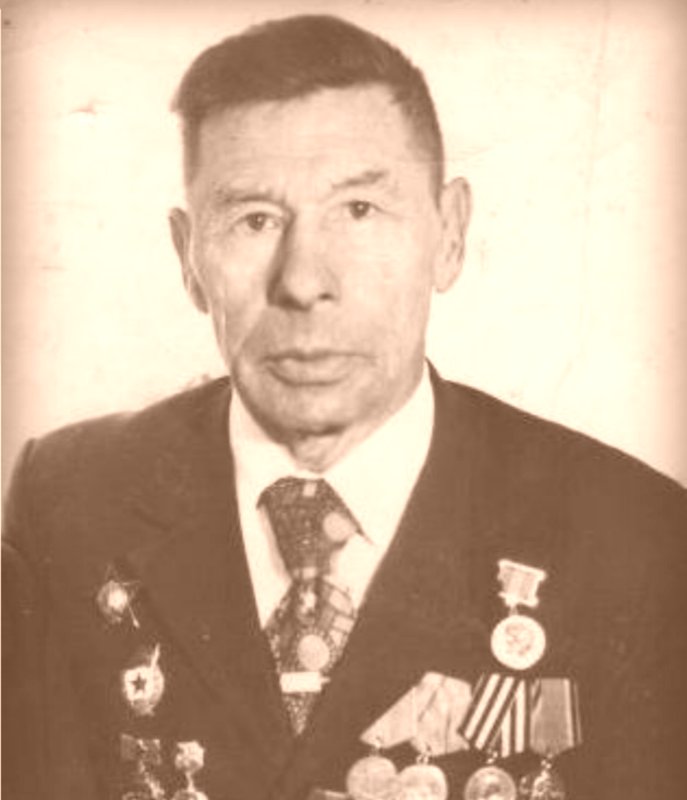
In Nazi captivity I cannot judge which was more difficult: to defend the homeland at the frontlines, constantly feeling the shoulder of a fellow comrade, the power of the weapon you have been given, the support of the homefront, or to be driven like slave cattle to the conqueror, to work for him in order to get your soup and bread, to constantly endure beatings and humiliation. Now, when I feel the heavy burden of the years I have lived, it is hard to believe what I, and tens of thousands of Soviet people, had to go through while in Nazi captivity. I was born in Azov in 1926. The Great Patriotic War found me me at my school desk. The frontline was rapidly approaching, and in July 1942, my hometown, Azov was occupied by the German-fascist invaders. The commandant's office appeared with its commandant, the city council, the police, made up of traitors. All of them began to establish a "new order" in the city. Raids and shootings began. I remember how the military commandant made a speech before lined up boys and girls. The translator repeated: "You all are healthy kids, will be sent to work in Germany for the benefit and prosperity of the Third Reich. Disobedience, runaway - death." Then there were submachine gunners, dogs, "calves" with barbed wire on the windows. Thus, my life in captivity began. The allocation points were located in the cities of Ulm and Stuttgart (Germany). From there, I was taken to the Swiss border in Friedrichshafen to the Olympia concentration camp. I was assigned №636. The Germans forced guys just like me, hungry and exhausted, to build a factory. We dug deep ditches. In any weather - rain or mud - we shoveled the soil up, and others picked it up and threw it even higher. Often all of it would fall back on us. And all this for 12 to 14 hours a day. We would cut blocks from stone for building construction. We would fall from fatigue, but the guards roused us with whips, and we continued to work to survive. There were constant thoughts of escape. The first attempt failed. I was caught, beaten with a whip, taken back to the camp. In total, there were four attempts alone and with friends, and all of them ended in failure. Then, I was sent to build another plant in the city of Kressbronn. It was right on the border with Switzerland. Here, on April 28, 1945, we were liberated by General De Gaulle's French 6th Shock Army. They brought us to Hoiberg and then transferred to the command of the Soviet zone of occupation in Germany. After three checks by the “Smersh” authorities, I was called up for military service in the military unit No. 61470, in the city of Uterbok (25 km South of Potsdam). After the disbanding of this unit, I was sent to serve in Gorky, in the 1241st rifle regiment, where I served as a commander of a 76-mm gun in the rank of sergeant until March 1950. In the same year, I returned to Azov. Returned to peaceful labor. When I was serving in Gorky, I met and then married a good person, Tamara Vasilyevna, who had become my life partner for 56 years. She worked as a craftswoman of the tailoring facility of the Gorky Fashion Studio, the products of which were sent to the frontlines in 1944. The work of a seamstress was very hard: she had to sit at the sewing machine for 10-12 hours in cold and hunger. That is how she lost her health, especially her eyesight. She was a veteran of the homefront, had awards and commendations. Almost all of my working years were devoted to the baking industry. I gave 27 years of my life to this business and went from being a handyman to the manager of a bakery. In 1968, I graduated from the Moscow Remote Institute of the Food Industry. While working, I carried out a lot of public work. I was elected deputy of the city council of People's Deputies for two periods. For my work, I have received government awards, including the medals: "Veteran of Labor", "50 years of Victory of the Great Patriotic War", "For valiant Labor in Commemoration of the 100th Anniversary of the Birth of V. I. Lenin "Bronze Medal of VDNH", "For Achievements in the National Economy" and many others. Now I am surrounded by children, grandchildren, and great-grandchildren. I am busy doing what I love in my garden and at home, and the only wish I have for my family and friends, for all the people of our country, is that there will be no war, that the nightmare that we had to go through in the distant forties will not be repeated.
Byshkov Yuri Tikhonovich
In Nazi captivity I cannot judge which was more difficult: to defend the homeland at the frontlines, constantly feeling the shoulder of a fellow comrade, the power of the weapon you have been given, the support of the homefront, or to be driven like slave cattle to the conqueror, to work for him in order to get your soup and bread, to constantly endure beatings and humiliation. Now, when I feel the heavy burden of the years I have lived, it is hard to believe what I, and tens of thousands of Soviet people, had to go through while in Nazi captivity. I was born in Azov in 1926. The Great Patriotic War found me me at my school desk. The frontline was rapidly approaching, and in July 1942, my hometown, Azov was occupied by the German-fascist invaders. The commandant's office appeared with its commandant, the city council, the police, made up of traitors. All of them began to establish a "new order" in the city. Raids and shootings began. I remember how the military commandant made a speech before lined up boys and girls. The translator repeated: "You all are healthy kids, will be sent to work in Germany for the benefit and prosperity of the Third Reich. Disobedience, runaway - death." Then there were submachine gunners, dogs, "calves" with barbed wire on the windows. Thus, my life in captivity began. The allocation points were located in the cities of Ulm and Stuttgart (Germany). From there, I was taken to the Swiss border in Friedrichshafen to the Olympia concentration camp. I was assigned №636. The Germans forced guys just like me, hungry and exhausted, to build a factory. We dug deep ditches. In any weather - rain or mud - we shoveled the soil up, and others picked it up and threw it even higher. Often all of it would fall back on us. And all this for 12 to 14 hours a day. We would cut blocks from stone for building construction. We would fall from fatigue, but the guards roused us with whips, and we continued to work to survive. There were constant thoughts of escape. The first attempt failed. I was caught, beaten with a whip, taken back to the camp. In total, there were four attempts alone and with friends, and all of them ended in failure. Then, I was sent to build another plant in the city of Kressbronn. It was right on the border with Switzerland. Here, on April 28, 1945, we were liberated by General De Gaulle's French 6th Shock Army. They brought us to Hoiberg and then transferred to the command of the Soviet zone of occupation in Germany. After three checks by the “Smersh” authorities, I was called up for military service in the military unit No. 61470, in the city of Uterbok (25 km South of Potsdam). After the disbanding of this unit, I was sent to serve in Gorky, in the 1241st rifle regiment, where I served as a commander of a 76-mm gun in the rank of sergeant until March 1950. In the same year, I returned to Azov. Returned to peaceful labor. When I was serving in Gorky, I met and then married a good person, Tamara Vasilyevna, who had become my life partner for 56 years. She worked as a craftswoman of the tailoring facility of the Gorky Fashion Studio, the products of which were sent to the frontlines in 1944. The work of a seamstress was very hard: she had to sit at the sewing machine for 10-12 hours in cold and hunger. That is how she lost her health, especially her eyesight. She was a veteran of the homefront, had awards and commendations. Almost all of my working years were devoted to the baking industry. I gave 27 years of my life to this business and went from being a handyman to the manager of a bakery. In 1968, I graduated from the Moscow Remote Institute of the Food Industry. While working, I carried out a lot of public work. I was elected deputy of the city council of People's Deputies for two periods. For my work, I have received government awards, including the medals: "Veteran of Labor", "50 years of Victory of the Great Patriotic War", "For valiant Labor in Commemoration of the 100th Anniversary of the Birth of V. I. Lenin "Bronze Medal of VDNH", "For Achievements in the National Economy" and many others. Now I am surrounded by children, grandchildren, and great-grandchildren. I am busy doing what I love in my garden and at home, and the only wish I have for my family and friends, for all the people of our country, is that there will be no war, that the nightmare that we had to go through in the distant forties will not be repeated.
0 comment



2026 © Russian Military Historical Society Developed by Jetmix