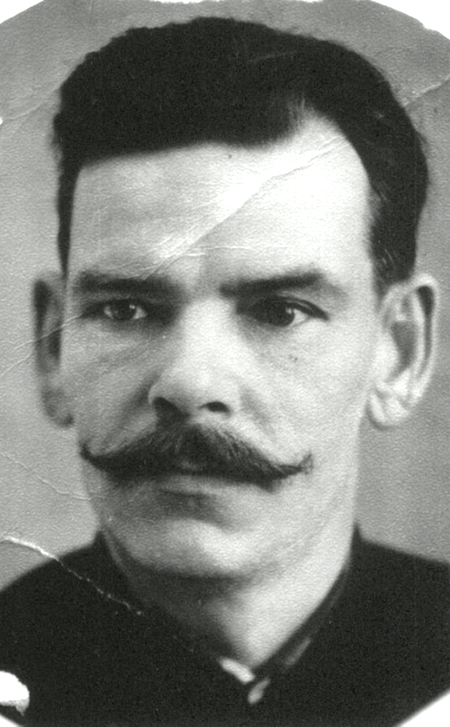


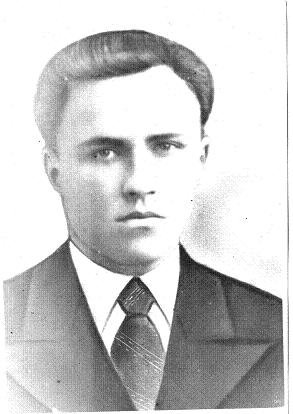


Korzun Lev Ignatievich
Rank: Lieutenant. Type of service: - ground forces, - air force (except naval aviation), - the coast guard, troops of the NKVD, - the border guards. Unit: 1st Moscow rifle division of the people's militia (Leninsky district). Lev Ignatievich Korzun was born on March 30, 1925 in Saltykovka. His father, Ignatiy Pavlovich worked as a land surveyor, while his mother, Sofya Filippovna was a housewife. Along with Leo, another two brothers were brought up in the family. He often likes to say: "I am a happy person. I have been lucky to have good teachers throughout my whole life: in school, in the military college, in the military academy, and at the Moscow University. If there were any poor teachers, they passed me without deeply touching neither my soul nor my heart. And in my memory remained only the favorites, and, above all, the saltykovskiye. They not only taught us their subjects, but also were unobtrusively raising us, teaching us life itself, foremostly, by being an example to us. After all, each of them was their own person." So many years have passed, a long difficult life has been lived, and the memories of those years at school are filled with feelings of deep respect and heartfelt gratitude. When in 1943, Lev Ignatievich had the opportunity to command a company of several dozens of people, all of whom were older than him, he was greatly helped by the lessons and skills that he received from the teachers of his dear school. After graduating from school in June 1942, Lev Ignatievich decided to volunteer for the army and enter a military school. However, the district military commissariat refused him due to the fact that he had not turned eighteen years old yet. However, through the Central Committee of the Komsomol, the young man still managed to get a referral to study at the Moscow Red Banner infantry school named after the Supreme Council of the RSFSR. On the day of his eighteenth birthday, March 30, 1943, Lev Ignatievich received a certificate of completion of the accelerated course. And in April, Lieutenant Korzun was sent to the active army on the Central frontline (on the Kursk bulge) as the commander of the 1st rifle company of the 1285 rifle regiment, which was part of the 60th rifle division of the 65th army of the Central frontline. On August 26 - 27, the division participated in the assault of the city of Sevsk. During the assault, on August 27, he was wounded in his thigh by an explosive bullet: "At this time, something heavy hit my legs. I fell, like a log. Raising my head, I saw that the open skirts of my greatcoat were torn. The right leg of my pants was torn to shreds just above the knee. These rags quickly became soaked in blood. I felt blood running down my leg and into my boot. Someone shouted: "Senior Lieutenant wounded!". Fortunately, there were a few of medical instructors nearby. They ran up to me immediately, expertly applied a tourniquet, not sparing no bandages, bandaged the thigh directly over the pant leg. I do not know what miracle saved my life at that moment. After all, if the Hitlerite had aimed a little to the side, I would have been left without both legs. I probably would not be able to make it to the medical unit, anyways. If he had aimed a little higher, my stomach and chest would have been a bloody mess. Afterall, it was a burst of explosive bullets. I saw my wound only in the medical unit. Just above the right knee, there was a small bullet hole in the thigh, and a piece of meat literally torn out of the back of the thigh. The bullet was, indeed, explosive. In the medical battalion on August 31, in the divisional newspaper, young soldiers read the order of the Supreme Commander-in-Chief to Army General K. K. Rokossovsky.
Korzun L.I. recalls: "We were very happy and proud that our division was marked in the order. It was given the name Sevskaya, and the Supreme Commander-in-Chief bestowed gratitude upon us. In Moscow, on this day, an artillery salute was held in our honor. It was one of the first salutes in my life." After 7 months of hospitals, tenacious Lev Ignatievich decided to continue his military career. Lev Ignatyevich was sent to study at the officers' training crash courses. Then, he worked as a commander of an reconnaissance company. In 1948, he entered the Command Department of the Military Academy of Panzor Forces, from which he graduated with honors in 1953, and was left to study at the post-graduate school, from which he graduated in 1956. After the post-graduate, he served in staff and military scientific work in the headquarters, in the "Shot" courses in the main headquarters of the ground forces. His love of literature instilled in school by his teacher Lyudmila Evgenievna Ivanova had finally shown through in 1960, when Lev Ignatievich entered the correspondence department of the faculty of journalism of Moscow State University. In 1963, he was accepted as a member of the Union of Journalists of the USSR. For a long time, Lev Ignatievich worked in the general staff of the Armed Forces of the USSR, and after retiring with the rank of major general, he began working as deputy editor-in-chief of the magazine “Military thought”, and then “Military historical magazine”. At present, Lev Ignatievich also tries to be in the thick of things, always happy to respond to an invitation to visit his old school. His memoirs share some elements of a confession, a kind of spiritual testament from the generation of the forties to the generation of the two-thousands. Indeed, how little do we know about those who live or have lived near us! We do not know anything about our ancestors beyond our parents or, at best, our grandparents. In this regard, the words of the remarkable Russian writer Emmanuel Kazakevich, the author of the novel "Star", with whom L.I. Korzun was well acquainted and whom he likes to quote so much, sound very fitting: "Remember: the heroes are next to us. They are not great generals or great artists. They are just people. But they are great for their dedication to the common cause and love for the people, the people around them. It is easy to love humanity. It is hard to love the people around you. And that is the thing they need. Heroes are near you. So, try to learn how to understand them when it is still not too late. Be able to understand, appreciate, and love them! »
0 comment



2026 © Russian Military Historical Society Developed by Jetmix