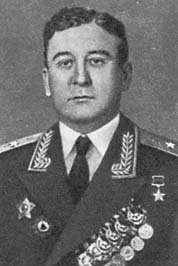



Kitaev Nikolay Trofimovich
Nikolai Trofimovich Kitaev was a Lieutenant Colonel of the Guards’ of the Soviet Army, participant of the Great Patriotic War, “Hero of the Soviet Union” (1943). He was a commander of the 40th guards’ fighter aviation regiment. He was born on November 9 (22), 1917 in the village of Pichuga (now Dubovsky district of the Volgograd region), in a peasant family. He graduated from 7 years of school and the school of factory training. He worked in the foundry of the Stalingrad tractor plant as a mechanic in equipment repairment. He graduated from the aeroclub in Stalingrad (now Volgograd). He had been in the Red Army since 1938. In that same year, he graduated from the Borisoglebsk military aviation school of pilots. He participated in the Soviet-Finnish war of 1939-1940, made several dozen sorties to attack Finnish troops. He had been on the frontlines of the Great Patriotic War from December 1941, where he took part in combat missions on an I-16 fighter as part of the 131st fighter aviation regiment (later transformed into the 40th guards’ fighter aviation regiment). He had been a member of the CPSU (b) / CPSU since 1942. HE had participated in the battle of Moscow. He fought in the North Caucasus, fought in the Kursk area, and liberated Ukraine. In 1943, Nikolai Trofimovich Kitaev's sorties were particularly effective: he won every second battle, and more than half of the enemy planes he shot down were bombers. By March 1943, being the Senior Lieutenant of the guards’, Nikolai Kitaev was commanding a squadron of the 40th guards fighter aviation regiment of the 217th fighter air division of the 4th air force of the North Caucasus front. By that time, he had made 183 sorties, participated in 45 air battles, shooting down eight enemy aircrafts personally and five more as part of a group. By decree of the Presidium of the Supreme Soviet of the USSR of May 1, 1943, senior Lieutenant Nikolai Trofimovich Kitaev was awarded the title of “Hero of the Soviet Union” with the Order of Lenin and the Gold Star medal for exemplary performance of commanders’ combat tasks at the frontlines of the fight against the German-fascist invaders. During the defensive stage of the battle of Kursk, the brave pilot shot down five enemy planes. In 1944, major Kitaev was appointed commander of the 40th guards’ fighter aviation regiment in the 8th guards’ fighter aviation division. On one July day of 1944, the commander of the air regiment Nikolai Trofimovich Kitaev, together with guard major Shvarev, flew to reconnoiter enemy troops near the city of Ternopil in Ukraine. On the way back, near the frontline, both pilots made an assault to the Hitler column. At the same time, the plane of major Kitaev's guards was hit by a stray shell. Nikolai Kitaev landed his plane without releasing the landing gear, but losing consciousness and was captured. In captivity, the Soviet officer did not lose his presence of mind and with honor endured all the hardships of fascist captivity. In 1945, he was liberated by Soviet troops. But the sky was gone for him... In 1946, with the rank of Lieutenant Colonel of the guards, Nikolai Trofimovich Kitaev was dismissed to the reserve. During the war, one of the best air fighters of the Soviet air force conducted about 400 sorties, personally shot down 34 aircrafts in 120 air battles and 8 more as part of a group. After retiring, he lived in the urban-type settlement of Belynichi in the Mogilev region of Belarus. He died on March 24, 2000. He was buried in the village of Rogach, Belynichi district, Mogilev region of the Republic of Belarus. Korme was awarded the title of Hero of the Soviet Union with two orders of Lenin, two orders of the Red Banner, the order of Alexander Nevsky and the Patriotic war I degree, as well as the Belarusian order "for service to the Motherland" and a number of medals. He is still remembered as one of the streets in the village of Belynichi is named in honor of Nikolai Trofimovich Kitaev.
Kitaev Nikolay Trofimovich
Nikolai Trofimovich Kitaev was a Lieutenant Colonel of the Guards’ of the Soviet Army, participant of the Great Patriotic War, “Hero of the Soviet Union” (1943). He was a commander of the 40th guards’ fighter aviation regiment. He was born on November 9 (22), 1917 in the village of Pichuga (now Dubovsky district of the Volgograd region), in a peasant family. He graduated from 7 years of school and the school of factory training. He worked in the foundry of the Stalingrad tractor plant as a mechanic in equipment repairment. He graduated from the aeroclub in Stalingrad (now Volgograd). He had been in the Red Army since 1938. In that same year, he graduated from the Borisoglebsk military aviation school of pilots. He participated in the Soviet-Finnish war of 1939-1940, made several dozen sorties to attack Finnish troops. He had been on the frontlines of the Great Patriotic War from December 1941, where he took part in combat missions on an I-16 fighter as part of the 131st fighter aviation regiment (later transformed into the 40th guards’ fighter aviation regiment). He had been a member of the CPSU (b) / CPSU since 1942. HE had participated in the battle of Moscow. He fought in the North Caucasus, fought in the Kursk area, and liberated Ukraine. In 1943, Nikolai Trofimovich Kitaev's sorties were particularly effective: he won every second battle, and more than half of the enemy planes he shot down were bombers. By March 1943, being the Senior Lieutenant of the guards’, Nikolai Kitaev was commanding a squadron of the 40th guards fighter aviation regiment of the 217th fighter air division of the 4th air force of the North Caucasus front. By that time, he had made 183 sorties, participated in 45 air battles, shooting down eight enemy aircrafts personally and five more as part of a group. By decree of the Presidium of the Supreme Soviet of the USSR of May 1, 1943, senior Lieutenant Nikolai Trofimovich Kitaev was awarded the title of “Hero of the Soviet Union” with the Order of Lenin and the Gold Star medal for exemplary performance of commanders’ combat tasks at the frontlines of the fight against the German-fascist invaders. During the defensive stage of the battle of Kursk, the brave pilot shot down five enemy planes. In 1944, major Kitaev was appointed commander of the 40th guards’ fighter aviation regiment in the 8th guards’ fighter aviation division. On one July day of 1944, the commander of the air regiment Nikolai Trofimovich Kitaev, together with guard major Shvarev, flew to reconnoiter enemy troops near the city of Ternopil in Ukraine. On the way back, near the frontline, both pilots made an assault to the Hitler column. At the same time, the plane of major Kitaev's guards was hit by a stray shell. Nikolai Kitaev landed his plane without releasing the landing gear, but losing consciousness and was captured. In captivity, the Soviet officer did not lose his presence of mind and with honor endured all the hardships of fascist captivity. In 1945, he was liberated by Soviet troops. But the sky was gone for him... In 1946, with the rank of Lieutenant Colonel of the guards, Nikolai Trofimovich Kitaev was dismissed to the reserve. During the war, one of the best air fighters of the Soviet air force conducted about 400 sorties, personally shot down 34 aircrafts in 120 air battles and 8 more as part of a group. After retiring, he lived in the urban-type settlement of Belynichi in the Mogilev region of Belarus. He died on March 24, 2000. He was buried in the village of Rogach, Belynichi district, Mogilev region of the Republic of Belarus. Korme was awarded the title of Hero of the Soviet Union with two orders of Lenin, two orders of the Red Banner, the order of Alexander Nevsky and the Patriotic war I degree, as well as the Belarusian order "for service to the Motherland" and a number of medals. He is still remembered as one of the streets in the village of Belynichi is named in honor of Nikolai Trofimovich Kitaev.
0 comment


2026 © Russian Military Historical Society Developed by Jetmix