
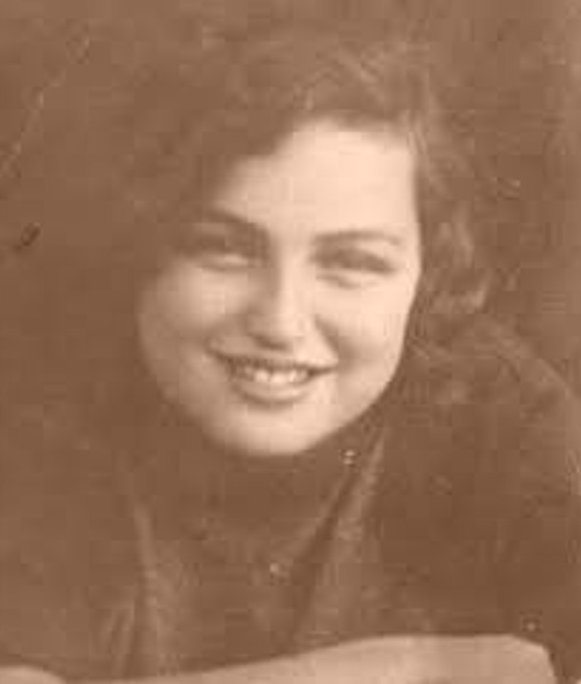


Mikhail Kozlov
My grandfather was born in the spring of 1910, on Michaelmas day, and that's he was named Mikhail. In those days, the will of parents when choosing a name was not taken into account. It should be according to the saints, so the child was called in the Church at baptism. Yes, and with the last name they would not think much – if one was born in the village of Kozlenki so he wold be Kozlov.
Before the war, he lived in the city of Ostrov and worked as a blacksmith in a cooperative.
He served in the Red Army from December 1939 to March 1940 - the Soviet-Finnish war. He was injured.
Grandfather was called up for military training by Ostrovsky District Military Commissariat in the early spring of 1941 or even in the winter (in the archive documents there is a date from 01.01.1941), where he met the beginning of the war. From the training – immediately to the front.
He started the war with the rank of Privet and finished as a Sergeant Major.
Military specialty: sniper.
Combat uni: 3rd battalion of the 877th Rifle Regiment of the 282nd Rifle (Tartu) Division of the 1st Schock Army, North-Western Front.
He took part in the Demyansk offensive operation in April 1942. The 877th Rifle Regiment, where my grandfather served, was awarded the Revolutionary Red Banner of the Supreme Soviet of the USSR in December 1942.
He participated in the Staraya Russa offensive operation in March 1943. His division was recognized from May to November 1943, as the best in the 1st Schock Army of the North-Western Front in organization, discipline, combat training and combat activity.
He liberated the Kalinin (Pskov) Region from the Nazi invaders in November 1943.
He took part in the battles in the area of the "Nevelsky bag" in December 1943.
In the battle of Nevel on January 19, 1944, my grandfather received a serious gunshot wound, which put an end to his further service. He survived by a miracle – either a lucky chance saved him, or something sent from above… Night, darkness, no-man's-land, German air bomb blasts, none of their own near… Blood gushes from the hand that was pierced through, grandfather freezes in the bitter cold, gradually losing consciousness… And suddenly, somewhere in the distance, a faint Russian speech was heard – it was the orderlies on a sledge carrying a dead General from the battlefield. The grandfather was heard, laid down next to the General's corpse, and was taken to a field hospital in an unconscious state. The only thing that my grandfather managed to say then: "I am russian...".
Then - a long treatment in the rear hospital in Sverdlovsk, until July 1944. My grandfather could no longer fight – the shoulder injury was classified as severe (the right arm was almost lost).
For health reasons, Sergeant Mikhail Kozlov was removed from the military register.
And his fellow soldiers from the 282nd Rifle Division, liberated our hometown of Ostrov in July 1944. During the Pskov-Ostrovsky offensive operation, they broke through the Panther defense line – an impregnable defensive line of German troops created by Hitler's personal order.
To build this very "Panther", the fascists dismantled the ancient Ostrovsk fortress, a military defensive structure and architectural monument, which staunchly defended the Western borders of Russia in the Middle Ages and survived many battles.
The fortress was almost wiped off the face of the earth.
Mikhail Kozlov knew the material part of a sniper rifle very well. Going into an ambush in the neutral zone he disabled 55 enemy soldiers (officially confirmed). He was bold, resolute, did not consider any difficulties in the conditions of battle, accurately followed the orders of commanders, as written in the archival documents.
Injuries received:
- blind shrapnel wound to the left foot (16.02.1943);
- gunshot fracture of the right shoulder with damage to the radial nerve (19.01.1944);
- two concussions.
For courage and bravery in the battles with the German invaders, for the active extermination of the Nazis, my grandfather was awarded government awards:
- mark the Sniper (this was the very first and most valued award of my grandfather, without a number, unfortunately, so I could not find information about it in the documents of the archive);
- two medals For Military Merit (10.06.1943; 16.07.1943);
- medal For the Victory over Germany in the Great Patriotic War of 1941-1945 (09.05.1945);
- Order of the Red Star (23.06.1945).
Jubilee medals and order:
- Order of the Patriotic War 1st degree (11.03.1985);
- medal 20 years of the Victory in the Great Patriotic War of 1941-1945 (07.05.1965);
- badge 25 Years of the Victory in the War of 1941-1945;
- medal 30 Years of the ictory in the Great Patriotic War of 1941-1945 (21.05.1976);
- medal 40 years of the Victory in the Great Patriotic War of 1941-1945 (07.05.1985);
- medal 50 years of the Armed Forces of the USSR" (25.02.1969);
- two medals 60 Years of the Armed Forces of the USSR (12.08.1978 and 05.11.1979).
My grandfather's medallion is still in our possession. Tt was brought from the front as a souvenir. As a child, I thought that "black and shiny" thing was something from a Department store for storing sewing needles…
My grandfather received the Order of the Red Star after the war, in June 1945. He told me that they gave it to him for being alive and spilling a lot of blood – the star was red from the blood spilled by soldiers in the war…
Mikhail Kozlov
My grandfather was born in the spring of 1910, on Michaelmas day, and that's he was named Mikhail. In those days, the will of parents when choosing a name was not taken into account. It should be according to the saints, so the child was called in the Church at baptism. Yes, and with the last name they would not think much – if one was born in the village of Kozlenki so he wold be Kozlov.
Before the war, he lived in the city of Ostrov and worked as a blacksmith in a cooperative.
He served in the Red Army from December 1939 to March 1940 - the Soviet-Finnish war. He was injured.
Grandfather was called up for military training by Ostrovsky District Military Commissariat in the early spring of 1941 or even in the winter (in the archive documents there is a date from 01.01.1941), where he met the beginning of the war. From the training – immediately to the front.
He started the war with the rank of Privet and finished as a Sergeant Major.
Military specialty: sniper.
Combat uni: 3rd battalion of the 877th Rifle Regiment of the 282nd Rifle (Tartu) Division of the 1st Schock Army, North-Western Front.
He took part in the Demyansk offensive operation in April 1942. The 877th Rifle Regiment, where my grandfather served, was awarded the Revolutionary Red Banner of the Supreme Soviet of the USSR in December 1942.
He participated in the Staraya Russa offensive operation in March 1943. His division was recognized from May to November 1943, as the best in the 1st Schock Army of the North-Western Front in organization, discipline, combat training and combat activity.
He liberated the Kalinin (Pskov) Region from the Nazi invaders in November 1943.
He took part in the battles in the area of the "Nevelsky bag" in December 1943.
In the battle of Nevel on January 19, 1944, my grandfather received a serious gunshot wound, which put an end to his further service. He survived by a miracle – either a lucky chance saved him, or something sent from above… Night, darkness, no-man's-land, German air bomb blasts, none of their own near… Blood gushes from the hand that was pierced through, grandfather freezes in the bitter cold, gradually losing consciousness… And suddenly, somewhere in the distance, a faint Russian speech was heard – it was the orderlies on a sledge carrying a dead General from the battlefield. The grandfather was heard, laid down next to the General's corpse, and was taken to a field hospital in an unconscious state. The only thing that my grandfather managed to say then: "I am russian...".
Then - a long treatment in the rear hospital in Sverdlovsk, until July 1944. My grandfather could no longer fight – the shoulder injury was classified as severe (the right arm was almost lost).
For health reasons, Sergeant Mikhail Kozlov was removed from the military register.
And his fellow soldiers from the 282nd Rifle Division, liberated our hometown of Ostrov in July 1944. During the Pskov-Ostrovsky offensive operation, they broke through the Panther defense line – an impregnable defensive line of German troops created by Hitler's personal order.
To build this very "Panther", the fascists dismantled the ancient Ostrovsk fortress, a military defensive structure and architectural monument, which staunchly defended the Western borders of Russia in the Middle Ages and survived many battles.
The fortress was almost wiped off the face of the earth.
Mikhail Kozlov knew the material part of a sniper rifle very well. Going into an ambush in the neutral zone he disabled 55 enemy soldiers (officially confirmed). He was bold, resolute, did not consider any difficulties in the conditions of battle, accurately followed the orders of commanders, as written in the archival documents.
Injuries received:
- blind shrapnel wound to the left foot (16.02.1943);
- gunshot fracture of the right shoulder with damage to the radial nerve (19.01.1944);
- two concussions.
For courage and bravery in the battles with the German invaders, for the active extermination of the Nazis, my grandfather was awarded government awards:
- mark the Sniper (this was the very first and most valued award of my grandfather, without a number, unfortunately, so I could not find information about it in the documents of the archive);
- two medals For Military Merit (10.06.1943; 16.07.1943);
- medal For the Victory over Germany in the Great Patriotic War of 1941-1945 (09.05.1945);
- Order of the Red Star (23.06.1945).
Jubilee medals and order:
- Order of the Patriotic War 1st degree (11.03.1985);
- medal 20 years of the Victory in the Great Patriotic War of 1941-1945 (07.05.1965);
- badge 25 Years of the Victory in the War of 1941-1945;
- medal 30 Years of the ictory in the Great Patriotic War of 1941-1945 (21.05.1976);
- medal 40 years of the Victory in the Great Patriotic War of 1941-1945 (07.05.1985);
- medal 50 years of the Armed Forces of the USSR" (25.02.1969);
- two medals 60 Years of the Armed Forces of the USSR (12.08.1978 and 05.11.1979).
My grandfather's medallion is still in our possession. Tt was brought from the front as a souvenir. As a child, I thought that "black and shiny" thing was something from a Department store for storing sewing needles…
My grandfather received the Order of the Red Star after the war, in June 1945. He told me that they gave it to him for being alive and spilling a lot of blood – the star was red from the blood spilled by soldiers in the war…
0 comment



2026 © Russian Military Historical Society Developed by Jetmix