


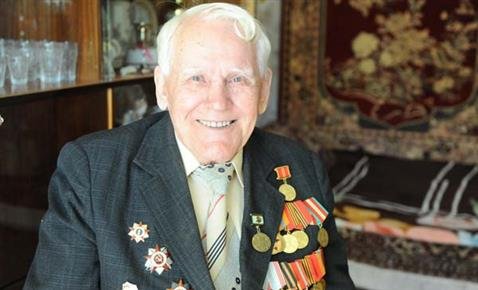
Vasily Ivanovich Portnyagin
LAST name: Portnyagin first NAME: Vasily PATRONYMIC: Ivanovich CITY: Zheleznogorsk date of BIRTH: 14.03.1922 DATE of DEATH: - HISTORY: Military branch: Land forces, air force (except for naval aviation), coast service, NKVD troops, border guards. in 1941, Vasily Portnyagin lived in a small village in the Krasnoyarsk territory and, despite his young age (he was only 19 at the time), worked on a collective farm as a chief accountant. Two months after the terrible news of the beginning of the war came, Vasily was called to the military enlistment office and assigned to the border troops. With the train of recruits formed in Krasnoyarsk, they were sent first to Moscow, and then to the Saratov region. They said "be you, my sons, paratroopers" and began training sessions. The airborne brigade formed at that time was located in a small village, from where the Volga Germans were evacuated. Classes were held mainly on physical training. "We didn't even have parachutes then," recalls Portnyagin.Two months later, the team was again transferred to Moscow,where more serious training began. "We were prepared for a responsible operation," the veteran recalls. – We had to land in the enemy's encirclement and bring out the cavalry." But then the task was delegated to others, the unit was renamed the 41st guards rifle division and in August 1942 was sent to the defense of Stalingrad. The fighting there was very heavy. It is still hard for a veteran to remember this. "In three days, almost all of our guys were killed there," he says. Later, tanks joined the battle. We are sitting with the Sergeant in the trench, my machine gun was broken into two parts, the tanks are getting closer and closer. We don't even have grenades. And just when death seemed to be very close, the artillery began to cover us from the side. The tanks stood for a while longer, then turned around and went back." After this battle, Vasily Portnyagin received his first, and therefore most important award-the medal"for bravery". After the Stalingrad battles, the division was replenished and sent to fight in the middle reaches of the don. Intelligence was always on the front line, under fire. But the Tailor was lucky. Not once in the entire war was he even wounded. "You used to take off your raincoat tent," the veteran recalls, " and it was full of holes from shrapnel. But I was never hurt."Later, Vasily Portnyagin fought near Voronezh. In January 1943, the division in which he served went on the offensive. And near Dnepropetrovsk was surrounded. "We got out at night," the veteran recalls, " in small groups, and not everyone managed to survive." When the Russian troops took up the defense 60 km from Kharkiv, the scouts also had a hard time. Several times Portnyagin and his comrades went to the rear of the enemy for "languages". "Spring," he says, " the water is icy, and you had to Wade 15 kilometers." But "languages" still took. Yes, even what! No wonder at this time Vasily Ivanovich received two orders of the red Star. Then, as part of his division, he crossed the Dnieper, fought in Moldavia, and liberated the city of Soroka. Then part of it went towards Romania, then Hungary, and the good news of the Victory he received in Austria. "We were riding a motorcycle at the time," the veteran recalls, " and there was a signalman sitting behind me. And the radio said that we won. The joy was, of course, huge, although we were already waiting for this news from day to day." And in Austria, Portnyagin met with his sister, who also fought at the front. "We used to write letters to each other," he says, " and use special encryption to indicate where we were. And then it turned out that some of them were not far away."But after may 9, 1945, the war did not end for Vasily Portnyagin. The division in which he served was still in Austria for a year, then in the Ukraine. In January 1946, he managed to take a vacation and go home. And he was discharged only in August, with the rank of Lieutenant. After serving for 25 years, the veteran worked in Siberia, in the gold mining industry. First he was an accountant, then a senior accountant, and then he served as a chief accountant. He moved to Samara (then Kuibyshev) in 1972. My wife was very ill, and the doctors advised me to change the climate. There were no problems with finding a job, because good specialists are always in demand. For five years, Vasily Portnyagin worked at JSC Samaraneftegaz as a chief accountant in the supply Department, from where he retired. Meanwhile, the company still remembers him, he is always a welcome guest there. "There are not so many veterans left now," says Vasily Portnyagin , " and they treat us very reverently. No holiday is forgotten, every year they organize a trip to Volgograd, to places of military glory." On the eve of Victory Day, Vasily Ivanovich has many plans. You need to visit your brother, who lives in the Saratov region, and go home, where there are also relatives. In addition, the veteran is often called to meetings with schoolchildren and employees of JSC Samaraneftegaz. He is one of the guests of honor at all the company's events dedicated to the 65th anniversary of Victory. At 88 years old, Vasily Portnyagin looks great, is still cheerful and full of energy. "I'm still young," he says, " I planned to start living until I was 100, and then we'll see."
0 comment




2026 © Russian Military Historical Society Developed by Jetmix