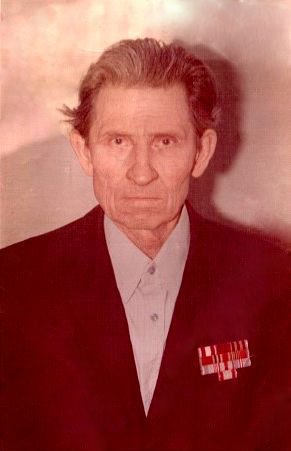


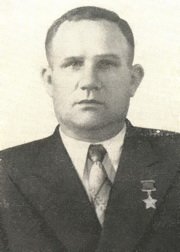


Leonard Berezovsky
Rank: Captain
Branch of Service: Artillery
Leonard Anatolyevich Berezovsky was born on January 28, 1922 in Novosibirsk. From the age of 3 to 7, he lived in Berlin with his parents (on a business trip).
He lived in Moscow on 10/1 Maroseyka Street since 1929.
Leonard graduated from high school with a gold medal in 1940 and was drafted to the army. The military enlistment office recorded him as Leonid (the name Leonard was not recognized), so some military documents were written with the name of Leonid Berezovsky.
When 1941 the war broke out, and he was sent as a cadet to the accelerated courses at the Moscow Supreme Council Combined Arms Military Schol. After graduation in May 1942 he went to the front as a Commander of a Mortar Platoon of the 2nd Separate Artillery Battalion of the Don Front. His first fight was in Stalingrad, when he was only 20 years old! They were not given weapons, because weapons were sorely lacking, so he had to get himself a weapon that he found on the dead German, and it was a knife. Then 69 Army of the Steppe Front and the 4th Ukrainian Front. Since 1944 - Commander of Mortar Companies of the 963rd Rifle Regiment, the 274th Rifle Division of the 1st Belarusian Front. Participated in the battles for the liberation of Warsaw and the capture of Berlin!
Was awarded the Order of Patriotic War 1st degree, medal For Defense of Stalingrad, medal For the Liberation of Warsaw, medal For the Capture of Berlin, medal for the Victory Over Germany in the Great Patriotic War! During the war, he was shell-shocked, repeatedly wounded, his entire back was covered with shrapnel scars, some fragments remained until the end of his life. The explosion tore off one phalanx of his finger. The orderly quickly tied this phalanx to the finger with a bandage and the finger stucked, though crooked, but a full finger. He was also shot through the arm. At the front, his colleagues called him Lenya. Since then, all his life he was called Lenya.
Leonard finished the war with the rank of Guards Captain of Artillery. After the end of the war in June 1945 my father was a Chief of Staff of the Rifle Battalion of the 963rd Rifle Regiment of the 274th Rifle Division in the Group of Soviet Troops in Germany, then from July 1945 until November 1946, he was Chief of Staff of the 180th Guards Rifle Red Banner Berlin Regiment of the (GSTG). While in Berlin, my father decided to visit the owner of the apartment where he lived with his parents before the war (1925-1929). The apartment was located on the American side of Berlin, so he was issued a pass and allocated a Red Army soldier. Surprisingly, the Americans let him go to their part of the city, even more surprisingly, that the house was intact. Approaching the apartment, my father did not even think if she was alive? remembered him? would recognizhim?, because he lived there as a little boy. The door was opened by an old woman, Lenya asked: "Frau Liebchen?" and introduced himself in German. Pause... and the old woman, with a cry, thrown herself on his neck, shouting his name:- "Adya, Adya...!" - so affectionately she called him in those distant years. Then she kept asking about mom and dad and crying and crying... Then the rode the tram together to the checkpoint and surprised passengers: - "In the American zone of Berlin, a Red Army officer is riding in a tram, and a German old woman is sobbing on his shoulder, hugging him, and saying that now she can die in peace." Leonard drew very well and made various sketches of architectural structures in Berlin at any spare moment. This saw one of our soldiers, she liked the pictures and learning that Leonard was from Moscow have advised, upon returning home, to go to MARKHI (Moscow Architectural Institute). Unfortunately, he did ask the first and last name of this servicewoman. After returning home, in 1948, he entered the MARKHI, successfully studied there, entered graduate school, defended his PhD thesis, and became an Associate Professor. After graduation in 1954 Leonard Berezovsky continued to work at the MARHI as a teacher of architectural design, worked as the Dean of the Faculty of Industrial Design, was awarded the badge Winner of the Socialist Competition in 1973, He became a member of the Union of Architects of the USSR and the Architectural Foundation in 1984. All the students loved him very much and remember him with a kind word. He was married since 1951 and had four children.
Leonard Berezovsky
Rank: Captain
Branch of Service: Artillery
Leonard Anatolyevich Berezovsky was born on January 28, 1922 in Novosibirsk. From the age of 3 to 7, he lived in Berlin with his parents (on a business trip).
He lived in Moscow on 10/1 Maroseyka Street since 1929.
Leonard graduated from high school with a gold medal in 1940 and was drafted to the army. The military enlistment office recorded him as Leonid (the name Leonard was not recognized), so some military documents were written with the name of Leonid Berezovsky.
When 1941 the war broke out, and he was sent as a cadet to the accelerated courses at the Moscow Supreme Council Combined Arms Military Schol. After graduation in May 1942 he went to the front as a Commander of a Mortar Platoon of the 2nd Separate Artillery Battalion of the Don Front. His first fight was in Stalingrad, when he was only 20 years old! They were not given weapons, because weapons were sorely lacking, so he had to get himself a weapon that he found on the dead German, and it was a knife. Then 69 Army of the Steppe Front and the 4th Ukrainian Front. Since 1944 - Commander of Mortar Companies of the 963rd Rifle Regiment, the 274th Rifle Division of the 1st Belarusian Front. Participated in the battles for the liberation of Warsaw and the capture of Berlin!
Was awarded the Order of Patriotic War 1st degree, medal For Defense of Stalingrad, medal For the Liberation of Warsaw, medal For the Capture of Berlin, medal for the Victory Over Germany in the Great Patriotic War! During the war, he was shell-shocked, repeatedly wounded, his entire back was covered with shrapnel scars, some fragments remained until the end of his life. The explosion tore off one phalanx of his finger. The orderly quickly tied this phalanx to the finger with a bandage and the finger stucked, though crooked, but a full finger. He was also shot through the arm. At the front, his colleagues called him Lenya. Since then, all his life he was called Lenya.
Leonard finished the war with the rank of Guards Captain of Artillery. After the end of the war in June 1945 my father was a Chief of Staff of the Rifle Battalion of the 963rd Rifle Regiment of the 274th Rifle Division in the Group of Soviet Troops in Germany, then from July 1945 until November 1946, he was Chief of Staff of the 180th Guards Rifle Red Banner Berlin Regiment of the (GSTG). While in Berlin, my father decided to visit the owner of the apartment where he lived with his parents before the war (1925-1929). The apartment was located on the American side of Berlin, so he was issued a pass and allocated a Red Army soldier. Surprisingly, the Americans let him go to their part of the city, even more surprisingly, that the house was intact. Approaching the apartment, my father did not even think if she was alive? remembered him? would recognizhim?, because he lived there as a little boy. The door was opened by an old woman, Lenya asked: "Frau Liebchen?" and introduced himself in German. Pause... and the old woman, with a cry, thrown herself on his neck, shouting his name:- "Adya, Adya...!" - so affectionately she called him in those distant years. Then she kept asking about mom and dad and crying and crying... Then the rode the tram together to the checkpoint and surprised passengers: - "In the American zone of Berlin, a Red Army officer is riding in a tram, and a German old woman is sobbing on his shoulder, hugging him, and saying that now she can die in peace." Leonard drew very well and made various sketches of architectural structures in Berlin at any spare moment. This saw one of our soldiers, she liked the pictures and learning that Leonard was from Moscow have advised, upon returning home, to go to MARKHI (Moscow Architectural Institute). Unfortunately, he did ask the first and last name of this servicewoman. After returning home, in 1948, he entered the MARKHI, successfully studied there, entered graduate school, defended his PhD thesis, and became an Associate Professor. After graduation in 1954 Leonard Berezovsky continued to work at the MARHI as a teacher of architectural design, worked as the Dean of the Faculty of Industrial Design, was awarded the badge Winner of the Socialist Competition in 1973, He became a member of the Union of Architects of the USSR and the Architectural Foundation in 1984. All the students loved him very much and remember him with a kind word. He was married since 1951 and had four children.
0 comment



2026 © Russian Military Historical Society Developed by Jetmix