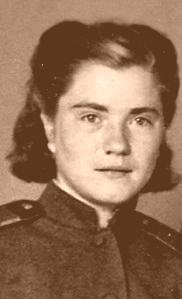
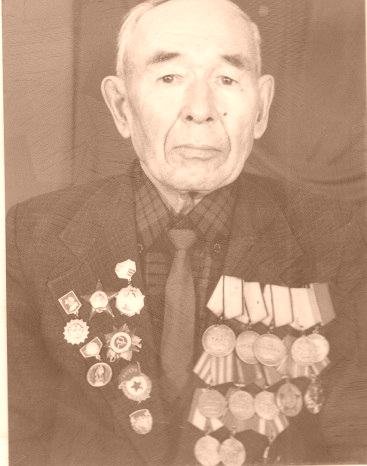


ANTONOV ALEXEY NIKOLAEVIC
ANTONOV ALEXEY NIKOLAEVIC Grandpa Lesha was born in the Leningrad region (Sertolovo). At the beginning of the war, he and his parents came near Pskov, The village Sheveli. The Germans approached Pskov from the southwest (The Cross area), on the afternoon of July 8, 1941. The Germans took over Pskov by the evening of July 9. Beginning in 1942, the activities of the serf regime were accompanied by a mass hijacking of the population for hard labor and slavery in Germany. The entire population of the region was passed through special commissions. A document with a note about job suitability was issued on his hands, with the caption "Left until a special order." On a special order, the commandant gave a reallocation of the parish and the village. At the same time, the Germans were not considered either with the marital status or with the interests of the person - separated husband and wife, mother with children. They hijacked people to an unknown place and did not allow to have postal correspondence. To escape from slavery, residents of Pskov and Pskov region had to hide in forests, in crypts of cemeteries, in trenches, basements, pits, in any secluded places. The Germans organized the hunt for people, using specially trained dogs. When they were found hiding, they were severely beaten and killed more often on the spot. On suspicion that at least one person had escaped from the hijacking, the whole village was burned to the ground. To characterize the extent of the hijacking into slavery, it is enough to refer to the fact that when Pskov was liberated by the Red Army in the city there were only 115 inhabitants. According to established data, the lists drawn up by the local councils, as well as the number of returnees for repatriation, the commission found that during the period of the temporary occupation of the region, between 100 and 150,000 people were taken into German slavery." As for my grandfather ANTONOV ALEXEY NIKOLAEVIC (1928-1995), it was so. When the Germans came to their village of Sheveli (Palkin direction), my grandfather was only 13 years old. He hid in the woods, but the Nazis found him and stole him to a concentration camp in Belgium. Thank God my grandfather survived, and in 1944 he was released. But what he had to go through, even scary to imagine. He hid in the woods, but the Nazis found him and stole him to a concentration camp in Belgium. Thank God my grandfather survived, and in 1944 he was released. But what he had to go through, even scary to imagine. Fort Breendonck .There are things that are scary to talk about and think about. There are carefully guarded walls, entwined with barbed wire, and smooth roads leading under the round arch, and behind it - a dark tunnel, from which there is no way out. Similar concentration camps were located throughout Europe in the mid-20th century. So was the Belgian fort Breendonk. Today it is a huge national monument to the victims of the Nazi regime. The fortress was built in the early 20th century to protect Belgium's most important port. The closed building, surrounded by a moat with water, was located 20 kilometers from Antwerp and was to serve as the second line of fortifications in case of war. The chance to do his job presented itself quickly: in 1914, German troops attacked the country. Antwerp interested them not as much as Brussels, however, seeing the active resistance of the Belgians, they entered the battle at the walls of the fort. Strengthening successfully coped with the onslaught, but the line of defense broke in a completely different place - under Lear. Thus, bypassing Breendonk, Antwerp was conquered. During World War II, Belgium was once again occupied by German troops. This time the fort could not resist, because it was not ready for tank attacks. But its infrastructure turned out to be very suitable for the creation of a prison camp in 1940. Mostly here were placed prisoners of war and enemies of Hitler's regime. The Jews did not stay here, they were quickly transferred to the Polish Auschwitz. In the territory of the concentration camp went without gas chambers, but there were gallows. However, hunger and daily torture also did not leave people any chance to survive. Historians have estimated that 3,500 people visited Breendonka, about 400 of them were killed. In 1944, the fort was liberated from the Germans. The commandant of the former concentration camp was executed by the unrepentant, and the fortification was used as a prison for those who switched to the side of the enemy. It was called Breendonk II. Today, perhaps the most terrible museum in Belgium is opened on this place. Inside there are cells, barracks - all that was still under the Nazis. All but the people whose memory remained only on the walls of the former concentration camp in the form of engraved names. Address: Brandstraat 57, 2830 Willebroek, Belgium
ANTONOV ALEXEY NIKOLAEVIC
ANTONOV ALEXEY NIKOLAEVIC Grandpa Lesha was born in the Leningrad region (Sertolovo). At the beginning of the war, he and his parents came near Pskov, The village Sheveli. The Germans approached Pskov from the southwest (The Cross area), on the afternoon of July 8, 1941. The Germans took over Pskov by the evening of July 9. Beginning in 1942, the activities of the serf regime were accompanied by a mass hijacking of the population for hard labor and slavery in Germany. The entire population of the region was passed through special commissions. A document with a note about job suitability was issued on his hands, with the caption "Left until a special order." On a special order, the commandant gave a reallocation of the parish and the village. At the same time, the Germans were not considered either with the marital status or with the interests of the person - separated husband and wife, mother with children. They hijacked people to an unknown place and did not allow to have postal correspondence. To escape from slavery, residents of Pskov and Pskov region had to hide in forests, in crypts of cemeteries, in trenches, basements, pits, in any secluded places. The Germans organized the hunt for people, using specially trained dogs. When they were found hiding, they were severely beaten and killed more often on the spot. On suspicion that at least one person had escaped from the hijacking, the whole village was burned to the ground. To characterize the extent of the hijacking into slavery, it is enough to refer to the fact that when Pskov was liberated by the Red Army in the city there were only 115 inhabitants. According to established data, the lists drawn up by the local councils, as well as the number of returnees for repatriation, the commission found that during the period of the temporary occupation of the region, between 100 and 150,000 people were taken into German slavery." As for my grandfather ANTONOV ALEXEY NIKOLAEVIC (1928-1995), it was so. When the Germans came to their village of Sheveli (Palkin direction), my grandfather was only 13 years old. He hid in the woods, but the Nazis found him and stole him to a concentration camp in Belgium. Thank God my grandfather survived, and in 1944 he was released. But what he had to go through, even scary to imagine. He hid in the woods, but the Nazis found him and stole him to a concentration camp in Belgium. Thank God my grandfather survived, and in 1944 he was released. But what he had to go through, even scary to imagine. Fort Breendonck .There are things that are scary to talk about and think about. There are carefully guarded walls, entwined with barbed wire, and smooth roads leading under the round arch, and behind it - a dark tunnel, from which there is no way out. Similar concentration camps were located throughout Europe in the mid-20th century. So was the Belgian fort Breendonk. Today it is a huge national monument to the victims of the Nazi regime. The fortress was built in the early 20th century to protect Belgium's most important port. The closed building, surrounded by a moat with water, was located 20 kilometers from Antwerp and was to serve as the second line of fortifications in case of war. The chance to do his job presented itself quickly: in 1914, German troops attacked the country. Antwerp interested them not as much as Brussels, however, seeing the active resistance of the Belgians, they entered the battle at the walls of the fort. Strengthening successfully coped with the onslaught, but the line of defense broke in a completely different place - under Lear. Thus, bypassing Breendonk, Antwerp was conquered. During World War II, Belgium was once again occupied by German troops. This time the fort could not resist, because it was not ready for tank attacks. But its infrastructure turned out to be very suitable for the creation of a prison camp in 1940. Mostly here were placed prisoners of war and enemies of Hitler's regime. The Jews did not stay here, they were quickly transferred to the Polish Auschwitz. In the territory of the concentration camp went without gas chambers, but there were gallows. However, hunger and daily torture also did not leave people any chance to survive. Historians have estimated that 3,500 people visited Breendonka, about 400 of them were killed. In 1944, the fort was liberated from the Germans. The commandant of the former concentration camp was executed by the unrepentant, and the fortification was used as a prison for those who switched to the side of the enemy. It was called Breendonk II. Today, perhaps the most terrible museum in Belgium is opened on this place. Inside there are cells, barracks - all that was still under the Nazis. All but the people whose memory remained only on the walls of the former concentration camp in the form of engraved names. Address: Brandstraat 57, 2830 Willebroek, Belgium
0 comment



2026 © Russian Military Historical Society Developed by Jetmix