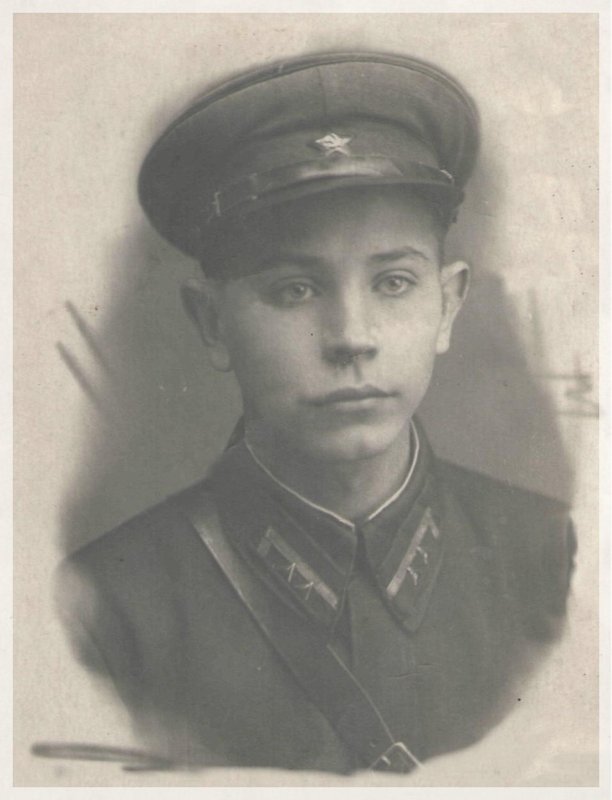
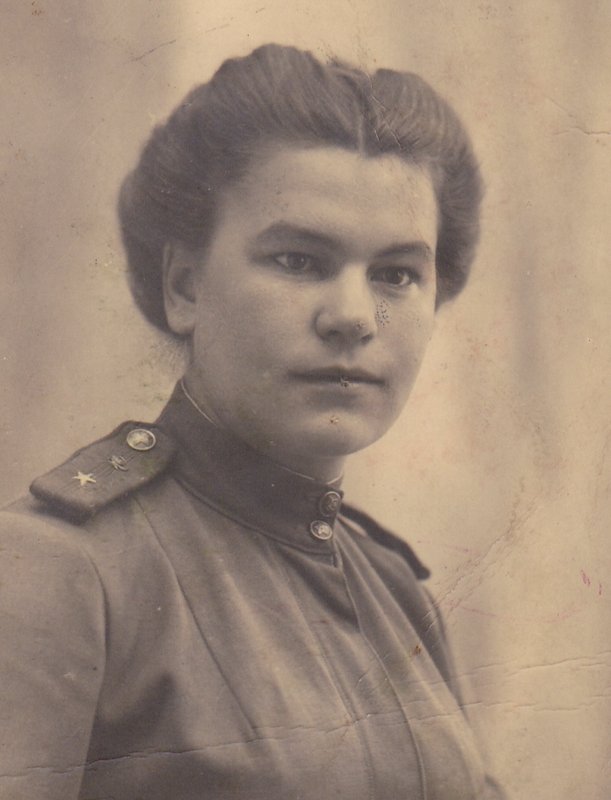
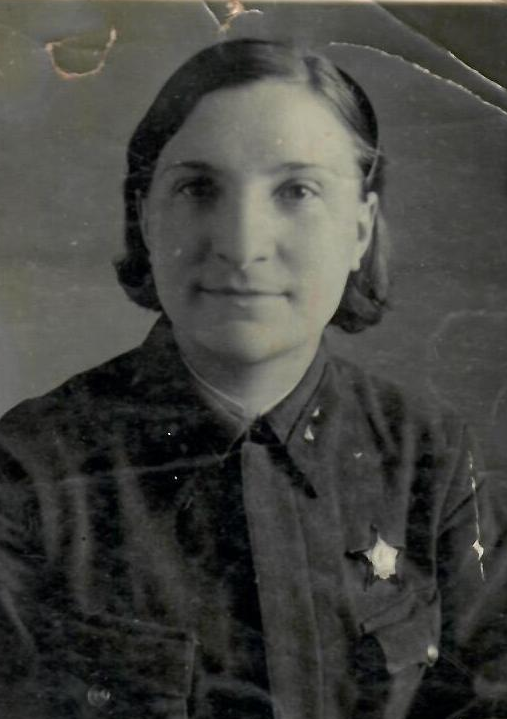
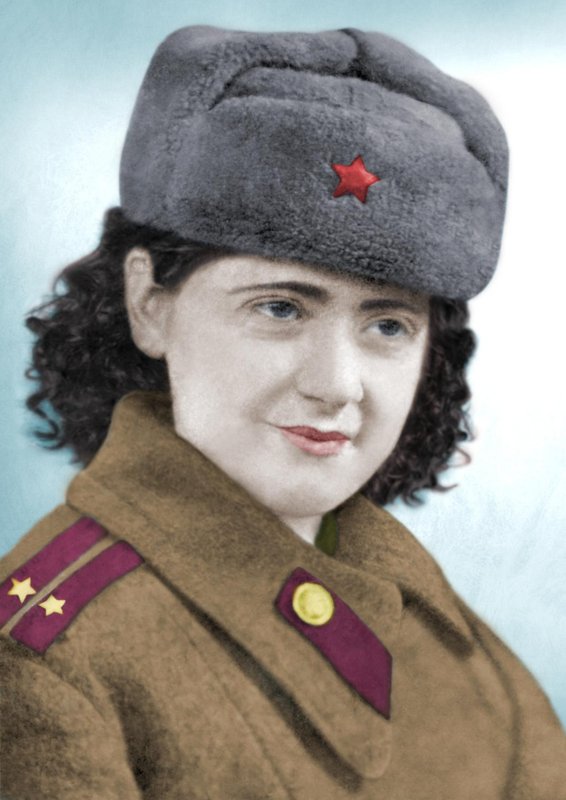
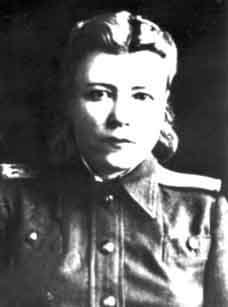
Tyushnyakova (Sibiryakova), Nadezhda Timofeevna
Tyushnyakova (Sibiryakova), Nadezhda Timofeevna_x000D_
Rank: Senior Sergeant._x000D_
Branch of the service: Ground Forces._x000D_
Division: 367th Red Banner Infantry Division. _x000D_
There are no people in the world that are not interesting. Their destinies are like the history of the planets, each has everything special, its own. And there are no similar planets. _x000D_
If you used to think about the meaning of the word “woman” in the 19th Century, then the following phrases come to mind: “weaker sex”, “fragile female shoulders.” However, в uring the war time huge burden of labor fell to the shoulders of women, and they proved that they can be as strong as their men who went to the front. _x000D_
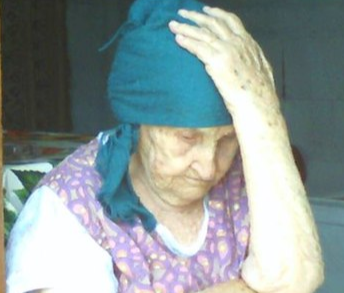
We were talking in a spacious kitchen with a veteran of the Great Patriotic War, Nadezhda Timofeevna Tyushnyakova (Sibiryakova), who is taken care by her daughter, a therapist, Honored Doctor of Russia, Irina Leonidovna Medvedchikova. _x000D_
The house is located on the outskirts of the Regional Center Mokrousovo. Nadezhda knows about the war firsthand. _x000D_
«In recent years, my health had been failing, - she showed her scars on her arm, - a shrapnel wound does not allow sleep at night, everything hurts, she began to forget the people she knew (grandmother is 93 years old). But I can't forget the war years ...»_x000D_
Before the start of the war, she received an honorary title and a badge of Voroshilov Sharpshooter, which played an important role in her further destiny. Nadya Tyushnyakova entered the Shadrinsk Pedagogical Institute. _x000D_
She was very bright at her twenty. Besides the teacher’s Institute, she simultaneously attended Courses for Reserve Medical Instructors in 1941. Medical practice consisted of unloading trains with wounded coming from the front-line. In the hospital, wounds were treated, bandaged, and soldiers were prepared for surgery. _x000D_
She was not scared of blood compared to many other young girls who were not able to get used to it. When they saw blood, they left the room or closed their eyes. In 1942 Nadezhda was sent to Dmitrievskaya, then to the Staropershinskaya School of the Mokrousovsky District as a Teacher. A medical diploma and a teacher's certificate were about her. _x000D_
There was a famine in the village, a tax in kind, which depleted the last supplies of the villagers. It was cold, people heated stoves with "driftwood" and dry deadwood, taken out by women with children late in the evening or at night from the forest. _x000D_
Her soul was eager to go to the front line, but numerous requests for active duty were not satisfied. _x000D_
“However, in 1943, apparently due to a shortage of medical instructors, I was granted my requests and drafted into the army as a volunteer,” the heroine of my story quietly recalls ... _x000D_
Young Nadia Tyushnyakova was in the midst of the fighting. She happened to be a cook, a sniper, and a typist to print documents. But most importantly, she remained a soldier. “On the front line, she did not disdain any work: she dug trenches, dug trenches, hunted down and killed the Germans with a sniper; carried the dead from the battlefield and helped to bandage the wounded, cooked and delivered food to the soldiers, taught the recruits to sniper,” this is how Ira's granddaughter wrote about her grandmother in one of her School essays. _x000D_
Baptism of fire happened near Vitebsk, on the very first mission she violated the Commander's order, she shot at the Nazi who brazenly crawled out of hiding without an order, for which she was subsequently punished. In war, discipline comes first. Self-righteousness is unacceptable. _x000D_
A young sniper Nadia Tyushnyakova officially killed 12 Germans on the West Belarusian Front. In the early autumn of 194I he was wounded by shell fragments in the combat in Lithuania, in the town of Grossenvasee. _x000D_
And her endless ordeals started: first she was sent to the Kaunas hospital, where she underwent surgery. And on October 18, her birthday, Captain Malenkov, a Senior Sniper Instructor, and her comrades came to visit Nadia. As a gift, the soldiers brought a bottle of cologne and a bar of laundry soap, which was considered a rarity at that time. _x000D_
_x000D_
N.T. Sibiryakova recalled: _x000D_
“The Captain was my friend, mentor, teacher, second father, a true man. His visit touched me so much that, being in serious condition, I asked in the evening to light a seven-line lamp, and, overcoming the pain, wrote a sincere poem dedicated to the guest: _x000D_
There is no more wonderful day than today, _x000D_
There is no happier person in the world than me, _x000D_
Though she is wounded, but as expected, the front-line family came to visit.”_x000D_
The whitened gray-haired woman talks about her fellow soldiers, remembering almost everyone by name. It is interesting that she does not remember the events that happened a week or a month ago, but what happened many years ago is still alive in her memory. Nadia made friends with many people at war. Most of the comrades did not return home, while the other somehow got lost by itself in the post-war period in the space of our vast country, disappeared without a trace. But they did not vanish from Nadia's memory. Probably, front-line friendship arises subconsciously between all soldiers, regardless of whether they know each other, what nationality and faith they are. _x000D_
Brothers and sisters in thoughts, in feelings, in desires and fate. Zhenya Mosyagina became such a front-line sister for Nadezhda. Later, she was wounded, and her trace was lost in hospitals, and they never see each other again. _x000D_
Another tragic episode of that terrible war is the death of the most dear person to Nadya in her hands. If there was no war, it is likely that they would have got married, but ... The pain of the loss is so great that after 72 years, Nadezhda Timofeevna, with tears in her eyes and trembling voice, tells about the past. Yes, such deep wounds do not heal, do not leave scars and scars in human memory, but they bleed for the rest of their lives. _x000D_
“The Generation of War 1941-1945 survived, suffered a hundred times more than it could have. And all this so that the generations to come would have another, a better life. They dreamed about it in damp trenches under whistles of bullets…”_x000D_
Until 1946, due to injury, Nadezhda Timofeevna worked as a typist in the political department. Together with the troops, she moved along the front closer to the border. She took part in the battles for the liberation of Konigsberg, received a shell shock in one of the combats ... _x000D_
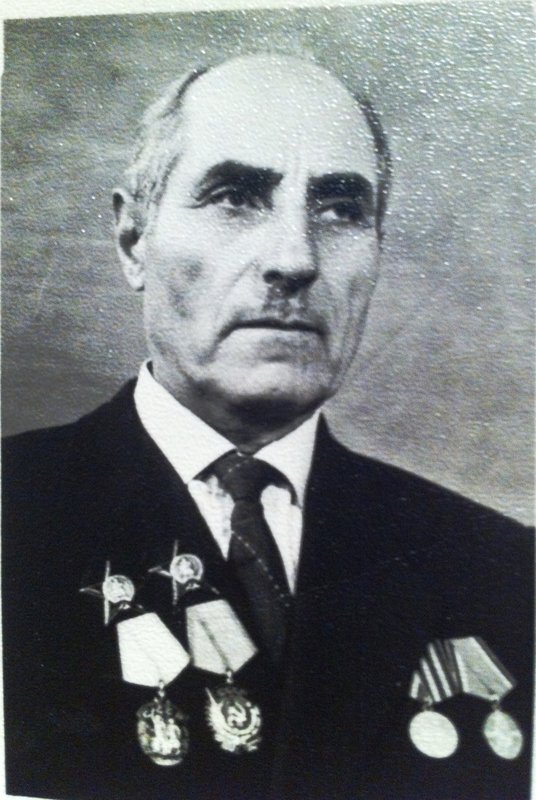
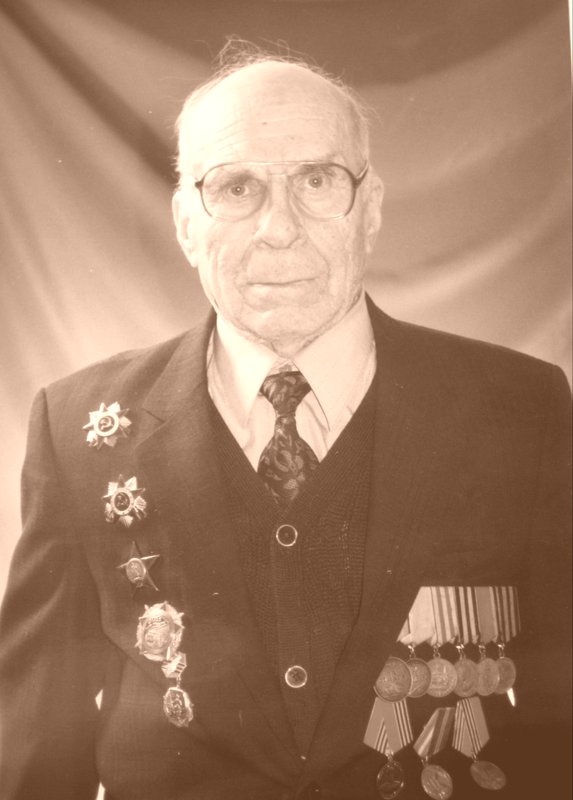
She was awarded the Orders of the Patriotic War of I and II degrees, medals "For Courage" and "For Capture of Konigsberg." _x000D_
The most precious thing taken away by the war was her health. Nadezhda Timofeevna became a disabled person of the 2nd group. For a whole year, while working as a Teacher of Russian Language and Literature, was instructing lessons in a whisper in the classroom, and did not hear well. But the post-war children respected and appreciated her, they never played pranks in class, did not laugh at her. To this day, they remember their teacher, a front-line soldier, who laid the foundations of the best in them: kindness, duty, justice and honor. _x000D_
“Much of what my mother and my uncle Dima achieved in their life has been achieved thanks to our grandmother. Behind her shoulders is a long, a hard, heroic life, and at the same time very rich fate: study, war, huge work experience, a broken family, raising her children, and later, us, grandchildren.”(from the composition of the granddaughter of N.T. Sibiryakova Irina Putintseva). _x000D_
If not for the war ... But history cannot be changed. The generations that took part in the battles, stood at the machines and worked in the fields and farms in those years are already passing away. _x000D_
On the fingers you can count women who "never dreamed of paradise, but were baptized with iron and fire. All my life I was at the forefront, and I would like to die on it." Yulia Drunina. These lines from a poem by another front-line soldier became the motto for N.T. Sibiryakova.