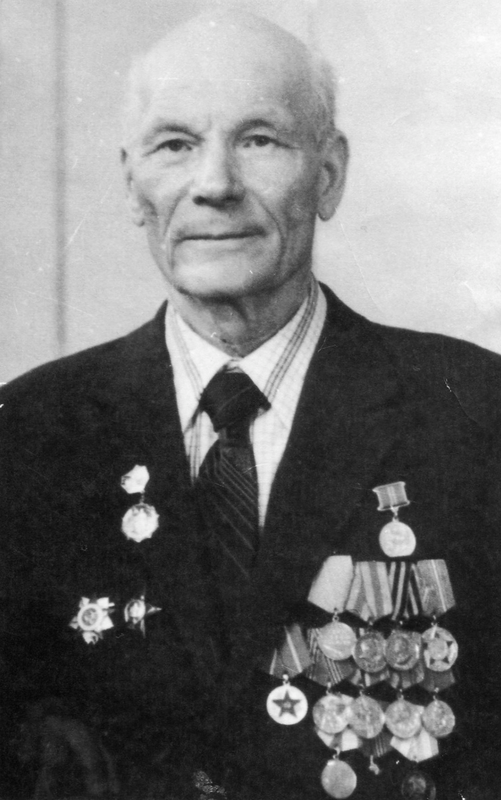
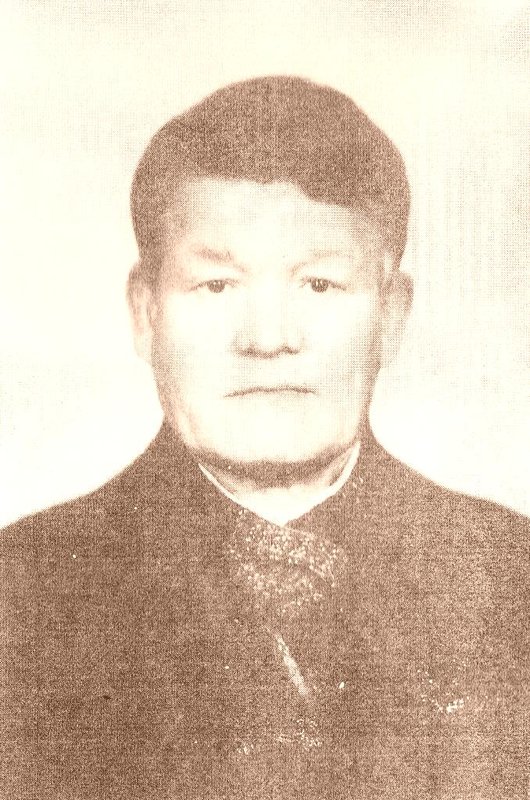
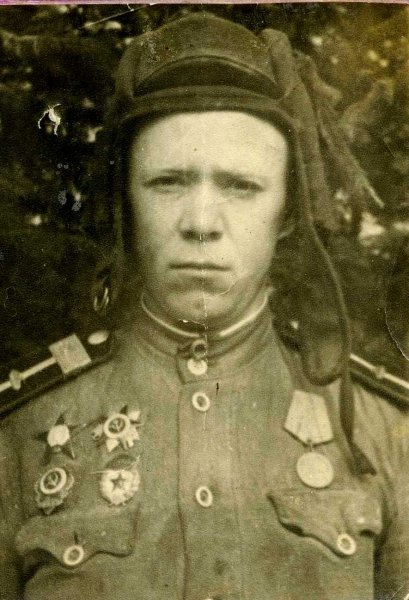
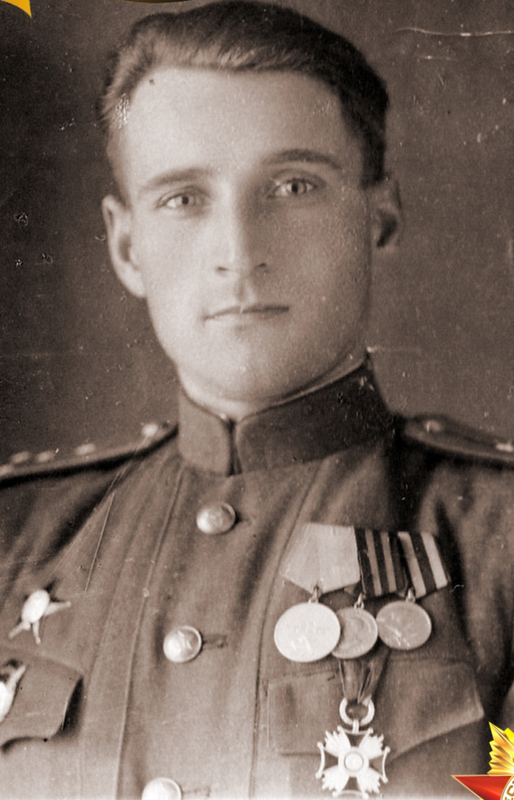
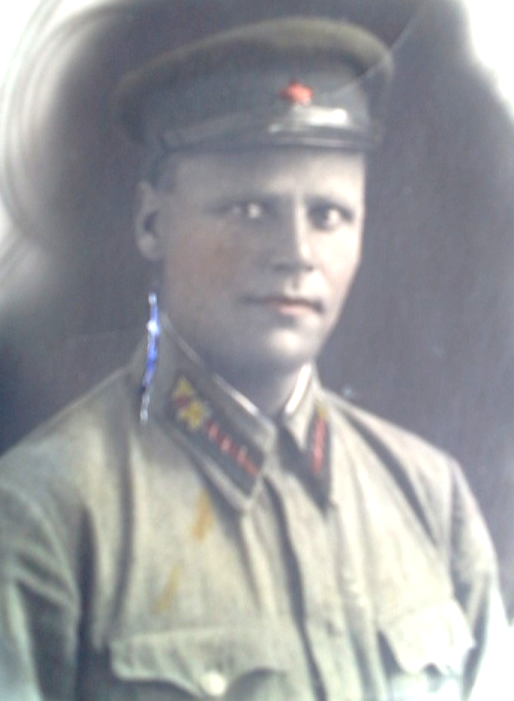
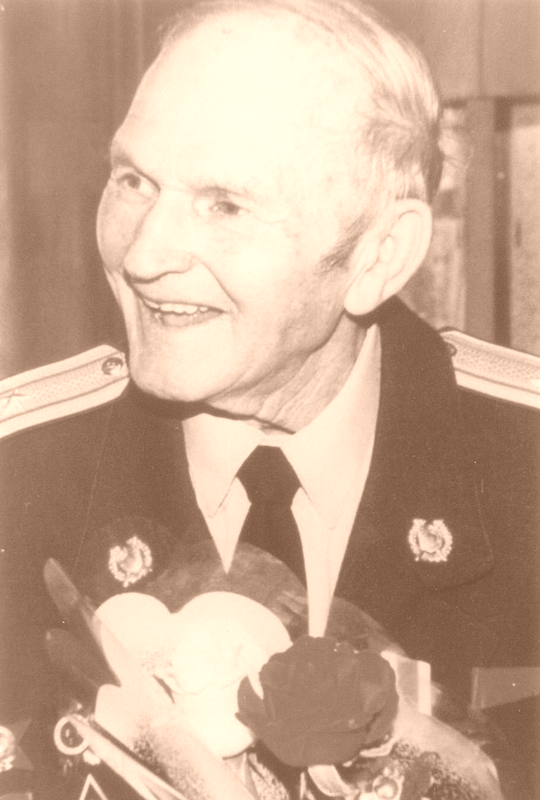
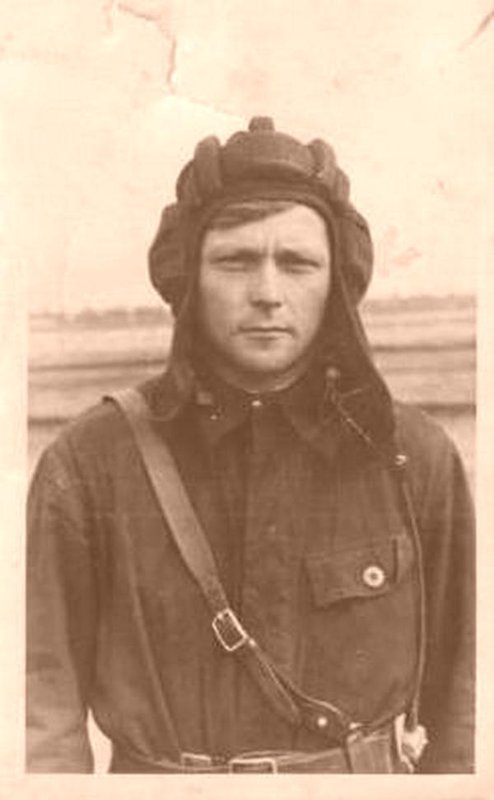
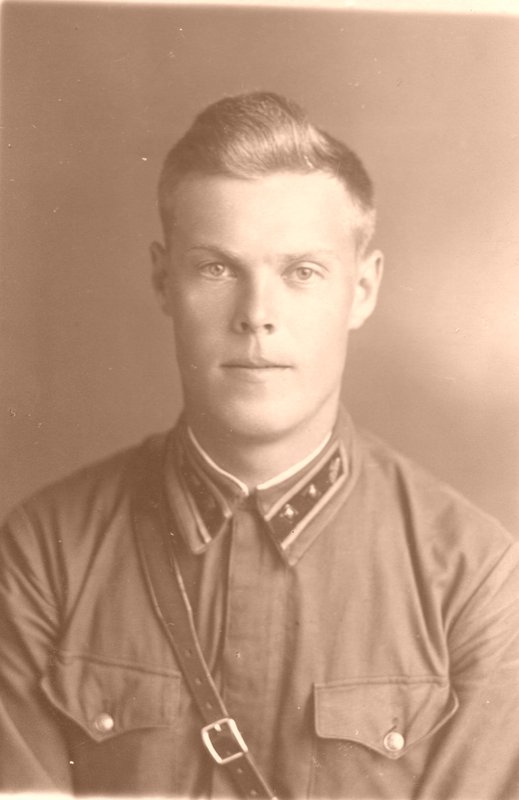
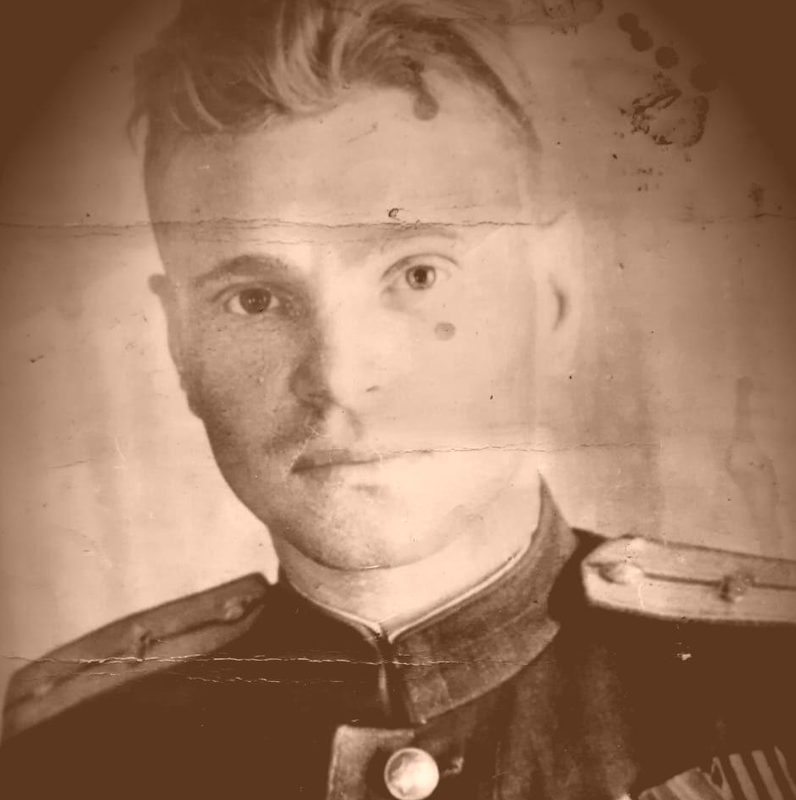
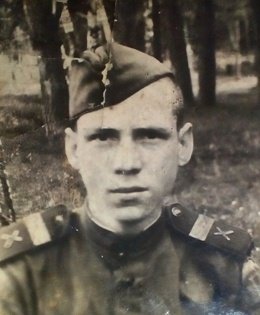
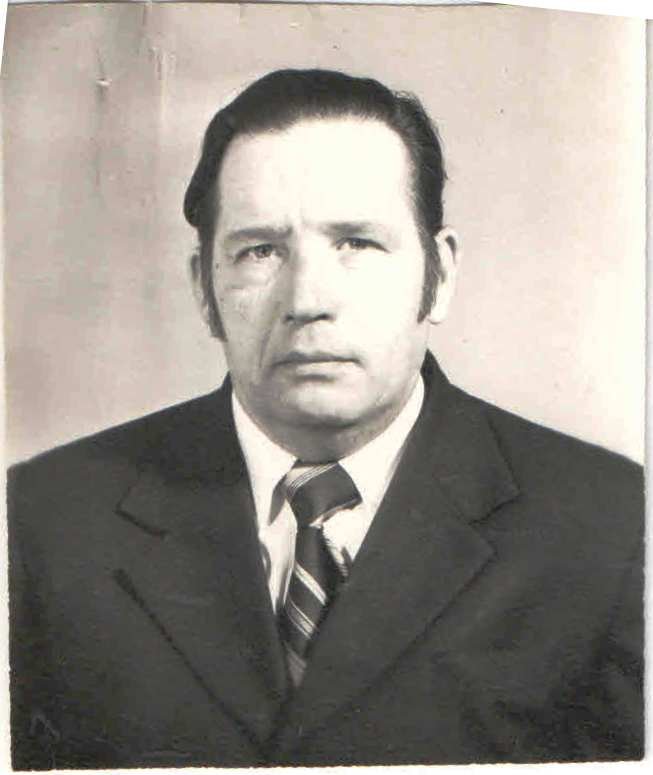
Gladush Mefodiy Kuzmich
Rank: Colonel. Branch of troops: Armored and mechanized forces. Gladush Methodius Kuzmich was born on June 7, 1920 in the village of Mishurin-Rog, Verkhnedneprovsky district, Dnipropetrovsk region. In 1939, he entered the 1st Saratov panzer specialized school. After graduation in June 1941, he was sent for further military service in the 144th tank regiment of the 23rd tank division as a platoon commander of T-26 tanks. Gladush got to the regiment's location on June 17th, 1941. In June 1941, the division was stationed in Libava, with 350 T-26 tanks, 17 “Vickers” tanks, 2 tankettes, 9 flamethrower tanks, 3 t-26 tow trucks, 5 BA-10 armored vehicles, 15 BA-20 armored vehicles. Starting with June 19, the division secretly relocated from Libava and concentrated by June 22 to the north of Telshay in the Kurtuvena area. In June-July 1941 the division protected retreat of Soviet units through Riga towards Pskov. By July 4th, the division had 10 tanks and 150 men in its composition, and was located on the Ostrov-Pskov highway. On July 5th Gladush`s division was supposed to be withdrawn from the fighting, but on July 7, German units knocked back Soviet troops and rushed to the crossings on the Cheryokha river. The remnants of the division were detained and together with the 3rd motorized rifle regiment of the 3rd tank division and the rifle battalion of the 118th rifle division were put on the defense of the crossings. On the evening of July 7, the division's tanks moved into action with the tanks of the German 1st Panzer division. On the morning of July 8, German units crossed the river and reached the southern outskirts of Pskov, where the remnants of the division retreated and on the same day the division left the city through the Northern outskirts. Only two properly operating tanks remained in the division (in addition to 56 damaged and requiring repair). During the first 16 days of the war, 144 tanks were lost due to the enemy fire, 122-for a technical reasons, 9-transferred to other units. After Pskov battle, the remaining tank man of the division were sent to Novgorod to join 8th tank brigade under the command of the future chief Marshal of the armored forces, at that time Colonel, P. Rotmistrov. From September 1941 to Januanry 1942 Gladush participated in the defense of Moscow staying with the 8th tank brigade which was part of the North-Western, Kalinin and Western fronts and took part in the winter counteroffensive of Soviet troops near Moscow when he distinguished himself during liberation of the city of Klin. During the offensive, the brigade marched as far as Rzhev. On January 11th, 1942, the 8th tank brigade was transformed into the 3rd guards tank brigade for the mass heroism of its personnel. After liberation of the town of Kalinin, emblems were painted on the turrets of all tanks of the 3rd guards brigade - large white circles with the number "3" in the middle. Each tank was given a name, which was written in white paint on the tower. On June 26, 1942, the brigade was re-equipped with KV heavy tanks. On July 1, 1942, due to the threat of an enemy breakthrough near Voronezh, the brigade within the 7th tank corps was transferred to the Bryansk front in the Yelets area, where it became part of the 5th Tank Army. On August 24, 1942, the brigade within the 7th tank corps was transferred to the Stalingrad front and became part of the 1st guards army. In August-September 1942, as a part of the 3rd guards tank brigade took part in fierce battles to defend Stalingrad. On 18th of September 1942 after the battle for the hill “154.2” in the area of the junction exit 564, he was awarded with the medal "for bravery". The phrase "a battle for a forester's hut" became a symbol for the positional battles of the First World War. But during battles of WWII in the steppes close to Stalingrad there were no forests, nor foresters, nor huts. In the operational documents of the troops fighting North of the city, another local landmark is mentioned - a traffic light on the railway running from Kotlubani towards Stalingrad. It is amazing how this traffic light survived several fierce battles, was not destroyed by attacking tanks or blown to pieces by shells and aerial bombs. So this particular trafic light at the 564 km junction exit can much more claim to be a symbol of the battle of Stalingrad than the house of Sergeant Pavlov since it was in the center of events much more often and was mentioned in operational reports up to and including the front-line level. And much more soldiers perished next to this traffic light than around any single house in Stalingrad. Gladush participated in the November offensive that terminated by encircling of the 4th Panzer and 6th German armies at Stalingrad. During the Soviet army's counteroffensive at Stalingrad on 19.11-30.12.42, a new tank attack tactic was used during the battle for the Rychkovskaya railway station. Our troops were located on high ground, the positions of the German troops - in the lowlands. At night, with their lights on, but without gunfire or machine-gun fire, the tanks began to move towards the German positions. The enemy was surprised by this kind of attack, the tanks reached the enemy's fortifications without firing a single shot, broke through the defenses and reached the Bank of the Don river. On December 13th, during nazi airstrike his tank was hit by a thermite shell that killed practrically all the guards crew – master sergeant Zemlyakov, sergeant Borowski, senior Sergeant Volchkov. After the crew was buried on the battlefield, repairmen welded a hole from a shell hit with electric welding, and in the morning the tank was back in service, having distinguished itself in battle, paying tribute to the fallen comrades. After the defeat of enemy troops at Stalingrad, Gladush participated in the Rostov offensive operation on January 1 – February 18, 1943. In March 1943, he participated in the defense of Belgorod during the German counteroffensive. In the summer of 1943, he took part in the battle of Kursk. In August 1943, he was transferred to the newly formed 233rd separate tank regiment as a company commander of KV tanks. As part of the regiment, he fought at the 1st Belorussian front within the 50th Army. He was awarded the order of the Red Banner for his distinction in crossing the Pronya and Dnipro rivers and liberating the city of Mogilev. It was decreed on 10th of July, 1944 that 233rd Separate Tank Regiment was given the honorary name "Mogilev". For military valour during the battle for Pron river Gladush M. K. was awarded the order of the Red Star. Together with the regiment, he participated in the liberation of Belarus and Poland. In the summer of 1944, he was sent to serve in the Polish Army, as a tutor of the tank school of the Polish Army in the city of Khelm. All Soviet officers in this school wore the uniform of The Polish Army. In March 1945 Gladush participated in the suppression of the uprising of supporters of the Krayovy Army among the cadets of the school. He was awarded the Polish silver Cross of merit. In the post-War years, he was commissioned as a teacher to the Kazan tank school, but due to the discrepancy in rank and age, he was transferred to Anapa as a company commander of a tank battalion. After Kazan, Gladush worked for Kharkov tank school as a teacher of tactics.
In 1958 Gladush graduated from the Military Red Banner Academy of the Armored Forces of the Order of Lenin and the October Revolution named after Marshal of the Soviet Union R. Ya. Malinovsky- and after that served in various positions in the Baltic States, within the group of Soviet forces in Germany and in Crimea.
In 1970, he went on a well-deserved rest. He passed away in 2012 at the age of 92.