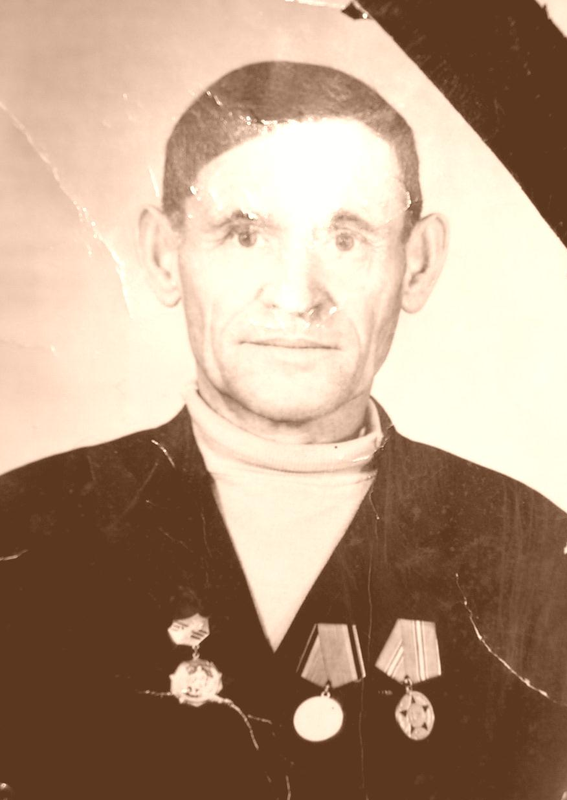
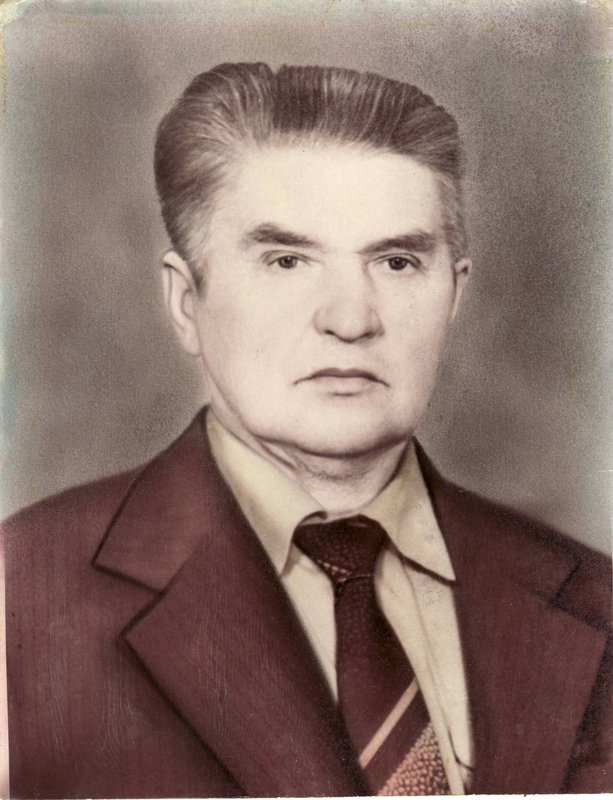
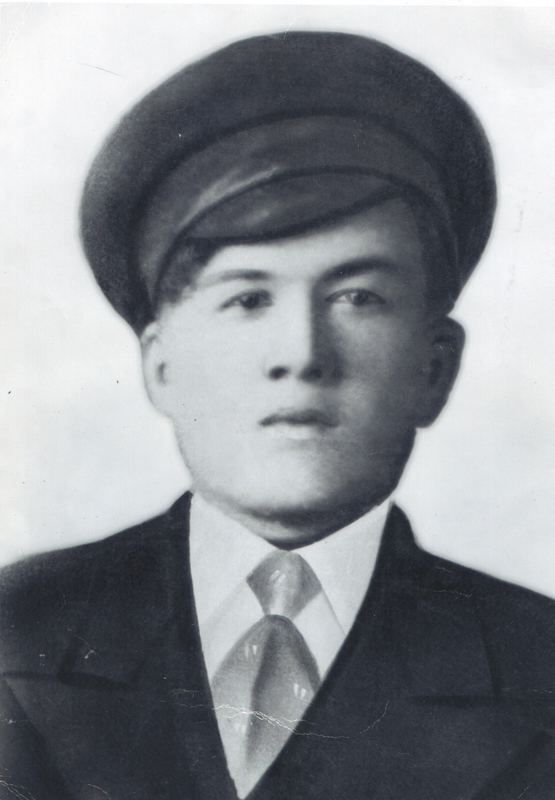
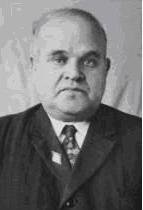
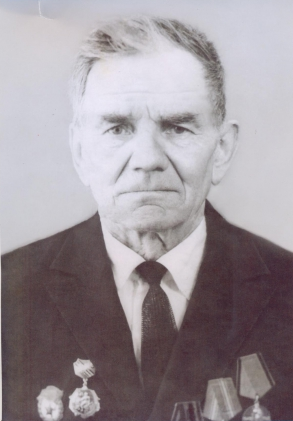
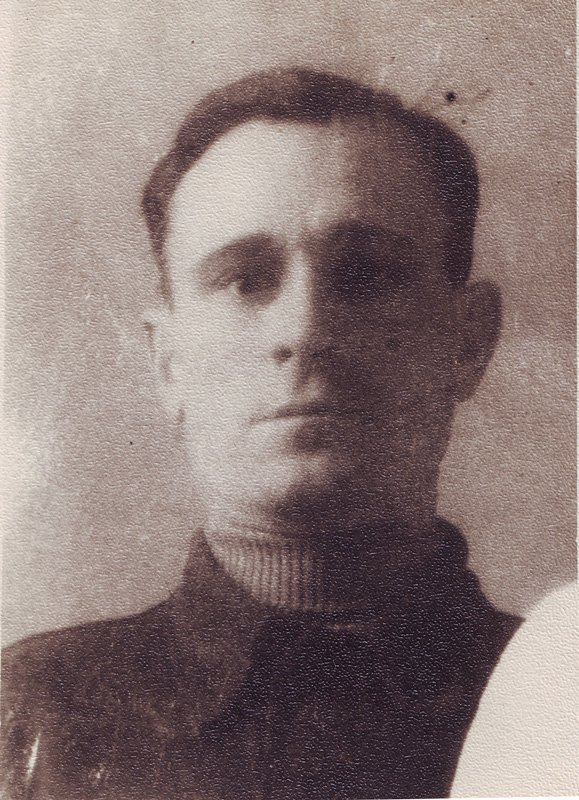
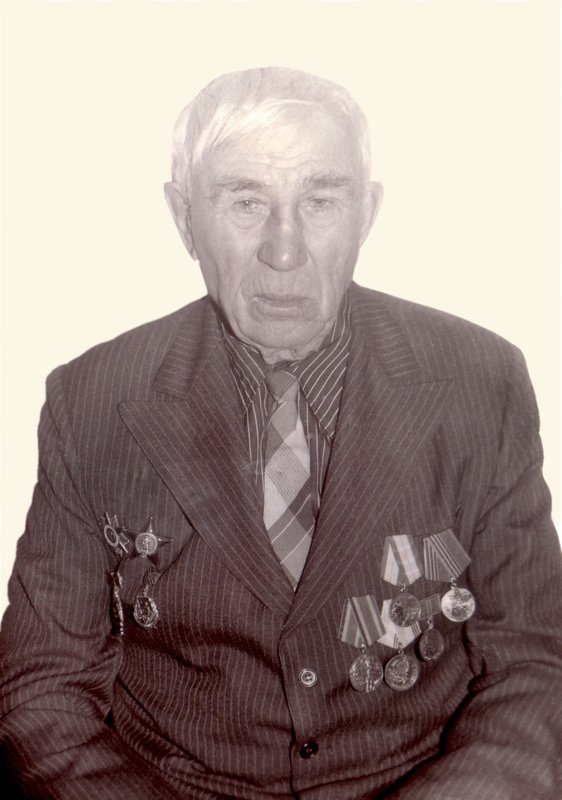
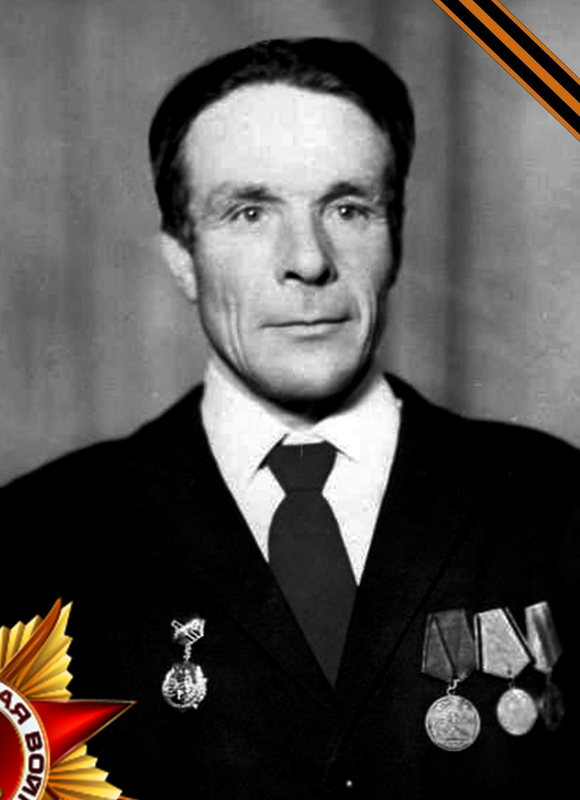
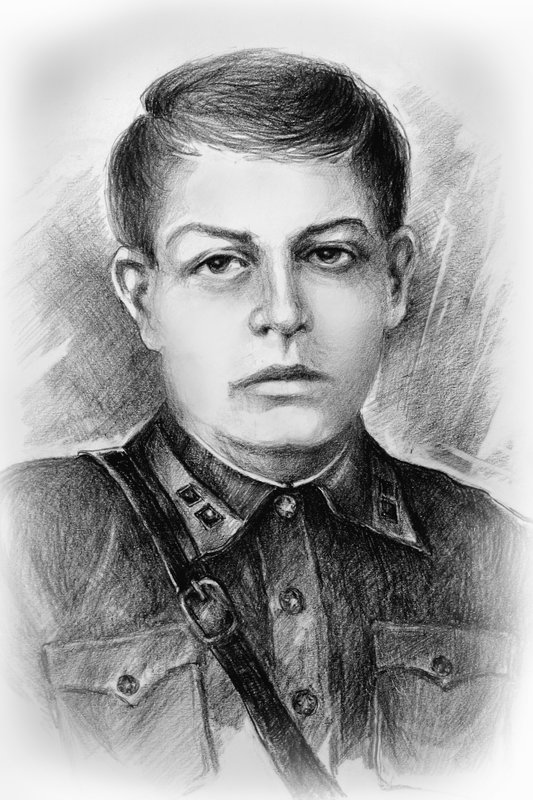
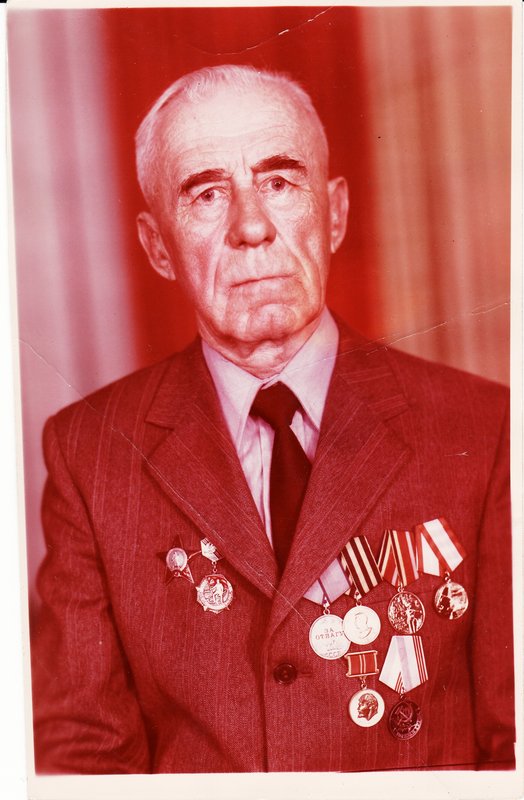
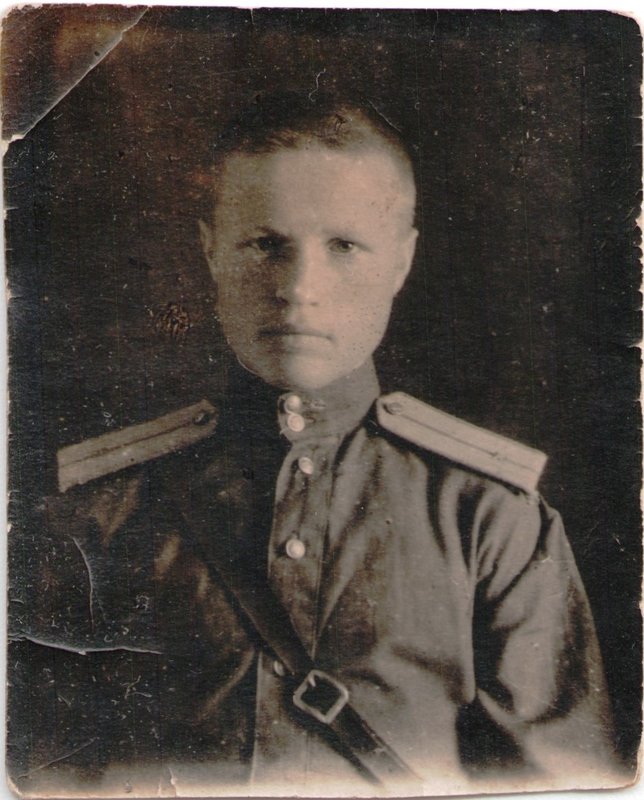
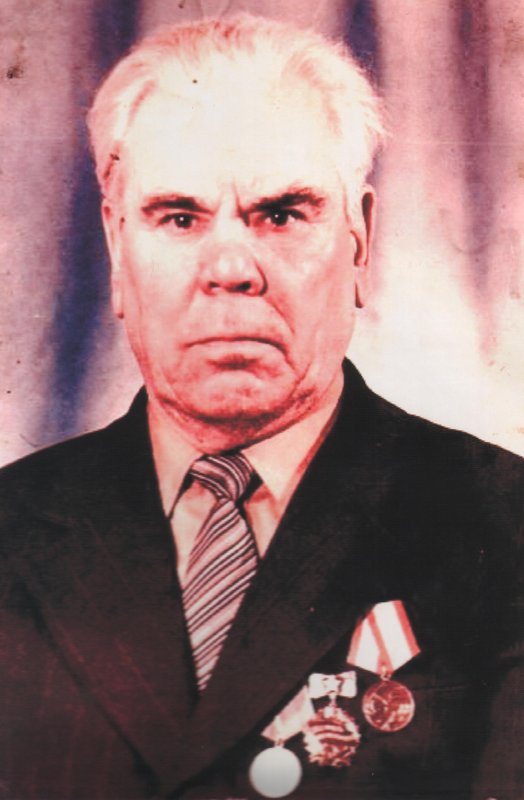
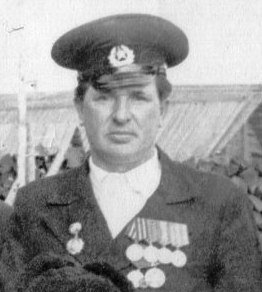
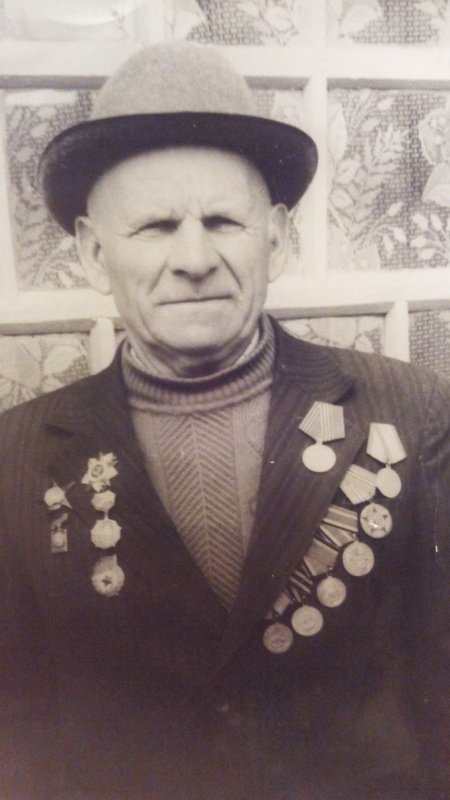
Voitsekhovich Anton Nikiforovich
Voitsekhovich Anton Nikiforovich_x000D_
_x000D_
Rank: Red Army soldier. _x000D_
Branch of troops: Army, air force (except marine aviation), the coast guard, the troops of the NKVD border troops. _x000D_
Unit: 384th rifle division (1st formation). Voitsekhovich Anton Nikiforovich. _x000D_
1897-01.12.1942. Red army soldier. Arrows 1276 infantry regiment of the 384-infantry division. He fought in 1942 in the area of the Demyansk pocket on the North-Western front. He died on December 1, 1942, one-kilometer East of the village of Vyazovka in the Polavsky district of the Leningrad region. Now it is the Parfinsky district of the Novgorod region. His name is immortalized in the cemetery of soldiers in the village of Novaya Derevnya, Parfinsky district, about fifteen kilometers from the place of death in battle. For ease of reading - explanations of the symbols: SP-rifle regiment, AP-artillery regiment, GSD-guards rifle division, A-army, NWF-North-Western front, NP-observation post, KP-command post, OP-strong point, OT-firing point, PR - K-enemy, red army-Workers 'and peasants' Red Army. My grandfather, Anton Nikiforovich Voitsekhovich, was born in the Russian Empire in 1897, somewhere in Belarus. The exact place of birth is unknown. Moreover, my father, Vitaly Antonovich Voitsekhovich, claims that his father was born in 1896, although all documents show the figure 1897. My grandmother, Tatyana Melentyevna Voitsekhovich, was born in 1897 in the village of Buglovo, Kremenets district, Volyn province, in Ukraine. My grandfather and my grandmother had seven children-a common occurrence at that time: Ivan, Anna, Ekaterina, Pelageya, Vladimir, Olga and my father Vitaly, the youngest in the family, born on December 7, 1938. History is silent about how the Voitsekhovichi moved to Siberia, but before the great Patriotic war, a large family lived in the village of ShChelkino. At that time, this locality was an administrative division of the Solominsky selsoviet of the Topkinsky district of the Novosibirsk region. Now that village is no longer there, and the town of Topki is still alive, although it is already part of the Kemerovo region. This is a mining region. Such it was before the terrible war. Not surprisingly, my grandfather worked for the benefit of the socialist Motherland as a miner in the mine. Shortly before the treacherous attack on the Soviet Union by Nazi Germany, Anton Nikiforovich was buried in a mine. Survived. The consequence was a serious kidney disease. Due to health problems, my grandfather was not taken to the front in the first days of the war. He was called up on may 16, 1942 and sent to military unit 4155 at Bogotol station in the Krasnoyarsk territory. There, as I understand it, was the formation of military units of the red army-the Workers 'and peasants' red Army. Apparently there my grandfather was assigned to the 1276 rifle regiment of the 384th rifle division. The red army became the Soviet army only after the war, in 1946. 384th RIFLE DIVISION the Division was formed from August 26 to October 10, 1941 by order of the State defense Committee in the Siberian military district, in the city of Ishim, Omsk region. According to the Directive of the headquarters of the Supreme high command No. 004275, the 384th rifle division was included in the 58th reserve army and was ready to be transferred to Ignatovo by November 7. From 10 to 20 November 1941 it was relocated to the Arkhangelsk military district in the area of Vytegra with unloading at art. Nyandoma of the Arkhangelsk region. Then the soldiers covered more than 250 km on foot to Vytegra by forest roads and column paths. Then from there, from February 1 to February 15, 1942, it was relocated to the area of Lyubnitsa station in the Leningrad region (now Novgorod region) on the North-Western front and became part of the 11th army. The composition of the 384 infantry division, the first formation:1272, 1274 and 1276 infantry regiment, an artillery regiment 947, 402 separate anti-tank battalion, 227 antiaircraft artillery battery (671 separate anti-aircraft artillery battalion), 446 reconnaissance company, battalion 664, 835 separate communications battalion (315 separate company), 469 medico-sanitary battalion, 462 separate company chemical protection, 499 motor company, 238 field bakery, 807 divisional veterinary infirmary, 1432 field postal station, 755 field offices of the state Bank. Curious staff of rifle divisions at the beginning of the war: _x000D_
People — 11.447 people _x000D_
Horses — 2.698 goal. _x000D_
Rifles — 8.844 _x000D_
machine Guns manual — 162 _x000D_
PCA— 162 machines _x000D_
Guns machine — 108 Guns of 37-mm or 25-mm anti-aircraft_x000D_
6 45 mm Guns — 18 12.7 mm anti-aircraft machine Guns. _x000D_
9- or 25-mm anti-aircraft guns_x000D_
4 Guns 76 mm regimental _x000D_
2 Guns 76 mm divisional _x000D_
16 Howitzer 122 mm — 8 Mortars 50 mm. _x000D_
81 Mortars -82 mm_x000D_
54 Mortars 120 mm — 18_x000D_
Cars — 4 Cars trucks. _x000D_
192 Car special. — 5 Tractors _x000D_
On February 15-16, after walking more than 250 km, the 384th rifle division occupied the positions indicated by the command. From the journal of combat operations 384 SD, quote: "24.2.42 g. 384 SD for the first time after its formation entered into battle with the fascist troops on the front 3 km West of Staraya Russa. 1276 SP took part in the battle (where my grandfather later got-approx.) under the command of major Witlin. The regiment was advancing in the direction Biologija, Small. Walnut. The regiment went on the attack at 12: 00 on 24.2.42, Overcoming enemy fire resistance. Was particularly strong flank with mortar and machine-gun fire from Raluca, Nagawa, Nechina, Muravieva. Within six hours, the regiment's battle lines advanced 800 m, lying in the immediate vicinity of the front edge of the enemy's battlefield. This was the end of the first day's offensive. The offensive was conducted without prior preparation.preparations». Major Witlin was killed in another attack the next day.From the first day of its battle, 384 SD participated in the Demyansk operation. DEMYANSK POCKET and RAMUSHEVSKY CORRIDOR the Offensive of the 11th army, which included 384 SD, in the Demyansk direction began on January 7, 1942. The first target was Staraya Russa, but the city was strongly fortified by the Germans, and it was not possible to take it on the move. As a result, the Soviet advance was stopped in this area. Simultaneously with the 11th army, the right wing of the 34th army launched an offensive. A few days later, the 3rd and 4th shock armies arrived at the scene, joined by the 241st rifle division under the command of I. D. Chernyakhovsky, which was part of the 34th army. On January 19, the headquarters of the Supreme high command developed and approved a new plan of action to encircle German troops on the North-Western front in the area of Demyansk. On January 29, Soviet troops began closing the ring on both sides. The German command repeatedly requested permission to retreat, but Hitler did not give it. As a result, on February 8, a "cauldron" was formed, in which six Nazi divisions, including the motorized SS division "Totenkopf" - "Death's head", with a total of about 100,000 soldiers and auxiliary units. At the head of the encircled troops was the commander of the 2nd corps, count Walter von Brockdorf-Alefeld. Due to the emergence of the "cauldron", the Soviet command had to change the strategic plan of action in the North-West direction. The need to constantly maintain the outer ring of encirclement hampered the actions of the North-Western front, which did not have enough forces to implement plans to attack the rear of the entire German army group "North". In addition, fresh enemy units were transferred to the area of operations, whose task was to unblock the group.Outside the cauldron, the Wehrmacht created a strike group of three divisions under the command of Lieutenant General Walter von Seidlitz-Kurzbach. On March 21, 1942, it launched an attack on the outer ring of the Soviet encirclement from the area southwest of Staraya Russa. At the same time, the blow was delivered from inside the "cauldron". The SS Totenkopf division, which lost most of its personnel during the operation, played a huge role in these actions. Division commander Theodor Eicke was awarded the Knight's cross with Oak leaves in April. The actions of Seidlitz-Kurbach were crowned with success: a month later, on April 21, the "Ramushevsky corridor" (from the name of the village of Ramushevo) was organized with a width of 6-8 km, through which it was possible to maintain communication between Staraya Russa and Demyansk. On may 5, the blockade was finally lifted. The German forces retained the Demyansk ledge and continued to hold Ramasheuski corridor. Until the end of may, Soviet troops attempted to eliminate the salient, but the Reich command moved additional forces to the area of operations, and the offensive was repulsed. 384 DIVISION at the TURN of the RAMUSHEVSKY CORRIDOR on the night of April 3 to 4, 1942, the division relocated to the area of the settlement of Redtsy. The village is adjacent to the Northern boundary Remotescope corridor. The constant fighting in this area was reduced to one thing: the Germans tried to expand the neck of the Demyansk boiler, the red army - to re-close the encirclement. From the journal of combat operations 384 SD: "7.6.42. on June 3, the enemy, having pulled up reserves, with the support of bomber aircraft up to 30 aircraft, 14 tanks, artillery and mortars at 9.30, went on the offensive along the entire front of the division, dealing the main blow to the defense of the 1276 rifle regiment. 1276 JV, having a small composition (up to 200 people) was almost completely destroyed and only a small group consisting of soldiers of the commandant's platoon, mortars, scouts and sappers, a total of 43 people, managed to hold the enemy on the Northern edge of the grove 1.5 km South-West of Gridino."As of the beginning of the great Patriotic war, there were 3,182 people in the rifle regiment in the state. Of the 1,276 SP 384 SD of the first formation only 43 people survived… These are losses from February 24 to June 3, 1942, in just three months with a hook. As stated at the dawn of this story, my grandfather Anton Nikiforovich Voitsekhovich, went to war on may 16, 1942. And according to my subjective concepts, I ended up in the 1276 rifle regiment of the second formation shortly after the Germans destroyed the first heroic part of the army unit in early June of the 42nd. That is, in the summer of the same year. On August 8, 1942, the COMMANDER of the 384th rifle division received a personal instruction from the army commander that the unit would carry out the task of defeating the enemy in the direction of the village of Vasilyevshchyna, which was located in the throat of the Demyansk group. From Staraya Russa to Demyansk, a single road passed through this locality. In July, Vasilishina was repulsed by the Germans to our troops. Both warring parties attached great importance to this strong point. In General, after the Germans unblocked their group in the Demyansk pocket in April 1942. The North-Western front conducted 9 offensive operations to re-encircle the enemy and 2 defensive operations to repel its offensive.For example, the dry lines of the 4th offensive of the red army, which lasted from August 10 to August 24, 1942: 14.08.42 g. PR-K provides strong fire resistance to the South. slopes height “Sandy". 1272 SP, knocking out PR-ka from the trenches, went to the Bank of an unnamed stream (Zap. heights “Sandy"). 1276 SP, destroying PR-ka on the ridge and yuzhn. slopes of an unnamed height (“Sandy”), went to the North. the Bank of an unnamed stream, where he is fighting with a strongly fortified PR-com on yuzhn. the Bank of an unnamed stream. I completed the task for 14.08.42. Losses of the regiment: 439 people. dead and wounded. (My grandfather was still alive). 1274 SP - 120 people-destroyed the node of resistance PR-ka at the junction of roads (1112), went to the South. the slope of the “Sandy " height, where it was fixed.20.08.42 G. During the entire time, the division repeatedly tried to seize the height and only on the night of 19-20.08.42, 1274 SP crossed the nameless stream at dawn and destroyed the centers of resistance on the North. on the slopes of the height “dotted", mastered them, secured and continued the fight. 1272 SP, while at the North. the banks of an unnamed stream (Zap. height “Sand”), contributed to the fire 1274 SP. 1276 SP from 18.08.42 was in the second echelon at d.Big Oak Trees. The regiment suffered heavy losses in the battle of 15.08.42 for the crossing of an unnamed stream. 25.08.42 g. PR-K three times counterattacked to the company on the site 1272 SP, was repulsed with heavy losses. In 1272 SP there were only 329 people. 1276 SP, having a total of 429 people., having built a battalion in three echelons, 25.08.42 g. comes for the mastery of the height " Dotted”. After the artillery RAID 1-2 echelon 1276 SP broke into the trenches of PR-ka and started a grenade battle. In the morning 1-2 echelon (75 people) repeat. No further information was received from them. 6 messengers sent were killed by snipers of PR-ka before the approach to the height of “Dotted” in the stream, 1 wounded. 3 echelon 30 people - at the height of”Sandy".PR-K attacked our units during the day, but the occupied trenches at the height of "dotted" were held by our fighters. During 27.07.42 g. to 12.09.42 g. 384 SD was in the same place in the district of Vasilyevschina, occupies the defense on the previous lines. Division losses for 03.09.42: 7 people were killed, 13 people were wounded. Losses for 04.09.42: 8 people were killed, 14 people were wounded. Losses for 05.09.42: 10 people were killed, 65 people were wounded. Losses for 06.09.42: 1 person was killed, 24 people were wounded 07.09.42: 11 people were killed, 25 people were wounded. Losses for 08.09.42: 2 people were killed, 9 people were wounded. Losses for 09.09.42: 10 people were killed, 15 people were wounded. Losses for 10.09.42: 1 person was killed, 8 were wounded чел.-http://demjanskij-kotel.blogspot.ru/2011/03/384.html [ http://demjanskij-kotel.blogspot.ru/2011/03/384.html ] Offensive and defensive battles in the area of Vasilyevshchina were conducted until October 2, 1942. From the journal of combat operations 384 SD: "18.10.42 g. division commander Colonel tov. Morozov with the commanders of regiments, the chief of staff and the staff conducted classes on the analysis of operations in the proposed area of action-the village of Vyazovka. According to the plan of the army command in the area of Vyazovka, it was supposed to break through the defense of the Demyansky cauldron and divide the Wehrmacht troops into two halves." The 11th army, which included 384 SD, was to advance from the North, and the 1st shock army was to advance from the South.To achieve the goal, an impressive group of the red army was concentrated in the area of Nora-Lyalino: 384 SD, 127 SBR, 133 SBR, assault battalions 22 and 28 GSD, 55, 282 SD, 947 AP, mortar units and a lot of artillery. During further redeployment to the area of operations to the village of Vyazovka, the troops faced one of the two eternal Russian problems-roads: first, the month of October - autumn thaw, the frosts did not have time to hit; second, the swamp is all around. According to local residents, they had to fight waist-deep in water, literally. From the journal of combat operations 384 SD of October 18, 1942: "the March was made in extremely difficult conditions. The roads along the route are completely unsuitable for movement. The horses were below average fatness. One gun in difficult places could not take even 10-12 horses. Tractors, of which there were only two, often failed, there was not enough fuel. Allocated 1,000 fighters 34 SD within ten days failed to prepare the way of Kropachevo - a Grass - Hole. As a result, the 30-kilometer March of the artillery regiment took four days and only 24.10.42 was concentrated four kilometers East of Nora, that is, in the area of Vyazovka... even with the beginning of a large amount of road work, enemy aircraft increased reconnaissance. Luftwaffe planes flew continuously over the roads - FV-179, XH-126, ME-109. And our vehicles were constantly moving along the roads. In many places, without any disguise, individual guns, RS vehicles, and carts were abandoned in the mud.All this gave away the plan of the command to concentrate troops.If 10-15 days ago in the area of Lyalino-Nora, mortar fire was rare, now artillery and mortars continuously shelled the roads leading to the nearby settlements of Svinoroy and Vyazovka. The enemy's fighter aircraft, along with reconnaissance, began to frequently fire guns and machine guns at infantry, baggage trains, and artillery.The enemy began to pull troops to the area of Vyazovka." From the journal of combat operations 384 SD: "30.10.42 g. at 3.00, the commander's order arrived to attack at 6.00. By the time the order was received in 1272 SP for two hours there was no communication with the battalions. The staff commanders who were sent out with orders to the battalions were delayed, because they did not know the exact location of the battalions. Only at 7.30 did the battalions move to their original positions. These guides from 1230 SP (through which our guides were supposed to attack) also did not know the exact location of the units, and if 1276 SP entered the battle in one section, then 1272 SP entered the battle in a battalion-each battalion began to advance independently wedged in part 370 SD. The commanders of the supporting artillery did not contact our commanders, and those who did did not have a connection within themselves. The commander of 1272 SP did not have an NP. From 9.30 am, the PR-ka aviation continuously bombed the front edge and battle formations of our units in groups of 10-15 Yu-87 and HE-111 aircraft. Having occupied the initial positions already under artillery fire and the influence of aviation 1272 SP and 1276 SP without any art. training, without supporting artillery, they went on the offensive through the battle formations of 370 SD and threw the PR-ka to 400-500 m. Further progress is suspended due to heavy rain, art. fire and counterattack on the right flank." On November 28, 1942, the sixth offensive of the red army begins with the goal of slamming the lid of the Demyansk boiler. This day marked the beginning of the end of 384 SD and its three rifle regiments-1272, 1274 and 1276. From the journal of combat operations 384 SD: "25.11.42 g. An offensive is being prepared to break through the defense of the PR-ka in the district of Strelitsy-Olkhovets-Vyazovka. Our 384 SD, as in the first plan, comes for 126 SBR after mastering it Vyazovka-Olkhovets. Preparation was completed on 27.11.42. Division is concentrated: - 1272 SP-forest edge 1 km South-West OTM. 68.6 (R-n Nora);- 1274 SP-near the Nora - Vyazovka road (6 km from Nora);- 1276 SP - 4 km South-East. Burrows; 28.11.42 g. at 12.00 on the front more than 10 km 11 A went on the offensive, 126 SBR two battalions advancing on Olkhovets-Vyazovka. As a result of all the fighting only on the right flank of the army-43 GSD was successful. 126 SBR did not have success, because it did not know the leading edge of the Ave. When reporting to the division commander, Colonel Moskalik, confirmation was received - to take Olkhovets at night. The battalion was going blindly, who was in front of it, what kind of TROOPS, no commander knew. As a result of this operation, the battalion suffered 86 casualties. killed and wounded, not a meter did not advance to the territory occupied by PR. 29. 11. 42 g. Many commanders (primarily 126 SBR) believed that the front edge of PR-ka passes near Olkhovets-Vyazovka. In front of the front edge there is a blockage from the forest with a system of Bunkers-as if BO. The whole art. the preparation was concentrated in vil'khovets ' - V'yazivka - they are more visible. The forest debris is not visible to art observers, and our artillery could not destroy them. Therefore, all the losses of both 126 SBR and 384 SD were mainly losses from bullet fire from OT from the blockage. The attached tank company (11-T-34) was not successful. 5 tanks deviated from the battle course to the left and got stuck in the swamp. Visibility was poor, it was snowing heavily. 1-2. 12. 42 The division advanced in cooperation with 126 SBR separate assault groups, destroying from PR-ka, prepared for the occupation of Olkhovets. 02. 12. 42 Unexpectedly, the division surrendered its combat section 126 SBR and 170 SD and concentrated on its previous positions before the offensive began. Received the order of the commander of 11 A on the basis of the order of the commander of the front to disband the 384th Siberian rifle division. All personnel and property should be used for staffing other parts of the army." The disbanding of the division during the great Patriotic war meant that there was simply no one to fight in the division, everyone died a brave death, or almost everyone.... This is not surprising: Rifle divisions (regiments, battalions, companies) in the red army during the great Patriotic war_x000D_
did not fight for long. Both in offensive and defensive battles, they were always assigned the most dangerous areas, and combat tasks were often set impossible. Therefore, the enemy very quickly knocked out the personnel of the rifle units. My grandfather, red army soldier Anton Nikiforovich Voitsekhovich, was one of the last to die in the 1276th rifle regiment on the last day of the 384th rifle division - December 1, 1942. According to the personal list of irrevocable losses of the commanding and enlisted personnel of the 1276 rifle regiment of the 384th rifle division, " Anton Nikiforovich Voitsekhovich 1.12.42 was killed in battle East of 1 km d. Vyazovka of the Polavsky district of the Leningrad region". Now it is the Parfinsky district of the Novgorod region. On December 2, 1942, the crumbs of the remaining 384th rifle division were withdrawn 4 kilometers Northwest of Vyazovka. There, by hand, was written "opersvodka No. 0527, to 16.00 2.12.1942, Shtadiv 384" - these data were declassified only in accordance with the order of the Minister of defense of the Russian Federation of may 8, 2007 No. 181 https://pamyat-naroda.ru/dou/?date_begin=01.12.1942&date_end=08.12.1942&division=384+%D1%81%D0%B4 [ https://pamyat-naroda.ru/dou/?date_begin=01.12.1942 & amp;date_end=08.12.1942& division=384+%D1%81% D0%B4 ] : "...1276 JV K.8.00 2.12.42 concentrated in the area of 74.5 3 km South-East of Lyalino and is building shelters for personnel. Losses of the regiment for 1.12.42 in personnel: killed-44, wounded-50". Probably one of the 44 dead was my grandfather. https://pamyat-naroda.ru/warunit/384+%D1%81%D0%B4/ [ https://pamyat-naroda.ru/warunit/384+%D1%81%D0%B4/ ] - here are all wartime maps and official documents related to the material. RESULTS of the DEMYANSK operation The Demyansk salient was held by the Wehrmacht for more than a year in the hope of conducting a large-scale operation to encircle the Soviet troops with converging strikes from the Demyansk and Rzhev areas. In March 1943, the red army still forced the enemy to leave the demyansky bridgehead and retreat across the Lovat river. Almost at the same time, German troops left The Rzhev-Vyazma salient. Thus, even the theoretical possibility of a German offensive in the Moscow direction was eliminated.The Sovinformburo report of March 1, 1943, under the heading "Elimination of the enemy's fortified bridgehead in the Demyansk area", stated: "during eight days of fighting, the troops, relentlessly pursuing the enemy, liberated 302 localities, including the city of Demyansk and the district centers of Lychkovo and zaluchye. An area of 2,350 square kilometers has been cleared of the enemy. During eight days of fighting, our troops captured 3,000 German soldiers and officers.... The enemy left more than 8,000 corpses on the battlefield."It is hardly possible to name the exact losses of the red army in the Demyansk operation. As mentioned above, for example, on August 14, 1942, 1276 SP lost 439 soldiers killed. And this is only one regiment in one day. And how many such heroic regiments and such tragic days were there!?According to the all-Russian book of memory, published in 1995 for the 50th anniversary of the great victory, " 245,511 people shed their blood in the operation near Demyansk. The names of the 88 908 of them are included in the lists of irrecoverable losses". Search engine HEROES the Phrase "the War is over only when the last soldier is buried" belongs to the great Russian commander Alexander Suvorov. And if we follow his wise dictum, the Great Patriotic war will be over for us when the search teams will find the last soldier who died during the fighting of 1941-1945, and who will be buried. From 1990 to 2015, the remains of 28,263 soldiers and officers were raised and buried in the Ramushevsky corridor of the Demyanskiy cauldron. We managed to identify the names of just over 1300 of them. Such a large ratio of unknown heroes and soldiers found with established surnames, among other things, is explained by an unfortunate fact. Each soldier of the red army was given a medallion - a plastic swirling vessel the size of an automatic cartridge case. According to the plan, the red army soldier was supposed to keep a piece of paper in a twisted form, which recorded data about the soldier and his relatives, in case of death. However, most of the soldiers were people, although believers, but superstitious and medallions were not used for their intended purpose. Therefore, search teams often find red army soldiers without a first and last name. Now in the Novgorod region, in the area of the Ramushevsky corridor, unburied soldiers lie almost everywhere on the sites of military operations: under roads that were thoughtlessly built in the post-war period, literally on bones, along the sides of these very routes, in impassable windbreaks, inaccessible swamps-everywhere! Enthusiasts of search teams raise the dead soldiers of the red army from oblivion. In their spare time, search engines - People with a capital letter-bring the end of the great Patriotic war closer: they find and bury soldiers. In 2000, my father, in response to requests, received a notification from the military enlistment office in Topki and the Central archive of the Ministry of defense of the Russian Federation that his father - Anton Nikiforovich Voitsekhovich-1.12.42 was killed in battle East of 1 km d. Vyazovka. At the Council, our family decided to find the burial place of my grandfather. Very humble your humble servant, as the most advanced unit of society in the field of the Internet, got information about the search teams of the Novgorod region. I was lucky enough to contact and get acquainted with Elena Anatolyevna Tremerova, head of the parfin branch of the "Valley Search expedition". A sympathetic and kind woman offered to take all the documents about the death of her grandfather, come to the urban-type settlement of Parfino and decide on the spot. PARFINO-2003 in June 2003, my father and I were in Parfino. We were greeted as honored guests, family Remirovich placed at home. Search engines immediately said that to get to the place of death of my grandfather, alas, it is impossible - around Vyazovka impassable swamps-unless there is a hypothetical possibility to get to the battlefield on an all-terrain vehicle and then in winter. However, nothing remained of Vyazovka-the village was wiped off the face of the earth by the Germans. Now it is a tract.During the excursions to the places of military operations that Elena Anatolyevna conducted for us, a Solomon's decision was made: to perpetuate the memory of Anton Nikiforovich Voitsekhovich at the cemetery of soldiers in the New Village of the Parfinsky district. This is the nearest burial of soldiers from the place where my grandfather died. The distance from Vyazovka to the New Village is about fifteen kilometers.For registration of documents, we went to the city of Staraya Russa, which is 20 kilometers from Parfino. The military Commissariat there is located on the embankment Of F. M. Dostoevsky, and nearby is the very house-Museum of the great Russian writer, where the genius created "Demons"and" Brothers Karamazov". Commissar Valery Tavarovich Jumaev was with us courteous and hospitable. We talked about the fighting during the war, the life and exploits of search teams. Thanks to Valery Dzhumaev, we immediately issued documents, receiving the official "go-ahead" to perpetuate the memory of our grandfather in a mass grave.In the New Village, we were met by the friendly Yulia Pavlovna Akifyeva, the head of this rural settlement. A nice woman did everything so that the next day on one of the plates of the military burial there was an inscription "Anton Nikiforovich Voitsekhovich, red army soldier, 1897-01.12.1942." Then, of course, there were tears, memories and front-line 100 gr.Many thanks to Elena Anatolyevna Tremerova and her family, Yulia Pavlovna Akifyeva, Valery Tavurovich Dzhumaev and all the people involved for these most important, solemn and mournful hours and minutes of life. PARFINO. A FEW YEARS LATER, in 2012, I invited my son, Nikifor Maximovich Voitsekhovich, to honor the memory of the hero of the great Patriotic war, Anton Nikiforovich Voitsekhovich. The second-grader gladly agreed to a trip to the Novgorod region on may 9. On the 8th, my son and I took part in festive events on Poklonnaya Gora in Moscow. In the capital, we were passing from Chelyabinsk, because direct trains to Parfino from our place of residence do not run. And planes don't fly. On the night of may 9, Elena Anatolyevna and her husband Vasily met us in Parfino. At nine in the morning we were at a solemn meeting, at the cemetery of soldiers in the New Village. The son saw the place where the memory of his great-grandfather is immortalized. And, I think, imbued with the memory that should connect generations of people. Nikifor was also struck by a stele at the entrance to the soldiers ' memorial to the New Village. A stork has built a nest on top of it. The elders of those places once wanted to demolish the stele as it did not fit into the architecture of the memorial complex. But in connection with the birth of a new life there - even if it was a bird-they abandoned their idea.After the rally, we were taken for a long time to the places of other graves and places where the red army soldiers ' excavations had recently ended. We visited near the village of Vasilishina. My grandfather's regiment fought there. It made a lasting impression on my son. You go into the forest a few meters from the road, and there are scattered fragments of mines and grenades, unloaded cartridges of machine guns of the red army and Wehrmacht soldiers, parts of weapons, shot helmets lie.... Scary! And on the hill there is an Orthodox cross, a symbol of the memory of the heroes who have already been raised and those who are yet to be raised. Son Nikifor took a few fragments of mines, ammunition, and a helmet as a souvenir. Some of them he gave to the Museum of the great Patriotic war of his school No. 138 in Chelyabinsk. WHEN Anton Nikiforovich went to war, Vitaly Antonovich-my father-was three years old. In person, he does not remember his father... ... he remembers how the postman brought the funeral… My grandmother, Tatyana Melentyevna wojciechowicz, and my father's sister Pelagia were standing in the kitchen of the hut and weeping with their arms around each other… My father was able to bury his father only after 61 years… At the place of perpetuating the memory of Anton Nikiforovich Wojciechowicz, my father and I took the land. And a little later took this bit of memory on the grave of the wife of my grandfather, my grandmother Tatiana Melentieva. She is buried in the city of Rubtsovsk in the Altai territory. After many decades, the Voytsekhovich couple reunited, even if somewhere up there in Heaven… Here is a tragic story about the war and the connection between generations…