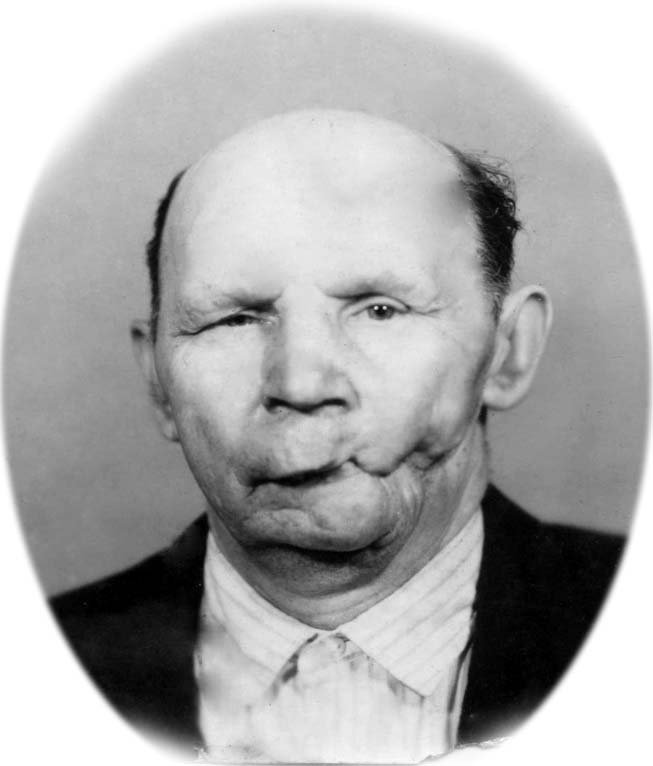
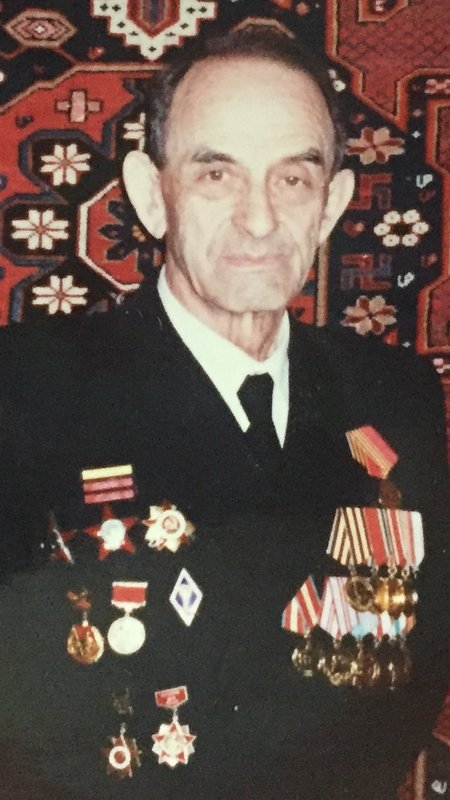
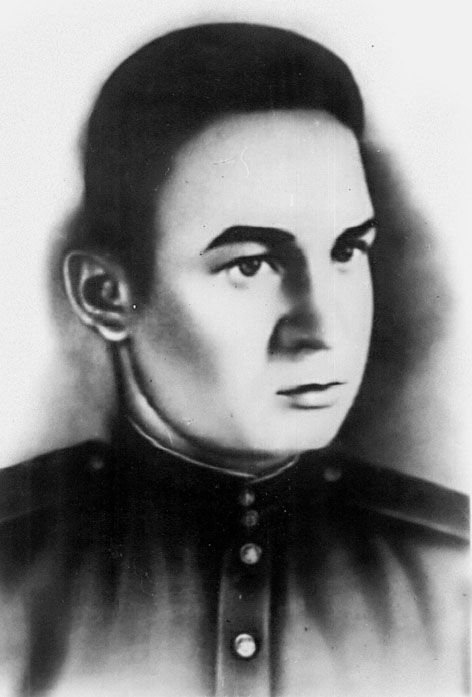
Rudnev Pyotr Petrovich
Rudnev Petr Petrovich_x000D_
_x000D_
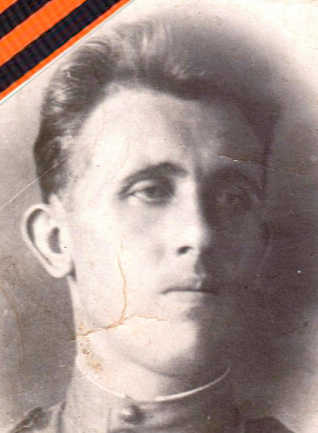
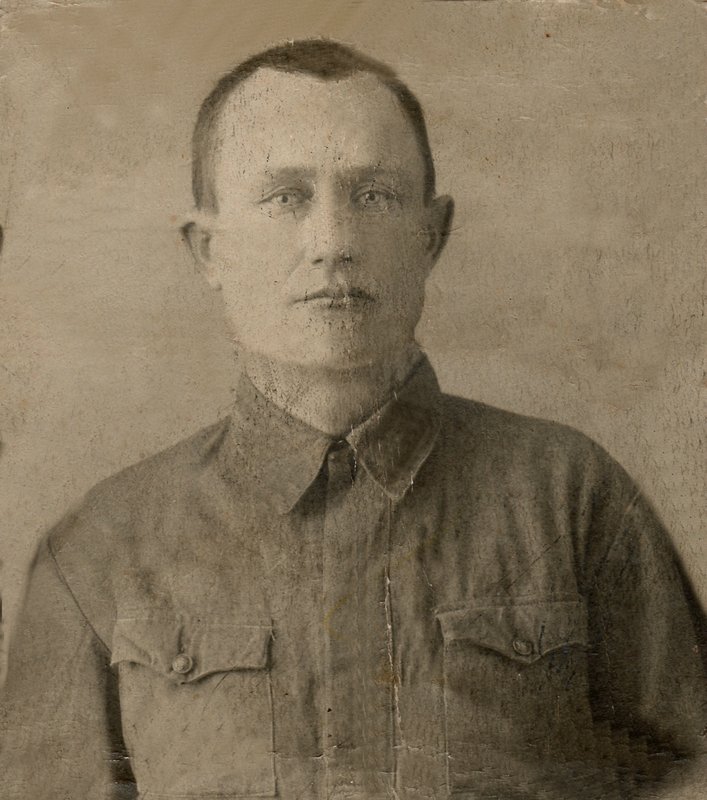
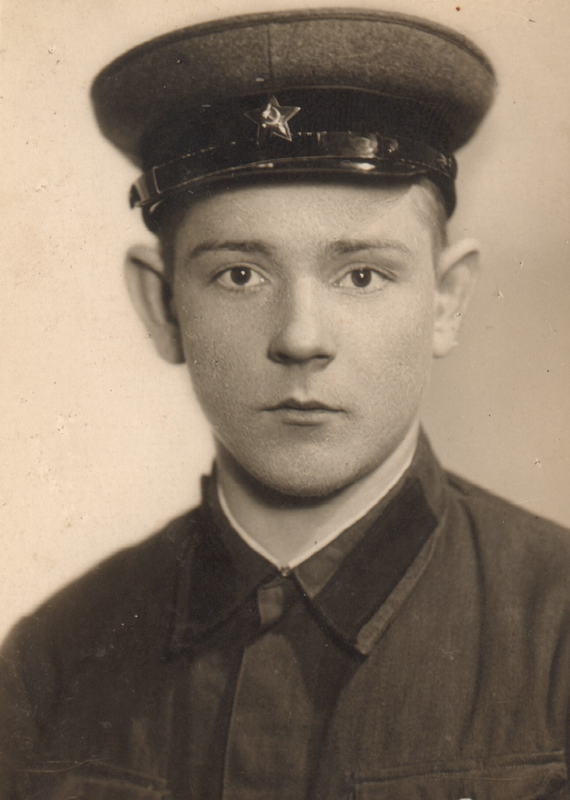
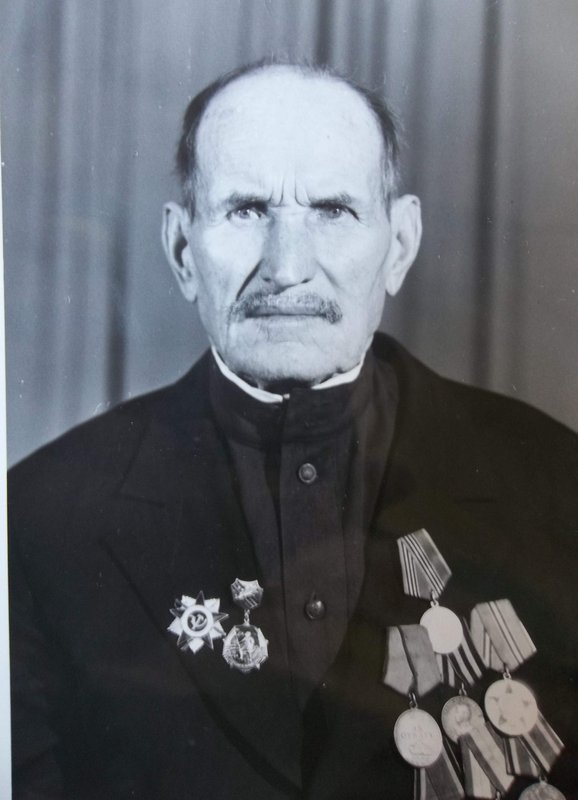
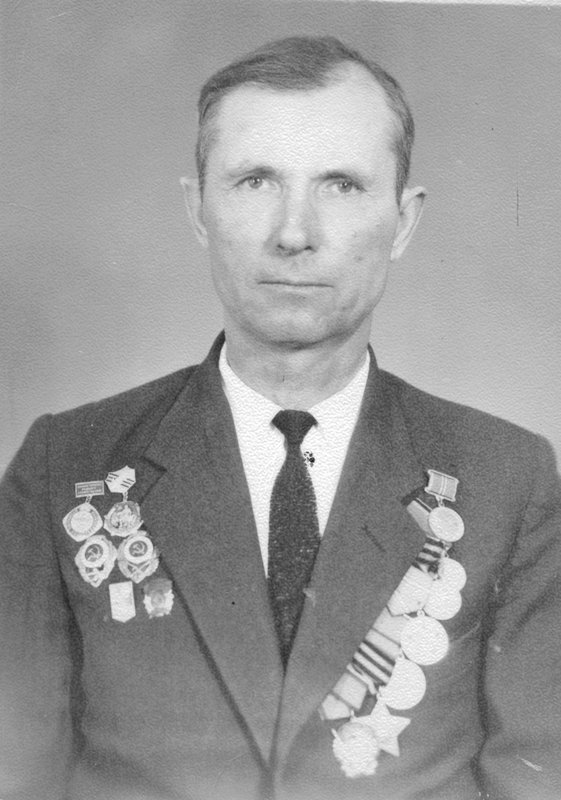
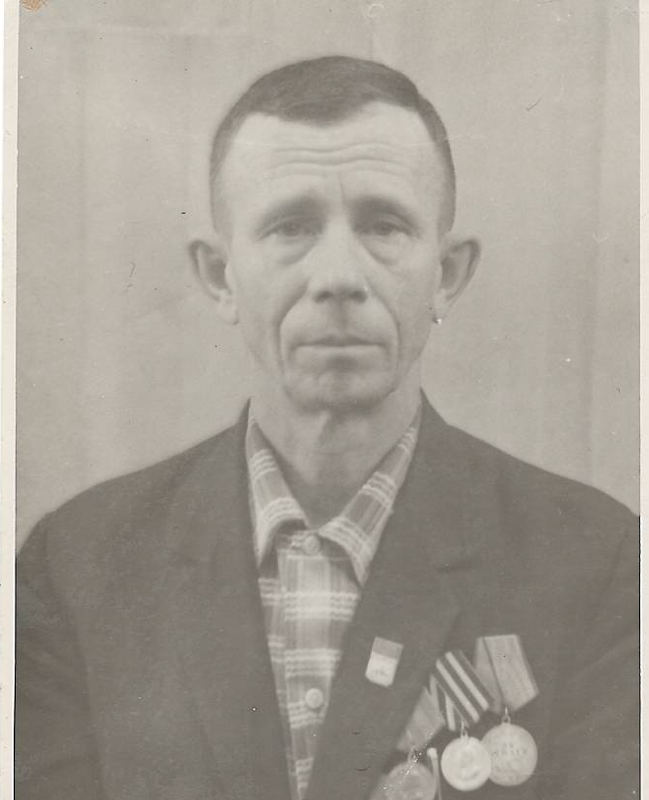
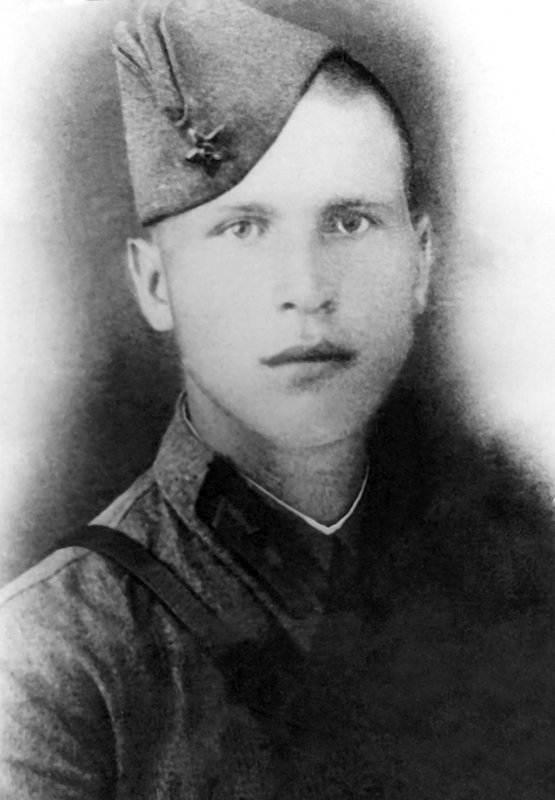
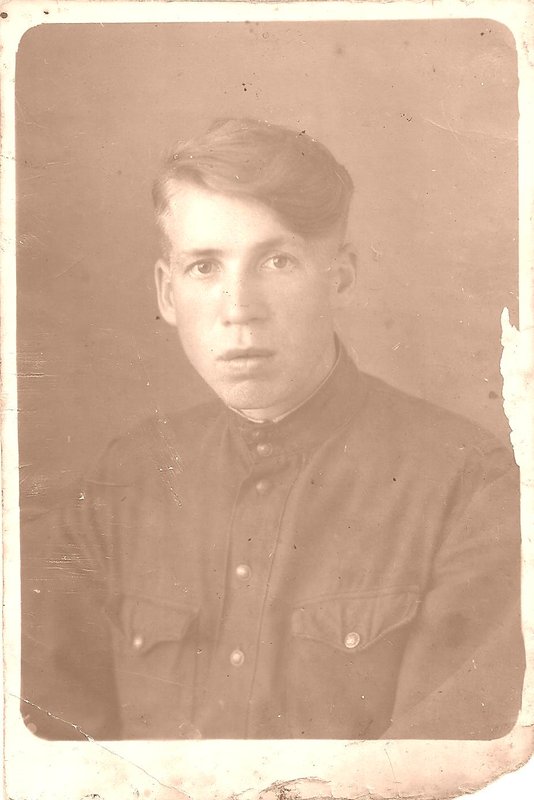
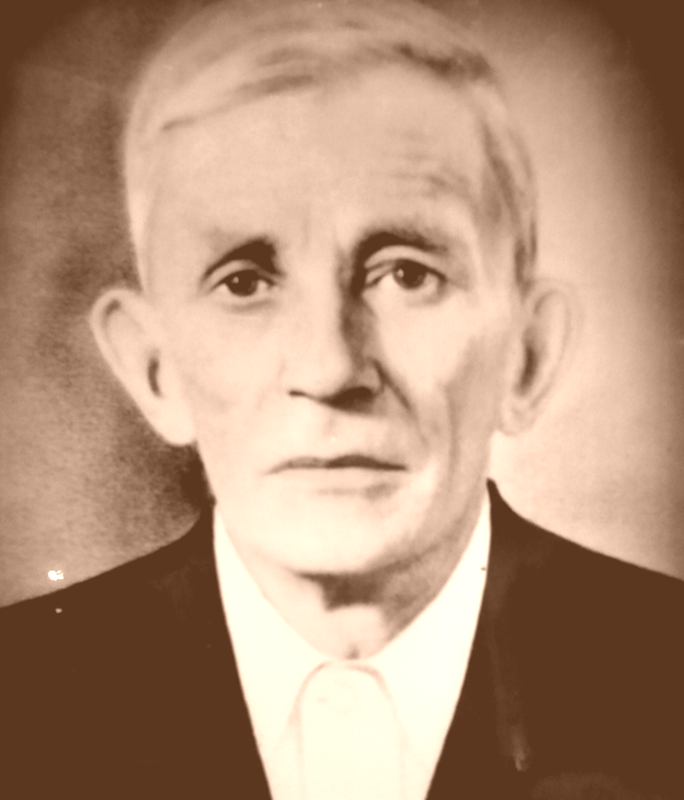
My father, Petr Petrovich Rudnev, a red army soldier born in 1913, was drafted into the red Army in April 1942, in the 1091 rifle regiment of the 324th division in the 16th army. His military path was not long, but, like any soldier, not simple, hard, through blood and sweat on the battlefields. He was a participant in the battles of Moscow. The division in which my father served was on the defensive and covered one of the most important directions of Sukhinichi-Kaluga-Moscow. The fighting took place on the Northern Bank of the Zhizdra river. And in June 1942. he participated in the operation to capture the bridge over the Zhizdra. From July to October 1942. Petr Rudnev participated in the Rzhev - Sychevkaya strategic offensive operation. The red army soldiers of the rifle division in which he fought, slowly, with heavy losses, won back every meter of land. At the cost of their own lives, liberating villages and towns from the German invaders. In his last battle, during the offensive battles near the village of Kholm, Petr Petrovich Rudnev, on December 1, 1942, received a severe shrapnel wound in the left forearm, with damage to the radius. He was saved by the commander, unfortunately, we do not know his name. From my father's story......... there were fierce battles, and we had a great responsibility to hold out as long as possible and move West, not to let the enemy pass to Moscow. There was a battle, the Germans once again tried to break through the defense, shells were bursting all around, it was scary, smoke, fire, the roar of exploding shells, huge craters in the ground appeared one after another, some served as temporary shelter for us soldiers. Machine-gun bursts and machine-gun fire cut down our soldiers. Young girls-nurses ran screaming from this horror, fear and only fear, was read in their eyes. It was impossible to look at these very young children, tears and pain blurred my eyes when I saw it. I am a 29-year-old adult man, I could not see how these girls, who recently came down from school, fell, cut by bullets, and their braids lay on the dirty snow. We, adult men, trying to somehow save them, knocked them down and covered them with our bodies. In those moments, I realized more than ever that they do not belong here, they must live to give birth to a new life. It was a terrible reality... .... And then one of the shells exploded right ten paces away from me and the commander who was next to me. I didn't even have time to realize what was happening, as the commander literally knocked me down and covered me with his body, stunned by the exploding shell, I lost consciousness. When I woke up, after the explosion, at first, I didn't even realize what had happened. I struggled out from under the commander's body and saw that the shell fragments had torn the commander's entire back, while my left arm was broken and part of my back was grazed by shrapnel. At the cost of his own life, the commander shut me down, thereby saving my life. The arm was practically hanging by tendon and leftover skin. There was smoke, the sound of explosions, everything was pitted and snow covered with traces of the blood of dead soldiers lying everywhere. I crawled for a while, trying to see or hear at least one person, but soon I lost consciousness. I don't know how long I lay there, but when I woke up, I saw that I was already being carried on a stretcher, but I lost consciousness again. Once again, I woke up when I was already in the ambulance train, which was going through Moscow to Gorky. My arm was bandaged, and I had the feeling that it was practically gone. In my head, of course, the thought flashed through my mind, how will I live without a hand, my wife and 2-year-old son were waiting for me at home. It was painful to think that I might become disabled, but I tried not to let this thought occur. From the conversations of the soldiers, I realized that the Germans passed through the occupied positions of the Red Army, which was surrounded, and only by chance that they took me for a dead man, so they did not shoot me, but passed by and returned to their positions. Sometime after the battle, our medical units were able to carry out the remaining survivors, but there were only a few of them. Upon arrival in Gorky, all the wounded were placed in EV. hospital No. 2816. After examining my wound immediately, the doctor made a conclusion: - "Your business is bad, but let's try to save your hand, you have a whole life ahead of you." At the time, I didn't understand what it was about, but I firmly believed that everything would be fine. I remembered the piece of paper on which the prayer was written and which helped me in the most difficult days, on the battlefields, so I kept it in the pocket of my tunic. And from that moment, when I was particularly ill, I read this prayer, remembering my family. » In the hospital, I had a unique operation, when they were able to restore the motor function of the hand, with the transfer of the missing skin, using an incision on the side of the torso. The arm was practically sewn along the body. Unaware of anything, he writes the first letter to his wife, saying that he is in the hospital for treatment after being injured. And as it turned out, earlier she received a notification that Rudnev Petr Petrovich was missing in action. So far, on some sites from reports of irretrievable losses, he is listed among the dead in the Smolensk region. Sychevskiy district, D. Holm. TSAMO. Number of the information source Fund No. 58, inventory number No. 818883, case number No. 1809 Last duty station hq148osbr. Military transfer point Gorky runway. EG 2816. Arrived in part 15.07.1943. In July 1943, the Pope was sent to part number 170 of the Republic of Kazakhstan until December 1943, the Pope served in the protection of military warehouses.18.12.1943 g. the medical Commission of the Gorky GWRK was recognized as fit for non-combat service under article 44 of the first column of the order of N. K. O No. 336-1943. and was commissioned. At the end of 1943, my father returned home. My mother looked at him and was happy that he was home, even if not quite healthy, but alive. How many men were left out there on the battlefields, and he was here? When my mother was washing her tunic, she found in her pocket a folded piece of notebook, soaked in sweat and blood, worn out, but still holding the words of faith, on which was written a prayer. She handed it to my father, and he said," if it wasn't for this prayer, who knows what might have happened... " my mother understood everything, this leaf is still kept in our family as a family heirloom. Many years passed, and my father worked tirelessly in the fields and in the factory. In 1955, the decision of the medical Board, he was declared fit for military service. And in our family, during these post-war years, four more guys were born and the only girl-daughter, this is me. Every year on Victory day, on the day of the great Victory, my father wore a suit with orders and went to a meeting with veterans, laid flowers at the monument to the fallen during the war with tears in his eyes. And in 1985, he was awarded the order of the Patriotic war, First class. Unfortunately, dad did not like to talk about those terrible days of the war, could not watch films about the war without tears, and silently swallowing tears, clenching his fists, said: "There is nothing worse than a war that takes away your most precious thing-your life." And only my insistent desire to hear something more from my father about the war, forced him again and again to return to those terrible days of the war. And he said that we, adult male soldiers, wept when we saw how German planes bombed and shot trains (trains) with civilians, in which mostly old people and women with children were traveling. His eyes were filled with tears at that moment, and the pain and bitterness of what he had seen still lingered in his heart. .... "I close my eyes and see," he said, " a woman, very young, clutching a baby to her breast, drops of blood trickling from her lips, and the baby is almost covered with earth from a shell that exploded nearby. The screams of people running in different directions, crying, a terrible picture was before his eyes. I wanted to run, to protect, to hide, but I had to go further, forward to the West. And we went without sparing ourselves, for those who remained on the battlefields, for those who were waiting for us at home, the closest, the dearest ... " he could not forget the woman holding the baby to her breast. He could not forget the old people, or the open eyes of dead children, nor could he forget the smell of death, even decades later, after this terrible war. That's probably why he loved life so much, worked and lived for his family, for 6 children. Only a fragment the size of a five-kopeck coin, left after the wound under his left shoulder blade, only occasionally reminded of those days. Farther worked until the age of 18, was awarded the title "Veteran of Labor", was repeatedly awarded diplomas and commendations for good work. He was always proud of his 5 sons, who one by one went to serve in the Soviet Army, in different parts of our vast country from the Far East to the Baltic States. We had a large, friendly and strong family. I am proud that I had such a hero father! Unfortunately, my dad is no longer with us, he died on 05.03.1988, but there is his continuation, grandchildren and great-grandchildren. We have a large family, 15 grandchildren and 18 great-grandchildren. So, one saved life, the Life of my father Rudnev Petr Petrovich, became a continuation of 39 more lives. Life goes on, in us his children, grandchildren and great-grandchildren. We remember, we are proud!