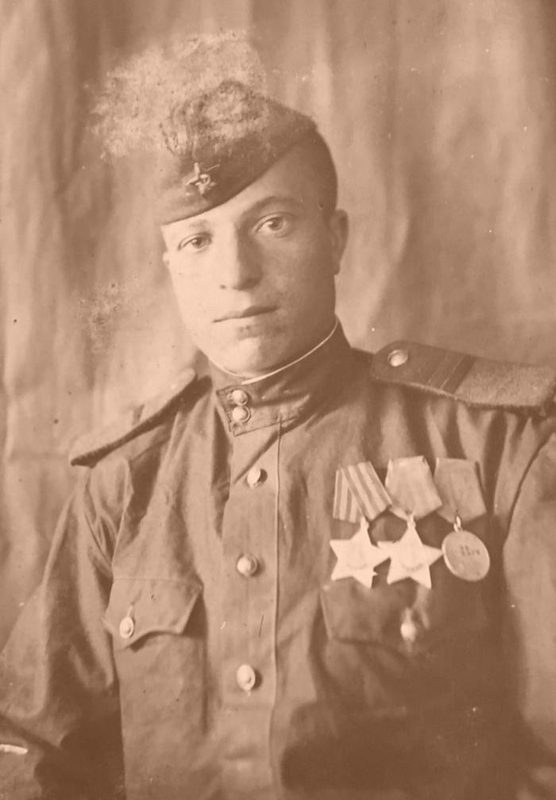
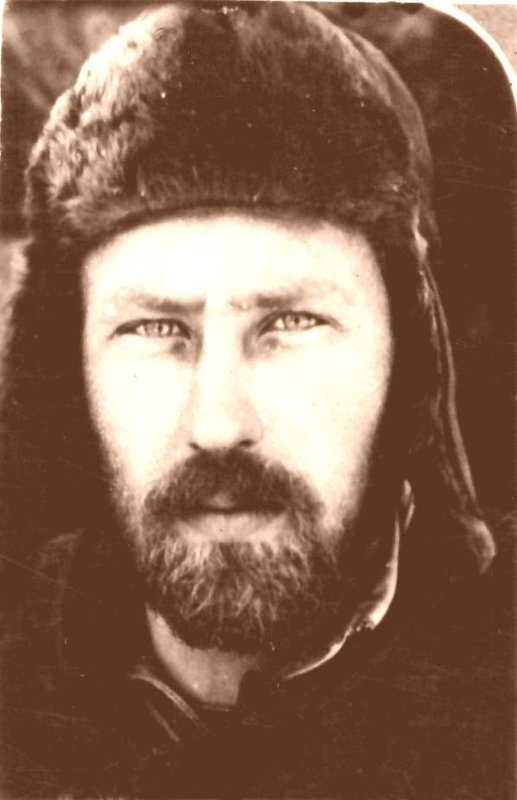
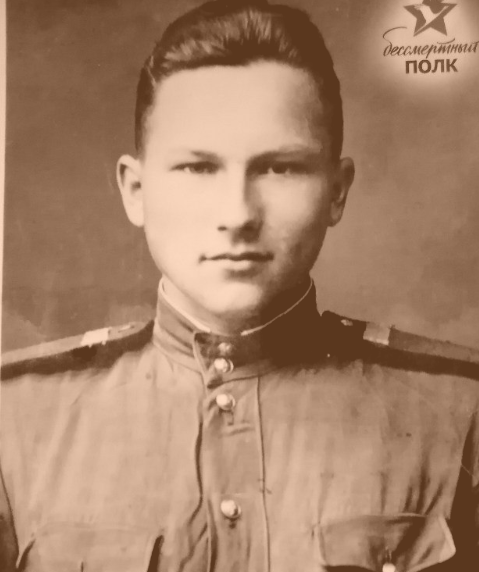
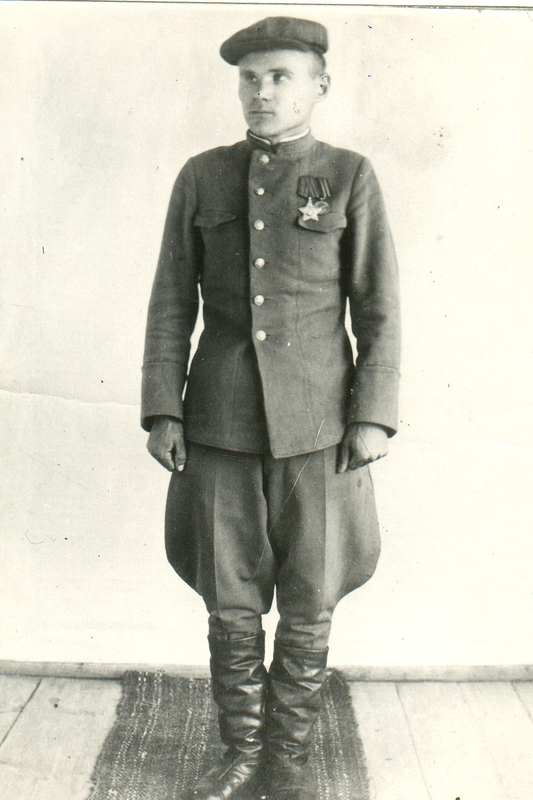
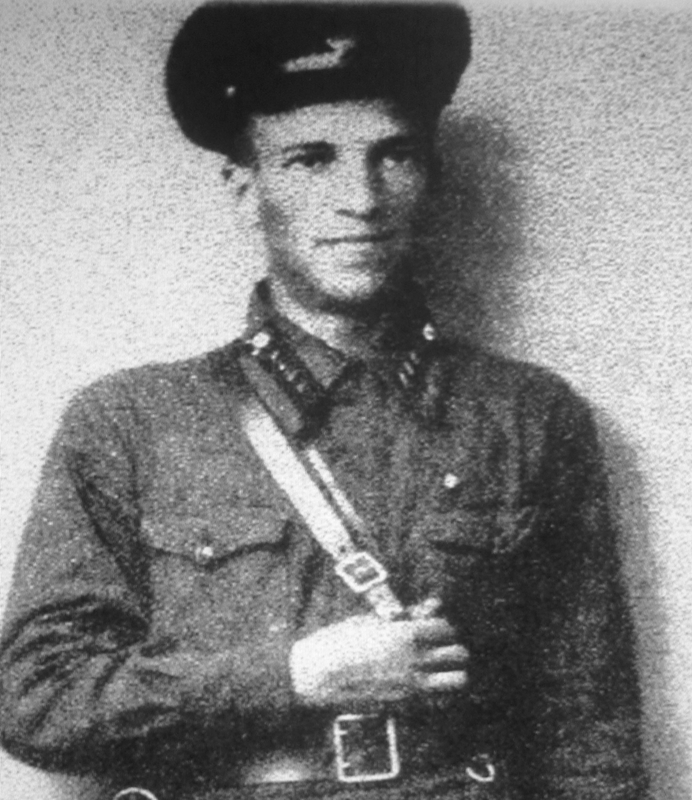
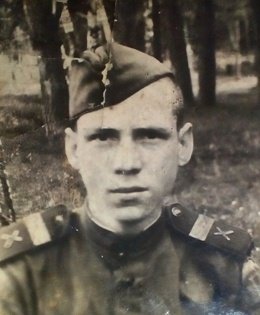
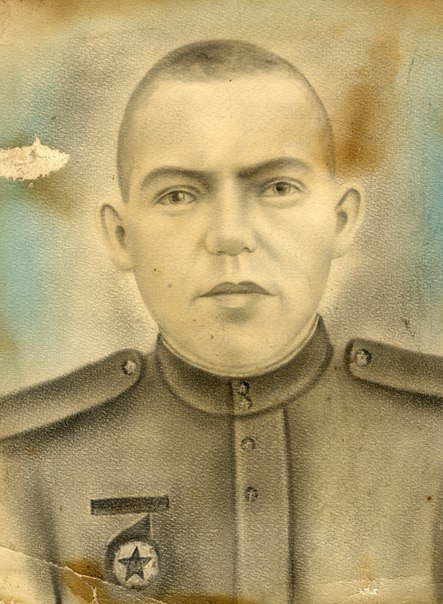
Anatoliy Tantsyrev
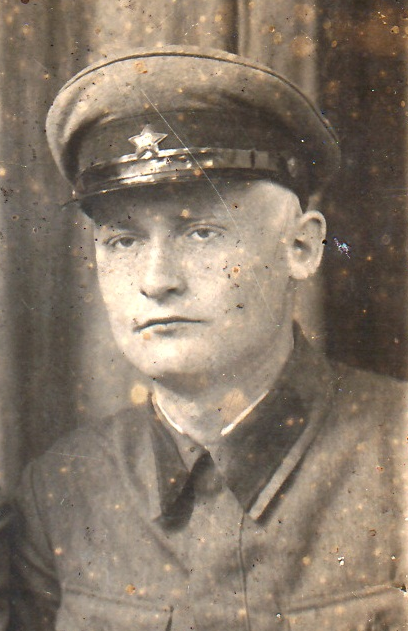
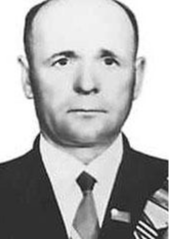
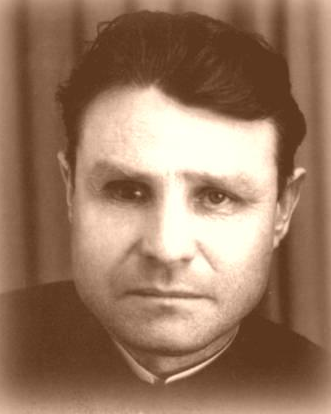
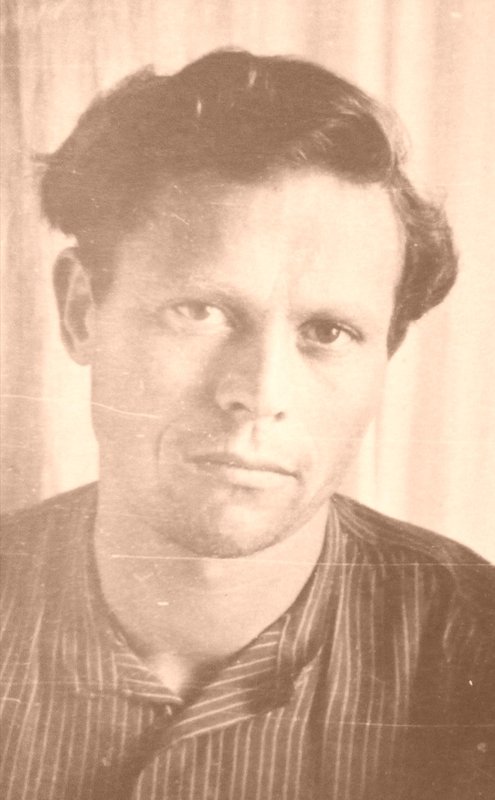
Anatoly Tantsyrev was born in 1907 at the Khilok station in the Petrovsko-Zavodsky District of the Trans-Baikal territory, in the family of a railway worker.
His father was Peter Tantsyrev, a heating engineer. Mother – Maria, by profession a primary school teacher. Anatoly was the third child in the family. There were four of them, three brothers and a sister: Andrey, Arkadiy, Anatoliy and Galina. Parents taught their children to work early. The mother was often ill, and the children had to clean the house themselves, cook, work on the farm, and milk the cow.
The children had everything: skis, skates, a boat, hunting rifles, musical instruments. My great-grandfather played mandolin in a string orchestra in his youth, my sister played piano, and my brother Arkadiy tuned the piano. The children were allowed to play everything except wind instruments, due to the fact that the brass players were often invited to ritual events that ended with a stormy feast. Thanks to this upbringing, none of the members of this family abused alcohol, and the great-grandfather did not take a drop of alcohol in his mouth for whole his life. Even in the years of war at the front he replaced hundred grams of alcohol with chocolate.
His parents were not members of the Communist party, but had progressive views. A circle of social Democrats was gathering in their apartment. Peter taught mathematics at night school on a voluntary basis. They had a large house in Ulan-Ude, and part of the house was rented out to tenants. The Mladov brothers, who were exiled from Central Russia for their democratic views, lived with them. One of them, Alexander, was a doctor, and the other, Grigoriy, was a writer, at the Ulan–Ude school he taught literature. In his spare time, he led a literary club, where he taught children to write poetry. Together they published a literary newspaper with the works of the club members.
As a children's writer, Grigory Mladov, who wrote under the pseudonym Eugene Korablev, wrote the story "Four and Krak", the prototypes of which were the children of the Tantsyrev family, one copy of which is now stored in the Fundamental Library of the State University of Irkutsk.
The daughter of Alexander's second brother was Tatyana Mladova, a biologist and researcher at the Limnological Institute on lake Baikal, with whom my great-grandfather corresponded for the rest of his life.
In the 1930s, the family of the revolutionary Postyshev lived in the Tantsyrev apartment. Pavel himself rarely appeared, but his wife and son Lenya lived there. After they left, the Tantsyrevs corresponded for a long time with Postyshev's wife, Tatyana, but when the Postyshev family began to be harassed by the authorities, Tatyana stopped correspondence in order not to harm the Tantsyrev family.
Anatoly maternal cousin, Yevgenia Cheremnykh, was the niece of the founder of the "Okna ROSTA"(a series of posters created by Soviet poets and artists who worked in the system of the Russian Telegraph Agency (ROSTA)) Mikhail Cheremnykh, who later worked with Vladimir Mayakovsky.
Anatoly Petrovich received his secondary education in Ulan-Ude. He entered the Tomsk Polytechnic Technical School, where he received an education as a zoo technician - pig breeder. His future wife Ekaterina Ivanenko studied at the same institution, where he met her. After graduating from the technical school, they were assigned as zoo technicians to the Byronovskiy State Farm in the Taishet District of the Irkutsk Region, where they got married in 1936.
However, they did not work there for long time. After a while, they moved to a state farm near Ulan-Ude, which was located in a very good location, not far from the railway. They lived there quite a bit, because the state farm was transformed into a collective farm, and they did not want to work on the collective farm. They moved to Nizhneudinskiy District.
In 1937, the arrests began. The chief zoo technician of the state farm was arrested. My great-grandfather was ordered to start to work in this position. But he did not want to take the place of a repressed person and asked the regional authorities to transfer him to the Usolskiy State Farm, where he was repeatedly invited by the first Director of the farm, Luka Gorlov. Here he began to work as a chief zoo technician and his wife as a zoo technician on a farm.
On June 22, 1941, the Great Patriotic War began, and on the 23rd, he was drafted into the Red Army. Prior to this time, he was relieved from service as an agricultural specialist. My great-grandmother was left with three small children and an old sick mother to perform her duties at the state farm. They did not even have time to say goodbye. All the women around them wept as they saw their husbands off to war, and Ekaterina was forced to accept the zoo technician's business in a hurry, to receive his instructions for the work.
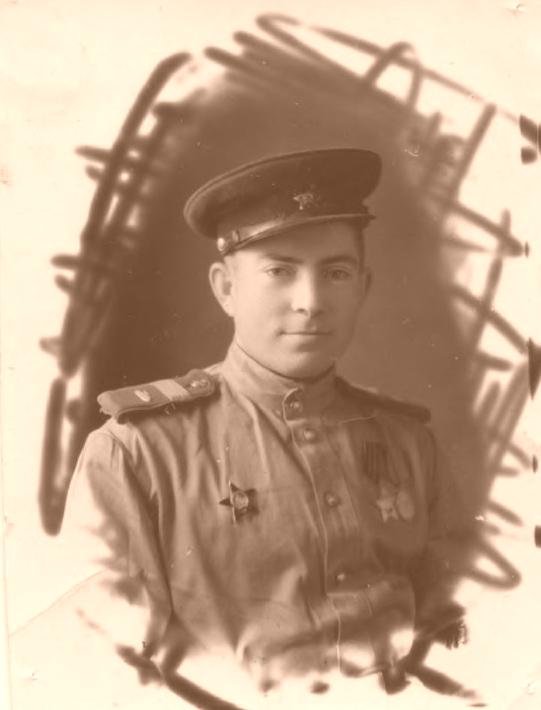
Anatoly trained in the Chita Region, because he did not serve in the army before as an agricultural specialist. His military path began on the Don Front at Stalingrad in June 1942, then fought on the Steppe Front, the 703rd Rifle Regiment of the 233rd Kremenchug Rifle Division of the Second Ukrainian Front and ended the war on the Third Ukrainian Front, which reached Vienna. He participated in the battle of Orel-Kursk, crossing the Danube, the liberation of Kharkov and Poltava, in the defense of Stalingrad, took part in the liberation of Bulgaria, Romania, and Yugoslavia.
He saw the German field Marshal Paulus, when he and his army surrendered in 1943.
During the liberation of Romania, in Bucharest, one of the soldiers, passing by the Palace of King Mihai, knocked on the gate. Mihai was informed of their arrival and invited the soldiers, including Anatoly to enter. King Mihai talked to them, and throughout the conversation was very surprised that the Russian soldier did not drink alcohol.
Preserved book of the Red Army soldier Anatoly Tantsyrev records that from July 17, 1942 to August 12, 1942, he fought on the Don Front, and then was in captivity, from November 20, 1942 to February 7, 1943 again on the Don Front, then the Steppe Front, the Second Ukrainian Front, in 1943 and 1944, he was twice shell-shocked. Anatoly ended the war with the 3d Ukrainian front in Austria on May 16, 1945.
Only in the fall, September 28, 1945, great-grandfather returned home.
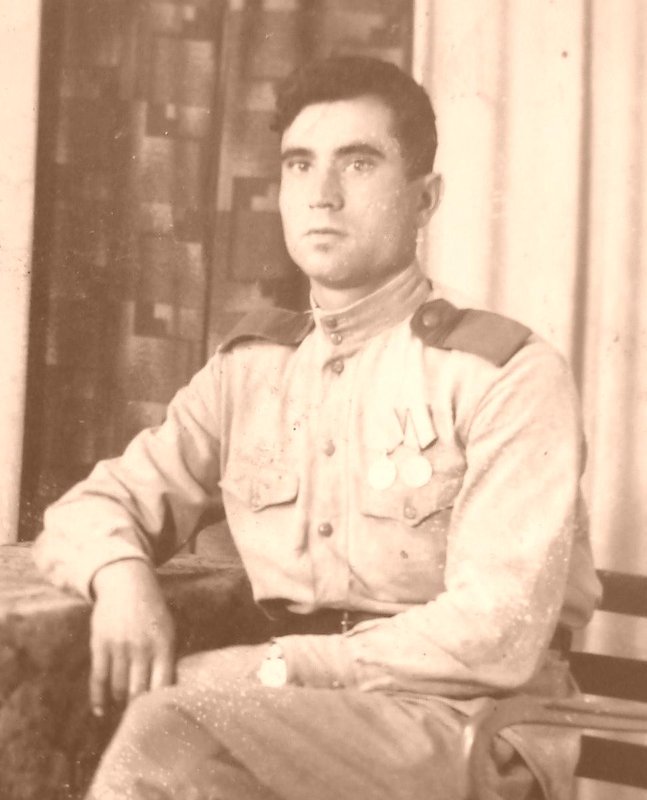
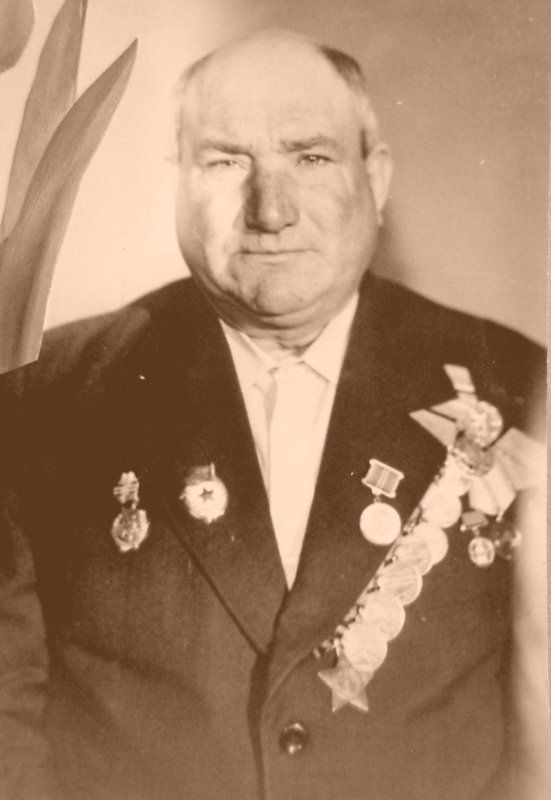
Anatoly hasd military awards: the Medal For the Liberation of Belgrade, the Medal For Courage, the Medal For the Victory over Germany in the Great Patriotic War 1941-1945, the Medal For the Defense of Stalingrad, the Order of Glory 3rd degree, the Order of the Great Patriotic War 2nd degree, and many commemorative medals.
Anatoly was awarded "Certificates of Gratitude" – for crossing the Danube, for the liberation of Poltava, Kremenchug, Zvenigorodka, Shpola, Smely, Boguslav, Kanev, Belgrade, Znamenka. All his awards, as a relic, are still kept in our family.
His wife Catherine Tantsereva during the war was not at the front, but worked in the rear. She worked at the state farm as a zoo technician, replacing her husband. At the end of the war, she was awarded the Order of the Badge of Honor, commemorative medals For Valiant Labor During the Great Patriotic War, and in peacetime, she was awarded a ticket to the exhibition of achievements of the national economy.
Her mother Anna Ivanenko, who lived with her until the end of her days (helped with the housework, looked after the children, washed, cleaned), in the past had with her husband Luka (he was a cabinetmaker) an Inn in Ust-Medveditsa, where she kept house: washed, cleaned, ironed clothes, made beds, cooked food for guests. All her life she was proud of the fact that when Semyon Budyonny with his cavalry army, passing through Ust-Medveditsa, stopped at their Inn and she herself treated him to food prepared with her own hands.
Anatoly's father, Peter Tantsyrev, worked in the rear as a locomotive operator throughout the war.
Brother Arkady trained soldiers in the training unit in the city of Chita.
Brother Andrey fought on the Eastern front.
Sister Galina worked in the Ministry of Forestry throughout the war.
Anatoly did not like to talk about the war, and when he watched films about that time, he often cried.
After the war, Anatoly continued to work as the chief zoo technician at the Usolskiy State Farm. For his excellent work, he was awarded a ticket for the trip to Moscow at Central Exibition, in which was stated that comrade A. Tantsyrev was invited to Moscow from August 15 to August 19, 1954 at the All-Union Agricultural Exhibition of 1954 as a member of Pressinoukogu Usolsky District of the Irkutsk Region. Anatoly received a small silver medal for achievements in the field of cattle breeding, issued by the Main Committee of the All-Union Agricultural Exhibition.
Even at the front, when the troops (and he fought in the infantry) passed through Bulgaria, Romania, he was delighted with the gardens that stretched everywhere. After returning from the front, the following spring of 1946, he planted a garden in his estate, with apples, cherries, raspberries, currants, and began to work on landscaping the village. He planted poplars and acacia trees on the streets, and villagers began to plant berry bushes in their homesteads, which were brought from a nursery located in the Cheremkhovskiy District. In the early 50s, a state farm garden was laid, where raspberries, currants, canadian cherries, yellow plums grew and bore fruit well.
For his work in 1955, he received a commemorative medal in commemoration of the 100th anniversary of the birth of Ivan Michurin for organizing the landscaping of the village. No one else in our region has such a medal. In honor of this event, the street where Anatoly lived was named Michurin street.