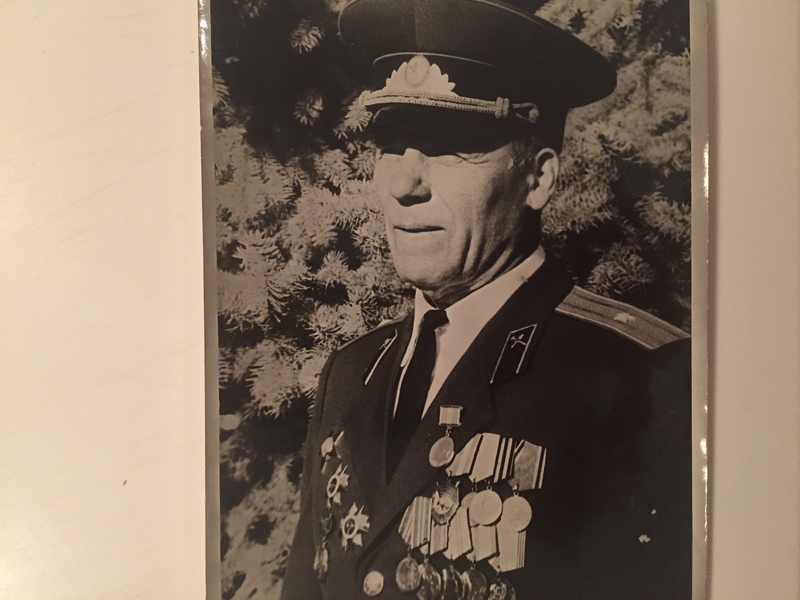
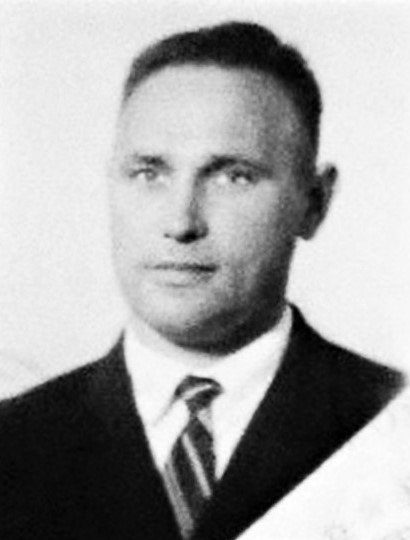
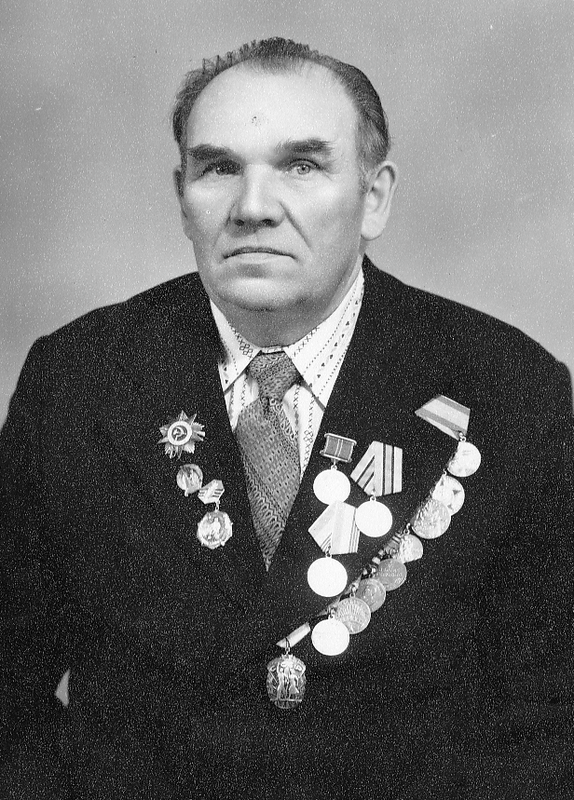
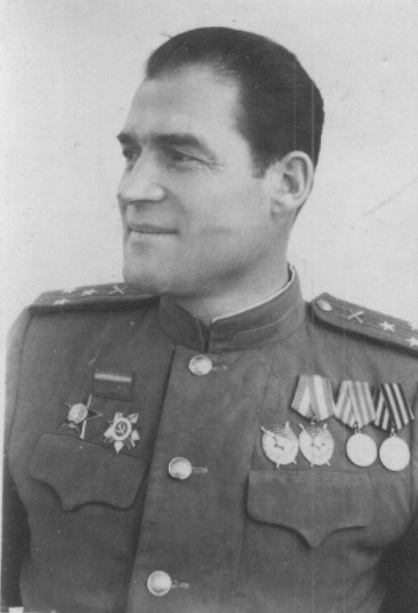
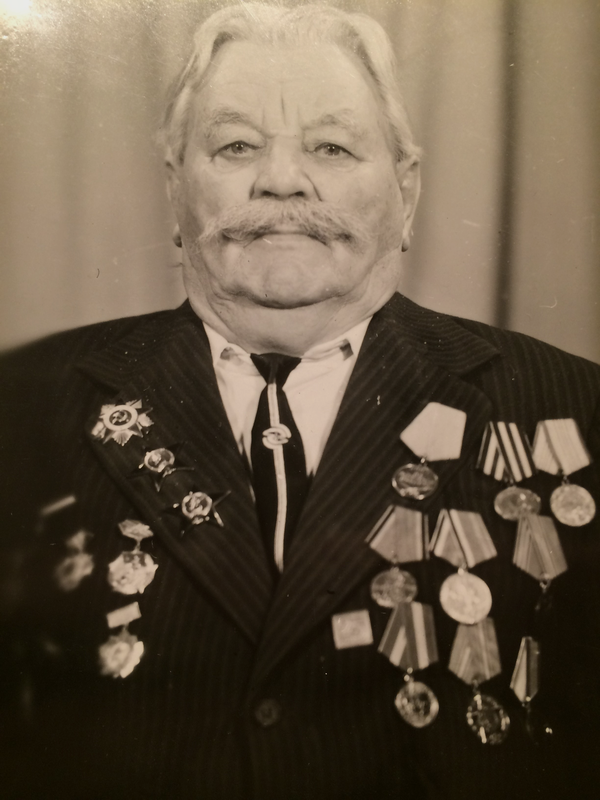
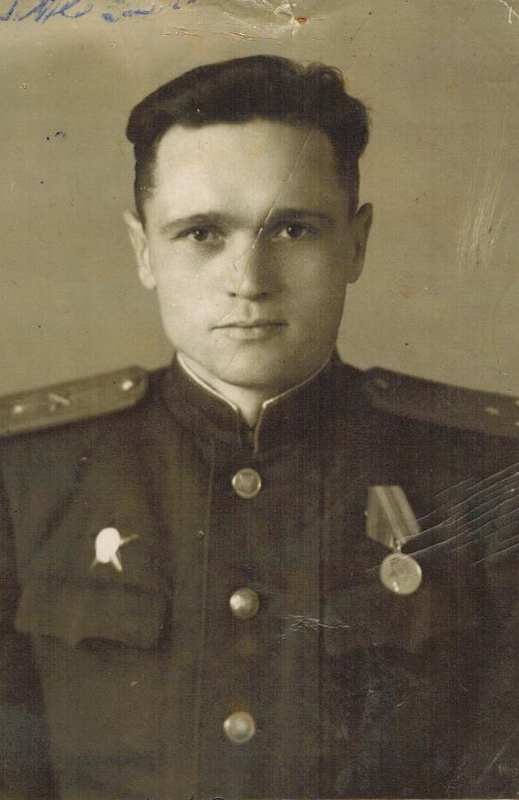
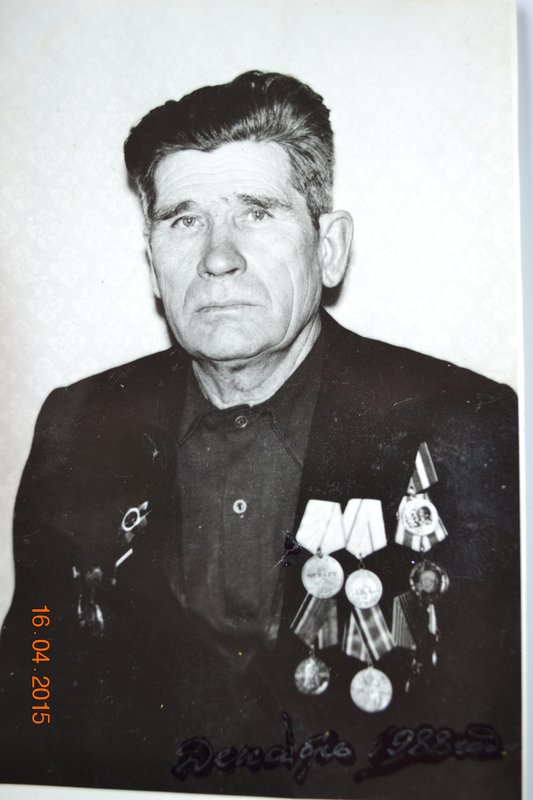
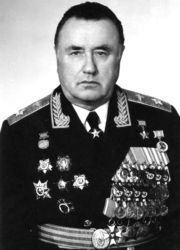
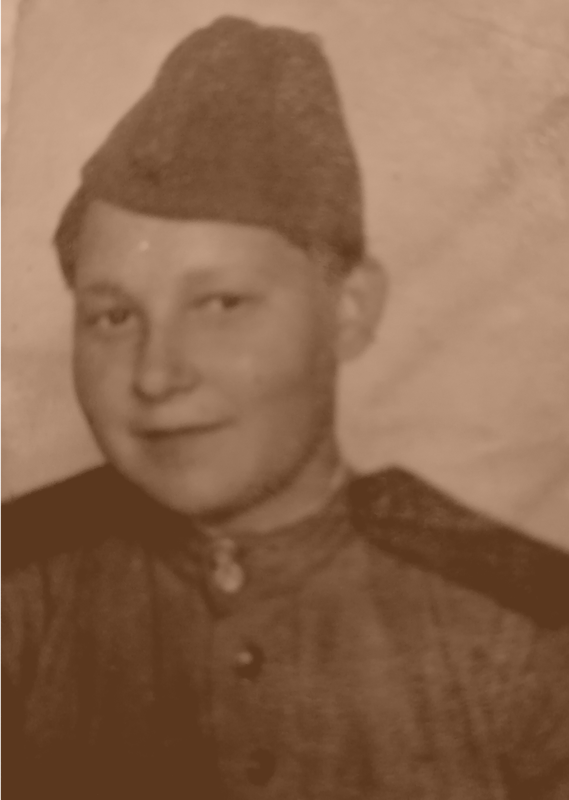
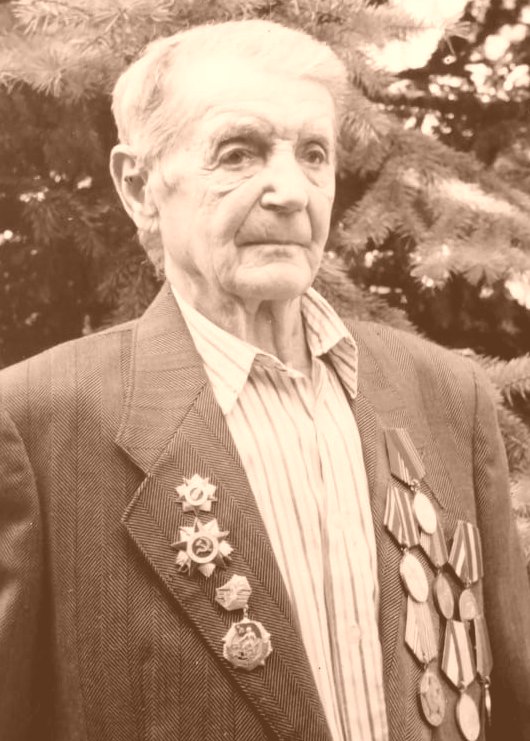
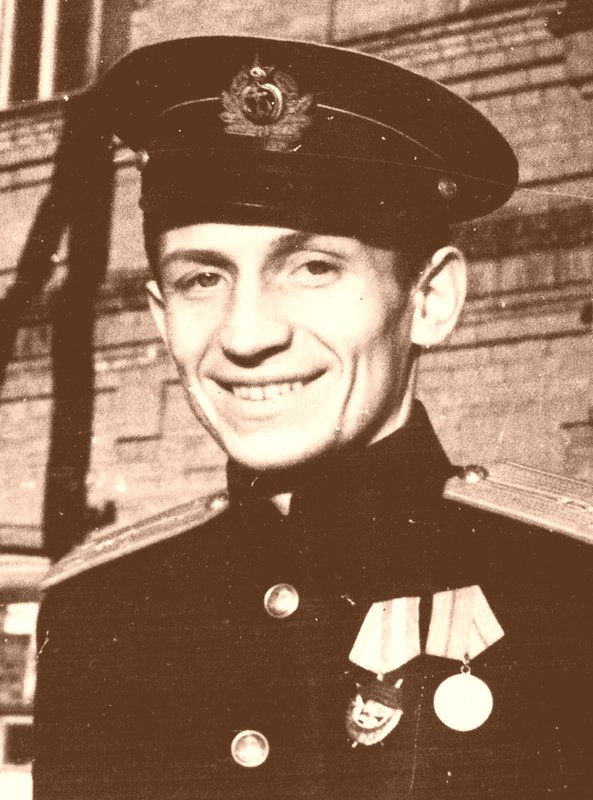
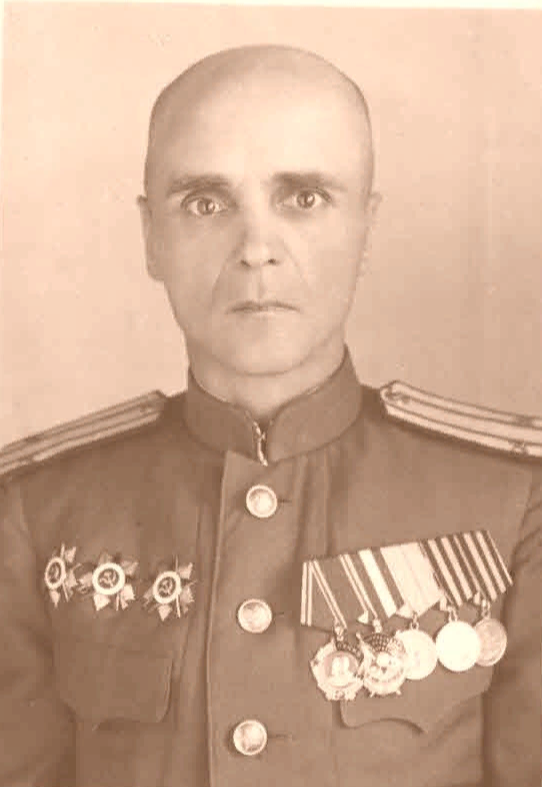
Fedor Pervushov
Bryansk Region, Karachevsky District, village of Maslovka_x000D_
15.07.1922 - 23.02.2006_x000D_
Rank: Colonel_x000D_
Branch of Service: Artillery_x000D_
To my dear father, a participant of the Great Patriotic War, as a sign of the deepest respect and memory dedicated to… We owe you a debt is not paid, your feat is immeasurable!_x000D_
My father, Fedor Pervushov, was born in the village of Maslovka, Karachevsky District, Bryansk Region on 15.07.1922. His parents – father Grigory and mother Tatyana worked for the collective farm at various jobs. Fedor was the fifth child in a large peasant family. He always wanted to be a soldier._x000D_
After graduating from Karachevsky School, he voluntarily joined the military service in the Karachevsky District Military Commissariat, Bryansk Region and from 20.03.1940 became a Cadet of the Ordzhonikidzegrad Automobile Motorcycle School in Minusinsk. He completed his training on 07.05.1942. The war was already underway._x000D_
After graduation, he was sent to the front, where he served at first in the 515th Guards Mortar Detachment of the Don Front, then in the 17th Guards Mortar Brigade of the 2nd division of the Don Front as a commander of a platoon of ammunition, and from December 1942 as a platoon commander of the detachment servicing “Katyusha” rocket mortars. In the battles near Stalingrad, where he participated, they smashed the Germans mercilessly with “Katyushas”, not allowing them to break through or retreat anywhere. Fedor was wounded on October 20, 1942, but refused to be evacuated to the hospital. The defenders of Stalingrad were able to hold their city, which was a serious moral and political shock for Nazi Germany. The 17th Guards Mortar Brigade was awarded the Order of the Red Banner on March 15, 1943, for the distinction and heroism shown by the soldiers and commanders in the battle of Stalingrad. In this award there was also a part of the effot of Fedor, and he was also awarded the Medal For the Defense of Stalingrad"_x000D_
Fedor oined the ranks of the Communists in May 1943,. After the defeat of the Germans at Stalingrad, the brigade as part of the 2nd Guards Mortar Division was transferred to the Bryansk Front and became part of the 61st Army of General P. Belov. In the heavy battles in July, during the Oryol-Kursk operation, it took part in the liberation of the city of Bolkhov. There the Germans long and hard, for a year and a half, were building a powerful fortified region, but the 17th Guards Mortar brigade, under the command of the Guards Colonel N. Zhezheruk, with volleys of "Katyushas" broke it very quickly._x000D_
Then again, the offensive and the battle of Prokhorovka on the Kursk bulge, where fierce and bloody battles took place. The battle of the Orel-Kursk bulge ended, the city of Orel was taken, and Soviet troops rushed to Bryansk. Fedor became a participant of the liberation of his native city of Karachev, Bryansk Region. Here is a detailed account of this, from the words and notes of my father. On August 12, 1943, parts of the Bryansk Front, including the guards mortar brigade, in which my father served as a battery commander, began fighting for the capture of the city of Karachev with a blow from the North and South-East. The fascist command attached special importance to the defense of the city. It was an important strategic point in the entire system of German defense on the outskirts of the city of Bryansk. Karachev was an important communications hub. Here cross the roads at Bryansk, Orel, Voronezh, Sevsk. Persistent battles were fought for the height of 246.1 on the Karachev-Orel Highway. This height dominated the entire area within a radius of 10-15 kilometers. The Nazis turned it into a strong point, encircling trenches, wire fences. Tanks and Ferdinand self-propelled guns were buried in the ground, and the approaches to Karachev and nearby settlements - Maslovka, Baranovka, Vishnevka, and Glybochka - were mined. But nothing could resist the onslaught of Soviet soldiers. On August 15, at 4 am, the commander of the Guards brigade, Colonel N. Zhezheruk, ordered the “Katyushas” batteries to fire a salvo at the enemy defenses. After a volley of Guards mortars, the assault began. Soon the German defense was broken and the advanced units broke into the city. Capturing block after block, by 7 am on August 15, Soviet soldiers completely liberated the city of Karachev from the enemy. A red banner flew over the building that now houses the Department store._x000D_
When my father and a group of guards rode into Karachev, they saw a terrible sight: the city was shrouded in clouds of black smoke, flames rose to the sky. Of the 1,859 houses, no more than 50 remained, and those were half destroyed. After a brief meeting with relatives and fellow countrymen, my father, with the rank of Lieutenant, returned to his unit._x000D_
Then there were the battles in Belarus and the liberation in December 1943 as part of the 11th Guards Army of the 1st Baltic Front of the city of Gorodok, Vitebsk Region, for which the division and brigade were awarded the honorary names of Gorodok. In addition, the second Order of the Red Banner shone on the brigade's battle banner._x000D_
One of the episodes of the war was the battles on the outskirts of Konigsberg, in which Fedor participated. The Germans were actively preparing for defense, and three defensive positions were prepared. Konigsberg had entire underground factories, warehouses, and arsenals. But the Soviet troops completely surrounded the city, the 11th Guards Army stopped on the banks of the Frisches Haff Bay, which made it possible to cut off the fortress from the field troops of the German army and block the main supply routes. In April 1945 the 17th Guards Mortar Brigade as part of the 2nd Guards Mortar Division is transferred to the 1st Belorussian Front - to the Kyustrin bridgehead, where, together with other units and formations of the 8th Guards Army, it took an active part in the assault on the Seelow Heights and the offensive on Berlin. When Seelow Heights were taken at night, searchlights of strong power were used, the enemy was stunned, but offered fierce resistance. Depending on the tasks set, volleys were given by the full brigade, and divisions, and individual batteries. It was hard to imagine a force that could resist this offensive. The domination was complete, but the resistance was fierce. The losses were very high. The commander of the glorious 17th Guards Double Red Banner Gorodok-Berlin Mortar Brigade, Colonel N. Zhezheruk, was killed on April 22._x000D_
Then there was the capture of Berlin, the stronghold of Nazi Germany. At the capture of Berlin, as Fedor himself said, the “Katyusha” volleys on the city and on the Reichstag Building played a significant role in the Victory. The 17th Guards Mortar Brigade as the best one was entrusted to fire a salvo at the Reichstag on April 27, 1945. And it did it brilliantly with all 36 guns!_x000D_
But the war for Fedor did not end there. The 17th Guards Mortar Brigade was transferred by rail to the Far East, where it became part of the 1st Far Eastern Front, in the 5th Army. The brigade took part in the defeat of the Kwantung Army of Japan in August 1945 as part of the 1st Far Eastern front under the command of Marshal of the Soviet Union K. Meretskov. They began to smash the Japanese, liberate China and Korea. The 5th Army was to break through the strongest border fortified area located in the mountainous taiga area, and on the eighteenth day of the operation capture the city of Mudanjiang. The offensive began on the morning of August 9, 1945. There were fierce battles. The Japanese defended themselves fiercely, stood to death, and practiced special suicide bombers. The enemy repeatedly launched counterattacks. But the resistance of the Japanese was overcome quickly, despite the fact that the samurai built their defenses and fortified areas for years, burying themselves deep in the ground and concreting everything they could. This defense of theirs was smashed by our troops in a matter of hours. Mudanjiang was taken on the seventh day of the operation, on August 16. Soon, the more than one million-strong Kwantung army surrendered. The war for Fedor ended with the last volley at the city of Mukden. For a long time, the Japanese will remember the fire raids of Guards mortars near Mulino and Mudanjiang._x000D_
The Motherland adequately appreciated the feat of its sons. Fedor Pervushov was awarded the Order of the Patriotic War 2 degree, medals for military distinctions: For Military Merit, For Defense of Stalingrad, For Capture of Berlin, For Capture of Konigsberg, For the Victory over Germany, For the Victory over Japan, For the Liberation of Korea. In subsequent years, for years of service, he was awarded the Order of the Red Star, the Medal for Military Merit, and other commemorative badges and medals._x000D_
After the end of the war, Fedor served for another seven years, until December 1952, first in Korea, and then in China. There, after the war, it was still restless. He got married in November 1946. His chosen one was the girl named Lyubov, who worked in a military unit. They had a son, Alexander, and a daughter, Lyudmila, in China. Fedor was lucky to meet his brother Semyon in February 1952, who served on a ship in Port Arthur._x000D_
Captain Fedor was transferred to the Primorsky Region in the city of Ussuriysk, in the 3rd Guards Mechanized Division of the Primorsky Military District at the end of December 1952, where he served in various positions. Later, he was transferred to the Far Eastern Military District and was appointed a chief of staff of the battalion.