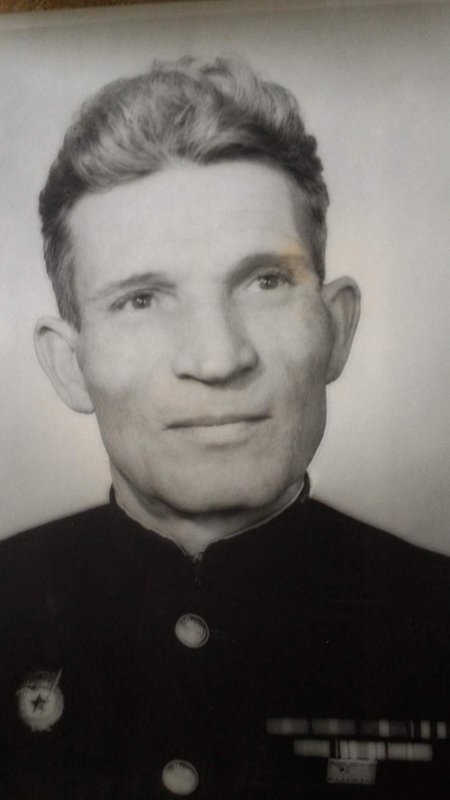
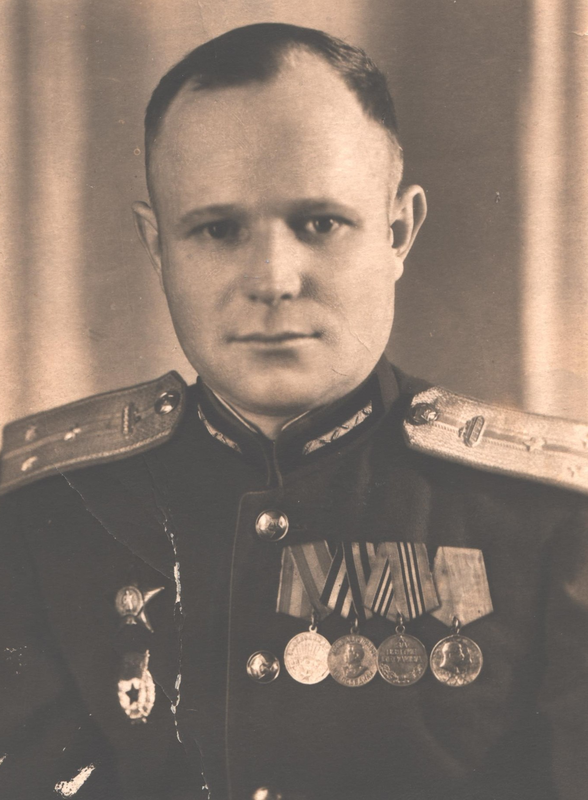
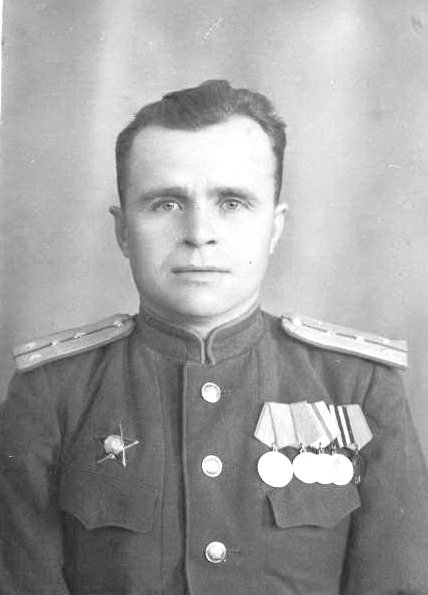
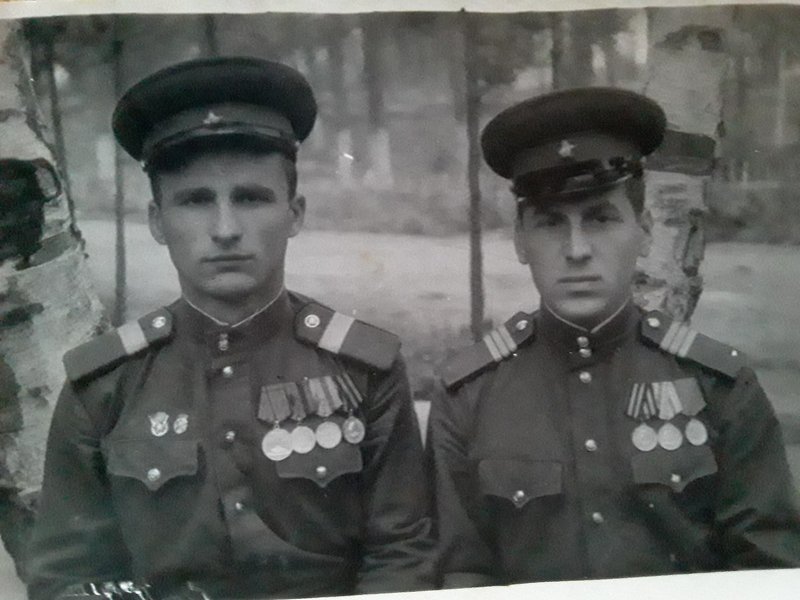
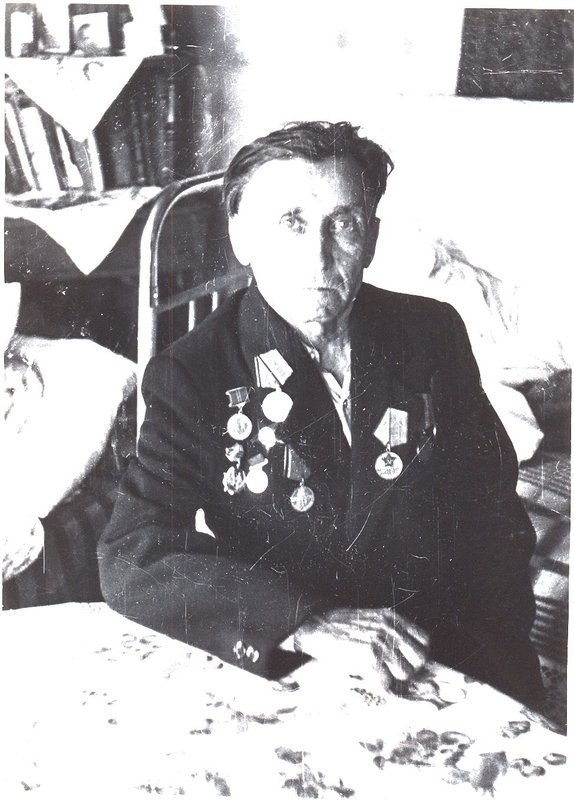
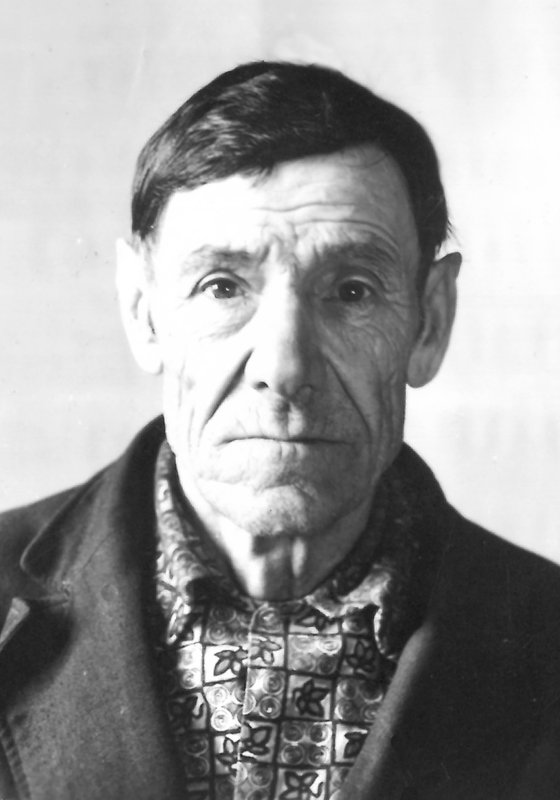
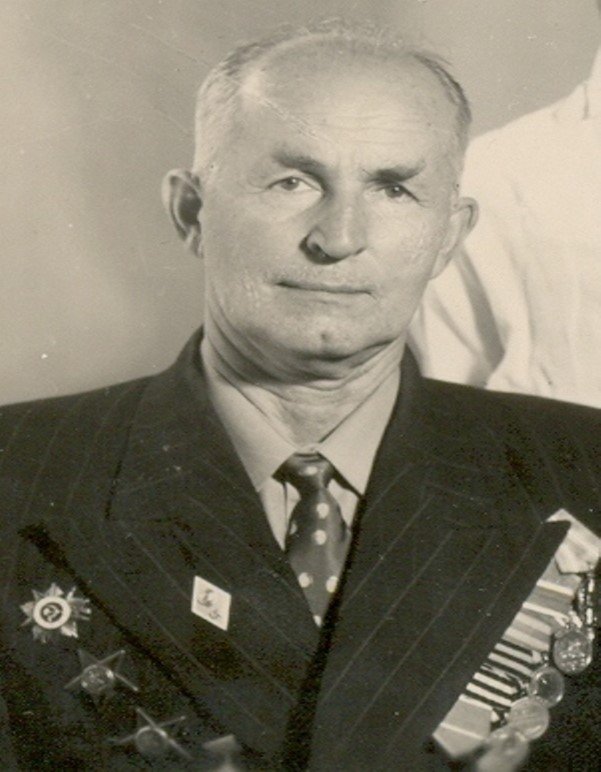
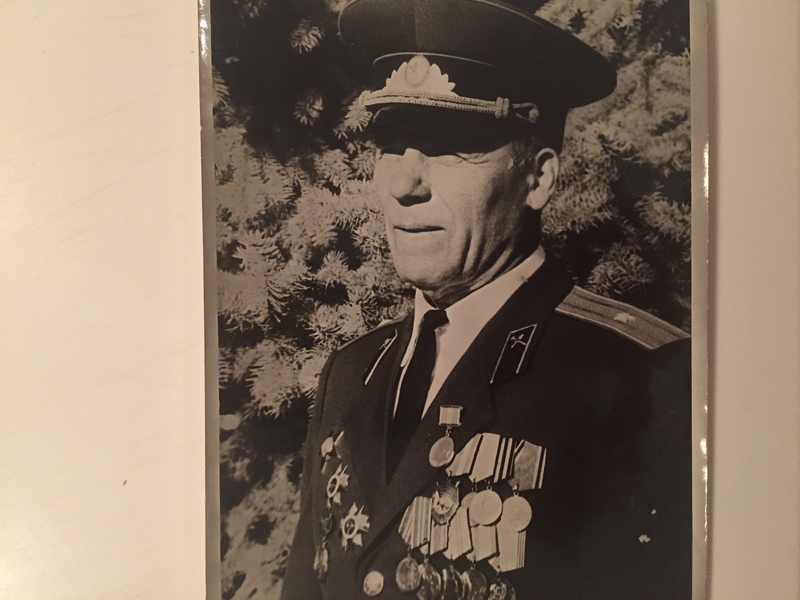
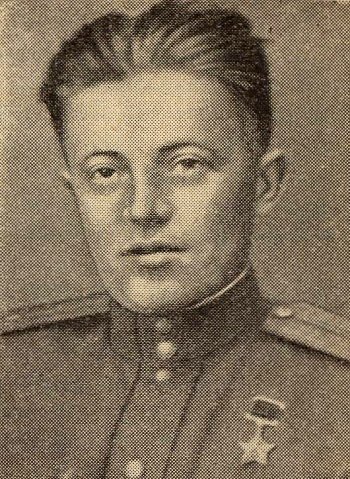
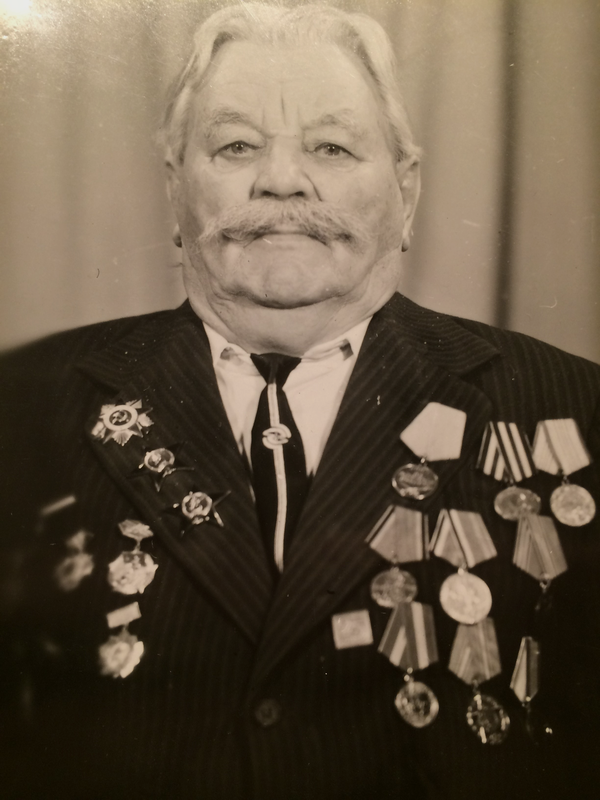
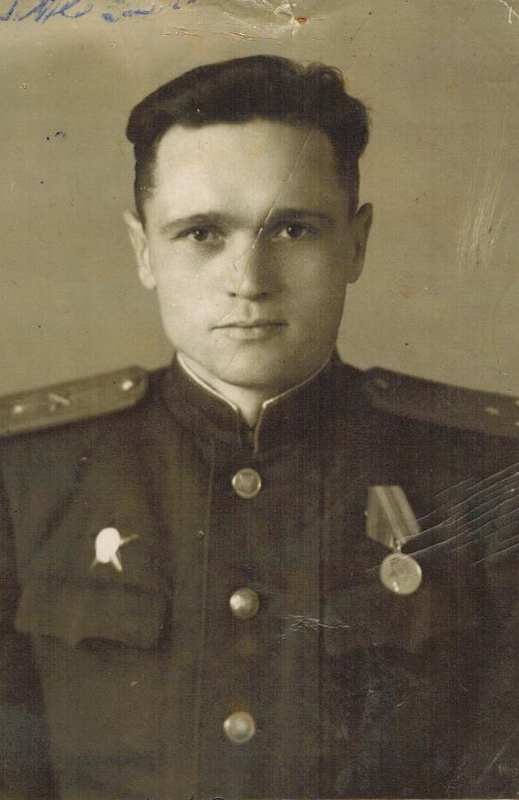
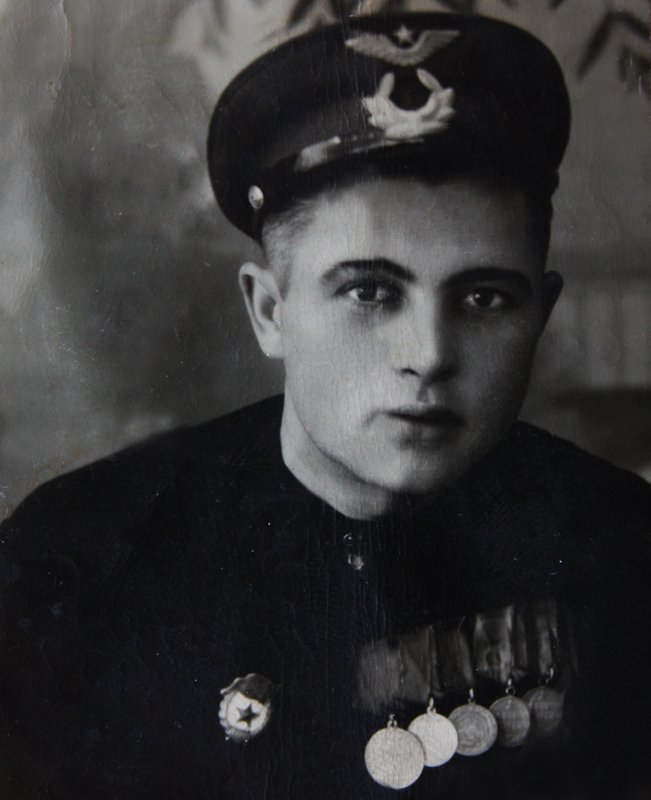
Pavlov, Yakov Fedotovich
DATE OF BIRTH: 10/17/1917 DATE OF DEATH: 09/28/1981 HISTORY: Title: Junior Lieutenant. Branch of troops: Ground Forces. Subdivision:13th Guards Rifle Poltava Order of Lenin Twice Red Banner Orders of Suvorov and Kutuzov Division Biography. Yakov Pavlov was born in the village of Malaya Krestovaya, now the Valdai District of the Novgorod Region, graduated from Elementary School, worked in agriculture. In 1938 he was drafted into the Red Army. He faced the war in combat units in the Kovel Region, as part of the troops of the South-Western Front. In 1942, Pavlov was sent to the 42nd Guards Rifle Regiment of the 13th Guards Division of General A.I. Rodimtsev. He took part in defensive combats on the outskirts of Stalingrad. In July-August 1942, Senior Sergeant Ya. F. Pavlov’s military unit was reorganized in Kamyshin, where he was appointed a machine-gun platoon commander of the 7th Company. In September 1942 he participated in the battles for Stalingrad on reconnaissance missions. _x000D_
In the evening of September 27, 1942, Pavlov received a combat mission from the Company Commander, Lieutenant Naumov, to reconnoiter the situation in a four-story building overlooking the central square of Stalingrad, “the 9th January Squre” This house occupied an important tactical position. He and three soldiers (Chernogolov, Glushchenko and Aleksandrov) knocked the Germans out of the house and completely captured it. Soon, the group received reinforcements, ammunition and telephone communications. Together with the platoon of Lieutenant I. Afanasyev, the number of defenders increased to 24 people. _x000D_
It was not immediately possible to evacuate civilians hiding in the basements of the house. The Nazis constantly attacked the building with artillery fire and aerial bombs. But Afanasyev avoided fierce losses and for almost two months did not allow the enemy to break through to the Volga. On November 19, 1942, the troops of the Stalingrad Front launched a counteroffensive “Operation Uranus”. On November 25, during the attack, Pavlov was wounded in the leg, lay in the hospital, then was the gunner and the Commander of the reconnaissance department in the Artillery units of the 3rd Ukrainian and 2nd Belorussian fronts, in which he reached Stettin. He was awarded two Orders of the Red Star and many medals. On June 17, 1945, Junior Lieutenant Yakov Pavlov was awarded the title of Hero of the Soviet Union (medal No. 6775). Pavlov was demobilized from the ranks of the Soviet Army in August 1946. After demobilization, he worked in the city of Valdai, Novgorod Region, was the First Secretary of the District committee, graduated from the Higher Party School under the Central Committee of the Communist Party. Three times he was elected a Deputy of the Supreme Soviet of the RSFSR from the Novgorod Region. After the war, he was also awarded the Order of Lenin, the Order of the October Revolution. He repeatedly came to Stalingrad (now Volgograd), met with the inhabitants of the city who survived the war and restored it from the ruins. In 1980, Ya. F. Pavlov was awarded the title of "Honorary Citizen of the Hero City of Volgograd." In Great Novgorod, at his boarding School named after him for orphans and children left without parental care, there is a Pavlov Museum (Derevyanitsy microdistrict, Beregovaya street, house 44). Pavlov was buried in the Alley of Heroes of the Western Cemetery of Veliky Novgorod. Viktor Mavrinsky, a pupil of the Kolos radio club named after Hero of the Soviet Union Yakov Pavlov, wrote, “In September 1942 in Stalingrad street combats were especially fierce in the city center, on the sector of the 13th Guards Division of A. I. Rodimtsev. _x000D_
By the evening of September 25, the situation sharply deteriorated, most of the buildings adjacent to the January 9 square were in the hands of the enemy. But one house at number 61 was in doubt. The Guards Sergeant Yakov Pavlov and his comrades Aleksandrov, Chernogolov and Shapovalov were sent to reconnoiter this building. Julius Chepurin, a front line correspondent for the 62nd Army, described all subsequent events in the essay ”Pavlov's House". “If we manage to catch on to it and turn the house into a strong stronghold, then we can keep the area under control. As it turned out, there were civilians in the house: women, children, as well as wounded soldiers of the 13th Guards Division, led by Medical Orderly Kalinin. But a large group of German machine gunners were already approaching the building. The combat for the house had started. Pavlov sent Medical Orderly Kalinin to the Regiment Headquarters at the expense of help, and he came led by a Guards Lieutenant Ivan Afanasyev, a communist who was appointed Chief of the garrison. And at the Headquarters of the Regiment, Colonel Elin waited all night for reports from Pavlov's house, as he ”If we manage to catch on to it and turn the house into a strong stronghold, then we can keep the area under control. _x000D_
As it turned out, there were civilians in the house: women, children, as well as wounded soldiers of the 13th Guards Division, led by Medical Orderly Kalinin. But a large group of German machine gunners were already approaching the building. The combat for the house had started. Pavlov sent Medical Orderly Kalinin to the Regiment Headquarters at the expense of help, and he came led by a Guards Lieutenant Ivan Afanasyev, a communist who was appointed Chief of the garrison. And at the Headquarters of the Regiment, Colonel Elin waited all night for reports from Pavlov's house, as he named it, not suspecting that under this name he would go down in history and become known to the whole world. Lieutenant Afanasyev knew that a modest soldier Pavlov was the soul of the defense. The fact that Pavlov was the first to break into this house and was able to defend with his fighters on the first night surrounded the personality of Yakov Pavlov with such a bright aura of soldier's glory, which turned out to be stronger than the provisions of the Infantry Fighting Regulations. That is why, the communist Ivan Afanasyev, organizing the defense of the house, tactfully stepped into the shadows, assigning the first role in this combat operation to the Guards Sergeant Yakov Pavlov.” The enemy's attacks intensified and when hand grenades were used, a miracle happened: the Katyusha Regiment fired a volley at the congregations of fascists around Pavlov's house. The newspaper “Pravda” for November 19, 1942 told for the first time about the hero-fighters of the 13th Guards Division in “Pavlov's House”. A few days before the end of the defense of the famous fortress house, the wounded Lieutenant Afanasyev was transported to the hospital. Нe was distinguished later. The command was taken over by Sergeant Yakov Pavlov, who remained in history forever. Yakov Pavlov, being wounded, did not leave the house until the very end of his defense. The defense of the house continued for 58 days and nights. Yakov himself learned about the title of Hero of the Soviet Union in April 1945. Guards Lieutenant Ivan Filippovich Afanasyev was awarded the Order of Lenin, his memoirs formed the basis of the book "House of Soldiers' Glory". The daughter of the legendary General A. I. Rodimtsev, Natalya Matyukhina met with two defenders of the Pavlov's House, whose names are carved on the wall of the house: Ilya Voronov (machine gunner) and Kamaljan Turgunov. Yakov Fedotovich Pavlov himself repeatedly visited the hero-city of Volgograd. _x000D_
The Kolos radio club (headed by Valery Vasilyevich Poltavets) bears Pavlov’s name, it had brought up many athletes. It was Yakov Pavlov who in 1980 gave the idea of a search to Valery Poltavets: to find on the air radio operators and participants in the Battle of Stalingrad, which grew into an International Search Radio Expedition, called the Victory Memorial. The Pavlov's House, the House of Soldiers' Glory stands as an unbending monument to the courage of Soviet soldiers. The defeat of the main forces of the German armies at Stalingrad predetermined the defeat of Nazi Germany and became a turning point in the Second World War. Here, at the walls of Stalingrad, the fate of our Fatherland, the freedom and independence of our Motherland was determined. _x000D_
Around this common four-story Stalingrad building “Pavlov's House” are still circulating stories. _x000D_
For example, there is a legend that Pavlov did not pass away in 1981, but took monastic vows and became Archimandrite Kirill. In fact, the hero is buried in his native Novgorod. And the aforementioned elder Kirill, according to the panorama museum, had also the common Russian last name Pavlov in the world. And he was also a Hero of the Soviet Union. Only he was awarded this title not for Stalingrad, but for the battles on the Sandomierz foot strong. There were true grounds for confusion. Both were sergeants during the battle on the Volga, both ended the war as Junior Lieutenants. _x000D_
At the end of September, the first replenishment, almost a thousand fighters, had arrived in Rodimtsev's Division. It became easier for the guardsmen, and on the initiative of the Stalingrad city committee of the Komsomol, a volunteer detachment of about five hundred soldiers was formed, who were to replenish the ranks of the 13th Division. They were boys of seventeen-eighteen years old. _x000D_
Fierce battles unfolded for the mill, the State Bank building, the Railway Worker's House and other buildings. For battles in the city, the Division needed a strong point. The attention of General Rodimtsev was attracted by a small four-story house, facing the square of the Ninth of January. This square has long become the epicenter of the struggle between the two warring parties. The buildings surrounding it served as powerful strongholds, real pillboxes. And now, when the division had moved to active defense, the fight for the city center has turned into a fight for every house. Sergeant Pavlov received an order to conduct Reconnaissance of this house. Pavlov with three fighters managed to gain a foothold in this building and took up defense. _x000D_
Civilians were hiding in the basement of the building. Each of the recons received a combat position, but more than one, the defense had to be held from three sides. Pavlov's fighters fought off attack after attack for two days, and then a replenishment led by Lieutenant Afanasyev came. For defense, ammunition was needed, wounded appeared, a regular communication with the regiment was needed. The guardsmen began to dig the communication route to the mill, the residents of the house helped them. Five days later, the passage along which one could walk to the mill in full growth was ready. By this time, telephone communication was established from the Battalion Headquarters. In the basement, beds were installed for the rest of the soldiers and commanders, everything was provided for a long and successful defense. The house kept all the adjacent streets under fire from its machine guns, from where the Nazis tried to counterattack. Moreover, there was a mill nearby, where the division's observation post was located. _x000D_
One night General Rodimtsev came to Pavlov's house to support the guardsmen. Of course, they knew that the divisional Commander was not a timid dozen, he was not hiding in the dugouts, but to come straight to the front line was a very big risk. And they immediately added that the general is fair, and if someone lies, do not expect mercy. He won’t scream, he won’t stomp his feet and, he won’t frighten with a tribunal or execution. But if you are guilty, he will punish severely, without further ado. Rodimtsev believed in victory, his soldiers fought heroically near Kharkov, Kremenchug, on the Kursk Bulge. On the Sandomierz foot strong beyond the Vistula, the Nazis threw seven divisions against Rodimtsev's corps, including four tank divisions. The guardsmen drove the enemy to the Oder. Then there were bloody battles in Germany itself. On the Elbe, the guards linked-up with the Americans. Then Rodimtsev led his divisions to help those fighting in Prague. General Rodimtsev walked more than eight thousand kilometers along the roads of the war. _x000D_
A documentary was shot about Ya.F. Pavlov: Yakov Pavlov is a Sergeant of the Rodimtsev Division (biography and photo): For what they gave the Hero of the Soviet Union (Order of Lenin and the Gold Star medal) to Ya.F. Pavlov.