Ryabukha Evdokia Grigorievna
Ryabukha Evdokia Grigorievna_x000D_
_x000D_
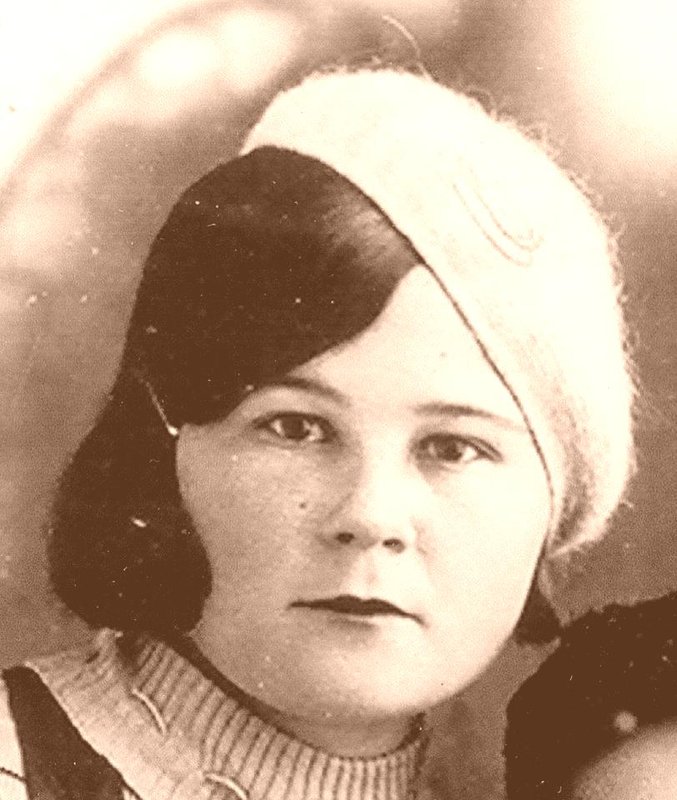
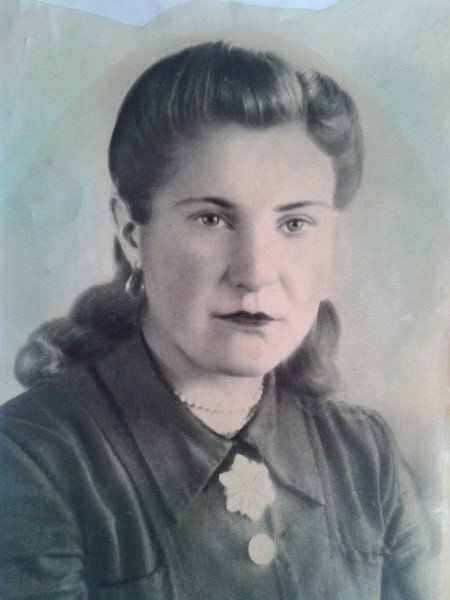
Crimean Joan Of Arc she was burned alive on March 19, 1944 near Simferopol, when the liberation of the city was less than a month away-the Nazis were driven out of here on April 13. They did not burn it in a furnace, like 8 thousand prisoners of the death camp, which was set up on the territory of the state farm "Krasny" near Simferopol. Few people know about it, but the stoves there were the same as in Buchenwald and Auschwitz! She was burned demonstratively, at the stake, because she was a Soviet intelligence officer, and her fellow countrymen gave her to the Nazis. This high feat is not marked by any awards. The place where she was put to death and then buried is not known. In vain the inconsolable mother Nina Pavlovna searched for her daughter's grave. The funeral was brought in mid-July, when the trail had already cooled, and the intelligence archives either did not survive, or did not lead them at all in that hell. In the death notice sent from Varenikovsky district military Commissariat to the name of the scout's father, Grigory Vasilyevich Ryabukha, her death is said sparingly and dryly, and even with an error in the surname (it is written "Fedorenko Evdokia Grigoryevna", and it should be – " Fedorchenko»): "Your daughter, red army soldier so-and-so in the battle for the Socialist Homeland, loyal to the military oath, showing heroism and courage, died on March 19, 1944. She was buried with military honors in the Simferopol region of the Crimean ASSR." And below in large letters it is reported that "this notice is a document for initiating a petition for a pension" and there are two signatures - the district military Committee of captain Golovach and the head of the 1st part of Lieutenant Pertsevoy. Such sweeping, squiggly ones! Why didn't you, fellow commanders, save the girl from a terrible death? After all, she loved German lessons, it was well given to her at school, and her friends were from Russified Germans whose ancestors moved to the South of Russia at the invitation of Catherine the Second. They were Russified, but they did not forget their native language, they spoke it at home. And Dusya practiced with them. Good German came in handy when the Nazi invaders entered the village: she got a job at the commandant's office as an interpreter to gather intelligence. Mission impossible with the partisan movement in Gostagayevskaya from the very beginning did not set. Steppe and steppe all around, you can see anyone at a glance, and on the hills of the North Caucasus foothills is not a forest, but so – woodlands. The commander of the partisan detachment – my grandfather Ivan Aleksandrovich Kovalev, the Nazis seized on a tip from traitors in this mountain forest near the village almost immediately. He hasn't even had time to put together a squad yet! They tortured him in the former school building and shot him a few days later. I don't know how he did it, but before he died, he managed to pass the card he carried in his breast pocket to his family. Fresh, just a month before taken by my grandmother. She stands on it 30-year-old, with a stern face, lifting higher 2-year-old dad and putting his arm around the shoulders of his 7-year-old brother, who looks at the camera with fear. On the back, in the teacher's handwriting, is written: "10 / VIII-42 years old. Photographed in the middle of the war. I don't know if I can survive it! Remember sometimes your wife and children Borya and Vova." Anapa Khatyn. So it turns out that the scout Evdokia walked on a razor's edge! Judge for yourself: the older sister's husband is a partisan commander who was shot, her own husband beats the Germans at the front, and Raya's younger sister is also fighting there. When our units were retreating from the village, she ran out to see them off with her three-year-old daughter Maya and everyone saw her! Grandpa Grisha and grandma Nina did not immediately understand the children's babble – the baby tried to pass them her mother's message. Just two words: gone to war! When the village was released, a letter came from the fugitive asking her to put flowers on the grave of her daughter Mayechka. They read it aloud, and the five-year-old daughter was already surprised: "what other grave?” But the mother had every reason to believe that the Nazis did not spare her child – she went to the front, and the family of volunteers did not stand on ceremony. Gostagai is called Anapa Khatyn for a reason! 134 residents of the village, mostly women and children, were brutally starved in the "soulhouse" with poison gas. They drove the living into it, and after 17 km of the way they dumped the dead into the pit. The Germans were in the village for a little more than a year - from August 30, 1942 to September 23, 1943. Just before the retreat, when there was heavy fighting on the so-called "Blue line", the invaders took 40 children aged from one and a half to 13 years old to transfuse their blood to their wounded. All, without a trace! In total, during this terrible year, they tortured 198 people: 45 men, 86 women and 67 children. It's a miracle that Dusya managed to survive in this meat grinder! Another would not have tried her luck-she stayed at home to raise her son and wait for her husband from the front. But she was a soldier of the Red Army, its valuable personnel, intelligence officer, and the war is not over yet! Red army soldier Evdokia Fedorchenko was ordered to retreat with the Germans to the Crimea and, of course, fulfilled it. In 7 months, she managed to send home two letters, but only one, the last one, was preserved. 3 / III-44 g. Hello, dear dad, mom, Mura, Nadia and tadpoles: Bob, Alex, Eric, Maya, Dylan and Nina! I can't tell you how much I missed you. It's been four months since I left home, and it feels like forever. I wrote You another letter earlier, and I managed to write it again. How much I want to say to you, but I can't convey what I feel on paper. I can only say that I envy you - you are all together, and I am alone and in a foreign land, where it was easier to experience any conditions together with you, and here I live well financially, but how I experience morally - this you do not understand. And the hatred for the cursed enemy grows even stronger, the fists are clenched even more against these scoundrels who have destroyed our happy and joyful life, who have turned the land of the sun into a tomb. I have seen a lot during this time, and now I am burning with one desire: to finish off the enemy faster, to free our sacred land from these monsters, to allow the people to breathe freely. I ask you to help restore the national economy in every way, it's spring - I remember our garden, I want to help you, but this year I can't help, and it seems that I would fall to the ground and scream and kiss my land, even if I could see a piece of my homeland, no matter how good it is here, and where I was born and grew up is the most precious thing. ... Don't worry about me, I live well, I just miss you, but the time will come - see you, we will rejoice together in our victory over the enemy. I don't think I'll get anything from you, but I'll write if I can, but don't write yet, because I think we'll change the address soon. I'd love to hear a word from you. How is everyone's health? How I worry that it's spring, and Eric is naked and barefoot, and I can't do anything, even though I have the opportunity... I siss all of you and give you a big hug. Teach Eric a little, I'm sick that it's time to send him to school, and you have a whole nursery there. Let's hope to see you soon. I kiss you again and wish you happiness. Pray for my success and for my life!” Martyr for the Fatherland Military censorship almost completely blotted out the paragraph from it, considering secret information about fellow countrymen whom the intelligence officer accidentally encountered in the Crimea. But one of them gave her to the enemy, given that the letter is dated March 3, 1944, and she died on the 19th. Someone I know, according to the uncrossed fragments, came with one woman and left with another, and this other lives with her father and brother. Dusya has heard about someone, but doesn't know about someone. And she also reports that "once met" a man who " shoemakers, he is everywhere at home with his brothers and sisters, was with me. Here they are..." one of these people have betrayed her? To make out the names smeared with ink, you need special expertise. But Dusya's parents had already guessed who they were talking about, even though they kept the knowledge to themselves. After all, the truth about it was not declassified, for the feat was not awarded. And people are different: they will not believe that a scout, they will say-a traitor. Dusya's son Eric died after getting into a fight with a scoundrel who insulted the memory of his mother. And after the grandson, one by one, Evdokia's parents died out: her mother's heart failed, and a month later her father left. They were a rare breed of lovebirds who don't live without each other. And they both had wonderful voices, like birds. In his youth, my great-grandfather sang in the Church choir. So, with faith in his heart, he served in combat in Ashgabat and Tehran, and then won the first world war on the Caucasian front, saving Armenians during the days of the massacre near Erzerum. His faith ended in 1918, having failed the test of a Bolshevik concentration camp for Cossacks. To the madness of the brave, how many nameless Alexander Matrosovs covered the embrasure of the pillbox with their Breasts! How many Victor Talalikhins went to fight in the sky, and Nikolaev Gastello died on the ground, sending the downed planes into the thick of enemy equipment! We will never know the names of all the heroes worthy of the Star, but we can try to save from oblivion at least some of them whose story still lives in the family archives.