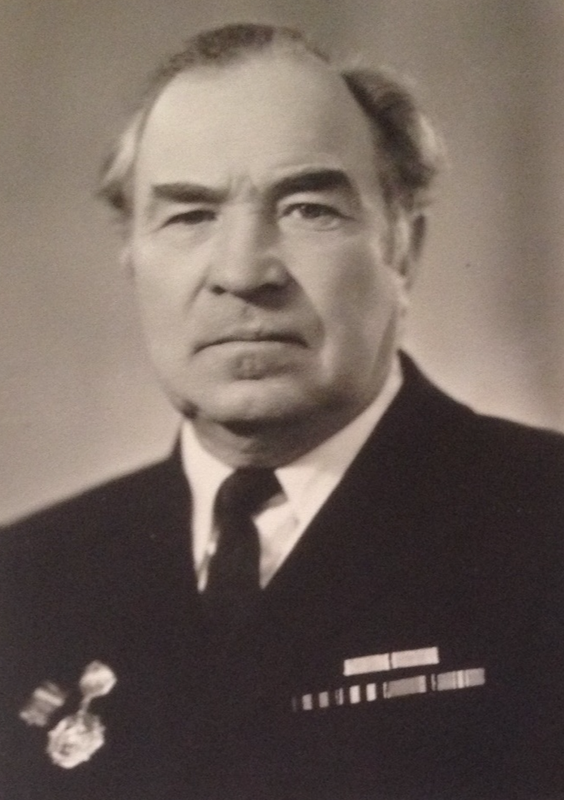
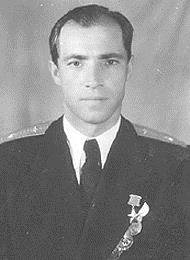
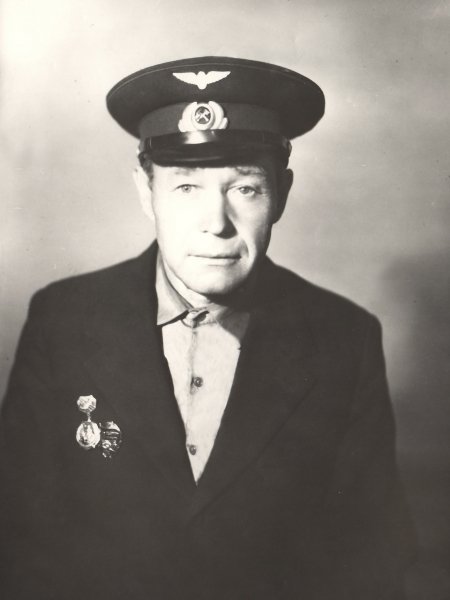
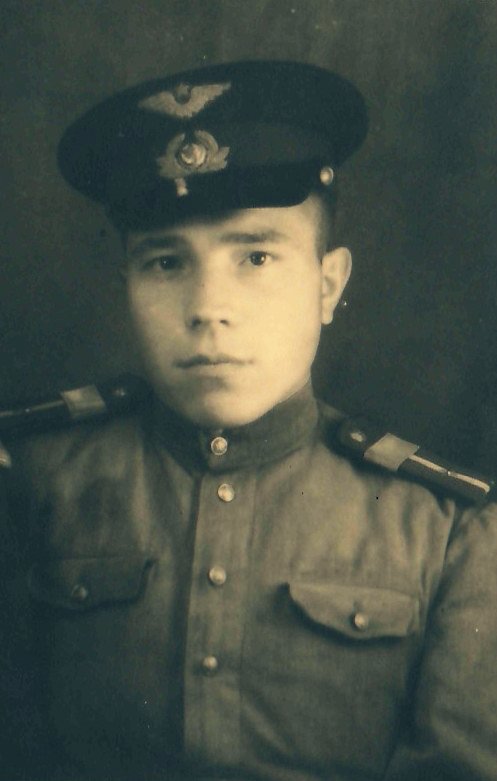
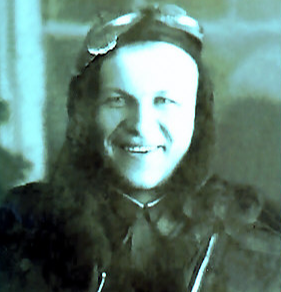
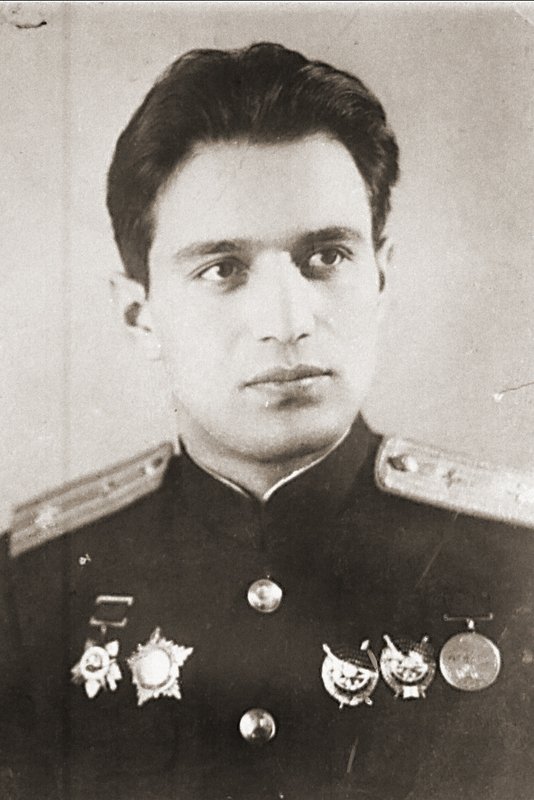
Vladimir Pavlov
Villadge of Popovo, Smolensk Region._x000D_
25.08.1918 - 06.04.1998_x000D_
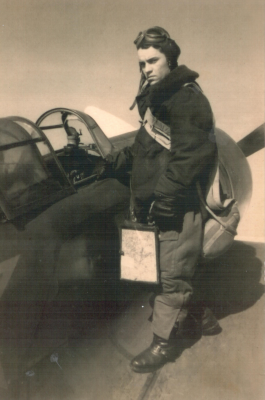
Vladimir Pavlov - commander of the transport squadron of the special purpose Aviation group (18th Air Army), Lieutenant. Born on August 25, 1918 in the village of Popovo, now Kardymovsky District, Smolensk Region, in a peasant family. Russian. Member of the CPSU (b)/CPSU since 1947. He completed three courses of the Smolensk Financial and Economic Technical School in 1938. In the same year, on Komsomol recruitment, he was sent to the Tambov Flight School of the Civil Air Fleet. He graduated in 1940 and worked as an instructor pilot for a training squadron in Penza. In the Red Army since January 1942. Appointed commander of a plane in the transport aviation of the Western Front._x000D_
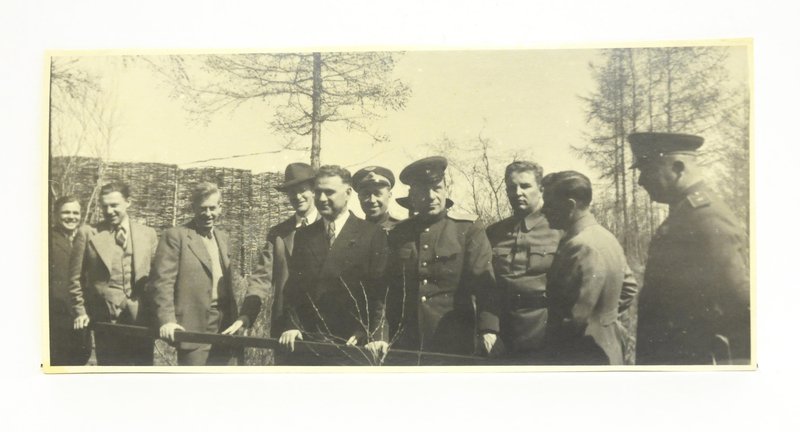
He flew combat missions on a heavy transport plane over the front line to the deep rear of the enemy to the partisans of Smolensk, Belarus, Ukraine, and Crimea. He dropped troops, delivered weapons and ammunition, and took out the wounded. It was necessary to fly in any weather, day or night, under anti-aircraft fire, repelling the attacks of enemy fighters. Vladimir was awarded the Medal For Bravery in December 1943, and in July 1944 - the Medal Partisan of the Patriotic War of the 1st degree.He especially distinguished himself in providing for combat operations of the People's Liberation Army of Yugoslavia. The special purpose aviation group, which included Pavlov, was based at Bari airfield in Italy and was equipped with American Douglas C-47 transport aircraft. Pavlov's crew spent 177 hours in the sky over the Balkans, delivered over 61 tons of ammunition, food and weapons to the Yugoslav partisans, took out 224 wounded, and transferred 213 soldiers and officers across the front line. In one of the sorties, he took 32 pilots from downed American planes from a partisan detachment to Italy, and this was when the aircraft capacity was just 21 people. In total, by May 1945, Lieutenant Pavlov had made 350 sorties across the front line, 80 of them landing behind enemy lines to deliver supplies to the partisans, evacuate the wounded, and drop off troops. By decree of the Presidium of the Supreme Soviet of the USSR of June 29, 1945 Lieutenant Vladimir Pavlov was awarded the title of the Hero of the Soviet Union with the Order of Lenin and the Gold Star Medal (#7987) for heroism, perseverance and high flying skills in performing particularly important tasks of the cCommand of the People's Liberation Army of Yugoslavia. First Lieutenant V. Pavlov - in the reserve since 1946. He worked as a civil aviation pilot until 1977. He flew as the commander of the IL-18 on international airlines, the total flight distance was more than 4 million kilometers. Lived in Moscow. Awarded the Order of Lenin, the Red Banner, the Patriotic War, 1st degree, the Red Banner of Labor, medals, foreign orders and medals. The crew of Vladimir Pavlov in May 1944, flying through Iran, Syria and Egypt, arrived at the Anglo-American military airfield of Bari, in southern Italy. He was assigned to a special air group that supplied the partisans of the Balkan Peninsula. In an extremely difficult situation in high-altitude areas, without fighter cover until October 1944, Pavlov made 37 sorties to the rear of the enemy and 24 times made landings on mountain partisan airfields. Each such landing was fraught with a huge risk. After all, the airfields were small, located among high mountains, and it was not easy to find them. However, the crew of Vladimir Pavlov successfully completed all the tasks of the command. One of the air group's planes was damaged on September 2, 1944, when landing in the mountains. In this area, the Nazis were attacking, and there was a threat that the plane, crew and wounded partisans might die. Enemy fighters discovered the partisan airfield and continuously patrolled over it. Vladimir Pavlov flew to the rescue of his comrades. The weather was non-flying. Along the entire route, thunderstorms raged over the sea and in the mountains, solid clouds dropped to 600 meters, and the height of the surrounding mountains exceeded 800 meters. Every second the plane could crash into the ground, but Pavlov managed to bring it to the destination, landed, and delivered spare parts and a repair and technical crew to the damaged plane. On the same night, he made another sortie, delivered weapons to the partisans and took out the wounded. The next day, the damaged aircraft was repaired and returned safely to its base. Pavlov, along with his countryman Lieutenant Mikhailov, received a particularly important task on September 18, 1944. They had to transfer a group of senior officers of the People's Liberation Army of Yugoslavia from the island of Vis on the Adriatic sea to the partisan formations fighting behind enemy lines. Performing this flight, the Soviet planes crossed the entire territory of Yugoslavia occupied by the enemy, and safely returned to their airfield. Guards Lieutenant Pavlov was assigned to perform a through flight from Bari airfield to the command of the Soviet troops in Romania on the night of October 4 to 5, 1944. Vladimir landed at night on a tiny mountain airfield in the rear of the Nazis, picked up a group of Soviet and Yugoslav officers and brought them across the front line. After filling up the plane with fuel, he returned to the partisans, took the wounded and brought them to Bari. In total, that night Pavlov flew more than 2,500 kilometers over enemy territory and made two landings at the mountain partisan airfield._x000D_
He died on April 6, 1998. He was buried in Moscow at the Troyekurovskoye Cemetery.