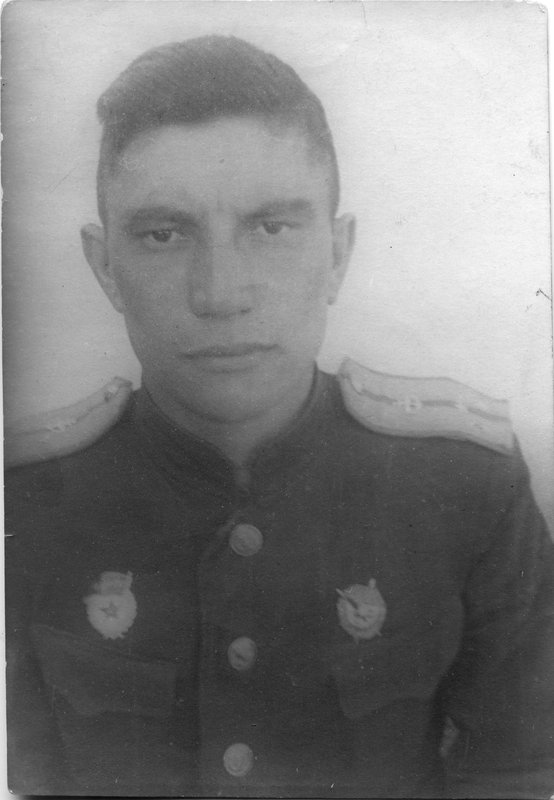
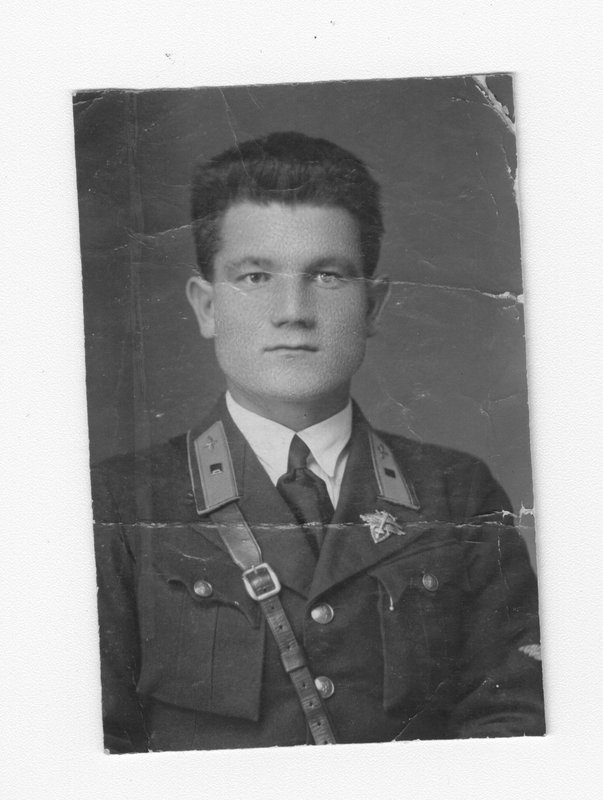
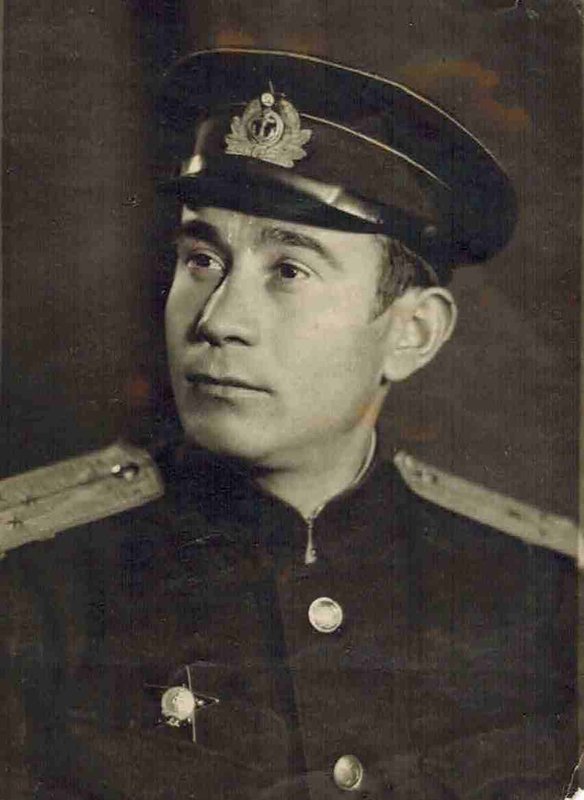
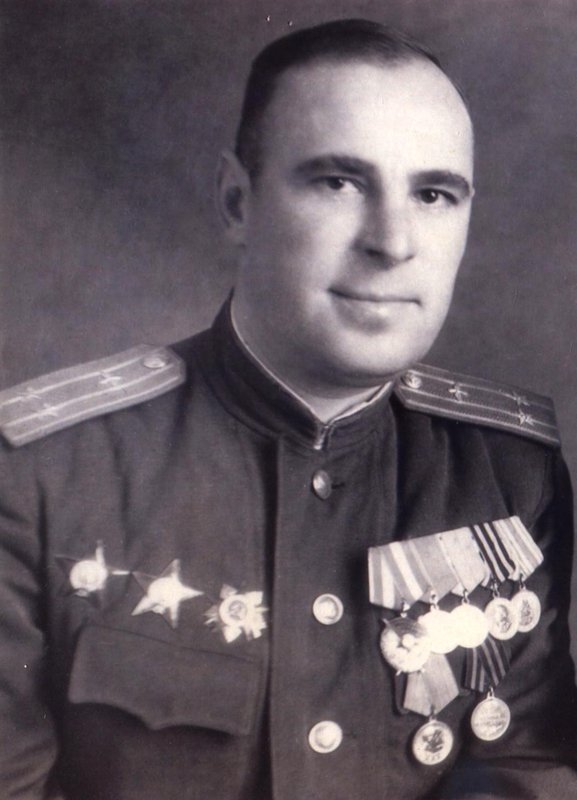
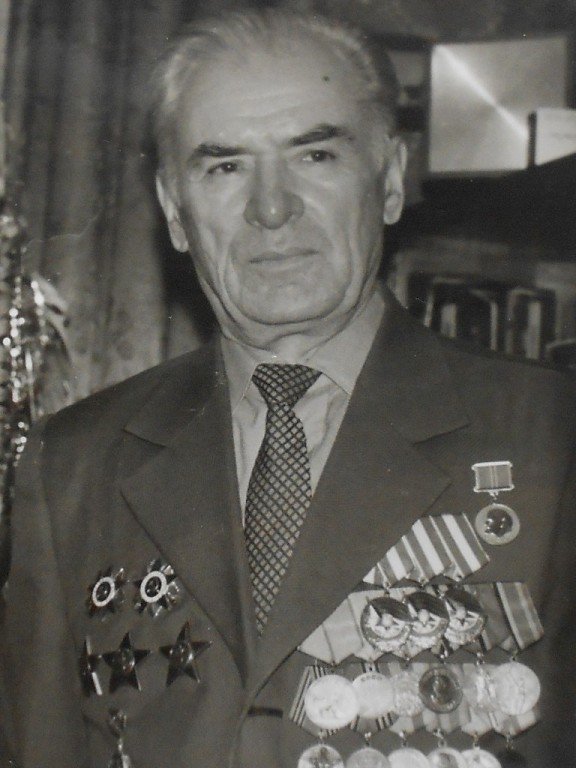
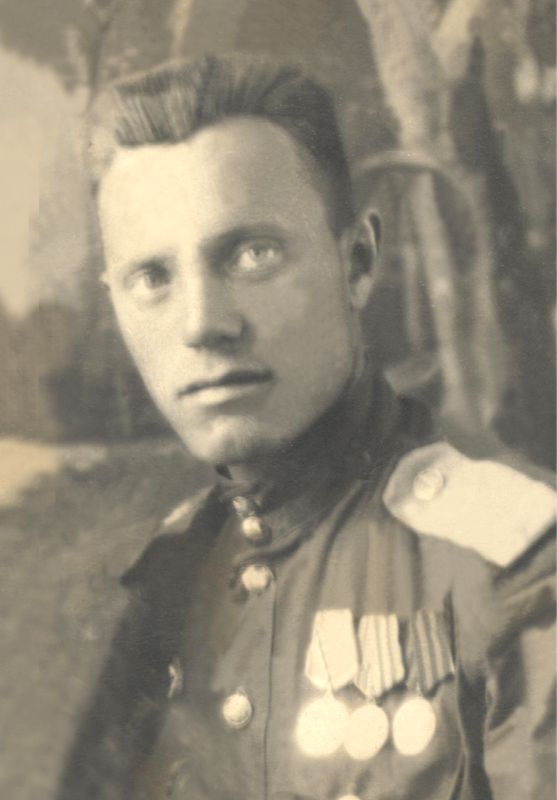
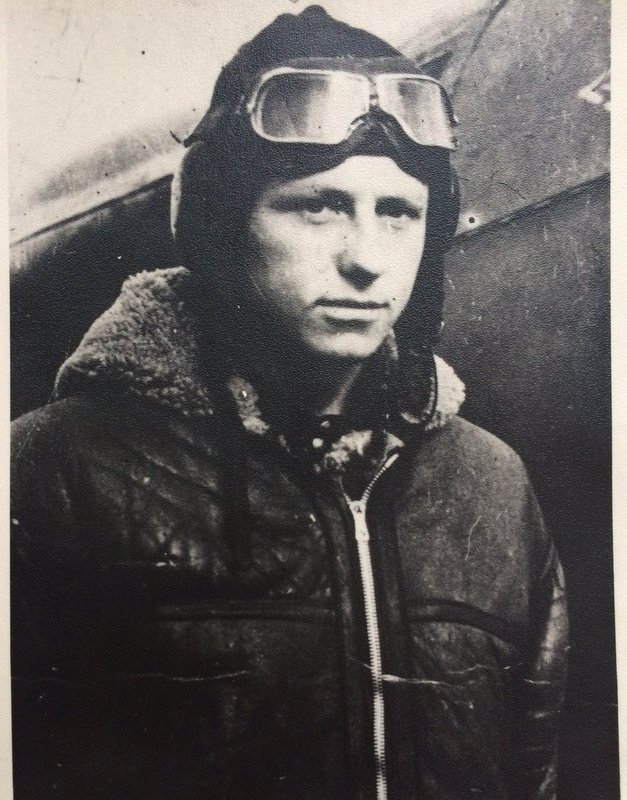
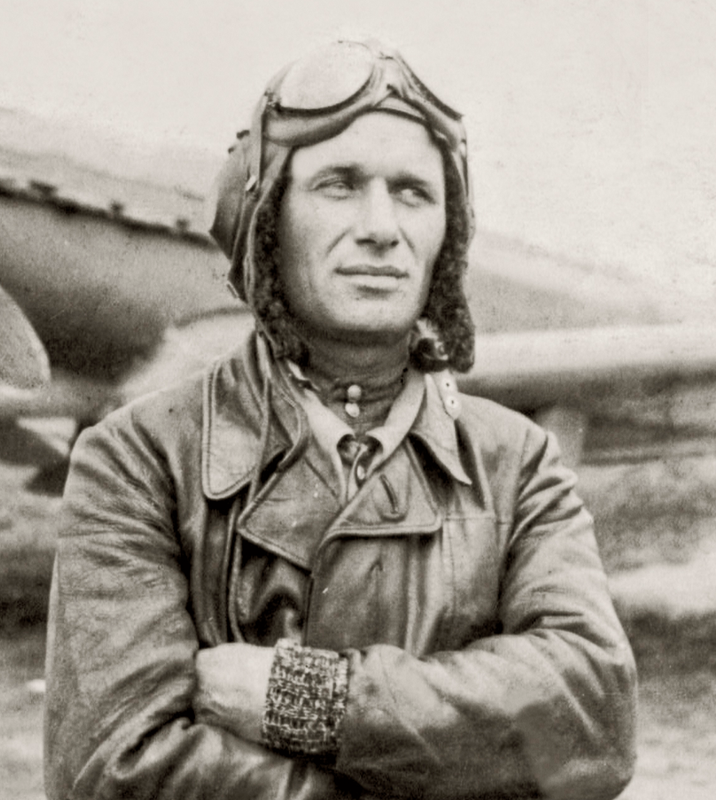
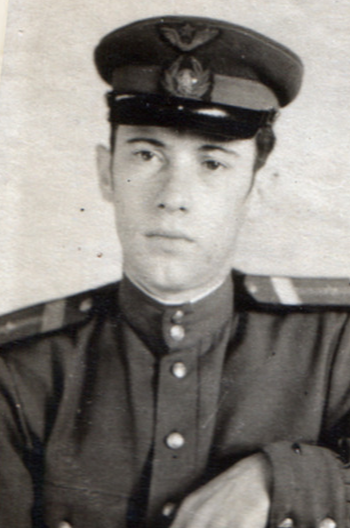
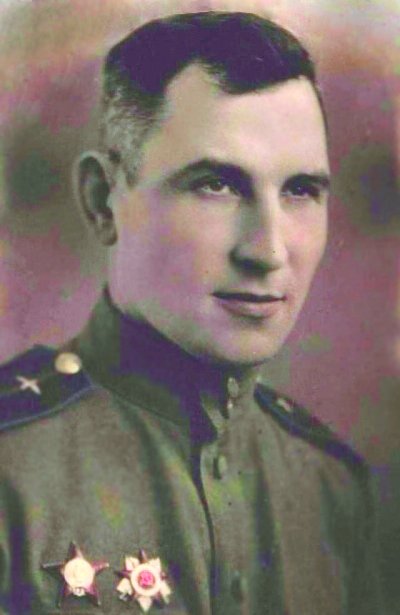
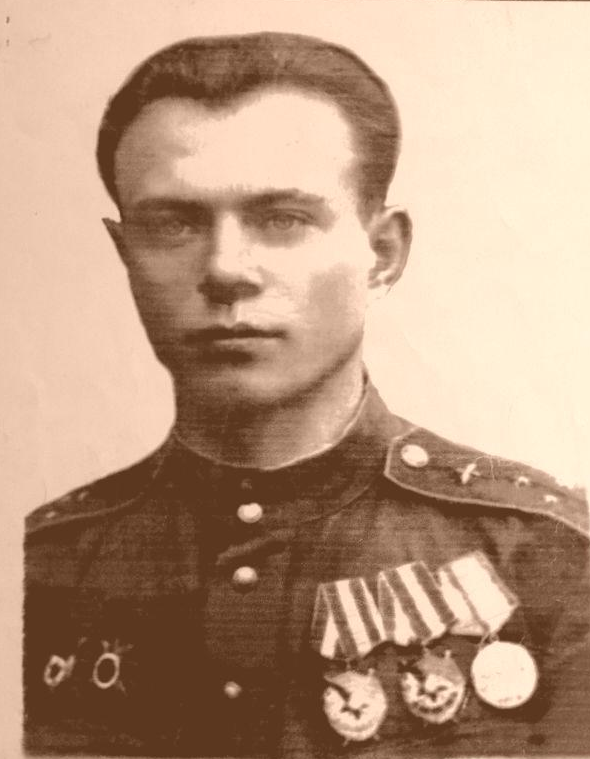
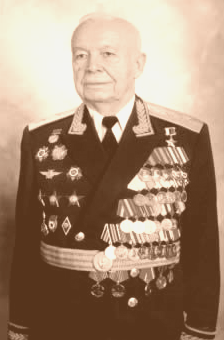
Ivanov Alexander Vladimirovich
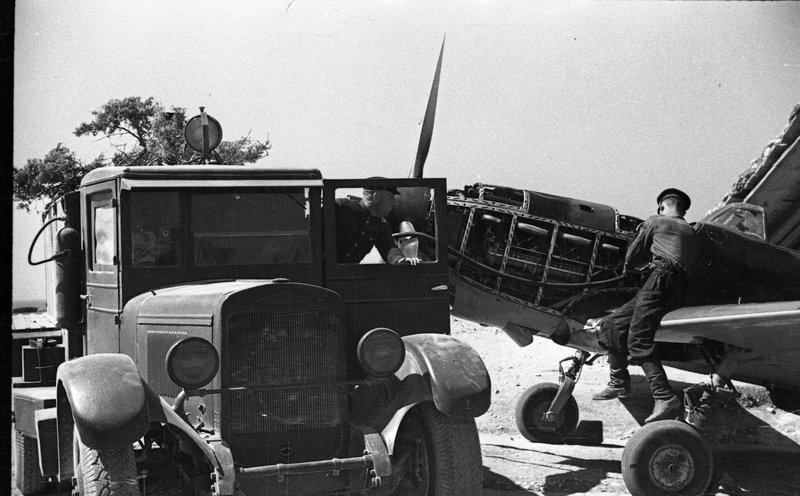
Rank: Lieutenant Colonel Type of Troops: Aviation My grandfather Ivanov Alexander Vladimirovich was born in the city of Kovrov, Vladimir Region. The story is from him. I met the beginning of the war at the military school of pilots in the city of Armavir on June 22, 1941. In August we graduated from military school, but sent us not to the front, but to the Far East. There we had to protect the borders of our Motherland. But when it became definitely known that Japan would not side with Germany, the flight crew of three air divisions, 6 fighter regiments were sent to the front. The 3rd Fighter Corps was formed from the pilots of the Far East. The corps was commanded by Colonel Savitsky. The regiment was armed with the latest Yak-1 aircraft. All pilots were looking forward to the start of combat work. I was the youngest of the pilots in the regiment, I was in my twenties. With all my might I tried not to lag behind my comrades in flight work. The regiment began combat work. The first combat mission was to cover their troops in the area of the city of Novorossiysk - Malaya Zemstanitsa Krymskaya. The weather was sunny, spring. Everyone tried to clearly maintain order of battle in the ranks. We came to the given area. We had an altitude of 4000 meters, on the radio I heard the voice of the commander of the group, Captain Lapshin: "Attention! The enemy is on the right" and immediately the command, "Let's attack!" The first air battle began. It was difficult to correctly assess the situation, there was not enough experience, unusual attention was distracted by fans of glowing trails and unfamiliar aircraft silhouettes; In this battle, our group did not shoot down a single aircraft, but all the pilots felt a real air battle, all of them had complete confidence in their abilities. In the next flight, the account of the downed aircraft was opened by the flight commander of Senior Lieutenant Sasha Lavrenov (later Hero of the Soviet Union). The air battles became more intense with each passing day. Air battles practically did not stop all day. Our pilots entered the battle immediately upon approaching the front line. In the last days of April, the fighting in the air turned into a real air battle. Our troops went on the offensive. The air was literally cramped. IL-2 attack aircraft were working near the ground. At medium altitudes, groups of bombers performed their tasks, each had cover for fighters. And all this happened over a small area, the village of Krymskaya - the city of Novorossiysk. Air battles lasted for several hours. Groups of aircraft on both sides changed without stopping the battle. In some air battles, 50 or more aircraft from each side took part. A few days before the end of the Kuban operation, in one of the sorties, after finishing the air battle, we headed for the airfield, for a while I relaxed my attention and came under fire from ME-109. The upper casing was torn off from the right edge, shrapnel hit the right arm and leg, the gas tank came out at an angle to the top of the plane. He swayed up and down from the oncoming air flow, holding on to the gas lines. ... Friends, seeing my position, covered me from the air. Everything went well, we managed to reach the airfield and land normally. It was another lesson that one should not forget the instructions of the senior pilots: "discretion begins with takeoff and ends with landing." Further, the combat path of our regiment passed through the south of Ukraine as part of the 4th Ukrainian Front. 1943 was the most productive year. Our troops marched from the walls of Stalingrad to Kiev. It is 1300 km. Every day, being above the troops, we watched this unstoppable advance. A dusty trail followed our columns of troops and equipment on all roads. Everyone moved west. On April 8, 1944, the liberation of Crimea began. The offensive began through Sivash. Three days later we landed at the Simferopol airfield. Crimea was cleared of German invaders in just 1 month. On May 9, Sevastopol was liberated. I would like to tell you about the Berlin operation. In January 1945, we, as part of the 1st Belorussian Front, took part in the liberation of Warsaw. The old Polish city was destroyed to the ground. In early April 1945, we landed at an airfield in Germany near the small German town of Morin. Berlin, as they say, is just a stone's throw away. For the aerodrome work, the German population was brought in, many women, teenagers, elderly men. We look at this nation with interest. None of them raise their heads, work with concentration, avoid eye contact. Thin, pale, now they feel the war at home. Every day we performed the main task of covering the ground forces. On April 16, 1945, the 1st Belorussian Front launched an offensive. There was a thick haze in the air, flew out in groups of 6-8 aircraft. The main task was to cover their ground troops on the battlefield. During the day, each pilot made 6-7 sorties. The complete superiority of our aviation was felt in the air. On one of the sorties we patrol in a given area west of the Oder with a group of 6 aircraft. I am the leader of the group. I see off to the side slightly above 6 "messengers".I get up on a parallel course with a climb. The Germans noticed us, but obviously they do not intend to enter the battle. We increase the speed, they will not be able to leave; I transmit to the guidance station "I see six messengers, we are attacking." The Germans have no choice but to accept the battle. Intense combat work continues every day. A week later we land almost at the very fascist den, 25 km away. from Berlin, next to the ring motorway. Here it is a fascist nest. It presented the darkest view from the air. Over the vast space, gray-dirty ruins, a sea of fires and a black smoky sky smoked. In the last days, April 27-28, our regiment landed at the Dalgov airfield, 3-4 km west of Berlin, not far from its suburbs. It was a German experimental airfield. In the hangars we saw 2 ME-262 turbojet aircraft and one ME-163 jet fighter with a liquid-propellant jet engine. Pilots, hastily retrained from bombers and transport aircraft, began to appear in the air on German fighters. Some aces with iron crosses preferred to advance to the airfield to the Americans and British. In those days, I obviously turned up such a hastily trained pilot, inexperience was guessed in his actions. This was my last victory, the twelfth. On May 2, 1945, it was just beginning to dawn, we were awakened by explosions and automatic fires. We got up on alarm, a few minutes later we were at the planes. The regiment commander reported on the situation: "The German units are striving to break out of the center of Berlin and go west." Came just to our airfield. A short order follows: "After takeoff, release the entire ammunition load at the advancing (or, more correctly, at the retreating) Germans, landing at a nearby airfield." We take off, find clusters of dark figures in the middle of the street and houses stuck to the walls, and in long bursts we release all the ammunition at them. The technical staff and the aerodrome service took up defensive positions at the aerodrome. The headquarters of our division has already reported the situation above. Our tanks approached. The retreat was cut off. And by 15.00 on the same day, all units in Berlin ceased resistance. This mission on May 2 was the last combat mission. The war is over. We stood by the planes, looked at each other, quite differently, and smiled. And it became sad when they remembered their friends, pilots, who had not lived up to this day quite a bit. On this day, I felt both joy and pride that I was born in a Soviet country and that I am its full citizen. Ivanov Alexander Vladimirovich died on 13.03.1995.