Back to
album
album
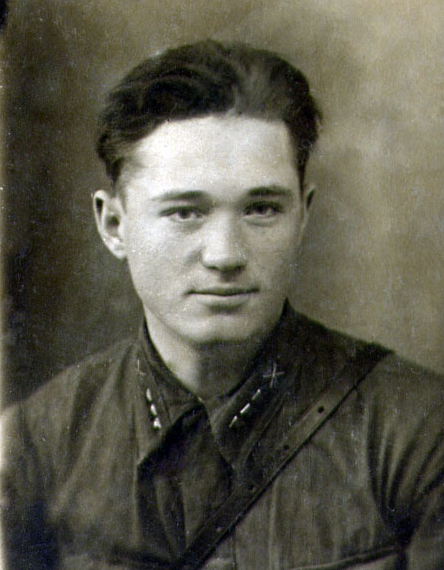
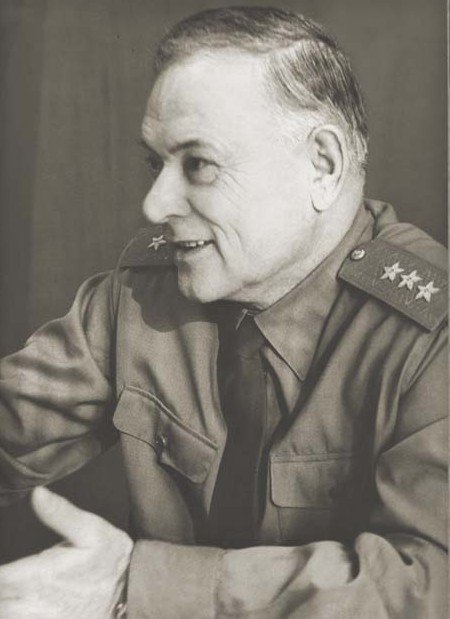


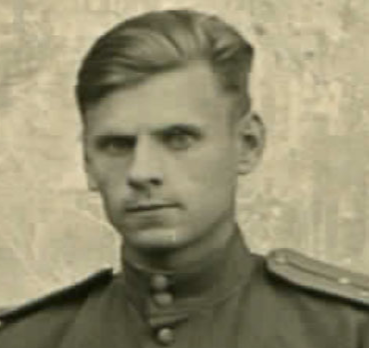

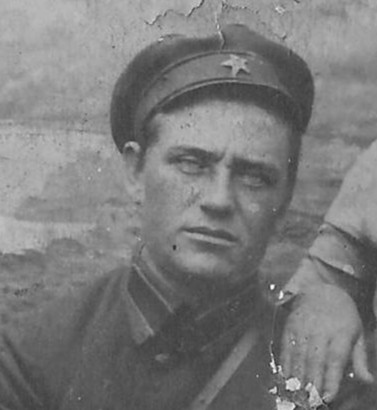
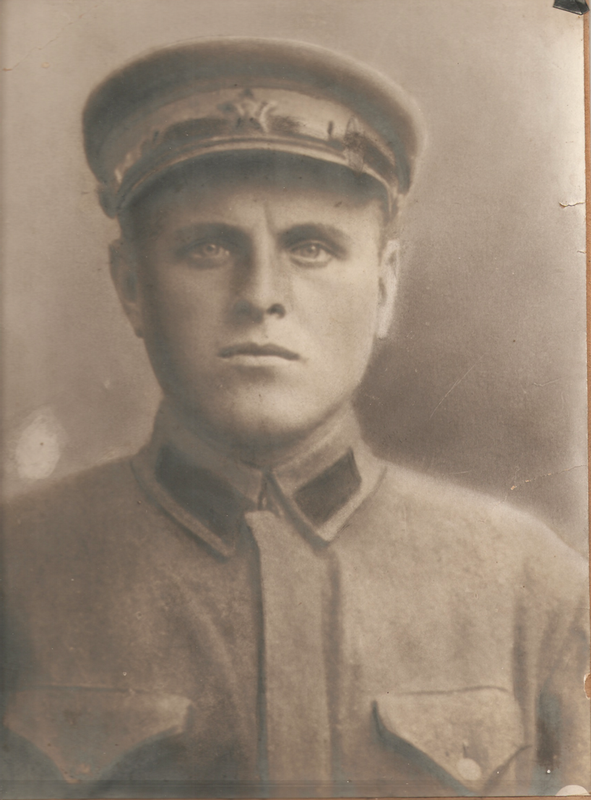


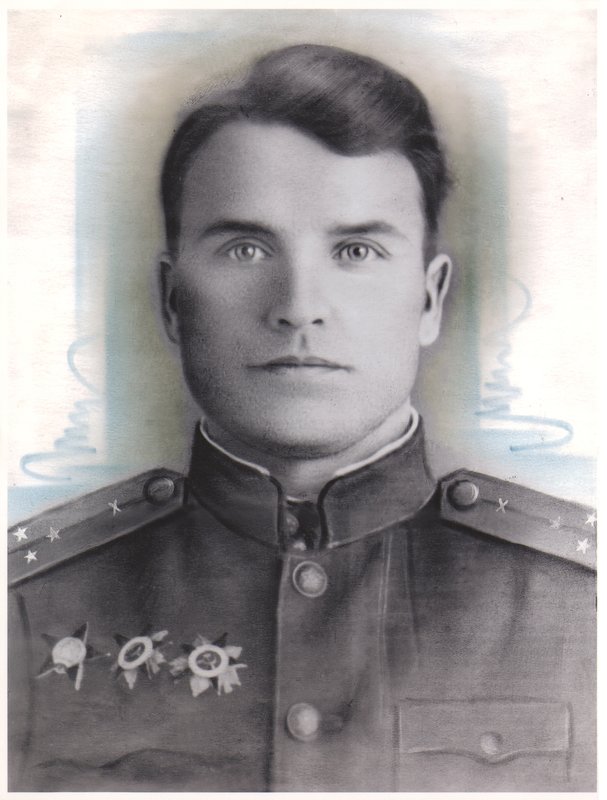
Sokolov, Nikolay Ivanovich
Rank: Corporal _x000D_
Branch of Troops: Artillery_x000D_
Sokolov Nikolay Ivanovich is a defender of the Brest Fortress ( 25.04.1917-25.06.1985). He was born in the village of Milyatino, Vshodsky District, Smolensk Region. In 1939, he lived in Bolkhov, Oryol Region. After the war, he lived in Yaroslavl. He was part of the 6th Oryol Rifle Division of the Red Banner. 98th Anti-tank Artillery Division._x000D_
Sokolov Nikolay was born on April 25, 1917 in the village of Milyatino in the Vshodsky District of the Smolensk Region in the family of a clergyman. His father, Ivan Sokolov, had no children for a very long time. He was well into his forties when his first son was born. There were only three of them: Nikolai, Mikhail and Konstantin. After graduating from the 7th grade, Nikolai worked on the railway as a greaser of cars, since 1933 he had been an accountant, then became an electrician-radio operator at the paper factory club, and at the radio station in the village of Milyatino. In 1939, he was sent to the course of projectionists in the city of Bolkhov, Oryol Region, but did not have time to finish them, and in fact, the specialty of cinema radio mechanics mastered independently. _x000D_
On February 15, 1940 Nicholas was drafted into the Red Army by the Vshod Military Commissariat of Smolensk and sent to serve in the Brest fortress in the 98th Separate Fighter-Antitank Artillery Division. Given Nikolai Sokolov's civilian specialty, he was appointed projectionist of the division. On February 23, 1941, he was awarded the military rank of “Corporal”. _x000D_
As Nikolai later recalled, on the last prewar day, June 21, unexpectedly, all the servicemen were given their first salary ahead of schedule, which the garrison expected to receive only on Monday, the 23rd. This had never happened before. It was also surprising that on that day, for the first time, all the military trading shops were open late, so that a lot of tipsy soldiers were walking around the fortress. _x000D_
At least this, although indirectly, can still explain why in the first minutes of the war so many people died without even having time to wake up. This important detail is not mentioned by any of the sources I know about the defense of the Brest fortress. On that last peaceful evening, several films were shown simultaneously for the first time in the fortress. On the territory of the fortress, under the open sky, on improvised movie screens (stretched on the walls with white sheets), movies: “Military oath", "Circus", "Enemies", "Ruslan and Lyudmila", "Chapaev", "Valery Chkalov", "Fighters"were shown. One of the projectionist was the Corporal of the 98th art Division, Nikolai Sokolov. After the demonstration of the evening film session, he, like many of his colleagues, went to the barracks and fell asleep. There was no sign of impending war. _x000D_
As for everyone, the greatest tragedy of the 20th century for him started with the roar of exploding shells and bombs, the groans of the wounded. Here is a fragment from S. S. Smirnov's Book “Brest fortress” (The Chapter “The Fortress is fighting”), in which there is a mention of Nikolai Sokolov: _x000D_
«...On that first day, battery-operated radios were still working in some of the units. One of these receivers was located in the club of the 98th Anti-Tank Division. The Artillery club was set up in an underground concrete room of some former warehouse, and here Nesterchuk, who headed the defense, ordered the wives and children of the commanders to be placed. Here, in a dark underground hall, where the stern, motionless figure of Red Army Soldier Sokolov, guarding the divisional combat banner, stood next to a radio receiver. Women and children lying side by side on the floor heard a distant voice from Moscow above the roar of exploding shells about noon. The Deputy Chairman of the Council of People's Commissars of the USSR addressed his message from the Soviet government to the people on the radio. _x000D_
And as soon as the broadcast was finished, the content of it, retold by word of mouth, soon became known to all the gunners, who were at that time engaged in a continuous combat with machine gunners on the ramparts...» _x000D_
Nikolai fought under the leadership of the Division's Deputy Commander, Senior Political Officer Nesterchuk, and the Division's Chief of Staff, Lieutenant Akimochkin. Many defenders of the fortress wrote about his courage in their memoirs. For more than two weeks, Mykola participated in the defense of the Eastern part of the main shaft of the Kobrin fortification and repeatedly participated in hand-to-hand combats with the enemy, and in the first days of July, he was shell-shocked and captured. _x000D_
“In the first days of July, a group of Hitlerites,” recalled N. I. Sokolov, " broke into the barracks. A final melee ensued. The Germans cornered us, surrounded us, and led us out into the square. Soon the Nazis pushed out Akimochkin and shot him in front of us." _x000D_
Below are the recollections of Nikolai Ivanovich Sokolov about the combat for the Brest fortress (this is the text of the Chapter "Ordeal" from the book "Heroic defense", published in Minsk in 1966). Printed without changes. _x000D_
"...Before the Artillery cannonade had stopped, Lieutenant Ivan Akimochkin, the Chief of Staff, ran into the unit, covered in dust and soot, with a cap and belt in his hands, leaving his wife and two young children at home. Vassily Volokitin came running after him. Lieutenant Akimochkin found out that there were no commanders among us, ordered a soldier on duty to distribute cartridges, and then began to give various missions. I hurried back to Headquarters. The Headquarters was located in the left wing of a squat room that stretched for more than 100 meters. _x000D_
Women and children were gathered there. Many of them were half-dressed, only in their underwear. Here, giving orders, were Senior political Comissar Nikolai Nesterchuk, Second Lieutenant Haver, petty officer Zastello (Head of regimental clothing and equipment supplies of the 98th Separate Anti-Tank Artillery Division) and wounded soldiers. The Germans launched several attacks. Many were killed and wounded, and the survivors were barely able to stand on their feet from the immense physical strain. In between the attacks we all were amazed at cold-headiness of our wounded platoon Commander Junior Lieutenant Sharaka. _x000D_
The first Hitlerite shells landed in the house where his family lived. His son, sleeping soundly in his crib, and his wife had been killed in front of him. Leaving them in a dilapidated apartment, with tears in his eyes Sharaka rushed to the earth rampart. Women and children were in a shock. The latter were crying and begging for water. To satisfy their desire, the Senior Political Officer ordered the floor to be hacked and a hole dug. After 2-3 meters, the ground became wet. He took a handful of earth and held it out in my left hand, slowly squeezing the water out of it. But when he tasted the first drops, he spat: the water was bitter. Saddened by this setback, everyone went back to their corners. Nearby, just a few meters away, was an artificial bypass canal, but there were already German soldiers in charge... _x000D_
In the second half of the day of June 22, 1941 there were heard thuds from the dining room. Gradually, the thuds grew louder, and it became clear that someone was sneaking into our Headquarters. We waited with bated breath for the last brick to fall through the gap. Blow, another blow, another... Through the gap we saw our Soviet military shirt. Immediately, as if on cue, everyone shouted in unison: “Our people!” and together rushed to break down the remaining bricks. It was Akimochkin, who sent one of the soldiers. _x000D_
Most of the tractors, cannons, and motor vehicles had already been destroyed and damaged by the first bombs and shells. Less than an hour later, there were sharp, high-pitched whistles in the air, followed by flashes of fire and muffled explosions. Fragments of exploding bombs, balls of soil, and debris from smashed cars rained down on the defenders. The air wave hurled a shell-shocked soldier Pitko to the side. It killed Kolesnikov and wounded Novikov. Combat Kaganovich had been in a pool of blood. He moaned and begged to be shot not to be a burden to the defenders. Looking at the agonized Commander, who was being bandaged with undershirts on his stomach, which had been torn open by a splinter, my heart involuntarily sank. Having collected a few surviving tractors and hitched up the guns, Chief of Staff Akimochkin ordered to unload ammunition from the depot. _x000D_
Approaching the warehouse was very challenging, as the enemy held this area under fierce mortar fire. Golovin and Pavel Mochalov took to break the lock of a warehouse of ammunition. Quickly loading the shells into the cars, 6 tractors passed the Kobrin gate and, gaining speed, went to Moskovskaya street. Large columns of enemy troops were moving along the road. German Artillery opened fire on our tractors. In an unequal combat, the drivers of the first tractors Kirkov and Rodin were killed. 4 tractor units were forced to turn back to the fortress. _x000D_
After hiding the vehicles in the bushes, Akimochkin and his soldiers made their way to the shop, where there were wounded, women and children... Akimochkin ordered one of the soldiers to run to the park to the driver Zaitsev, so that he immediately delivered the gun to the 2nd battery. A few minutes passed, and we had the gun. Gunner Vasily Volokitin examined the gun and pointed it at the enemy. Vasily wanted to load the cannon, but there were no shells. Soon the tractor truck came around the corner again. Skidding to a halt, the driver of the tractor Komsomolets Alexander Zaitsev shouted: “Take the shells.” So he ran back and forth from the park and to us and back again. For a long time, the Hitlerites failed to knock out this tractor, which deftly scurried among exploding shells and mines. Another attack started. The Hitlerites were not satisfied. They bombarded the bastions with direct fire. A tank appeared. Akimochkin ordered Zaitsev to roll out the 45mm gun. Volokitin's gun crew opened fire. During this unequal duel, which lasted several minutes, the best gunner of the division, my childhood friend Vasily Volokitin, was killed. Apparently, having used up all the shells, the tank turned back, and at this time a new column of Hitler's sub-machine guns was already moving. When the sun sank below the horizon, Senior Political Officer Nesterchuk decided to join other participants who were defending the fortress. Dawn found us in the machine shop. The people were thirsty... _x000D_
With the sun rising (23rd of June, 1941), the enemy infantry again began their invasion. They marched in a broad front on both sides of the road. The gun commander, Kosenkov, waited for the enemy to converge, then gave the order. Thick black smoke billowed high into the sky. The shell landed in the middle of the attackers. The Hitlerites took to their heels, but then our machine guns and rifles began to work in pursuit of the enemy. And from behind the rampart, on the North side, another column of enemy machine-gunners was already running in small leaps from bush to bush. _x000D_
The gunners, who were at the gun, got carried away and did not immediately notice the enemy. The Germans opened fire. The gunner fell dead. Kosenkov was severely wounded, but ignoring this, he quickly turned the gun around and sent a shell into the Hitlerites... _x000D_
The second severe day June 23rd, 1941 was coming to an end. There was a lull. When I returned to the compartment, I found a group of fighters there. Nesterchuk was also there. Soon Akimochkin appeared along with a group of his fighters. Moving a little to the side, Akimochkin and Nesterchuk discussed something among themselves, and Nesterchuk said in a hoarse voice: _x000D_
“Now we will split into two groups: one will go with me, the other will go with Lieutenant Akimochkin. We will leave the fortress. The place of meeting I appoint the outskirts of the city near the slaughterhouse, the route of the вivision in the area of concentration on combat alert”. Embracing, Nesterchuk and Akimochkin left the shop compartment. The fighters began to disperse in different directions. I fell in with Akimochkin's group, which also included Mosin, Kubasov, Ahmed Aliev, Kornev, Shiryaev, Sergeant-Major Vorobyov of the 3rd Battery, and tractor driver Morozov. _x000D_
We headed North along the earth rampart, and Nesterchuk's group followed the road ditches to the bridge. Spread out in a sparse line, we moved slowly from bush to bush, from crater to crater. After crossing 150 meters, we came across a tree felled by shells, which fortunately ran over the water moat from one bank to the other. Akimochkin paused and waited for the approaching fighters. Parting the thick branches of the bushes on either side, the Lieutenant reached the bank and hid in the thicket. Shiryaev was the next to cross the log, followed by me. Reaching almost to the bank, Shiryaev suddenly slipped and fell down into the water, immediately, an enemy sub machine gun rattled a few meters away, German soldiers ran around, and searchlights jumped in the air. Shiryaev and Akimochkin were besieged by fascists from three sides. We all froze. But Akimochkin was not at a loss. Firing back, he retreated step by step. _x000D_
We did not hesitate to open fire. Soldier Aliev fell down and groaned. Soldier Shiryaev, who had already crossed over to us, ran up to him and, lifting him on his back, dragged him to the shelter of the corner of the rampart. It was time to leave, especially since it was getting close to dawn. After a while, the wounded Nesterchuk returned with a group. The soldiers could barely move with fatigue. From Nesterchuk's group, only he and 4 more wounded soldiers returned. _x000D_
The children who had woken up from the noise began to cry and together with the wounded asked for water. Something had to be done. For the third time, Laden with canteens and kettles, I returned to the wounded, who had long been languishing from excessive thirst. At the entrance, Senior Political Officer Nesterchuk stopped me. He took a couple of kettles from me for the seriously injured, and told me to take the rest of the water to the right compartment and distribute it to the defenders there. _x000D_
On the roof of the barracks of ammunition was found Chishikhin. He was wounded several times, but did not leave his post. Suddenly his machine gun jammed. The Hitlerites took advantage of this and threw grenades at the soldier. Chishikhin was mortally wounded. 4 Hitlerites approached him, fired, and then, poking him with their feet and making sure that the machine gunner was dead, went to the right compartment and began to throw grenades at him. Some soldiers rushed out of the compartment, but the Germans opened fire. _x000D_
Some of the Red Army soldiers turned back. They had not crawled back a dozen paces when German machine-gunners appeared behind them. Morozov, Zaitsev and other comrades were captured. Some of the soldiers, following Akimochkin, ran to the left compartment of the gate. I followed them and reported to Nesterchuk what I had seen. Having learned that the Hitlerites had managed to break into our position, Nesterchuk made a decision: to go to the rampart and dislodge the enemy from the positions they occupied. _x000D_
Picking up the wounded, we noticed that behind the ammunition depot on the Northern rampart, the fascists forced the prisoners of war to dig in a post, bring wires to it, and, having installed a loudspeaker, began to broadcast the Soviet songs "Katyusha", "On the hills of Manchuria" and others. For several hours at a time they played the familiar music, obviously hoping to demoralize our fighters, but the fighters struck the enemy even more fiercely . _x000D_
It was the 5th day of fighting, June 26, 1941. None of the soldiers sent to the Division Headquarters returned. Repeated attempts to go outside the fortress also did not bring the desired result. The radio's batteries run out, we were cut off from the outside world. We tried to talk less. We saved our strength. The short summer night was ending. And at dawn, a firestorm raged for more than two hours. With ammunition, we managed to survive somehow. When the sun rose high, the Hitlerites again issued an ultimatum. _x000D_
Mikhail Dubinin, taking advantage of the lull, brought from somewhere about a dozen smoked bream and began to distribute them. Nesterchuk asked everyone to refrain from eating. We were well aware that salted fish would make us very thirsty, and there was no way to get water. But the temptation was too great: for several days people did not have a crumb in their mouths. We did eat this fish, although we were really thirsty afterwards. The time for the ultimatum was running out. German vultures circled the fortress, dropping bombs. They flew low, and the soldiers, taking cover in the ruins of the barracks, opened fire on them. Soon a large column of fire broke out in the sky, and the Junkers, which had caught fire, went limping down like a stone. _x000D_
Inspired fighters increased their rifle fire. Before the bombardment stopped, and people were fleeing from the houses of the Communist staff, located in the center of the North island, looking for shelter. Having lost her mother and brother Klim, 14-year-old Lida Nesterchuk came running to us. Her father was in the compartment at the time. When Nesterchuk saw his daughter, he froze in surprise, and Lida threw her arms around his neck, hugged him tightly with her little arms, and began to kiss his stubbly face, crying.The soldiers stood silent. The comparatively quiet summer night did not last long. When dawn came, it all began again. _x000D_
In the compartments near the Eastern gate, many wounded people, women, and children were gathered . When the situation became threatening, Nesterchuk suggested that the women surrender to save their children. In one of the days of the second week, the Hitlerites continued to besiege the gunners who were holed up in the barracks of the 2nd battery. _x000D_
There were still a few rounds left in Loreshin's tractor and he met the enemy with a well-aimed machine-gun fire, letting them come to a close range. Several dozen enemy infantrymen were destroyed. German grenades were thrown at Loreshin’s. _x000D_
His machine gun went silent. Then the hatch opened a crack, and a hand hurled a grenade. A few more fascists found their graves. "We must have ammunition," shouted Loreshin, and began to climb out. At this time, the tractor was hit by a shell. A black cloud of smoke enveloped him. _x000D_
For the death of comrade fellow Loreshin soldiers of the group of Charak and Khaver opened fire on the enemy. The situation was challenging: there was a strong lack of ammunition, there was no water or food. The smell of rotting corpses and burning was fierce over the fortress grounds. The Nazis tried to shoot down our little red flag several times. _x000D_
However, there were daredevils who crawled up to it and re-installed it in its old place. In the fierce unequal battles, we lost count of the hours and days. One afternoon, the Hitlerites launched an offensive in our sector. They managed to break through almost to the building in which we were holed up. Now they could throw grenades at us, shoot us at point-blank range with machine guns. Only the thick walls saved us. Nesterchuk ordered one of the soldiers to collect the remaining documents. He was the first to take the party card out of his pocket and hand it over. Following his example, soldiers began to collect their papers. _x000D_
The documents were wrapped in a soldier's tunic, placed in a bucket and buried in a hole in the middle of one of the compartments near the Eastern gate. The Hitlerites_x000D_
came almost close. Mosin, Kubasov and Bondarev have already been injured. Then those who remained behind shouted "hurrah" after Nesterchuk and Akimochkin rushed at the enemy hand-to-hand. With a groan, the wounded Vorobyov fell to the ground. A violent explosion deafened me. _x000D_
My rifle had the last 4 rounds left in it. Lying on the ground, I took aim at one fascist, then another, and just started to aim at the third, when I felt a strong blow on my back. The rifle fell from my hands. An unexploded grenade was spinning on the ground near me. I still did not have time to realize what was happening, as it was quickly seized by Akimochkin, who was lying next to me, and threw it at the approaching fascists. I fired the last two shots. Akimochkin forcefully pulled the trigger of the pistol, but the gun did not fire, the cartridges ran out. It was clear that it would not be possible to drive the Hitlerites back with our forces. Akimochkin ordered to withdraw. To my left, Nesterchuk lay dead. _x000D_
Overcoming the pain, I somehow reached the building with the help of Akimochkin. We found an empty space in the corner of the casemate and, scraping our hands on the stones and glass, dug a hole and put a gas mask bag with a rolled-up banner of our division in it. At this time, a group of Hitlerites had already burst into the room. A final melee ensued. The Germans have cornered us step by step. A tank petty officer from the Central island screamed: “Goodbye, mother! Avenge me! ” and, opening his mouth wide, he fired. Several more people who managed to shoot themselves. _x000D_
In a hand-to-hand combat, Deputy Political Comissar Shiryaev was killed by the Nazis. They surrounded us and began to beat us savagely with their rifle butts. Then, pushing with bayonets, they led them out into the square, where several dozen disarmed prisoners were already standing. Together with me were Akimochkin, Lieutenant Gerasimov, Kubasov and my other comrades. Dirty, ragged, with bloodshot eyes and sunken, overgrown cheeks, we stood in silence, overwhelmed by what had happened. Soon the Nazis took Akimochkin out of the crowd of prisoners of war and, taking him aside, shot him in front of our eyes. A party card was found on him. When the Germans showed him the card, Akimochkin proudly raised his head and, looking the German officer directly in the eyes, said: _x000D_
"Yes, this is my party card." My heart bled when we went to the places where we had recently studied and rested. Now they were disfigured beyond recognition by the war. But the fortress was alive: here and there a gunfight could be heard. The garrison had borne its ordeal with honor.” _x000D_
In captivity. It is known that he was in camp No. 307 near Biala Podlaski. Then, after a failed attempt to escape, he was taken to Holland. Subsequently, a cruel military fate threw him into prison camps in Germany. If I remember correctly from my childhood, my grandfather told me about his terrible life in the camps of Mauthausen and Sachsenhausen. I can still remember his story about how a prisoner of war sat down on the stones at work in the quarries of one of the camps, exhausted, in order to catch his breath. And then the German overseer ran up to him, swung, and backhanded the soldier with a steel spitzruten across the face, depriving the unfortunate prisoner of both eyes. Nikolai also had to work at the Krupp factories in the city of Essen. At the risk of his life, he conducted anti-fascist agitation among prisoners of war. _x000D_
He was released from the camp only in April 1945. _x000D_
After the war. From August 1945 to June 1946, Nikolai Sokolov served as a projectionist in the 340th Rifle Regiment, after which he was discharged from the Red Army. Since September 1946, he worked as a projectionist in the Yaroslavl cinema "ARS". Six months later, he became a technical Manager. _x000D_
In April 1958, he was transferred to the cinema Letny, where he worked for almost 7 years. During this time, he completed his education, graduated from ten classes of Night School. From January 24, 1956 until his retirement in November 1983 Nikolay Ivanovich worked in Yaroslavl as a locksmith for control and measuring devices in the production management of enterprises of the all-Russian society of the blind. _x000D_
Since 1956, he maintained contact with the Museum of the Brest fortress, and in early April 1957, the writer Sergey Smirnov came to Yaroslavl and met with him. The only award for the defender of the Brest Fortress, Corporal Sokolov, was the medal “For the Victory over Germany in the Great Patriotic war of 1941-1945”. _x000D_
I saw my heroic grandfather only twice: on May 9, 1981, and a little later in the same year. I was 9 years old at that time, and he was 64 years old. It was from those very meetings that the terrible tragedy of the Brest defense forever settled in my heart. Nikolai Ivanovich Sokolov died after a serious and long illness on June 25, 1985. He was buried at Ignatov cemetery in the Zavolzhsky District of Yaroslavl.
Sokolov, Nikolay Ivanovich
Rank: Corporal _x000D_
Branch of Troops: Artillery_x000D_
Sokolov Nikolay Ivanovich is a defender of the Brest Fortress ( 25.04.1917-25.06.1985). He was born in the village of Milyatino, Vshodsky District, Smolensk Region. In 1939, he lived in Bolkhov, Oryol Region. After the war, he lived in Yaroslavl. He was part of the 6th Oryol Rifle Division of the Red Banner. 98th Anti-tank Artillery Division._x000D_
Sokolov Nikolay was born on April 25, 1917 in the village of Milyatino in the Vshodsky District of the Smolensk Region in the family of a clergyman. His father, Ivan Sokolov, had no children for a very long time. He was well into his forties when his first son was born. There were only three of them: Nikolai, Mikhail and Konstantin. After graduating from the 7th grade, Nikolai worked on the railway as a greaser of cars, since 1933 he had been an accountant, then became an electrician-radio operator at the paper factory club, and at the radio station in the village of Milyatino. In 1939, he was sent to the course of projectionists in the city of Bolkhov, Oryol Region, but did not have time to finish them, and in fact, the specialty of cinema radio mechanics mastered independently. _x000D_
On February 15, 1940 Nicholas was drafted into the Red Army by the Vshod Military Commissariat of Smolensk and sent to serve in the Brest fortress in the 98th Separate Fighter-Antitank Artillery Division. Given Nikolai Sokolov's civilian specialty, he was appointed projectionist of the division. On February 23, 1941, he was awarded the military rank of “Corporal”. _x000D_
As Nikolai later recalled, on the last prewar day, June 21, unexpectedly, all the servicemen were given their first salary ahead of schedule, which the garrison expected to receive only on Monday, the 23rd. This had never happened before. It was also surprising that on that day, for the first time, all the military trading shops were open late, so that a lot of tipsy soldiers were walking around the fortress. _x000D_
At least this, although indirectly, can still explain why in the first minutes of the war so many people died without even having time to wake up. This important detail is not mentioned by any of the sources I know about the defense of the Brest fortress. On that last peaceful evening, several films were shown simultaneously for the first time in the fortress. On the territory of the fortress, under the open sky, on improvised movie screens (stretched on the walls with white sheets), movies: “Military oath", "Circus", "Enemies", "Ruslan and Lyudmila", "Chapaev", "Valery Chkalov", "Fighters"were shown. One of the projectionist was the Corporal of the 98th art Division, Nikolai Sokolov. After the demonstration of the evening film session, he, like many of his colleagues, went to the barracks and fell asleep. There was no sign of impending war. _x000D_
As for everyone, the greatest tragedy of the 20th century for him started with the roar of exploding shells and bombs, the groans of the wounded. Here is a fragment from S. S. Smirnov's Book “Brest fortress” (The Chapter “The Fortress is fighting”), in which there is a mention of Nikolai Sokolov: _x000D_
«...On that first day, battery-operated radios were still working in some of the units. One of these receivers was located in the club of the 98th Anti-Tank Division. The Artillery club was set up in an underground concrete room of some former warehouse, and here Nesterchuk, who headed the defense, ordered the wives and children of the commanders to be placed. Here, in a dark underground hall, where the stern, motionless figure of Red Army Soldier Sokolov, guarding the divisional combat banner, stood next to a radio receiver. Women and children lying side by side on the floor heard a distant voice from Moscow above the roar of exploding shells about noon. The Deputy Chairman of the Council of People's Commissars of the USSR addressed his message from the Soviet government to the people on the radio. _x000D_
And as soon as the broadcast was finished, the content of it, retold by word of mouth, soon became known to all the gunners, who were at that time engaged in a continuous combat with machine gunners on the ramparts...» _x000D_
Nikolai fought under the leadership of the Division's Deputy Commander, Senior Political Officer Nesterchuk, and the Division's Chief of Staff, Lieutenant Akimochkin. Many defenders of the fortress wrote about his courage in their memoirs. For more than two weeks, Mykola participated in the defense of the Eastern part of the main shaft of the Kobrin fortification and repeatedly participated in hand-to-hand combats with the enemy, and in the first days of July, he was shell-shocked and captured. _x000D_
“In the first days of July, a group of Hitlerites,” recalled N. I. Sokolov, " broke into the barracks. A final melee ensued. The Germans cornered us, surrounded us, and led us out into the square. Soon the Nazis pushed out Akimochkin and shot him in front of us." _x000D_
Below are the recollections of Nikolai Ivanovich Sokolov about the combat for the Brest fortress (this is the text of the Chapter "Ordeal" from the book "Heroic defense", published in Minsk in 1966). Printed without changes. _x000D_
"...Before the Artillery cannonade had stopped, Lieutenant Ivan Akimochkin, the Chief of Staff, ran into the unit, covered in dust and soot, with a cap and belt in his hands, leaving his wife and two young children at home. Vassily Volokitin came running after him. Lieutenant Akimochkin found out that there were no commanders among us, ordered a soldier on duty to distribute cartridges, and then began to give various missions. I hurried back to Headquarters. The Headquarters was located in the left wing of a squat room that stretched for more than 100 meters. _x000D_
Women and children were gathered there. Many of them were half-dressed, only in their underwear. Here, giving orders, were Senior political Comissar Nikolai Nesterchuk, Second Lieutenant Haver, petty officer Zastello (Head of regimental clothing and equipment supplies of the 98th Separate Anti-Tank Artillery Division) and wounded soldiers. The Germans launched several attacks. Many were killed and wounded, and the survivors were barely able to stand on their feet from the immense physical strain. In between the attacks we all were amazed at cold-headiness of our wounded platoon Commander Junior Lieutenant Sharaka. _x000D_
The first Hitlerite shells landed in the house where his family lived. His son, sleeping soundly in his crib, and his wife had been killed in front of him. Leaving them in a dilapidated apartment, with tears in his eyes Sharaka rushed to the earth rampart. Women and children were in a shock. The latter were crying and begging for water. To satisfy their desire, the Senior Political Officer ordered the floor to be hacked and a hole dug. After 2-3 meters, the ground became wet. He took a handful of earth and held it out in my left hand, slowly squeezing the water out of it. But when he tasted the first drops, he spat: the water was bitter. Saddened by this setback, everyone went back to their corners. Nearby, just a few meters away, was an artificial bypass canal, but there were already German soldiers in charge... _x000D_
In the second half of the day of June 22, 1941 there were heard thuds from the dining room. Gradually, the thuds grew louder, and it became clear that someone was sneaking into our Headquarters. We waited with bated breath for the last brick to fall through the gap. Blow, another blow, another... Through the gap we saw our Soviet military shirt. Immediately, as if on cue, everyone shouted in unison: “Our people!” and together rushed to break down the remaining bricks. It was Akimochkin, who sent one of the soldiers. _x000D_
Most of the tractors, cannons, and motor vehicles had already been destroyed and damaged by the first bombs and shells. Less than an hour later, there were sharp, high-pitched whistles in the air, followed by flashes of fire and muffled explosions. Fragments of exploding bombs, balls of soil, and debris from smashed cars rained down on the defenders. The air wave hurled a shell-shocked soldier Pitko to the side. It killed Kolesnikov and wounded Novikov. Combat Kaganovich had been in a pool of blood. He moaned and begged to be shot not to be a burden to the defenders. Looking at the agonized Commander, who was being bandaged with undershirts on his stomach, which had been torn open by a splinter, my heart involuntarily sank. Having collected a few surviving tractors and hitched up the guns, Chief of Staff Akimochkin ordered to unload ammunition from the depot. _x000D_
Approaching the warehouse was very challenging, as the enemy held this area under fierce mortar fire. Golovin and Pavel Mochalov took to break the lock of a warehouse of ammunition. Quickly loading the shells into the cars, 6 tractors passed the Kobrin gate and, gaining speed, went to Moskovskaya street. Large columns of enemy troops were moving along the road. German Artillery opened fire on our tractors. In an unequal combat, the drivers of the first tractors Kirkov and Rodin were killed. 4 tractor units were forced to turn back to the fortress. _x000D_
After hiding the vehicles in the bushes, Akimochkin and his soldiers made their way to the shop, where there were wounded, women and children... Akimochkin ordered one of the soldiers to run to the park to the driver Zaitsev, so that he immediately delivered the gun to the 2nd battery. A few minutes passed, and we had the gun. Gunner Vasily Volokitin examined the gun and pointed it at the enemy. Vasily wanted to load the cannon, but there were no shells. Soon the tractor truck came around the corner again. Skidding to a halt, the driver of the tractor Komsomolets Alexander Zaitsev shouted: “Take the shells.” So he ran back and forth from the park and to us and back again. For a long time, the Hitlerites failed to knock out this tractor, which deftly scurried among exploding shells and mines. Another attack started. The Hitlerites were not satisfied. They bombarded the bastions with direct fire. A tank appeared. Akimochkin ordered Zaitsev to roll out the 45mm gun. Volokitin's gun crew opened fire. During this unequal duel, which lasted several minutes, the best gunner of the division, my childhood friend Vasily Volokitin, was killed. Apparently, having used up all the shells, the tank turned back, and at this time a new column of Hitler's sub-machine guns was already moving. When the sun sank below the horizon, Senior Political Officer Nesterchuk decided to join other participants who were defending the fortress. Dawn found us in the machine shop. The people were thirsty... _x000D_
With the sun rising (23rd of June, 1941), the enemy infantry again began their invasion. They marched in a broad front on both sides of the road. The gun commander, Kosenkov, waited for the enemy to converge, then gave the order. Thick black smoke billowed high into the sky. The shell landed in the middle of the attackers. The Hitlerites took to their heels, but then our machine guns and rifles began to work in pursuit of the enemy. And from behind the rampart, on the North side, another column of enemy machine-gunners was already running in small leaps from bush to bush. _x000D_
The gunners, who were at the gun, got carried away and did not immediately notice the enemy. The Germans opened fire. The gunner fell dead. Kosenkov was severely wounded, but ignoring this, he quickly turned the gun around and sent a shell into the Hitlerites... _x000D_
The second severe day June 23rd, 1941 was coming to an end. There was a lull. When I returned to the compartment, I found a group of fighters there. Nesterchuk was also there. Soon Akimochkin appeared along with a group of his fighters. Moving a little to the side, Akimochkin and Nesterchuk discussed something among themselves, and Nesterchuk said in a hoarse voice: _x000D_
“Now we will split into two groups: one will go with me, the other will go with Lieutenant Akimochkin. We will leave the fortress. The place of meeting I appoint the outskirts of the city near the slaughterhouse, the route of the вivision in the area of concentration on combat alert”. Embracing, Nesterchuk and Akimochkin left the shop compartment. The fighters began to disperse in different directions. I fell in with Akimochkin's group, which also included Mosin, Kubasov, Ahmed Aliev, Kornev, Shiryaev, Sergeant-Major Vorobyov of the 3rd Battery, and tractor driver Morozov. _x000D_
We headed North along the earth rampart, and Nesterchuk's group followed the road ditches to the bridge. Spread out in a sparse line, we moved slowly from bush to bush, from crater to crater. After crossing 150 meters, we came across a tree felled by shells, which fortunately ran over the water moat from one bank to the other. Akimochkin paused and waited for the approaching fighters. Parting the thick branches of the bushes on either side, the Lieutenant reached the bank and hid in the thicket. Shiryaev was the next to cross the log, followed by me. Reaching almost to the bank, Shiryaev suddenly slipped and fell down into the water, immediately, an enemy sub machine gun rattled a few meters away, German soldiers ran around, and searchlights jumped in the air. Shiryaev and Akimochkin were besieged by fascists from three sides. We all froze. But Akimochkin was not at a loss. Firing back, he retreated step by step. _x000D_
We did not hesitate to open fire. Soldier Aliev fell down and groaned. Soldier Shiryaev, who had already crossed over to us, ran up to him and, lifting him on his back, dragged him to the shelter of the corner of the rampart. It was time to leave, especially since it was getting close to dawn. After a while, the wounded Nesterchuk returned with a group. The soldiers could barely move with fatigue. From Nesterchuk's group, only he and 4 more wounded soldiers returned. _x000D_
The children who had woken up from the noise began to cry and together with the wounded asked for water. Something had to be done. For the third time, Laden with canteens and kettles, I returned to the wounded, who had long been languishing from excessive thirst. At the entrance, Senior Political Officer Nesterchuk stopped me. He took a couple of kettles from me for the seriously injured, and told me to take the rest of the water to the right compartment and distribute it to the defenders there. _x000D_
On the roof of the barracks of ammunition was found Chishikhin. He was wounded several times, but did not leave his post. Suddenly his machine gun jammed. The Hitlerites took advantage of this and threw grenades at the soldier. Chishikhin was mortally wounded. 4 Hitlerites approached him, fired, and then, poking him with their feet and making sure that the machine gunner was dead, went to the right compartment and began to throw grenades at him. Some soldiers rushed out of the compartment, but the Germans opened fire. _x000D_
Some of the Red Army soldiers turned back. They had not crawled back a dozen paces when German machine-gunners appeared behind them. Morozov, Zaitsev and other comrades were captured. Some of the soldiers, following Akimochkin, ran to the left compartment of the gate. I followed them and reported to Nesterchuk what I had seen. Having learned that the Hitlerites had managed to break into our position, Nesterchuk made a decision: to go to the rampart and dislodge the enemy from the positions they occupied. _x000D_
Picking up the wounded, we noticed that behind the ammunition depot on the Northern rampart, the fascists forced the prisoners of war to dig in a post, bring wires to it, and, having installed a loudspeaker, began to broadcast the Soviet songs "Katyusha", "On the hills of Manchuria" and others. For several hours at a time they played the familiar music, obviously hoping to demoralize our fighters, but the fighters struck the enemy even more fiercely . _x000D_
It was the 5th day of fighting, June 26, 1941. None of the soldiers sent to the Division Headquarters returned. Repeated attempts to go outside the fortress also did not bring the desired result. The radio's batteries run out, we were cut off from the outside world. We tried to talk less. We saved our strength. The short summer night was ending. And at dawn, a firestorm raged for more than two hours. With ammunition, we managed to survive somehow. When the sun rose high, the Hitlerites again issued an ultimatum. _x000D_
Mikhail Dubinin, taking advantage of the lull, brought from somewhere about a dozen smoked bream and began to distribute them. Nesterchuk asked everyone to refrain from eating. We were well aware that salted fish would make us very thirsty, and there was no way to get water. But the temptation was too great: for several days people did not have a crumb in their mouths. We did eat this fish, although we were really thirsty afterwards. The time for the ultimatum was running out. German vultures circled the fortress, dropping bombs. They flew low, and the soldiers, taking cover in the ruins of the barracks, opened fire on them. Soon a large column of fire broke out in the sky, and the Junkers, which had caught fire, went limping down like a stone. _x000D_
Inspired fighters increased their rifle fire. Before the bombardment stopped, and people were fleeing from the houses of the Communist staff, located in the center of the North island, looking for shelter. Having lost her mother and brother Klim, 14-year-old Lida Nesterchuk came running to us. Her father was in the compartment at the time. When Nesterchuk saw his daughter, he froze in surprise, and Lida threw her arms around his neck, hugged him tightly with her little arms, and began to kiss his stubbly face, crying.The soldiers stood silent. The comparatively quiet summer night did not last long. When dawn came, it all began again. _x000D_
In the compartments near the Eastern gate, many wounded people, women, and children were gathered . When the situation became threatening, Nesterchuk suggested that the women surrender to save their children. In one of the days of the second week, the Hitlerites continued to besiege the gunners who were holed up in the barracks of the 2nd battery. _x000D_
There were still a few rounds left in Loreshin's tractor and he met the enemy with a well-aimed machine-gun fire, letting them come to a close range. Several dozen enemy infantrymen were destroyed. German grenades were thrown at Loreshin’s. _x000D_
His machine gun went silent. Then the hatch opened a crack, and a hand hurled a grenade. A few more fascists found their graves. "We must have ammunition," shouted Loreshin, and began to climb out. At this time, the tractor was hit by a shell. A black cloud of smoke enveloped him. _x000D_
For the death of comrade fellow Loreshin soldiers of the group of Charak and Khaver opened fire on the enemy. The situation was challenging: there was a strong lack of ammunition, there was no water or food. The smell of rotting corpses and burning was fierce over the fortress grounds. The Nazis tried to shoot down our little red flag several times. _x000D_
However, there were daredevils who crawled up to it and re-installed it in its old place. In the fierce unequal battles, we lost count of the hours and days. One afternoon, the Hitlerites launched an offensive in our sector. They managed to break through almost to the building in which we were holed up. Now they could throw grenades at us, shoot us at point-blank range with machine guns. Only the thick walls saved us. Nesterchuk ordered one of the soldiers to collect the remaining documents. He was the first to take the party card out of his pocket and hand it over. Following his example, soldiers began to collect their papers. _x000D_
The documents were wrapped in a soldier's tunic, placed in a bucket and buried in a hole in the middle of one of the compartments near the Eastern gate. The Hitlerites_x000D_
came almost close. Mosin, Kubasov and Bondarev have already been injured. Then those who remained behind shouted "hurrah" after Nesterchuk and Akimochkin rushed at the enemy hand-to-hand. With a groan, the wounded Vorobyov fell to the ground. A violent explosion deafened me. _x000D_
My rifle had the last 4 rounds left in it. Lying on the ground, I took aim at one fascist, then another, and just started to aim at the third, when I felt a strong blow on my back. The rifle fell from my hands. An unexploded grenade was spinning on the ground near me. I still did not have time to realize what was happening, as it was quickly seized by Akimochkin, who was lying next to me, and threw it at the approaching fascists. I fired the last two shots. Akimochkin forcefully pulled the trigger of the pistol, but the gun did not fire, the cartridges ran out. It was clear that it would not be possible to drive the Hitlerites back with our forces. Akimochkin ordered to withdraw. To my left, Nesterchuk lay dead. _x000D_
Overcoming the pain, I somehow reached the building with the help of Akimochkin. We found an empty space in the corner of the casemate and, scraping our hands on the stones and glass, dug a hole and put a gas mask bag with a rolled-up banner of our division in it. At this time, a group of Hitlerites had already burst into the room. A final melee ensued. The Germans have cornered us step by step. A tank petty officer from the Central island screamed: “Goodbye, mother! Avenge me! ” and, opening his mouth wide, he fired. Several more people who managed to shoot themselves. _x000D_
In a hand-to-hand combat, Deputy Political Comissar Shiryaev was killed by the Nazis. They surrounded us and began to beat us savagely with their rifle butts. Then, pushing with bayonets, they led them out into the square, where several dozen disarmed prisoners were already standing. Together with me were Akimochkin, Lieutenant Gerasimov, Kubasov and my other comrades. Dirty, ragged, with bloodshot eyes and sunken, overgrown cheeks, we stood in silence, overwhelmed by what had happened. Soon the Nazis took Akimochkin out of the crowd of prisoners of war and, taking him aside, shot him in front of our eyes. A party card was found on him. When the Germans showed him the card, Akimochkin proudly raised his head and, looking the German officer directly in the eyes, said: _x000D_
"Yes, this is my party card." My heart bled when we went to the places where we had recently studied and rested. Now they were disfigured beyond recognition by the war. But the fortress was alive: here and there a gunfight could be heard. The garrison had borne its ordeal with honor.” _x000D_
In captivity. It is known that he was in camp No. 307 near Biala Podlaski. Then, after a failed attempt to escape, he was taken to Holland. Subsequently, a cruel military fate threw him into prison camps in Germany. If I remember correctly from my childhood, my grandfather told me about his terrible life in the camps of Mauthausen and Sachsenhausen. I can still remember his story about how a prisoner of war sat down on the stones at work in the quarries of one of the camps, exhausted, in order to catch his breath. And then the German overseer ran up to him, swung, and backhanded the soldier with a steel spitzruten across the face, depriving the unfortunate prisoner of both eyes. Nikolai also had to work at the Krupp factories in the city of Essen. At the risk of his life, he conducted anti-fascist agitation among prisoners of war. _x000D_
He was released from the camp only in April 1945. _x000D_
After the war. From August 1945 to June 1946, Nikolai Sokolov served as a projectionist in the 340th Rifle Regiment, after which he was discharged from the Red Army. Since September 1946, he worked as a projectionist in the Yaroslavl cinema "ARS". Six months later, he became a technical Manager. _x000D_
In April 1958, he was transferred to the cinema Letny, where he worked for almost 7 years. During this time, he completed his education, graduated from ten classes of Night School. From January 24, 1956 until his retirement in November 1983 Nikolay Ivanovich worked in Yaroslavl as a locksmith for control and measuring devices in the production management of enterprises of the all-Russian society of the blind. _x000D_
Since 1956, he maintained contact with the Museum of the Brest fortress, and in early April 1957, the writer Sergey Smirnov came to Yaroslavl and met with him. The only award for the defender of the Brest Fortress, Corporal Sokolov, was the medal “For the Victory over Germany in the Great Patriotic war of 1941-1945”. _x000D_
I saw my heroic grandfather only twice: on May 9, 1981, and a little later in the same year. I was 9 years old at that time, and he was 64 years old. It was from those very meetings that the terrible tragedy of the Brest defense forever settled in my heart. Nikolai Ivanovich Sokolov died after a serious and long illness on June 25, 1985. He was buried at Ignatov cemetery in the Zavolzhsky District of Yaroslavl.
0 comment




2026 © Russian Military Historical Society Developed by Jetmix