Back to
album
album


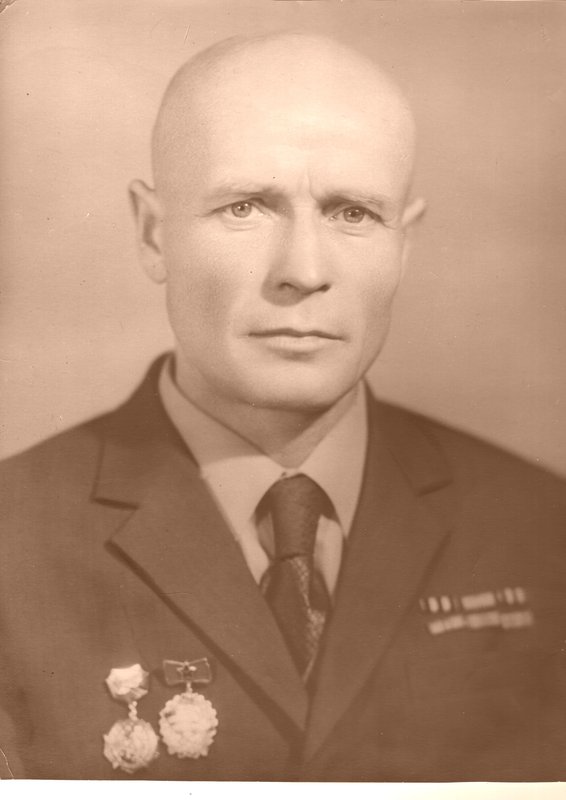
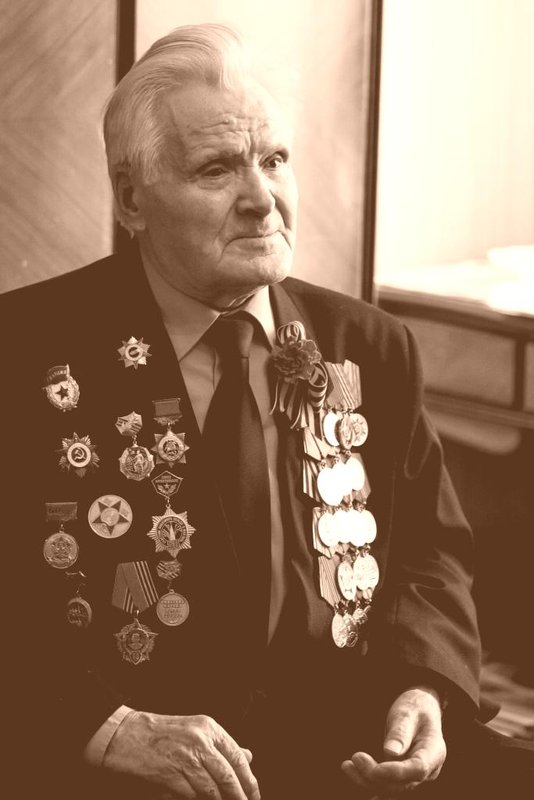

Elimbayev Michail Fedorovich
Elimbayev Michail Fedorovich
Rank: Lieutenant military Branch of military: Artillery Division: 27th rifle Gdynia red banner division" My soul will live as long as I am remembered...", - Mikhail Fedorovich Elembayev. Born Michael F. Alimbaev in November of 1912 in the village of Kandas-Whitey Novotor district. He was two years old when his father died in the first imperialist war. Mikhail Fedorovich had a difficult life. All the transformations took place before his eyes and with his direct participation. He graduated from the Yoshkar-Ola teachers ' Institute and taught mathematics. He witnessed the collectivization of agriculture, was on the front line of the great Patriotic war, and participated in the post-war restoration of the national economy. He returned from the war with the order of the Patriotic war II degree, the order of the Red star and medals. In peacetime, labor and anniversary awards were added to the combat awards. At the age of 70, he began to keep brief records of the main milestones of his difficult life. In them, he tells about his mother and the years of study, youth, work in schools in Novotoryalsky district, the elimination of illiteracy among the population and, of course, the great Patriotic war of 1941-1945.
Fragments of memories ... to the North, to the army. I was drafted into the army at the end of 1940. He served on the farthest-North-Western border of our homeland on the Kola Peninsula, where the long polar night was replaced by the polar day. I first saw the edge of the sun on February 28, 1941. And in June, it was a full polar day. The sun was no longer sinking below the horizon at all. Our generation had a very strong Patriotic spirit. We loved our Homeland and were proud of improving the life of our people. Both in the ranks and in their spare time, they sang a lot of drill songs. And it sounded in the far side: If tomorrow is a war, if tomorrow is a campaign, If the dark force descends…
As one person, the entire Soviet people will stand up for the Motherland. On alert. On June 22, our platoon with two machine guns was taken to the border to reinforce the 6th border post. Even though we were trained in combat skills, we weren't really prepared to face our enemies properly. Many even never fired live ammunition, did not know how to load and throw live grenades. I, too, have never fired my Maxim at a target before. A week later, a thick fog descended on the coast of the Barents sea. The Germans took advantage of this and surrounded us on three sides. And the fourth Patsanski Bay. For three days and three nights we fought, trying to get out of the encirclement. We lost a lot of fighters. The order came: "submerge the machine Guns and ammunition and swim out of the encirclement."We descended from the rocky shore and just managed to sink the machine guns, as the Germans opened heavy fire on us. We fired back for a while. And when the tide came in, when they were up to their necks in water, there was only one way out - to swim to the middle of the Bay, so that enemy bullets would not reach them. Canvas boots and a roll coat pulled down. I rolled onto my back and kicked them off. It was hard to swim. I rested in the water, lying on my back, and swam on. And so, for more than two kilometers, until it reached the coast of the Sredny Peninsula. Our Small Earth. From 33 soldiers of our platoon, only seven were left alive. In the unit, we were considered missing and my mother was sent a notification about it. On the other Bank we met other members of our thinned battalion. I was given a machine gun again. Our unit held the defense on the Sredny and Rybachy peninsulas. The Germans then tried to block the Northern fleet and the 14th Army from the Mainland, to occupy Murmansk. We prevented them from achieving this goal. Everyone knows about Malaya Zemlya on the black sea coast of Novorossiysk. And here was our Northern Small land, we defended it stoutly. We kept in touch with the outside world. We managed to defend Arkhangelsk and the approaches to Murmansk. Either a bullet in front or a bullet in the back! On the ridge of Musta-Tunturi, which separated the Kola and Sredny peninsulas, in August 41, the fascists dominated, constantly firing at us. And our command decided to take this height. All week there were fights for the hill. Once I was called to the headquarters and ordered to take seven soldiers with me, creep up under the ridge unnoticed and support the planned assault on the hill. Ten more fighters were waiting for us there. After consulting, we decided to go into a bayonet attack. But the Germans saw through our plan and drove us off the cliff with heavy fire. The second attack was also unsuccessful. I was called to the phone, the order was harsh: "Take the hill! Either a bullet in front or a bullet in the back!» No exit. We collected as many grenades as possible, took them from the dead soldiers, put them in their pockets, gas masks and grenade bags. Two light machine guns were placed on the flanks. They launched a grenade and machine-gun attack. We took the hill! We took a break, ate, and rested. But the Germans came to their senses and started firing at us again. Get a grenade, fascist… A German grenade hissed and spun around me. Out of fear, I grabbed it and threw it away. It exploded in the air. This moment was a turning point for me: I started throwing German grenades. For a while I ran, playing with death like a snowball. And when I looked around, there was no one in front or behind us. I noticed two pairs of boots behind a block of rock. Who, I think, managed to come running before me? I jumped up to them-and right into the mess of blood. Here lay our dead soldiers. I was immediately followed by a burst of machine-gun fire. Well, I guess I'm finished, too. I still had three grenades left. But how do you know where the enemy machine gunner is shooting from? Without getting up, he placed one corpse on top of the other and pushed it forward. The German noticed, gave a turn. The bullets ricochet off to the side. It became clear that the machine gunner was hiding in 18-20 meters behind a large stone. There I threw two grenades one after the other...a few seconds later our people started a mortar attack. Suddenly I felt as if I had been hit with a heavy crowbar – a large fragment of a mine hit my pelvic bone. While I was still conscious, I crawled behind a block of rock. I don't remember anything further…This happened on August 20, 1941. And two days later, in a thick fog, I was found by a medical instructor and, shifting to a raincoat tent, dragged under the hill. From there, they were transported on a stretcher to the regimental medical unit on the Rybachy Peninsula. Then there was the convalescent battalion. And again, in front! The music didn't last long. Testingthe direction. Here we were given fur coats, felt boots and warm underwear. After changing clothes right in the snow, we went to the combat guard. Our firing point was in a swamp. It was in three rolls and masked by the ground. It was very low, you couldn't even sit down. An embrasure was made for the machine gun. Machine-gun fire knocked down the trees in front, made a blockage and mined. We didn't have to wait long: the Germans went on a psychic attack – in full-length formation and with music and songs. At the beginning of the war, they often resorted to such intimidating actions. After taking a comfortable position, we have opened a dagger-flanking fire. More than 70 German soldiers were killed in this battle. Only then did the Germans stop their psychic attacks.There were successes in other battles, and they defended well in other areas. For the victories in these battles, our division was awarded the guards rank. Now I am a warrior guardsman. In the sights of Finnish snipers After the hospital, because of the second wound, I was sent to a Lieutenant's course. Then - the Karelian front, the REBOL direction. Appointed commander of a mortar platoon. Here we had to fight against the Finns.This front stretches from lake Ladoga to the White sea. In the summer, swamps and lakes created great difficulties, and in the winter, Finnish soldiers, standing on skis, flew at our rear garrisons. They were very good skiers, and they were excellent shooters. In the Finnish forests, we had to act as partisans: we blew up bridges, enemy warehouses, etc. The enemy was strong, efficient. Their air force was particularly dangerous. Northern Malaya Zemlya suffered
many hardships and losses, being left without support from the Mainland. We had to starve, there was not enough ammunition, medicines...In spite of everything, the Soviet soldiers fought heroically for the Motherland, for the victory. But it was necessary to pass all five fatal years before it. Thank you, mother, I was never afraid of Death. I always kept the last bullet for myself. He returned home with the order of the Patriotic war II degree and the red star. My mother accompanied her three sons to the war, giving them a hunk of bread, which she asked them not to part with under any difficulties. It must have been her charm. Then I found out thatevery day she went out into the open field and prayed to God for us. Thank you, mother. All three returned from the war. However, the older brother Grigory is without an arm and I am with two wounds… ... Memories of the war Mikhail Fedorovich ended with the message that a year after the war, he and Marusya – Maria Fedorovna created a family. This was the beginning of a new, family, peaceful life...
Elimbayev Michail Fedorovich
Elimbayev Michail Fedorovich
Rank: Lieutenant military Branch of military: Artillery Division: 27th rifle Gdynia red banner division" My soul will live as long as I am remembered...", - Mikhail Fedorovich Elembayev. Born Michael F. Alimbaev in November of 1912 in the village of Kandas-Whitey Novotor district. He was two years old when his father died in the first imperialist war. Mikhail Fedorovich had a difficult life. All the transformations took place before his eyes and with his direct participation. He graduated from the Yoshkar-Ola teachers ' Institute and taught mathematics. He witnessed the collectivization of agriculture, was on the front line of the great Patriotic war, and participated in the post-war restoration of the national economy. He returned from the war with the order of the Patriotic war II degree, the order of the Red star and medals. In peacetime, labor and anniversary awards were added to the combat awards. At the age of 70, he began to keep brief records of the main milestones of his difficult life. In them, he tells about his mother and the years of study, youth, work in schools in Novotoryalsky district, the elimination of illiteracy among the population and, of course, the great Patriotic war of 1941-1945.
Fragments of memories ... to the North, to the army. I was drafted into the army at the end of 1940. He served on the farthest-North-Western border of our homeland on the Kola Peninsula, where the long polar night was replaced by the polar day. I first saw the edge of the sun on February 28, 1941. And in June, it was a full polar day. The sun was no longer sinking below the horizon at all. Our generation had a very strong Patriotic spirit. We loved our Homeland and were proud of improving the life of our people. Both in the ranks and in their spare time, they sang a lot of drill songs. And it sounded in the far side: If tomorrow is a war, if tomorrow is a campaign, If the dark force descends…
As one person, the entire Soviet people will stand up for the Motherland. On alert. On June 22, our platoon with two machine guns was taken to the border to reinforce the 6th border post. Even though we were trained in combat skills, we weren't really prepared to face our enemies properly. Many even never fired live ammunition, did not know how to load and throw live grenades. I, too, have never fired my Maxim at a target before. A week later, a thick fog descended on the coast of the Barents sea. The Germans took advantage of this and surrounded us on three sides. And the fourth Patsanski Bay. For three days and three nights we fought, trying to get out of the encirclement. We lost a lot of fighters. The order came: "submerge the machine Guns and ammunition and swim out of the encirclement."We descended from the rocky shore and just managed to sink the machine guns, as the Germans opened heavy fire on us. We fired back for a while. And when the tide came in, when they were up to their necks in water, there was only one way out - to swim to the middle of the Bay, so that enemy bullets would not reach them. Canvas boots and a roll coat pulled down. I rolled onto my back and kicked them off. It was hard to swim. I rested in the water, lying on my back, and swam on. And so, for more than two kilometers, until it reached the coast of the Sredny Peninsula. Our Small Earth. From 33 soldiers of our platoon, only seven were left alive. In the unit, we were considered missing and my mother was sent a notification about it. On the other Bank we met other members of our thinned battalion. I was given a machine gun again. Our unit held the defense on the Sredny and Rybachy peninsulas. The Germans then tried to block the Northern fleet and the 14th Army from the Mainland, to occupy Murmansk. We prevented them from achieving this goal. Everyone knows about Malaya Zemlya on the black sea coast of Novorossiysk. And here was our Northern Small land, we defended it stoutly. We kept in touch with the outside world. We managed to defend Arkhangelsk and the approaches to Murmansk. Either a bullet in front or a bullet in the back! On the ridge of Musta-Tunturi, which separated the Kola and Sredny peninsulas, in August 41, the fascists dominated, constantly firing at us. And our command decided to take this height. All week there were fights for the hill. Once I was called to the headquarters and ordered to take seven soldiers with me, creep up under the ridge unnoticed and support the planned assault on the hill. Ten more fighters were waiting for us there. After consulting, we decided to go into a bayonet attack. But the Germans saw through our plan and drove us off the cliff with heavy fire. The second attack was also unsuccessful. I was called to the phone, the order was harsh: "Take the hill! Either a bullet in front or a bullet in the back!» No exit. We collected as many grenades as possible, took them from the dead soldiers, put them in their pockets, gas masks and grenade bags. Two light machine guns were placed on the flanks. They launched a grenade and machine-gun attack. We took the hill! We took a break, ate, and rested. But the Germans came to their senses and started firing at us again. Get a grenade, fascist… A German grenade hissed and spun around me. Out of fear, I grabbed it and threw it away. It exploded in the air. This moment was a turning point for me: I started throwing German grenades. For a while I ran, playing with death like a snowball. And when I looked around, there was no one in front or behind us. I noticed two pairs of boots behind a block of rock. Who, I think, managed to come running before me? I jumped up to them-and right into the mess of blood. Here lay our dead soldiers. I was immediately followed by a burst of machine-gun fire. Well, I guess I'm finished, too. I still had three grenades left. But how do you know where the enemy machine gunner is shooting from? Without getting up, he placed one corpse on top of the other and pushed it forward. The German noticed, gave a turn. The bullets ricochet off to the side. It became clear that the machine gunner was hiding in 18-20 meters behind a large stone. There I threw two grenades one after the other...a few seconds later our people started a mortar attack. Suddenly I felt as if I had been hit with a heavy crowbar – a large fragment of a mine hit my pelvic bone. While I was still conscious, I crawled behind a block of rock. I don't remember anything further…This happened on August 20, 1941. And two days later, in a thick fog, I was found by a medical instructor and, shifting to a raincoat tent, dragged under the hill. From there, they were transported on a stretcher to the regimental medical unit on the Rybachy Peninsula. Then there was the convalescent battalion. And again, in front! The music didn't last long. Testingthe direction. Here we were given fur coats, felt boots and warm underwear. After changing clothes right in the snow, we went to the combat guard. Our firing point was in a swamp. It was in three rolls and masked by the ground. It was very low, you couldn't even sit down. An embrasure was made for the machine gun. Machine-gun fire knocked down the trees in front, made a blockage and mined. We didn't have to wait long: the Germans went on a psychic attack – in full-length formation and with music and songs. At the beginning of the war, they often resorted to such intimidating actions. After taking a comfortable position, we have opened a dagger-flanking fire. More than 70 German soldiers were killed in this battle. Only then did the Germans stop their psychic attacks.There were successes in other battles, and they defended well in other areas. For the victories in these battles, our division was awarded the guards rank. Now I am a warrior guardsman. In the sights of Finnish snipers After the hospital, because of the second wound, I was sent to a Lieutenant's course. Then - the Karelian front, the REBOL direction. Appointed commander of a mortar platoon. Here we had to fight against the Finns.This front stretches from lake Ladoga to the White sea. In the summer, swamps and lakes created great difficulties, and in the winter, Finnish soldiers, standing on skis, flew at our rear garrisons. They were very good skiers, and they were excellent shooters. In the Finnish forests, we had to act as partisans: we blew up bridges, enemy warehouses, etc. The enemy was strong, efficient. Their air force was particularly dangerous. Northern Malaya Zemlya suffered
many hardships and losses, being left without support from the Mainland. We had to starve, there was not enough ammunition, medicines...In spite of everything, the Soviet soldiers fought heroically for the Motherland, for the victory. But it was necessary to pass all five fatal years before it. Thank you, mother, I was never afraid of Death. I always kept the last bullet for myself. He returned home with the order of the Patriotic war II degree and the red star. My mother accompanied her three sons to the war, giving them a hunk of bread, which she asked them not to part with under any difficulties. It must have been her charm. Then I found out thatevery day she went out into the open field and prayed to God for us. Thank you, mother. All three returned from the war. However, the older brother Grigory is without an arm and I am with two wounds… ... Memories of the war Mikhail Fedorovich ended with the message that a year after the war, he and Marusya – Maria Fedorovna created a family. This was the beginning of a new, family, peaceful life...
0 comment




2026 © Russian Military Historical Society Developed by Jetmix