Back to
album
album


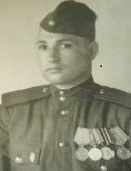
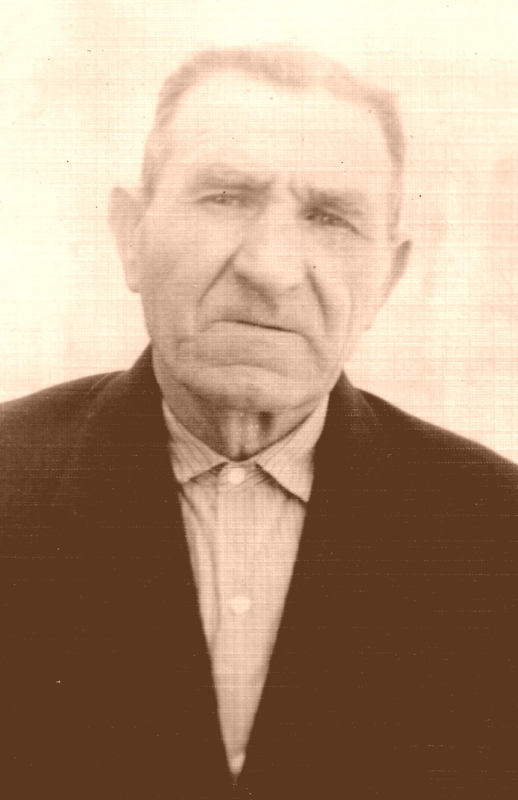


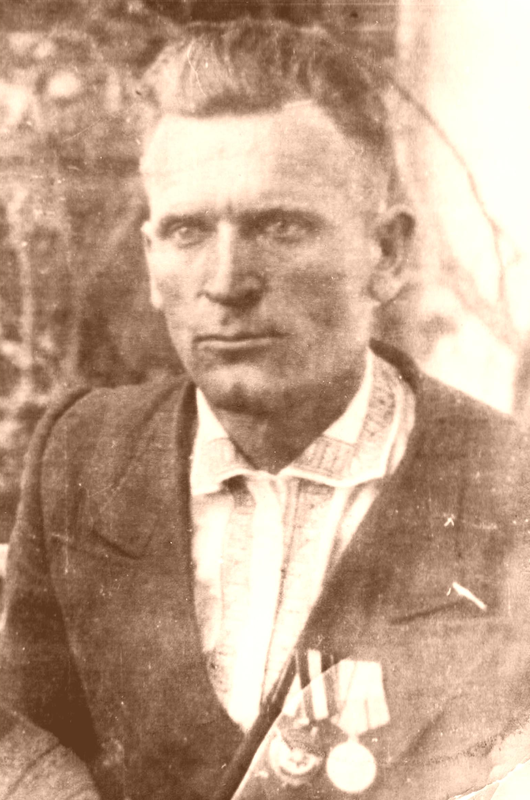
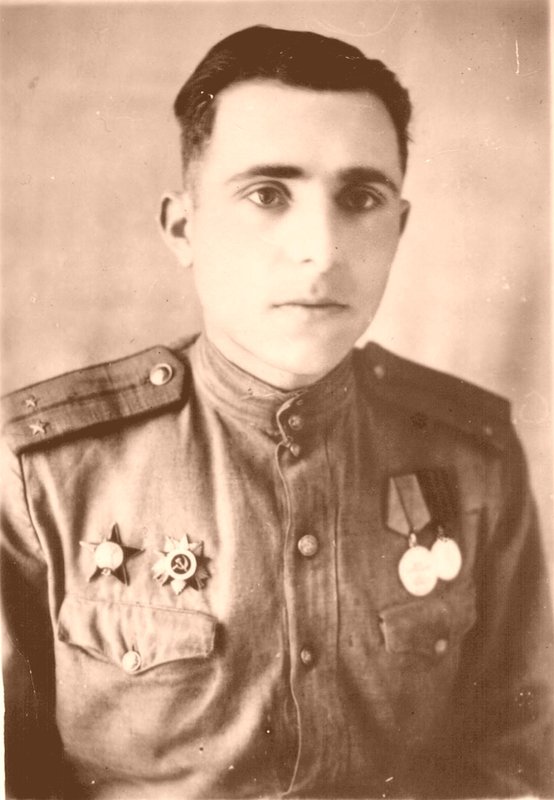
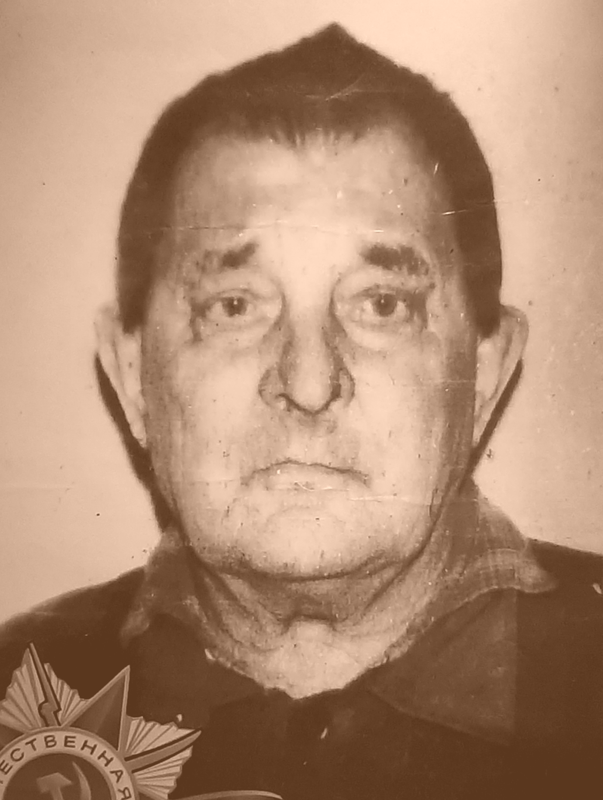
Dudnik Ivan Kuzmich
Dudnik Ivan Kuzmich_x000D_
_x000D_
He graduated with honors from the Omsk combined arms school named after M. V. Frunze (class of 1939) and was invited to the command and teaching staff of the school. In January 1941, he was transferred to the command and teaching staff of the Kuibyshev (now Samara) military infantry school No. 1. In August 1941 (according to other sources – in September) on the basis of the Kuibyshev parachute school trained paratroopers. He had a parachute badge "parachutist Instructor". Ivan Dudnik was a battalion commander of the 332nd Guards rifle regiment of the 104th guards rifle order of Kutuzov II class of the 9th guards army division in the 3rd Ukrainian front under the command of Marshal F. I. Tolbukhin. As part of this regiment, Ivan Dudnik participated in the heaviest battles for the liberation of Hungary (crossing the Raba river, Balaton operation), Austria (storming Vienna) and Czechoslovakia (Prague operation). In the fierce battles for the liberation of Vienna, when crossing the river Traisen, such a story happened. The fascists took up a defensive position at the height and fired at the crossing from all sides. Our men were in great danger - the enemy's self-propelled guns were firing incessantly. The Germans intended to take the height to the left of the already occupied line, but Ivan Dudnik and his men did not allow this to happen. As a battalion commander, he never hid behind the backs of his men. With a group of twenty men, he penetrated to the left flank to draw fire from the main forces of his battalion. The group managed to reach the enemy's left flank unnoticed, using camouflage, and open fire. The Germans did not expect this and were stunned - they were forced to retreat. The self-propelled guns turned back. This made it possible for the main forces of the battalion to Ford the river Traizen and quickly maneuver to reach the borders of the Nazis. For competent, according to the laws of military science, organized actions and victories in offensive battles with the invaders, Ivan Dudnik was presented to the Order of Alexander Nevsky. Crossing the Raba river. Report of the commander of the battalion 332 guards rifle regiment 104 guards rifle order of Kutuzov II degree division 3 of the Ukrainian front Dudnik Ivan Kuzmich (transcript of the manuscript). After breaking through the Shered defensive line, German troops, under the cover of strong rearguards consisting of infantry, machine-gun and machine-gun units, and mainly self-propelled artillery, supported by heavy artillery and heavy mortars, retreated to a pre-prepared defensive line on the Raba river. The defense on the Raba river was well organized and took place mainly on the opposite Bank. On our shore, only small groups of infantry defended themselves, which were combat guards consisting of shooters, machine gunners, machine gunners and snipers. The defensive line on the opposite Bank of the Raba river consisted of three or four lines of solid trenches connected by a well-developed system of communication passages. Of great interest is the construction of trenches with their large depth of up to two to two and a half meters and their improvement. All the trenches were covered with poles and brushwood and adapted for defense. Especially strongly developed was the system of trenches and communication passages on the river Bank, near roads and on the edge of groves. The men of the first rifle battalion who captured these trenches said: "you can't knock a Russian soldier out of these trenches." The terrain of our coast was flat and open. Only on our side there was a dense shrub and young forest growth are rare. The forest and brush made it difficult to observe and direct fire. Twenty or seventy meters from the river on our Bank was an earthen rampart, protecting from spring floods of the river, which was the only shelter from direct fire. The area on the opposite Bank was teeming with shrubs, which, as they moved away from the river, became a large oak forest extending almost close to the settlements of Edwe and Pali. The width of the river reached a hundred meters, there were no fords, the depth of the river six or seven meters from the shore already hid a person. We considered the speed of the river flow on our site to be average. The defense of the opposite (German) Bank of the river was with a well-organized system of weapons-machine-gun, automatic and sniper fire. Every movement of even single fighters on our shore caused a mass of this fire, and insignificant clusters of fighters, signs of observation and command posts were immediately subjected to fire raids by artillery, which already had accurate data for firing. The defense was well reinforced with anti-tank and especially self-propelled artillery. The nomadic tactics of self-propelled guns allowed each self-propelled gun to maneuver fire well. The battalions of the regiment, pursuing the enemy, immediately shot down the German combat guard, captured the river Bank, and the first battalion managed to capture one boat with a capacity of eight or nine people, which, apparently, was being transported by the German combat guard and which they did not have time to destroy. Units of the regiment went to the river Bank, exhausted by insomnia and abnormal nutrition. In the heavy fighting for the village of Shered, where the units suffered significant losses, exhausted by the non-stop eight-day pursuit of the retreating Germans, the soldiers abandoned all equipment except weapons and ammunition. Almost no one has any raincoats or overcoats left. There were no improvised means of transport that could be used for the crossing. There were two stacks of straw, which also one, without linking means, could not be used. In this situation, the units had to fulfill the command order to start crossing the river at 22: 00 hours on March 27, 1945. The first to cross the river was the 1st rifle battalion. The battalion's task was to force and capture the bridgehead, and ensure the regiment's crossing. The battalion was assigned: a platoon of 57 anti-tank guns and a platoon of submachine gunners. Supported the 1/567 MP7 battalion. Before the crossing, only surveillance reconnaissance was conducted. An attempt to explore the opposite Bank in small groups did not give positive results, since no scout managed to reach the opposite Bank. Time did not wait. The desire for relentless pursuit in order to prevent the enemy from gaining a foothold and organizing required urgent forcing. At midnight, the first boat with one machine gun and submachine guns from the 1st rifle company, which was commanded by guard Lieutenant Pavel Sergeevich Yershov, went to the opposite Bank. The same company, by the decision of the battalion commander, was to cross the river first. The first trip of the boat included: one machine gun with calculation and three submachine gunners. Senior group commander of the machine gun guards senior Sergeant Rogov; guards Sergeant Kovalev, guards red army Kondratovich, guards red army Menukhov and machine gunners. This group, as well as the second group of the guards of Junior Lieutenant Konstantin Petrov, as part of the red army guards mursalimov, Solomatin, Tsurkanov and snipers Vasiliev and Papenkov crossed secretly from German observation. The third group, under the command of the guard Lieutenant Kuzin Peter, consisted of six men with a machine gun and ammunition reserves for machine guns and one light machine gun. So secretly and suddenly for the enemy, five boats were ferried ashore. The Germans, apparently, did not expect the crossing that night. They probably thought that we would do a lot of preparatory work, build rafts, prepare a ferry, and so on. But as a result of the stealth and surprise of the crossing, we managed to smuggle two heavy machine guns, four light machine guns, a group of submachine gunners and Riflemen numbering up to forty people unnoticed by the enemy. Thus, on the opposite Bank, unnoticed by the enemy, the entire 1st rifle company was concentrated. Having accumulated at the cliff of the opposite Bank of the river, this group suddenly threw grenades at the first German trench and shot at point-blank range the German infantry. Bursting into the trench, the soldiers quickly began to clear it of the Germans. Great courage, bravery, courage and selflessness were shown by: guards senior Sergeant Rogov, guards Junior Lieutenant Petrov, guards lieutenants Kuzin and Yershov, guards Sergeant Kovalev, guards red army soldiers Vasiliev, Papenkov, Salamatin, Tsurkanov and many others. The actions of the Riflemen and submachine gunners were well supported by the calculations of machine guns and light machine guns, which operated directly in the battle formations of the Riflemen. The Germans figured out the actual crossing only when one after another hand grenades and a mass of bullets from our Bank, the firepower that provided the crossing, fell on their heads. The crossing was provided by all hand and machine guns of the 2nd and 3rd companies,as well as machine guns of the machine-gun company. The signal to open fire for the firepower providing the crossing was the opening of fire by the Germans. In case of failure of the 1st rifle company, a part of the machine guns of the 3rd rifle battalion was ready to support its actions. The 1st rifle company operating in the first trench was supported by 1/567 MP, which suppressed the enemy's firepower in the second trench, and the battalion's mortar company, which covered the right flank of the 1st rifle company from the settlement. The opening of fire by the mortar division and the mortar company was timed to coincide with the RAID on the first trench. Thus, the first trench was partially captured by our infantry for a short distance and then cleared, the second in our direction was suppressed by fire. The third trench with small arms fire in the night shooting did not pose much danger. The first flank of the 1st rifle company operating in the trench was covered by the fire of a mortar company. The left flank was dangerous, and the 346th guards rifle regiment, which even used RS8 guards mortars, was actively engaged at a short distance. This forced the Germans to focus on the direction of the 346th guards rifle regiment, where the Germans were waiting for our crossing to begin.
Dudnik Ivan Kuzmich
Dudnik Ivan Kuzmich_x000D_
_x000D_
He graduated with honors from the Omsk combined arms school named after M. V. Frunze (class of 1939) and was invited to the command and teaching staff of the school. In January 1941, he was transferred to the command and teaching staff of the Kuibyshev (now Samara) military infantry school No. 1. In August 1941 (according to other sources – in September) on the basis of the Kuibyshev parachute school trained paratroopers. He had a parachute badge "parachutist Instructor". Ivan Dudnik was a battalion commander of the 332nd Guards rifle regiment of the 104th guards rifle order of Kutuzov II class of the 9th guards army division in the 3rd Ukrainian front under the command of Marshal F. I. Tolbukhin. As part of this regiment, Ivan Dudnik participated in the heaviest battles for the liberation of Hungary (crossing the Raba river, Balaton operation), Austria (storming Vienna) and Czechoslovakia (Prague operation). In the fierce battles for the liberation of Vienna, when crossing the river Traisen, such a story happened. The fascists took up a defensive position at the height and fired at the crossing from all sides. Our men were in great danger - the enemy's self-propelled guns were firing incessantly. The Germans intended to take the height to the left of the already occupied line, but Ivan Dudnik and his men did not allow this to happen. As a battalion commander, he never hid behind the backs of his men. With a group of twenty men, he penetrated to the left flank to draw fire from the main forces of his battalion. The group managed to reach the enemy's left flank unnoticed, using camouflage, and open fire. The Germans did not expect this and were stunned - they were forced to retreat. The self-propelled guns turned back. This made it possible for the main forces of the battalion to Ford the river Traizen and quickly maneuver to reach the borders of the Nazis. For competent, according to the laws of military science, organized actions and victories in offensive battles with the invaders, Ivan Dudnik was presented to the Order of Alexander Nevsky. Crossing the Raba river. Report of the commander of the battalion 332 guards rifle regiment 104 guards rifle order of Kutuzov II degree division 3 of the Ukrainian front Dudnik Ivan Kuzmich (transcript of the manuscript). After breaking through the Shered defensive line, German troops, under the cover of strong rearguards consisting of infantry, machine-gun and machine-gun units, and mainly self-propelled artillery, supported by heavy artillery and heavy mortars, retreated to a pre-prepared defensive line on the Raba river. The defense on the Raba river was well organized and took place mainly on the opposite Bank. On our shore, only small groups of infantry defended themselves, which were combat guards consisting of shooters, machine gunners, machine gunners and snipers. The defensive line on the opposite Bank of the Raba river consisted of three or four lines of solid trenches connected by a well-developed system of communication passages. Of great interest is the construction of trenches with their large depth of up to two to two and a half meters and their improvement. All the trenches were covered with poles and brushwood and adapted for defense. Especially strongly developed was the system of trenches and communication passages on the river Bank, near roads and on the edge of groves. The men of the first rifle battalion who captured these trenches said: "you can't knock a Russian soldier out of these trenches." The terrain of our coast was flat and open. Only on our side there was a dense shrub and young forest growth are rare. The forest and brush made it difficult to observe and direct fire. Twenty or seventy meters from the river on our Bank was an earthen rampart, protecting from spring floods of the river, which was the only shelter from direct fire. The area on the opposite Bank was teeming with shrubs, which, as they moved away from the river, became a large oak forest extending almost close to the settlements of Edwe and Pali. The width of the river reached a hundred meters, there were no fords, the depth of the river six or seven meters from the shore already hid a person. We considered the speed of the river flow on our site to be average. The defense of the opposite (German) Bank of the river was with a well-organized system of weapons-machine-gun, automatic and sniper fire. Every movement of even single fighters on our shore caused a mass of this fire, and insignificant clusters of fighters, signs of observation and command posts were immediately subjected to fire raids by artillery, which already had accurate data for firing. The defense was well reinforced with anti-tank and especially self-propelled artillery. The nomadic tactics of self-propelled guns allowed each self-propelled gun to maneuver fire well. The battalions of the regiment, pursuing the enemy, immediately shot down the German combat guard, captured the river Bank, and the first battalion managed to capture one boat with a capacity of eight or nine people, which, apparently, was being transported by the German combat guard and which they did not have time to destroy. Units of the regiment went to the river Bank, exhausted by insomnia and abnormal nutrition. In the heavy fighting for the village of Shered, where the units suffered significant losses, exhausted by the non-stop eight-day pursuit of the retreating Germans, the soldiers abandoned all equipment except weapons and ammunition. Almost no one has any raincoats or overcoats left. There were no improvised means of transport that could be used for the crossing. There were two stacks of straw, which also one, without linking means, could not be used. In this situation, the units had to fulfill the command order to start crossing the river at 22: 00 hours on March 27, 1945. The first to cross the river was the 1st rifle battalion. The battalion's task was to force and capture the bridgehead, and ensure the regiment's crossing. The battalion was assigned: a platoon of 57 anti-tank guns and a platoon of submachine gunners. Supported the 1/567 MP7 battalion. Before the crossing, only surveillance reconnaissance was conducted. An attempt to explore the opposite Bank in small groups did not give positive results, since no scout managed to reach the opposite Bank. Time did not wait. The desire for relentless pursuit in order to prevent the enemy from gaining a foothold and organizing required urgent forcing. At midnight, the first boat with one machine gun and submachine guns from the 1st rifle company, which was commanded by guard Lieutenant Pavel Sergeevich Yershov, went to the opposite Bank. The same company, by the decision of the battalion commander, was to cross the river first. The first trip of the boat included: one machine gun with calculation and three submachine gunners. Senior group commander of the machine gun guards senior Sergeant Rogov; guards Sergeant Kovalev, guards red army Kondratovich, guards red army Menukhov and machine gunners. This group, as well as the second group of the guards of Junior Lieutenant Konstantin Petrov, as part of the red army guards mursalimov, Solomatin, Tsurkanov and snipers Vasiliev and Papenkov crossed secretly from German observation. The third group, under the command of the guard Lieutenant Kuzin Peter, consisted of six men with a machine gun and ammunition reserves for machine guns and one light machine gun. So secretly and suddenly for the enemy, five boats were ferried ashore. The Germans, apparently, did not expect the crossing that night. They probably thought that we would do a lot of preparatory work, build rafts, prepare a ferry, and so on. But as a result of the stealth and surprise of the crossing, we managed to smuggle two heavy machine guns, four light machine guns, a group of submachine gunners and Riflemen numbering up to forty people unnoticed by the enemy. Thus, on the opposite Bank, unnoticed by the enemy, the entire 1st rifle company was concentrated. Having accumulated at the cliff of the opposite Bank of the river, this group suddenly threw grenades at the first German trench and shot at point-blank range the German infantry. Bursting into the trench, the soldiers quickly began to clear it of the Germans. Great courage, bravery, courage and selflessness were shown by: guards senior Sergeant Rogov, guards Junior Lieutenant Petrov, guards lieutenants Kuzin and Yershov, guards Sergeant Kovalev, guards red army soldiers Vasiliev, Papenkov, Salamatin, Tsurkanov and many others. The actions of the Riflemen and submachine gunners were well supported by the calculations of machine guns and light machine guns, which operated directly in the battle formations of the Riflemen. The Germans figured out the actual crossing only when one after another hand grenades and a mass of bullets from our Bank, the firepower that provided the crossing, fell on their heads. The crossing was provided by all hand and machine guns of the 2nd and 3rd companies,as well as machine guns of the machine-gun company. The signal to open fire for the firepower providing the crossing was the opening of fire by the Germans. In case of failure of the 1st rifle company, a part of the machine guns of the 3rd rifle battalion was ready to support its actions. The 1st rifle company operating in the first trench was supported by 1/567 MP, which suppressed the enemy's firepower in the second trench, and the battalion's mortar company, which covered the right flank of the 1st rifle company from the settlement. The opening of fire by the mortar division and the mortar company was timed to coincide with the RAID on the first trench. Thus, the first trench was partially captured by our infantry for a short distance and then cleared, the second in our direction was suppressed by fire. The third trench with small arms fire in the night shooting did not pose much danger. The first flank of the 1st rifle company operating in the trench was covered by the fire of a mortar company. The left flank was dangerous, and the 346th guards rifle regiment, which even used RS8 guards mortars, was actively engaged at a short distance. This forced the Germans to focus on the direction of the 346th guards rifle regiment, where the Germans were waiting for our crossing to begin.
0 comment



2026 © Russian Military Historical Society Developed by Jetmix