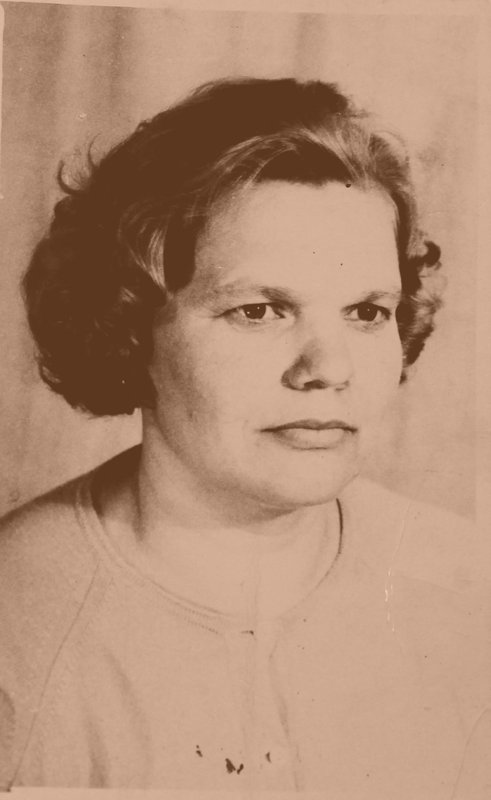
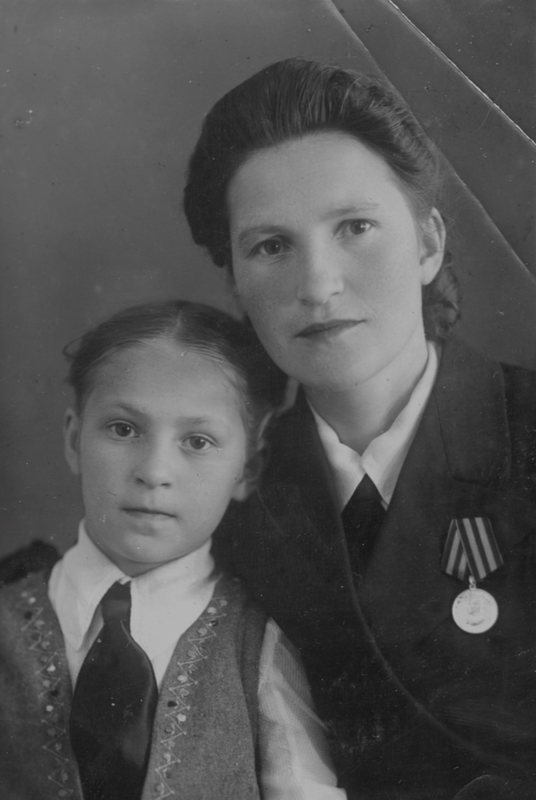
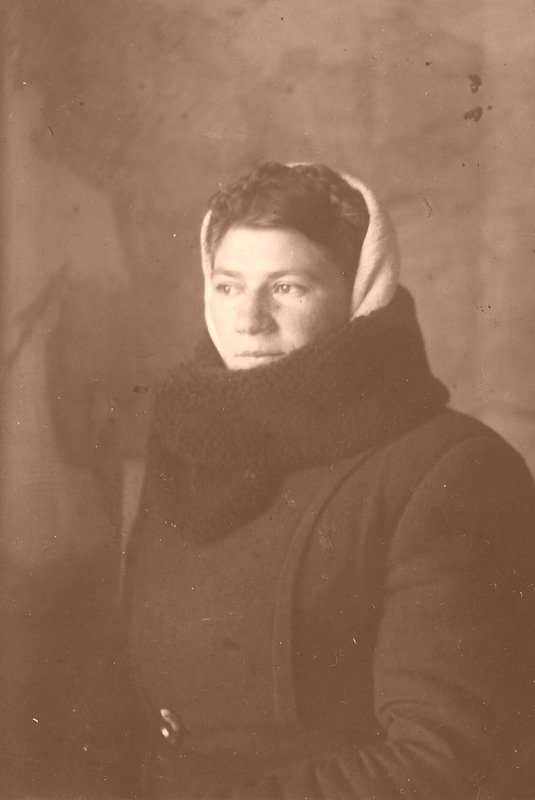
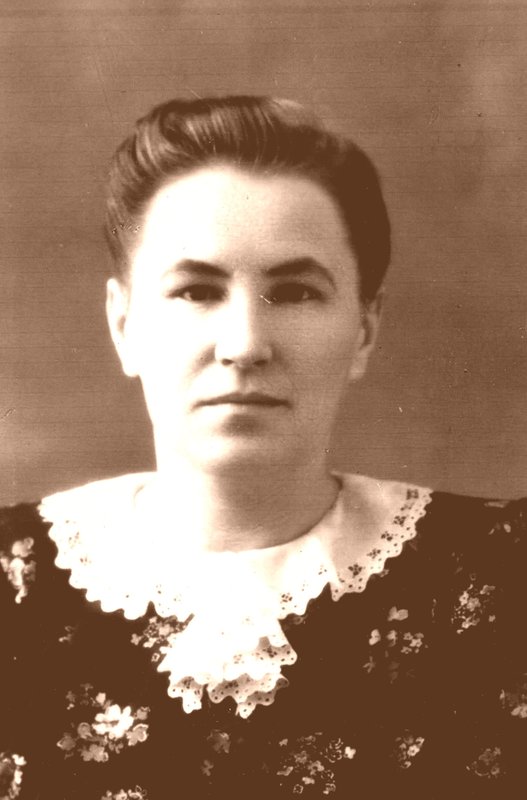
Polyanskaya Polina Andreevna
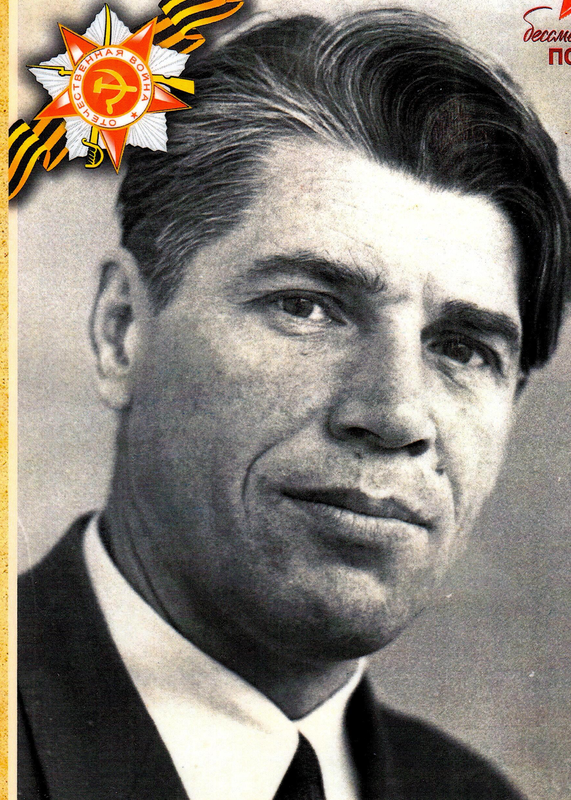
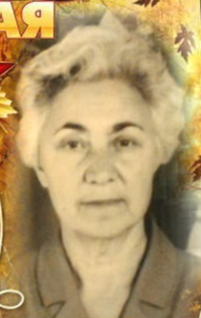
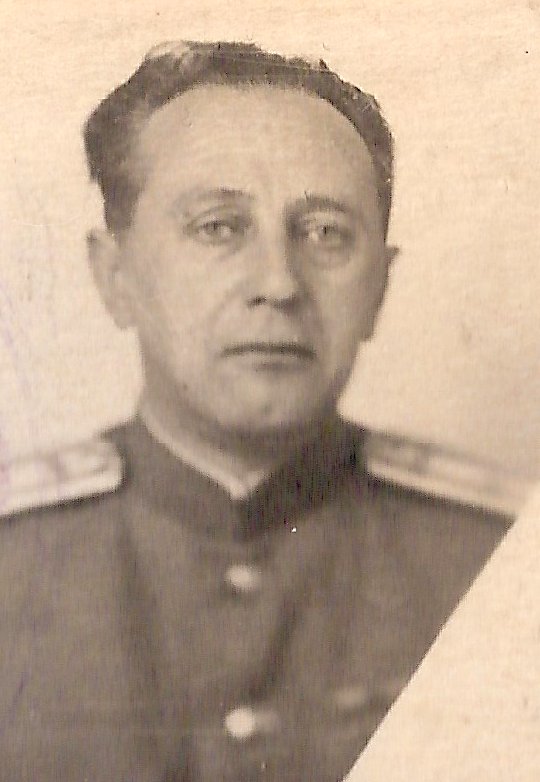
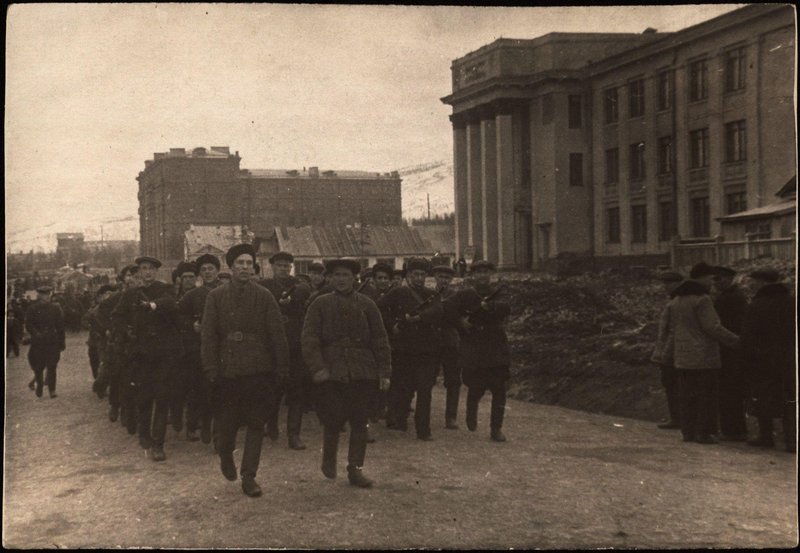
Full name: Polyanskaya Polina Andreevna SURNAME: Polyanskaya FIRST name: Polina PATRONYMIC: Andreyevna CITY: s. Syarda Penza region DATE of BIRTH: 28.08.1922 DATE of DEATH: 19.04.2015 HISTORY: This is my mother. WWII veteran. Labor veteran. Here are her memoirs, written by her personally on 26.02.2015 at the request of colleagues for the 70th anniversary of the Victory (two months before her departure). Hard road to Victory. I was 18 when the war started. I worked at the Saratov aviation plant as a controller of the technical control Department. The factory produced the legendary yak1 and YAK3 fighters. My mother and my sister also worked at the factory. The fascists were rushing to the Volga. The red Army held the front, but Saratov became a front-line city. These are hard times. Famine and night bombing were constant companions of those years. The front needed more and more planes. The plant worked around the clock. During the most difficult time for the country, the work shift lasted 24 hours. People didn't leave the factory for days. For violation of labor discipline, a military Tribunal was threatened. The Nazis bombed the factory every night with German pedantry. It was forbidden to leave the workplace, the plant had to work under any conditions. During air raids, all Windows and doors of workshops were closed, and blackout was introduced. The atmosphere in the closed shop was suffocating because of gas welding, technical oils, kerosene vapors, gasoline, solvents, sandblasts. Mothers wept as they worked at their looms, worried about the children left at home. But no one left their jobs. Bombs repeatedly fell in the running of the shop, killing and maiming people, destroying equipment. In the morning, after such bombings, the dead were taken out by trucks. It was a very painful sight. My job was to control the frame of the plane. This was a responsible operation, on which the reliability of the aircraft depended to a large extent. The frame consisted of numerous metal tubes welded together. No defects were allowed: dents, chips, scratches, deformations, etc. Welding should be ideal. I went through everything carefully, probing with my fingers, checking the diagrams. If there was no marriage, I put my brand on the frame, got a technical passport for the plane. In the case of marriage, the disadvantages were eliminated. During my work at the factory, not a single comment was made in my address. During the long night shifts, I couldn't help feeling sleepy. But I and in thoughts was not allowed to leave the workplace. The constant companion of those years was hunger. On non-working days, my mother and I went at night on freight trains across the Volga to Moscow. Engels worked part-time at a meat processing plant. A single set of workers was made at five o'clock in the morning. They worked in the slaughterhouse up to their ankles in blood. We were paid for our work with low-grade meat trimmings – raw stomachs of cattle. And for us it was a great joy and salvation. The Nazis purposefully bombed strategic objects of the city. The railway bridge over the Volga, which was connected to the left Bank of the Volga and the East of the country, and which we used to travel to Engels. But the Germans did not manage to get into it. Until the end of the war, the bridge served the cause of victory, with trains carrying weapons, people,and food. The Nazis managed to bomb the Kretinga oil refinery. Its oil storage facilities continued to burn for several years after the war. In these difficult conditions, I continued to study at night school. My dear husband Polyansky Vasily Andreevich-senior investigator for particularly important cases of the regional Prosecutor's office-survived the war as a teenager. In the absence of the male population, all the difficulties of rear life fell on his shoulders. The hard time of the war undermined his health. Later, he passed away early, and I raised two children alone. There was no family that was not affected by the war. In a fierce battle on the Kursk-Oryol arc, my sister's husband Stepan Kichatov died heroically. He was a political officer, a wonderful kind person, the soul of the team. Repeatedly wounded, shell-shocked, commissioned, he again and again voluntarily went to the front, until he died in battle. The place of his burial is still unknown. My sister was left with two young sons, whom she raised alone. Due to malnutrition and avitominosis, her youngest son could not stand up for a long time, and his cheeks were covered with a thick crust of diathesis. There were no medications. Folk wisdom helped: they steamed onions in a cast-iron stove in a Russian oven, lowered the child's legs into a warm mass and smeared their cheeks with it. Our relative, a resident of the village of Nechayevka in the Penza region, Vladimir Gerasimov, was awarded the order of Glory of all three degrees for his courage and heroism on the war fronts, which is equivalent to the title of Hero of the Soviet Union. His name is immortalized on the stele of Heroes on the embankment of the Sura river in Penza. In November 1944, when the war was coming to an end, the country began to prepare for a peaceful life. The Komsomol Committee of the factory and the party bodies sent me to study at the Saratov law school. After finishing school, I was sent to the Prosecutor's office of the Penza region. At the same time, she entered the Saratov law Institute. This is how my life in law began. I worked as a Prosecutor in the Penza region Prosecutor's office for 33 years before retiring in 1978. He was a senior assistant Prosecutor, chief of civil litigation Deputy city attorney. Since 1952, a member of the CPSU. Have 10 government awards: medal "For valiant labor in the great Patriotic war", medal "Veteran of labor", medal "For valiant labor in honor of the 100th anniversary of the birth of Lenin", Medal Rudenko, in honor of the 70th anniversary Newbergso process, the medal "290 years of the Russian Prosecutor's office", 4 commemorative medals in honor of Victory in great Patriotic war, medal "50 years Soviet prosecution". I have two children, a grandson and a great-granddaughter. In the cruel ordeal of the war, our people showed the highest morale, great dedication, willpower, and humanism. The key to this was the great unity of the entire people in the face of danger. No amount of hardships broke us. We believed in victory and won!