


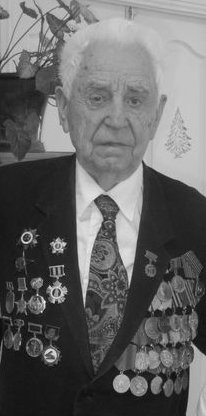

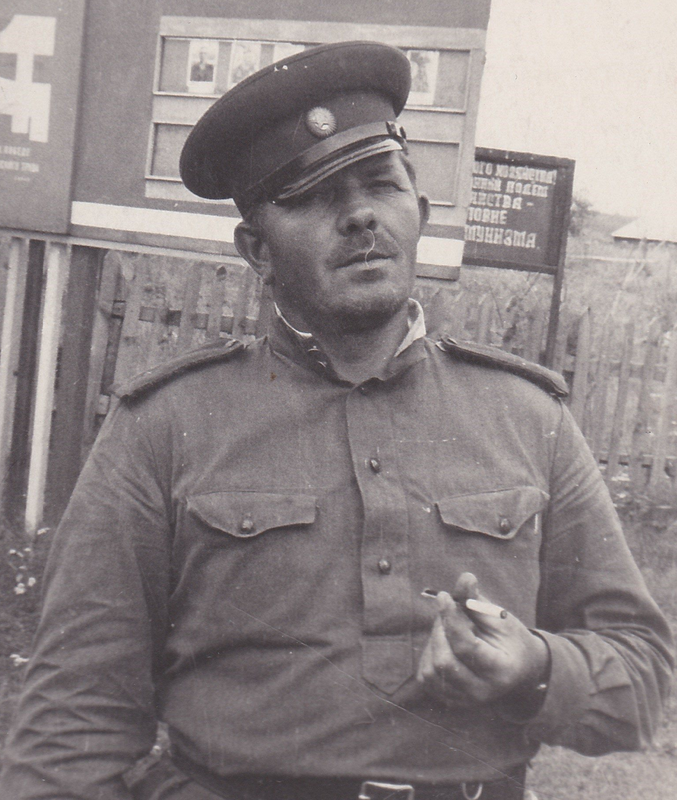

Voronin Boris Petrovich
Voronin Vasiliy Mikhailovich
Rank: Major Vasiliy Mikhailovich Voronin was born on March 23, 1917 in the village "Larino" of the Kolkhoz district (currently Uyskiy), Chelyabinsk region in the peasant’s family. Voronin's parents Mikhail Vasilyevich (1873-1934) and Evdokiya Nikiforovna (1873-1955) were engaged in agriculture almost all their lives. Since 1932, his father worked as a guard at the freight yard of the South Ural Magnitogorsk railway station. There were two children in his family, a son Vasiliy and a daughter Anna. When our grandfather turned 7 years old, he went to the rural school, where he studied at the Larin primary school for 4 years. From 1928 to 1931, he studied at the Uyski (UY) school of collective farm youth. At the age of 16, he entered the Sverdlovsk Mining and Metallurgical technical school. Vasiliy Mikhailovich liked studying, and he studied and worked, learnt and fought, again learnt and brought up his children. Simultaneously with his studies at the technical school, from 1932, my grandfather got a job at the South Ural Magnitogorsk railway station. At first, he worked as a carriage clerk, then as a technical clerk, then as a railway cargo transport agent, and since 1937, after graduating from technical school, he was an employee in the management of the Magnitogorsk Iron and steel Works, worked as a technician. In September 1938, he was drafted into the Soviet Army. He entered the army in the 349-rifle regiment 26th Infantry Division first as a cadet of regimental school, in October 1938 had promoted to the “Junior leader” 349 rifle regiment, then from November 1939 he became a commander of the infantry platoon. In February 1940, he was promoted to “senior lieutenant” and was appointed as “assistant chief of staff” of the 87th branch of the construction battalion in the town of Garajevo. In June 1941, the Great Patriotic War began. My grandfather did not like to talk about the war, he said that it was sad, not interesting, it should be forgotten. Even when he was definitely asked to talk about this period, he refused. Therefore, we had to restore the events of the war years with the help of remained documents, photos, letters, archival reports that we were able to find in various military bases and on the searching sites for soldiers, as well as the military biography of my grandfather, which he compiled for the Defense Ministry in 1951. He went to the war as a senior lieutenant, returned as a major. My grandfather went through the entire war from the very first day to the very last. Vasiliy Mikhailovich went to the front as the commander of a rifle company of the 624th rifle regiment of the 24th army in the rank of first lieutenant. Several times he participated in battles, and earned a Medal of Merit. In July 1941, the army, consisting of rifle corps, artillery and other units, was moved to the Vyazma area and prepared the “Nelidovo-Belyi-Dorogobuzh”, defensive line. From 15 to 29 July 1941, as part of the Reserve Army Front, it held the Belyi — Dorogobuzh — Yelnya line. During the Smolensk battle, the troops launched two counterblows: firstly, on the grouping of German troops, covering Smolensk from the North, then on the adversary troops advancing from the Yelnya region to Dorogobuzh. July 30, 1941 the army was transferred to the Reserve Front, which conducted the Yelninsky offensive operation from August 30 to September 8, during which it defeated the troops of the adversary's 4th army in the Yelnya area and eliminated the Yelninskiy salient of its front. Afterwards, the army held a defensive line western and southwest of Yelnya. In this battle, my grandfather was seriously wounded in the leg. Here is what is written in the award list, describing the feat of captain V. M. Voronin, for which he received the order of the “Red star”: "Voronin V. M. combat commander of the Red Army, a repeated participant in the battles with the enemies of the Soviet homeland, who joined the battle with enemies 5 times. Voronin has submitted an application to the candidates of the CPSU(B.) -(Communist Party of the Soviet Union (Bolsheviks)) and said: “I'll fight as a Communist!”. As a senior adjutant, he properly directs the entire course of the battle. When the commander of battalion was out of action, Voronin boldly and decisively led the battalion against the brutal fascists. His battalion was the first to take on the attack of the German hordes and has been conducting offensive battles for 8 days. Based on the experience of his battalion, the rest of the units fight such way. Voronin's soldiers are heroes, that he managed to teach in a peaceful environment and heroically fight in the battle. In a difficult moment of the battle, Voronin personally goes ahead of the fighters and smashes the fascist hordes. For 8 days of fighting, Voronin did not take a single step back. On the 8th day, a fascist bullet wounded Voronin at the “hottest moment” of the battle, but he did not leave the battlefield until the end of it. And he fulfilled the order with honor and on time, taking the line specified in the order." After being wounded, my grandfather was treated for three months in the mobile field hospital № 53. Then he went to the city of Gorky for recovery, where he was trained at the shooting courses "Shot" and received the rank of “Captain”. From January 1942, as a battalion commander of the 482nd rifle regiment of the 131 rifle division, he led offensive battles on the right bank of the river Don, then from August 8 to September 28, as part of the 62nd Army, he led defensive battles with his battalion directly to the city of Stalingrad…The battle of Stalingrad was the decisive battle of the entire Second World War, in which the Soviet troops won the largest victory. This battle marked the beginning of a radical change in the course of the Great Patriotic War and in the Second World War as a whole. The victorious offensive of the German-fascist troops was ended and their removal from the territory of the Soviet Union began. The Victory of the Soviet troops over the German-fascist troops at Stalingrad is one of the most glorious pages of the chronicle of the Great Patriotic War. For 200 days and nights – from the 17 of July, 1942 to the 2-d February , 1943 - the battle of Stalingrad continued with the forces of both sides constantly increasing. During the first four months, there were persistent defensive battles, firstly, near the river Don, and then on the outskirts of Stalingrad and in the city itself. During this period, the Soviet troops exhausted the German-fascist group that was rushing to the Volga and forced it to go on the defensive. In the next two and a half months, the Red Army launched a counteroffensive, defeated the enemy’s army northwest and south of Stalingrad, surrounded and eliminated the 300,000-strong group of German fascist troops. For the courage and heroism shown in the battle of Stalingrad, 32 formations and units were awarded the honorary names "Stalingradskiye", 5 - "Donskiye". 55 formations and units were awarded orders. Our family carefully keeps the medal "For the Defence of Stalingrad", which my grandfather received after the war in 1946 and in 1942 he was issued an order for awarding, which also has survived to this day. In this heroic battle, Vasiliy Mikhailovich was seriously wounded again in the arm and was hospitalized in the city of Syzran in the evacuation hospital № 139.From October 1942, he fought as a senior adjutant of the 50th reserve rifle regiment. The 50th reserve infantry regiment of the 15th infantry replacement division of the 2-d formation was stationed in the village Akshuat Baryshsky district of Ulyanovsk, in the Volga military district. There my grandfather met his future wife, Antonina Dmitrievna Babushkina. But at that time, the war separated them. To the 10th of May, 1943, the regiment was relocated to the city of Krasnoarmeysk in the Stalingrad region, where the offensive battles were already being fought against German troops. After another training in the city of Solnechnogorsk in August 1944, having received the rank of major, Vasiliy Mikhailovich was appointed as battalion commander in the camp of citizens ' reparations, under the 8th Guards Army of the first Belorussian front, in which he participated in the Berlin operation. The Berlin strategic offensive was one of the last strategic operations of the Soviet forces, during which the Red Army occupied the German capital and victoriously ended the Great Patriotic War and World War II in Europe. The operation lasted 23 days — from April 16 to May 8, 1945, during which the Soviet troops advanced westward to a distance of 100 to 220 km. May 9, 1945 was declared as The Victory Day! After the war, my great-grandfather stayed in the army. For 10 more months, he was in Germany, serving as commandant of a German city. In December 1945, he moved to the city of Mogilev, where he worked as a senior inspector of the 5th Department of the Mogilev regional military Commissariat. Since 1951, he held the position of “The Head” of the second part of the Mogilev district military Commissariat. His daughters, sons-in-law, and grandchildren helped me to compile the history of his post-war life. Thanks to their memories, it was possible to restore the chronicle of the events of my grandfather's life until his death. In 1946, Vasiliy Mikhailovich returned to the village of Akshuat to his fiancée. He got married Antonina Dmitrievna Babushkina, my grandmother, who worked as a teacher of primary school. Together they have already moved to the city of Mogilev, where they had three daughters Tatiana (born in 1947) and Nina (born in 1948) and Olga (born in 1953). After completing his military service in 1955, he returned to his home city of Magnitogorsk, where his fourth daughter, my mother Svetlana, was born in 1956. My grandfather worked at the Magnitogorsk Iron and Steel Works, as an apparatchik in the coke-chemical industry, until his retirement. He was the foreman of the section of the resin shop of the coke-chemical production. He was very appreciated among colleagues, everyone listened to his opinion and consulted him. He has many labor awards and medals. Awarded the titles: Veteran of Magnitogorsk, Veteran of the Chelyabinsk region, Veteran of labor. In retirement, he served as Chairman of the Board of Veterans of Koksokhim (chemicals plant). Vasiliy Mikhailovich adored his family, started family traditions that observes to this day. He was able to cook well and tasty, everyone who knew him and at least once have visited him, remembers his cooking. He had a lot of guests, family friends, friends of his daughters, neighbors, colleagues, all of them came to visit him, because he was always the "life of the party". He brought up and married four daughters, all his sons-in-law were very respectful of his grandfather, according to his sons-in-law stories, he was like a father to them. In 1976 my grandmother, Antonina Dmitrievna, and the wife of Vasiliy Mikhailovich, became seriously ill and was never able to walk on her own. The great-grandfather took care of her alone. They lived together that time, but always accepted both children and grandchildren. He loved us so much, therefore brought up his grandchildren. Denis, Natalia, Alexey, Olga, Yuliya, Vasiliy, Pavel - we, his grandchildren always remember him with admiration and tenderness! His family was the most important thing in the world for him! He appreciated peacetime, life, every moment of it, even difficult or hard, but peaceful! In 1984, he died in the village of his relatives, where he went to rest in the summer with his eldest grandson Denis. Before that, he was feeling under the weather and his family persuaded him to go on vacation. Ivan Dmitrievich (his wife's brother) met them on a motorcycle, came home, they had dinner. My grandfather went out on the porch and felt sick. He died instantly because of heart attack. He was only 67 years old. His sons-in-law flew him to Magnitogorsk. Vasiliy Mikhailovich was buried with all his military honors. Eternal memory to the hero of the Great Patriotic War and the Hero of my family- Voronin Vasiliy Mikhailovich! My grandfather went through the war from the very first day to the very last. He went to the war as a senior lieutenant, returned from the war as a major. He has combat awards, injuries. (the entire path is described in the biography of my grandfather upwards). He served on the western border of the USSR. Its part was one of the first to take on the Germans in June 22, 1941. Vasiliy Mikhailovich went a long way in the infantry. He participated in the battles under Yelnia, Stalingrad, and was wounded twice. He reached Germany and in 1946 was the commandant of the German city.
RECALLS FROM HIS DAUGHTER SVETLANA:
Dad died very early, at 67 years old, in 1984, I was only 28 years old… I was very worried about this; I could not believe that I would never see him again. He died in our relative’s village, the village of my mother's brother Ivan Dmitrievich Babushkin, where my daddy went on vacation in summer with his eldest grandson Denis. He hasn't been feeling well lately, so my mother and I persuaded him to go on vacation. At the station Ivanovka in our village, the train stopped and it was necessary to get out, but the conductor was nowhere to be found. My father was very concerned about it, because Denis and he had to jump out of the train almost on the move… Uncle Vanya met them on a motorcycle, they came home and had dinner. Dad went out on the porch and got sick. He died instantly, because of a stroke. Three sons – in – law went to pick him up: Vova Syrov – the husband of the second daughter Nina, Kolya Tikhomirov-the husband of the third daughter Olga and my husband-Leonid Mezentsev. It was difficult for them and almost impossible to find a zinc coffin in our village, but as a result, they brought their father to Magnitogorsk by plane. I cried a lot and asked to open the coffin, but they wouldn't let me… My father was buried with all military honors. And now, after 31 years later, it’s necessary to talk about my feelings to father. It's very difficult, I feel only one thing – I loved my dad very much, I can even say that I idolized him… My older sisters say that I was the most favorite, the smallest, the last. We were on the same wavelength, we understood each other at a glance. I trusted him more of my secrets than my mother. He was very close to me. I don't remember my early childhood at all, but I remember very well, that we often had guests at home, mostly friends of my parents. They had fun, danced, and we sang very well together. They knew a lot of songs. We had a huge number of records, which unfortunately did not last. My father never raised his voice at me, he was a very reserved man. Now, having grown up and brought up two children, I always wonder how they managed to give higher education to four daughters in that challenging time! It doesn't seem real right now. What willpower they had! We had only 4 and 5 at school, no one ever checked our diary or homework, and it is it still a mystery for me. We also choice the Institute ourselves. I think it seemed so, but in fact it was a huge effort of parents to teach independence each of us. Our family had its own traditions: we made dumplings together, especially in winter, and then frozen them on the balcony. My father bought meat, made mince from it, my mother and I made dough. The girls rolled, and dad made dumplings, they turned out so beautiful! When my parents were left alone (I was the last to marry in 1976), they did not abandon this tradition. We all knew that if we went to our parent’s house at any time, we would find hand-made dumplings in the refrigerator. Dad was a great cook, and never was embarrassed about it. He was a very affectionate husband and father. When my mother got sick, he did everything to raise her: different kinds of massages, compresses, lotions. But it so happened that she never got back on her feet… And he took care of her himself until the day he died. He always said, that they were safer together. My sisters and I came to them only at the weekends. We helped him with our mother, always washed the dishes, ironed the clothes, cleaned the rooms and help with mum’s bathing. Dad never complained to anyone, that he was having a hard time with his sick wife. Always affectionately called it "my guide". I think just in order my mother always feel needed. He loved her very much. Why? Only he knows. Sometimes my mother told me she can be cold, she was generally taciturn, not very emotional, but she was clearly his woman! All of us: me and my family, my sisters Nina, Tanya, Olya and their families, always gathered at my parent’s house for the holidays on the May 9, November 7, and January 1-st after The New Year's Eve. It was also a tradition. Dad never talked about the war, always said it was not a woman's business. Now, in 2015, when my daughter Yuliya and my grandson Valentin decided to make a military history of their grandfather, I regret very much, that I did not try to get him to tell me more about himself, about his youth and maturity… Dad had enough strength, love, and care for all of children: sons-in-law, and grandchildren until his death, and there were seven little tomboys. Again, I don't remember him ever yelling at his grandchildren. Was it patience or did he compare the war he went through with the simple, ordinary, everyday life? He appreciated life more than anything else in the world. I also remember, that he always came home from work with gifts. There were sweets and cookies in my pocket. And we always waited for him from his work, even the cat Marsik always heard him coming into the entrance, and we lived on the third floor, and lay down on his belly near the door, waiting for dad to come in and stroke him. My dad was the best father and grandfather in the whole world!
RECALLS FROM DAUGHTER TATIANA: I was born in the city of Mogilev, when my father was still working in the military organization office, my mother worked as a teacher of primary school and a year later my sister Nina was born. We lived amicably, cheerfully, our parents tried to give us everything: education, clothes, sweets, holidays, my sister and I did not need anything, and soon our third sister Olga was born. We lived in Mogilev until 1955. This year, my father retired from the military before serving for several months, so the situation has developed. His sister Anna lived in Magnitogorsk, and his parents decided to move to the Urals. Our family was given two rooms in a three-room apartment on Oktyabrskaya street in Magnitogorsk. We lived with neighbors by the name of Adamites, unfortunately, communication with them we have lost. Dad got a job at MMK in the coke production. In 1956, our fourth sister Svetlana was born. Our family was friendly, my father was “the life of the party” in any friendship, loved to sing songs, told jokes. All our friends loved him, he gathered us, our daughters and our friends around him, all the time coming up with tasks for us. Together we dug potatoes in the "Old Magnitogorsk", and went for apples. But most of all he loved was our mother, this love for her was visible from a mile away, he was very affectionate with her, always consulted her, did not take a step without her. When he received salary, he always brought us treats: in one pocket - candy, in the other - cookies! Oh, how we've waited these days! Pampered us. Every weekend, my mother dressed us up beautifully and we went for a walk in the Park on Metallurg street the whole family. This was our tradition. Soon we were given a three-room apartment at 105 Michurina street. That was my entire youth. In winter, my parents still gathered guests, in the summer we went to the river" Gerbil " to swim and sunbathe. Dad was very patient, did not scold us, sometimes looked strictly, this look was enough, we did not want to upset him, tried our best, studied, attended clubs, sang, danced, played sports, who - what. Dad's talents were shared by all his daughters! My mother was strict with us, and my father forgave everything, saying ,that he could not be angry with us, we are his daughters... We sometimes went to his homeland, to the village of Larino (now this is the Uyskiy district), picking mushrooms and berries. The house there was small, crooked, but everything in this house was nice and cozy. Dad didn't talk much about his childhood either. My father was often invited to our schools and told students about the war. But he didn't tell us, he wanted to protect his family even from the memories of this terrible time. Gradually, we grew up, entered institutes, and all four of us received higher education! They started getting married. All our husbands respected dad very much, obeyed him, and father loved them, consulted with them, and put us, our daughters, in safe hands. In 1976, my mother was completely ill, which he just did not do... But she couldn't walk anymore, and he took care of her and didn't complain. Soon the grandchildren went too. In total, our daddy has seven grandchildren, he had enough care and love for all of them. He even sat with the babies, even though his mother was ill. I remember letting my husband and me going on a vacation for a week, and he took our eldest daughter Natasha and my sister Nina's son Deniska to live with him! Oh, and suffered, probably, they were only 3 years old, they ran away, and ate food from the cat's bowl, hooligans! And my grandfather didn't even complain, he told his adventures with his grandchildren as a funny story, but I don't think he was laughing. It's just was like that, he appreciated life, us, our daughters, and our grandchildren! Always cheerful, smiling, he was. That's how I remember him: tall, smiling, loving!
RECALLS FROM HIS SON-IN-LAW LEONID:
I have known my father-in-law, Vasiliy Mikhailovich Voronin, since 1976, when, as a retiree, he "gave" the last of the four "beloved daughter" in marriage and thus shared his paternal happiness with me, then still a boy. For this, I am immensely grateful to him being at his age today and I understand how difficult and responsible it was: to give birth, brought up, give higher education to four children – girls, especially in the post-war years, not the most "well-fed".Vasiliy Mikhailovich adequately tolerated the unscrupulous attitude of the authorities to the soldier who went through the entire war from the beginning to the end, when he lacked some few months before receiving a military pension, he was reduced, and he "served" at one of the most harmful MMK production facilities. There were few easy days in his life: war, famine, injuries, devastation, moving, injustice… Perhaps, I guess, there were bright days of victory and even greater love for his wife and daughters, to whom he was devoted to the end of his days and considered it his duty to always be useful. So, he protected and preserved for many years, and in recent years he was like a physical support for his sick wife. Only death did not allow him to fulfill his duty to the end, he left briefly and unnoticed, did not remain in debt to anyone, did not offend anyone. But he taught us a lot, then young. I think he taught everyone who knew him. They cannot say anything unkind, despite the fact that he was an obvious man, not simple-minded, but wise. I am very grateful to fate, that I was lucky to communicate with this person.
Voronin Boris Petrovich
Voronin Vasiliy Mikhailovich
Rank: Major Vasiliy Mikhailovich Voronin was born on March 23, 1917 in the village "Larino" of the Kolkhoz district (currently Uyskiy), Chelyabinsk region in the peasant’s family. Voronin's parents Mikhail Vasilyevich (1873-1934) and Evdokiya Nikiforovna (1873-1955) were engaged in agriculture almost all their lives. Since 1932, his father worked as a guard at the freight yard of the South Ural Magnitogorsk railway station. There were two children in his family, a son Vasiliy and a daughter Anna. When our grandfather turned 7 years old, he went to the rural school, where he studied at the Larin primary school for 4 years. From 1928 to 1931, he studied at the Uyski (UY) school of collective farm youth. At the age of 16, he entered the Sverdlovsk Mining and Metallurgical technical school. Vasiliy Mikhailovich liked studying, and he studied and worked, learnt and fought, again learnt and brought up his children. Simultaneously with his studies at the technical school, from 1932, my grandfather got a job at the South Ural Magnitogorsk railway station. At first, he worked as a carriage clerk, then as a technical clerk, then as a railway cargo transport agent, and since 1937, after graduating from technical school, he was an employee in the management of the Magnitogorsk Iron and steel Works, worked as a technician. In September 1938, he was drafted into the Soviet Army. He entered the army in the 349-rifle regiment 26th Infantry Division first as a cadet of regimental school, in October 1938 had promoted to the “Junior leader” 349 rifle regiment, then from November 1939 he became a commander of the infantry platoon. In February 1940, he was promoted to “senior lieutenant” and was appointed as “assistant chief of staff” of the 87th branch of the construction battalion in the town of Garajevo. In June 1941, the Great Patriotic War began. My grandfather did not like to talk about the war, he said that it was sad, not interesting, it should be forgotten. Even when he was definitely asked to talk about this period, he refused. Therefore, we had to restore the events of the war years with the help of remained documents, photos, letters, archival reports that we were able to find in various military bases and on the searching sites for soldiers, as well as the military biography of my grandfather, which he compiled for the Defense Ministry in 1951. He went to the war as a senior lieutenant, returned as a major. My grandfather went through the entire war from the very first day to the very last. Vasiliy Mikhailovich went to the front as the commander of a rifle company of the 624th rifle regiment of the 24th army in the rank of first lieutenant. Several times he participated in battles, and earned a Medal of Merit. In July 1941, the army, consisting of rifle corps, artillery and other units, was moved to the Vyazma area and prepared the “Nelidovo-Belyi-Dorogobuzh”, defensive line. From 15 to 29 July 1941, as part of the Reserve Army Front, it held the Belyi — Dorogobuzh — Yelnya line. During the Smolensk battle, the troops launched two counterblows: firstly, on the grouping of German troops, covering Smolensk from the North, then on the adversary troops advancing from the Yelnya region to Dorogobuzh. July 30, 1941 the army was transferred to the Reserve Front, which conducted the Yelninsky offensive operation from August 30 to September 8, during which it defeated the troops of the adversary's 4th army in the Yelnya area and eliminated the Yelninskiy salient of its front. Afterwards, the army held a defensive line western and southwest of Yelnya. In this battle, my grandfather was seriously wounded in the leg. Here is what is written in the award list, describing the feat of captain V. M. Voronin, for which he received the order of the “Red star”: "Voronin V. M. combat commander of the Red Army, a repeated participant in the battles with the enemies of the Soviet homeland, who joined the battle with enemies 5 times. Voronin has submitted an application to the candidates of the CPSU(B.) -(Communist Party of the Soviet Union (Bolsheviks)) and said: “I'll fight as a Communist!”. As a senior adjutant, he properly directs the entire course of the battle. When the commander of battalion was out of action, Voronin boldly and decisively led the battalion against the brutal fascists. His battalion was the first to take on the attack of the German hordes and has been conducting offensive battles for 8 days. Based on the experience of his battalion, the rest of the units fight such way. Voronin's soldiers are heroes, that he managed to teach in a peaceful environment and heroically fight in the battle. In a difficult moment of the battle, Voronin personally goes ahead of the fighters and smashes the fascist hordes. For 8 days of fighting, Voronin did not take a single step back. On the 8th day, a fascist bullet wounded Voronin at the “hottest moment” of the battle, but he did not leave the battlefield until the end of it. And he fulfilled the order with honor and on time, taking the line specified in the order." After being wounded, my grandfather was treated for three months in the mobile field hospital № 53. Then he went to the city of Gorky for recovery, where he was trained at the shooting courses "Shot" and received the rank of “Captain”. From January 1942, as a battalion commander of the 482nd rifle regiment of the 131 rifle division, he led offensive battles on the right bank of the river Don, then from August 8 to September 28, as part of the 62nd Army, he led defensive battles with his battalion directly to the city of Stalingrad…The battle of Stalingrad was the decisive battle of the entire Second World War, in which the Soviet troops won the largest victory. This battle marked the beginning of a radical change in the course of the Great Patriotic War and in the Second World War as a whole. The victorious offensive of the German-fascist troops was ended and their removal from the territory of the Soviet Union began. The Victory of the Soviet troops over the German-fascist troops at Stalingrad is one of the most glorious pages of the chronicle of the Great Patriotic War. For 200 days and nights – from the 17 of July, 1942 to the 2-d February , 1943 - the battle of Stalingrad continued with the forces of both sides constantly increasing. During the first four months, there were persistent defensive battles, firstly, near the river Don, and then on the outskirts of Stalingrad and in the city itself. During this period, the Soviet troops exhausted the German-fascist group that was rushing to the Volga and forced it to go on the defensive. In the next two and a half months, the Red Army launched a counteroffensive, defeated the enemy’s army northwest and south of Stalingrad, surrounded and eliminated the 300,000-strong group of German fascist troops. For the courage and heroism shown in the battle of Stalingrad, 32 formations and units were awarded the honorary names "Stalingradskiye", 5 - "Donskiye". 55 formations and units were awarded orders. Our family carefully keeps the medal "For the Defence of Stalingrad", which my grandfather received after the war in 1946 and in 1942 he was issued an order for awarding, which also has survived to this day. In this heroic battle, Vasiliy Mikhailovich was seriously wounded again in the arm and was hospitalized in the city of Syzran in the evacuation hospital № 139.From October 1942, he fought as a senior adjutant of the 50th reserve rifle regiment. The 50th reserve infantry regiment of the 15th infantry replacement division of the 2-d formation was stationed in the village Akshuat Baryshsky district of Ulyanovsk, in the Volga military district. There my grandfather met his future wife, Antonina Dmitrievna Babushkina. But at that time, the war separated them. To the 10th of May, 1943, the regiment was relocated to the city of Krasnoarmeysk in the Stalingrad region, where the offensive battles were already being fought against German troops. After another training in the city of Solnechnogorsk in August 1944, having received the rank of major, Vasiliy Mikhailovich was appointed as battalion commander in the camp of citizens ' reparations, under the 8th Guards Army of the first Belorussian front, in which he participated in the Berlin operation. The Berlin strategic offensive was one of the last strategic operations of the Soviet forces, during which the Red Army occupied the German capital and victoriously ended the Great Patriotic War and World War II in Europe. The operation lasted 23 days — from April 16 to May 8, 1945, during which the Soviet troops advanced westward to a distance of 100 to 220 km. May 9, 1945 was declared as The Victory Day! After the war, my great-grandfather stayed in the army. For 10 more months, he was in Germany, serving as commandant of a German city. In December 1945, he moved to the city of Mogilev, where he worked as a senior inspector of the 5th Department of the Mogilev regional military Commissariat. Since 1951, he held the position of “The Head” of the second part of the Mogilev district military Commissariat. His daughters, sons-in-law, and grandchildren helped me to compile the history of his post-war life. Thanks to their memories, it was possible to restore the chronicle of the events of my grandfather's life until his death. In 1946, Vasiliy Mikhailovich returned to the village of Akshuat to his fiancée. He got married Antonina Dmitrievna Babushkina, my grandmother, who worked as a teacher of primary school. Together they have already moved to the city of Mogilev, where they had three daughters Tatiana (born in 1947) and Nina (born in 1948) and Olga (born in 1953). After completing his military service in 1955, he returned to his home city of Magnitogorsk, where his fourth daughter, my mother Svetlana, was born in 1956. My grandfather worked at the Magnitogorsk Iron and Steel Works, as an apparatchik in the coke-chemical industry, until his retirement. He was the foreman of the section of the resin shop of the coke-chemical production. He was very appreciated among colleagues, everyone listened to his opinion and consulted him. He has many labor awards and medals. Awarded the titles: Veteran of Magnitogorsk, Veteran of the Chelyabinsk region, Veteran of labor. In retirement, he served as Chairman of the Board of Veterans of Koksokhim (chemicals plant). Vasiliy Mikhailovich adored his family, started family traditions that observes to this day. He was able to cook well and tasty, everyone who knew him and at least once have visited him, remembers his cooking. He had a lot of guests, family friends, friends of his daughters, neighbors, colleagues, all of them came to visit him, because he was always the "life of the party". He brought up and married four daughters, all his sons-in-law were very respectful of his grandfather, according to his sons-in-law stories, he was like a father to them. In 1976 my grandmother, Antonina Dmitrievna, and the wife of Vasiliy Mikhailovich, became seriously ill and was never able to walk on her own. The great-grandfather took care of her alone. They lived together that time, but always accepted both children and grandchildren. He loved us so much, therefore brought up his grandchildren. Denis, Natalia, Alexey, Olga, Yuliya, Vasiliy, Pavel - we, his grandchildren always remember him with admiration and tenderness! His family was the most important thing in the world for him! He appreciated peacetime, life, every moment of it, even difficult or hard, but peaceful! In 1984, he died in the village of his relatives, where he went to rest in the summer with his eldest grandson Denis. Before that, he was feeling under the weather and his family persuaded him to go on vacation. Ivan Dmitrievich (his wife's brother) met them on a motorcycle, came home, they had dinner. My grandfather went out on the porch and felt sick. He died instantly because of heart attack. He was only 67 years old. His sons-in-law flew him to Magnitogorsk. Vasiliy Mikhailovich was buried with all his military honors. Eternal memory to the hero of the Great Patriotic War and the Hero of my family- Voronin Vasiliy Mikhailovich! My grandfather went through the war from the very first day to the very last. He went to the war as a senior lieutenant, returned from the war as a major. He has combat awards, injuries. (the entire path is described in the biography of my grandfather upwards). He served on the western border of the USSR. Its part was one of the first to take on the Germans in June 22, 1941. Vasiliy Mikhailovich went a long way in the infantry. He participated in the battles under Yelnia, Stalingrad, and was wounded twice. He reached Germany and in 1946 was the commandant of the German city.
RECALLS FROM HIS DAUGHTER SVETLANA:
Dad died very early, at 67 years old, in 1984, I was only 28 years old… I was very worried about this; I could not believe that I would never see him again. He died in our relative’s village, the village of my mother's brother Ivan Dmitrievich Babushkin, where my daddy went on vacation in summer with his eldest grandson Denis. He hasn't been feeling well lately, so my mother and I persuaded him to go on vacation. At the station Ivanovka in our village, the train stopped and it was necessary to get out, but the conductor was nowhere to be found. My father was very concerned about it, because Denis and he had to jump out of the train almost on the move… Uncle Vanya met them on a motorcycle, they came home and had dinner. Dad went out on the porch and got sick. He died instantly, because of a stroke. Three sons – in – law went to pick him up: Vova Syrov – the husband of the second daughter Nina, Kolya Tikhomirov-the husband of the third daughter Olga and my husband-Leonid Mezentsev. It was difficult for them and almost impossible to find a zinc coffin in our village, but as a result, they brought their father to Magnitogorsk by plane. I cried a lot and asked to open the coffin, but they wouldn't let me… My father was buried with all military honors. And now, after 31 years later, it’s necessary to talk about my feelings to father. It's very difficult, I feel only one thing – I loved my dad very much, I can even say that I idolized him… My older sisters say that I was the most favorite, the smallest, the last. We were on the same wavelength, we understood each other at a glance. I trusted him more of my secrets than my mother. He was very close to me. I don't remember my early childhood at all, but I remember very well, that we often had guests at home, mostly friends of my parents. They had fun, danced, and we sang very well together. They knew a lot of songs. We had a huge number of records, which unfortunately did not last. My father never raised his voice at me, he was a very reserved man. Now, having grown up and brought up two children, I always wonder how they managed to give higher education to four daughters in that challenging time! It doesn't seem real right now. What willpower they had! We had only 4 and 5 at school, no one ever checked our diary or homework, and it is it still a mystery for me. We also choice the Institute ourselves. I think it seemed so, but in fact it was a huge effort of parents to teach independence each of us. Our family had its own traditions: we made dumplings together, especially in winter, and then frozen them on the balcony. My father bought meat, made mince from it, my mother and I made dough. The girls rolled, and dad made dumplings, they turned out so beautiful! When my parents were left alone (I was the last to marry in 1976), they did not abandon this tradition. We all knew that if we went to our parent’s house at any time, we would find hand-made dumplings in the refrigerator. Dad was a great cook, and never was embarrassed about it. He was a very affectionate husband and father. When my mother got sick, he did everything to raise her: different kinds of massages, compresses, lotions. But it so happened that she never got back on her feet… And he took care of her himself until the day he died. He always said, that they were safer together. My sisters and I came to them only at the weekends. We helped him with our mother, always washed the dishes, ironed the clothes, cleaned the rooms and help with mum’s bathing. Dad never complained to anyone, that he was having a hard time with his sick wife. Always affectionately called it "my guide". I think just in order my mother always feel needed. He loved her very much. Why? Only he knows. Sometimes my mother told me she can be cold, she was generally taciturn, not very emotional, but she was clearly his woman! All of us: me and my family, my sisters Nina, Tanya, Olya and their families, always gathered at my parent’s house for the holidays on the May 9, November 7, and January 1-st after The New Year's Eve. It was also a tradition. Dad never talked about the war, always said it was not a woman's business. Now, in 2015, when my daughter Yuliya and my grandson Valentin decided to make a military history of their grandfather, I regret very much, that I did not try to get him to tell me more about himself, about his youth and maturity… Dad had enough strength, love, and care for all of children: sons-in-law, and grandchildren until his death, and there were seven little tomboys. Again, I don't remember him ever yelling at his grandchildren. Was it patience or did he compare the war he went through with the simple, ordinary, everyday life? He appreciated life more than anything else in the world. I also remember, that he always came home from work with gifts. There were sweets and cookies in my pocket. And we always waited for him from his work, even the cat Marsik always heard him coming into the entrance, and we lived on the third floor, and lay down on his belly near the door, waiting for dad to come in and stroke him. My dad was the best father and grandfather in the whole world!
RECALLS FROM DAUGHTER TATIANA: I was born in the city of Mogilev, when my father was still working in the military organization office, my mother worked as a teacher of primary school and a year later my sister Nina was born. We lived amicably, cheerfully, our parents tried to give us everything: education, clothes, sweets, holidays, my sister and I did not need anything, and soon our third sister Olga was born. We lived in Mogilev until 1955. This year, my father retired from the military before serving for several months, so the situation has developed. His sister Anna lived in Magnitogorsk, and his parents decided to move to the Urals. Our family was given two rooms in a three-room apartment on Oktyabrskaya street in Magnitogorsk. We lived with neighbors by the name of Adamites, unfortunately, communication with them we have lost. Dad got a job at MMK in the coke production. In 1956, our fourth sister Svetlana was born. Our family was friendly, my father was “the life of the party” in any friendship, loved to sing songs, told jokes. All our friends loved him, he gathered us, our daughters and our friends around him, all the time coming up with tasks for us. Together we dug potatoes in the "Old Magnitogorsk", and went for apples. But most of all he loved was our mother, this love for her was visible from a mile away, he was very affectionate with her, always consulted her, did not take a step without her. When he received salary, he always brought us treats: in one pocket - candy, in the other - cookies! Oh, how we've waited these days! Pampered us. Every weekend, my mother dressed us up beautifully and we went for a walk in the Park on Metallurg street the whole family. This was our tradition. Soon we were given a three-room apartment at 105 Michurina street. That was my entire youth. In winter, my parents still gathered guests, in the summer we went to the river" Gerbil " to swim and sunbathe. Dad was very patient, did not scold us, sometimes looked strictly, this look was enough, we did not want to upset him, tried our best, studied, attended clubs, sang, danced, played sports, who - what. Dad's talents were shared by all his daughters! My mother was strict with us, and my father forgave everything, saying ,that he could not be angry with us, we are his daughters... We sometimes went to his homeland, to the village of Larino (now this is the Uyskiy district), picking mushrooms and berries. The house there was small, crooked, but everything in this house was nice and cozy. Dad didn't talk much about his childhood either. My father was often invited to our schools and told students about the war. But he didn't tell us, he wanted to protect his family even from the memories of this terrible time. Gradually, we grew up, entered institutes, and all four of us received higher education! They started getting married. All our husbands respected dad very much, obeyed him, and father loved them, consulted with them, and put us, our daughters, in safe hands. In 1976, my mother was completely ill, which he just did not do... But she couldn't walk anymore, and he took care of her and didn't complain. Soon the grandchildren went too. In total, our daddy has seven grandchildren, he had enough care and love for all of them. He even sat with the babies, even though his mother was ill. I remember letting my husband and me going on a vacation for a week, and he took our eldest daughter Natasha and my sister Nina's son Deniska to live with him! Oh, and suffered, probably, they were only 3 years old, they ran away, and ate food from the cat's bowl, hooligans! And my grandfather didn't even complain, he told his adventures with his grandchildren as a funny story, but I don't think he was laughing. It's just was like that, he appreciated life, us, our daughters, and our grandchildren! Always cheerful, smiling, he was. That's how I remember him: tall, smiling, loving!
RECALLS FROM HIS SON-IN-LAW LEONID:
I have known my father-in-law, Vasiliy Mikhailovich Voronin, since 1976, when, as a retiree, he "gave" the last of the four "beloved daughter" in marriage and thus shared his paternal happiness with me, then still a boy. For this, I am immensely grateful to him being at his age today and I understand how difficult and responsible it was: to give birth, brought up, give higher education to four children – girls, especially in the post-war years, not the most "well-fed".Vasiliy Mikhailovich adequately tolerated the unscrupulous attitude of the authorities to the soldier who went through the entire war from the beginning to the end, when he lacked some few months before receiving a military pension, he was reduced, and he "served" at one of the most harmful MMK production facilities. There were few easy days in his life: war, famine, injuries, devastation, moving, injustice… Perhaps, I guess, there were bright days of victory and even greater love for his wife and daughters, to whom he was devoted to the end of his days and considered it his duty to always be useful. So, he protected and preserved for many years, and in recent years he was like a physical support for his sick wife. Only death did not allow him to fulfill his duty to the end, he left briefly and unnoticed, did not remain in debt to anyone, did not offend anyone. But he taught us a lot, then young. I think he taught everyone who knew him. They cannot say anything unkind, despite the fact that he was an obvious man, not simple-minded, but wise. I am very grateful to fate, that I was lucky to communicate with this person.
0 comment



2026 © Russian Military Historical Society Developed by Jetmix