

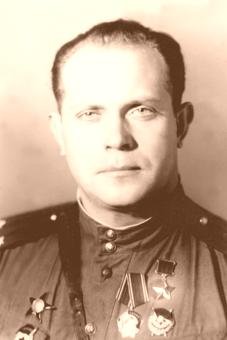
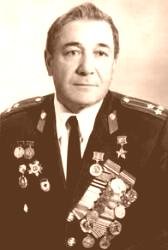


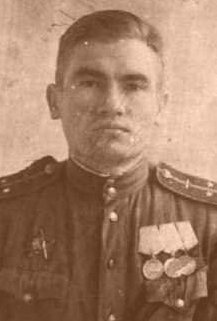


Grankin Matvey Semyonovich
Matvey Semyonovich Grankin was born in 1920 in the village of Svyatoslavka, of the Izhmorsky district, the Kemerovo region. In 1940 (in other documents - in 1939) on the 15th of August the Izhmor regional military commissariat of the Kemerovo region called up Matvey Semyonovich for military service in the Fed Army. He served in the border troops in the Far East. By the beginning of the Great Patriotic War my grandfather was a cadet of the Novo-Peterhof military-political border school of the NKVD named after K. E. Voroshilov, formed on the 7th of October, 1937, after the establishment of the Institute of military commissars in the armed forces, on the basis of the military school of border and internal security of the NKVD of the USSR named after K. E. Voroshilov. (The school trained political workers for the border and internal troops of the NKVD. The training period was 2 years. The school accepted enlisted men and sergeants of the border and internal troops of the NKVD who had completed military service and received excellent recommendations from unit commanders.) He did not complete his studies at the school because of the war. From 1941 to 1945 he took part in the Great Patriotic War. In the first days of the war - as part of one of the two battalions of cadets of the MPS (military and political school). “In connection with the complication of the situation on the approaches to Leningrad on the 7th of August, 1941, and according to the order of the commander of the Northern front, the battalions of cadets of the Novo-Peterhof military and political school of the NKVD named after K. E. Voroshilov were assigned the task of setting up a barrier at the turn: the 1st battalion under the command of major Shorin N. A. - collective farm Chukh. Antashi, Ozhogino, Volhovo, the 2nd battalion of captain A. A. Zolotarev - Hulgisi, Pulevo, Smolkovo, Delity. The Red Army units (the 1st and the 2nd guards divisions) were operating in front under the cover of which the battalions were to take up and prepare the defense... the 2nd battalion was reinforced by the sapper troop of the Leningrad district border guards and was to be supported by one 76-mm battery, but the battery did not arrive at its destination and did not support the battle of the battalion. The 1st battalion was assigned an anti-aircraft battery. The both battalions operated independently and were operationally subordinate to the commander of the 42nd army, major general Belyaev.” (“All my brothers” by V. Felisova. Lenizdat. 1977) From the award list for the medal “For Bravery”: “Comrade Grankin has been at the front from the 12th of August, 1941, as a cadet of the Voroshilov military Academy of the NKVD, who from the 17th of August, 1941, till the 10th of September, 1941, led continuous battles, repeatedly, personally took part in attacks. In one of them on the 10th of September, 1941, he was injured. Holding the position of adjutant of the senior battalion he led cadets in attacks three times. In the attack on the village Poroshino of the Leningrad region, being a contact of the company commander, personally destroyed 3 Germans. During the reconnaissance of the battle in the area of the village of Zhabino of the Leningrad region, he threw grenades into a house where there was a group of German machine gunners of the enemy and killed 10 people.” From the memoirs of Vera Felisova (Tsareva) who was a medical instructor of the training school and who wrote in 1977 books "All my brothers" and thereafter "Fought to the death" on the basis of documents and the memories of survivors, students of the school collected by her, - I knew that my father was wounded in the battle near the village of Porozhki. “Under the famous Porozhki the cadets without artillery, air and tank support went to attack the enemy armed to the teeth and won.” By delaying the enemy's advance on the Kingisepp highway, the cadets allowed the retreating Red Army units to regroup their forces and prepare for defense in new more favorable positions. Since 1941 my father was a member of the the All-Union Communist Party. After mentioning his wounds the front-line documents indicate that my father’s place of service was the 311th rifle division, the 1067th rifle regiment, the 54th army, the Volkhov front. Grade title - senior lieutenant. (Front-line order no. 77. n dated the 12th of August, 1943), in the award list for the order of the Red Star of the 18th of August, 1944, -senior lieutenant of the SMERSH of the 1069th rifle regiment, 311th rifle devision, in the paybook of a red army officer issued during demobilization in 1946 – he was stated as a guard captain of the 32nd Brest guard rifle regiment. In the award list for the order of the Red Star, the military leadership of the regiment (acting commander of the 1069th rifle regiment, major Lyapushkov, acting chief of staff captain Mirzoev, head of “SMERSH” of the 311st rifle devision Kudryakov) characterized the merits of my grandfather as follows: “As a result of proper organization of work, proper study of personnel, identification and timely removal of a hostile element that made its way into the ranks of the Red Army, proper contact with the command and timely information about his work, he managed to ensure that the command completed the combat task of mastering the city of Dvinsk; the battalion he served was the first to break into the city and fortress of Dvinsk. In the battles for the capture of the city comdrade Grankin, being directly in the battle formations of rifle companies, inspired the soldiers to fearlessness, courage and bravery by his personal example.” According to an entry in the paybook of a Red Army officer, Matvey Semyonovich “spent” 3 years, 11 months, and 23 days in the war. During the war he was awarded the medals "For Bravery" on the 12th of August, 1943, “For the defense of Leningrad” on the 3rd of October, 1943, orders of the Patriotic War of the second degree on the 30th of September, 1944, the order of Red Star on the 11th of April, 1945. In 1946 he was demobilized from the army and with his wife, Sofia Zhukova, whom he met during collaborative service in the 311st rifle devision (a medical assistant of a medical company of the 1069th rifle regiment of the 311th rifle devision) - got back home to the village of Izhmorka of the Kemerovo region, where he worked as a Secretary of the komsomol district committee, then of the Communist party. In 1952 he graduated from the party school in Kemerovo and was sent to the Industrial Committee of the Communist Party of the Soviet Union (Kemerovo region), where he worked as the 2nd Secretary until 1959. From 1959 to 1963 he worked as the Chairman of the collective farm "Giant" of the Promyshlennovsky district. In 1963 Matvey Semyonovich moved his family (wife and three children) to Kemerovo where he worked in various positions in construction organizations, the Kuzbass Polytechnic Institute.
Grankin Matvey Semyonovich
Matvey Semyonovich Grankin was born in 1920 in the village of Svyatoslavka, of the Izhmorsky district, the Kemerovo region. In 1940 (in other documents - in 1939) on the 15th of August the Izhmor regional military commissariat of the Kemerovo region called up Matvey Semyonovich for military service in the Fed Army. He served in the border troops in the Far East. By the beginning of the Great Patriotic War my grandfather was a cadet of the Novo-Peterhof military-political border school of the NKVD named after K. E. Voroshilov, formed on the 7th of October, 1937, after the establishment of the Institute of military commissars in the armed forces, on the basis of the military school of border and internal security of the NKVD of the USSR named after K. E. Voroshilov. (The school trained political workers for the border and internal troops of the NKVD. The training period was 2 years. The school accepted enlisted men and sergeants of the border and internal troops of the NKVD who had completed military service and received excellent recommendations from unit commanders.) He did not complete his studies at the school because of the war. From 1941 to 1945 he took part in the Great Patriotic War. In the first days of the war - as part of one of the two battalions of cadets of the MPS (military and political school). “In connection with the complication of the situation on the approaches to Leningrad on the 7th of August, 1941, and according to the order of the commander of the Northern front, the battalions of cadets of the Novo-Peterhof military and political school of the NKVD named after K. E. Voroshilov were assigned the task of setting up a barrier at the turn: the 1st battalion under the command of major Shorin N. A. - collective farm Chukh. Antashi, Ozhogino, Volhovo, the 2nd battalion of captain A. A. Zolotarev - Hulgisi, Pulevo, Smolkovo, Delity. The Red Army units (the 1st and the 2nd guards divisions) were operating in front under the cover of which the battalions were to take up and prepare the defense... the 2nd battalion was reinforced by the sapper troop of the Leningrad district border guards and was to be supported by one 76-mm battery, but the battery did not arrive at its destination and did not support the battle of the battalion. The 1st battalion was assigned an anti-aircraft battery. The both battalions operated independently and were operationally subordinate to the commander of the 42nd army, major general Belyaev.” (“All my brothers” by V. Felisova. Lenizdat. 1977) From the award list for the medal “For Bravery”: “Comrade Grankin has been at the front from the 12th of August, 1941, as a cadet of the Voroshilov military Academy of the NKVD, who from the 17th of August, 1941, till the 10th of September, 1941, led continuous battles, repeatedly, personally took part in attacks. In one of them on the 10th of September, 1941, he was injured. Holding the position of adjutant of the senior battalion he led cadets in attacks three times. In the attack on the village Poroshino of the Leningrad region, being a contact of the company commander, personally destroyed 3 Germans. During the reconnaissance of the battle in the area of the village of Zhabino of the Leningrad region, he threw grenades into a house where there was a group of German machine gunners of the enemy and killed 10 people.” From the memoirs of Vera Felisova (Tsareva) who was a medical instructor of the training school and who wrote in 1977 books "All my brothers" and thereafter "Fought to the death" on the basis of documents and the memories of survivors, students of the school collected by her, - I knew that my father was wounded in the battle near the village of Porozhki. “Under the famous Porozhki the cadets without artillery, air and tank support went to attack the enemy armed to the teeth and won.” By delaying the enemy's advance on the Kingisepp highway, the cadets allowed the retreating Red Army units to regroup their forces and prepare for defense in new more favorable positions. Since 1941 my father was a member of the the All-Union Communist Party. After mentioning his wounds the front-line documents indicate that my father’s place of service was the 311th rifle division, the 1067th rifle regiment, the 54th army, the Volkhov front. Grade title - senior lieutenant. (Front-line order no. 77. n dated the 12th of August, 1943), in the award list for the order of the Red Star of the 18th of August, 1944, -senior lieutenant of the SMERSH of the 1069th rifle regiment, 311th rifle devision, in the paybook of a red army officer issued during demobilization in 1946 – he was stated as a guard captain of the 32nd Brest guard rifle regiment. In the award list for the order of the Red Star, the military leadership of the regiment (acting commander of the 1069th rifle regiment, major Lyapushkov, acting chief of staff captain Mirzoev, head of “SMERSH” of the 311st rifle devision Kudryakov) characterized the merits of my grandfather as follows: “As a result of proper organization of work, proper study of personnel, identification and timely removal of a hostile element that made its way into the ranks of the Red Army, proper contact with the command and timely information about his work, he managed to ensure that the command completed the combat task of mastering the city of Dvinsk; the battalion he served was the first to break into the city and fortress of Dvinsk. In the battles for the capture of the city comdrade Grankin, being directly in the battle formations of rifle companies, inspired the soldiers to fearlessness, courage and bravery by his personal example.” According to an entry in the paybook of a Red Army officer, Matvey Semyonovich “spent” 3 years, 11 months, and 23 days in the war. During the war he was awarded the medals "For Bravery" on the 12th of August, 1943, “For the defense of Leningrad” on the 3rd of October, 1943, orders of the Patriotic War of the second degree on the 30th of September, 1944, the order of Red Star on the 11th of April, 1945. In 1946 he was demobilized from the army and with his wife, Sofia Zhukova, whom he met during collaborative service in the 311st rifle devision (a medical assistant of a medical company of the 1069th rifle regiment of the 311th rifle devision) - got back home to the village of Izhmorka of the Kemerovo region, where he worked as a Secretary of the komsomol district committee, then of the Communist party. In 1952 he graduated from the party school in Kemerovo and was sent to the Industrial Committee of the Communist Party of the Soviet Union (Kemerovo region), where he worked as the 2nd Secretary until 1959. From 1959 to 1963 he worked as the Chairman of the collective farm "Giant" of the Promyshlennovsky district. In 1963 Matvey Semyonovich moved his family (wife and three children) to Kemerovo where he worked in various positions in construction organizations, the Kuzbass Polytechnic Institute.
0 comment



2026 © Russian Military Historical Society Developed by Jetmix