Relations Between the Allies
The Second World War was a war of coalitions. The Axis Powers led by Germany, Italy and Japan was confronted by the Anti-Hitler coalition, an Alliance of States and peoples who joined forces in the fight against the aggressors. The fighting raged in Europe, Asia, and Northern Africa on a smaller scale, in the Atlantic and Pacific. The Soviet-German front was the main front in Europe. The main confrontation in Asia was between the US and Japan. The Anti-Hitler coalition, or the Grand Alliance in English-American terminology, was an unprecedented phenomenon in world history. The countries with different social and political systems, hundreds of millions of people united in a fight for freedom and a secure post-war world. The coalition was headed by the USSR, the USA and Great Britain. They discussed urging issues of the future world simultaneously with solving current military tasks.
The coalition began to take shape in the early days of the German invasion of the USSR. Winston Churchill (British Prime Minister) on June 22nd and Franklin D. Roosevelt (US President) on June 24th expressed their readiness to help the USSR. The Anglo-Soviet Agreement on joint action in the war against Germany and its allies was signed in Moscow on July 12, 1941. The cooperation between Moscow and London was important to ensure the security of the Soviet southern borders. British and Soviet troops jointly occupied Iran to prevent it from defecting to the Nazi bloc as early as in late August 1941. London forced the Afghan government to cease any pro-German activities in October.
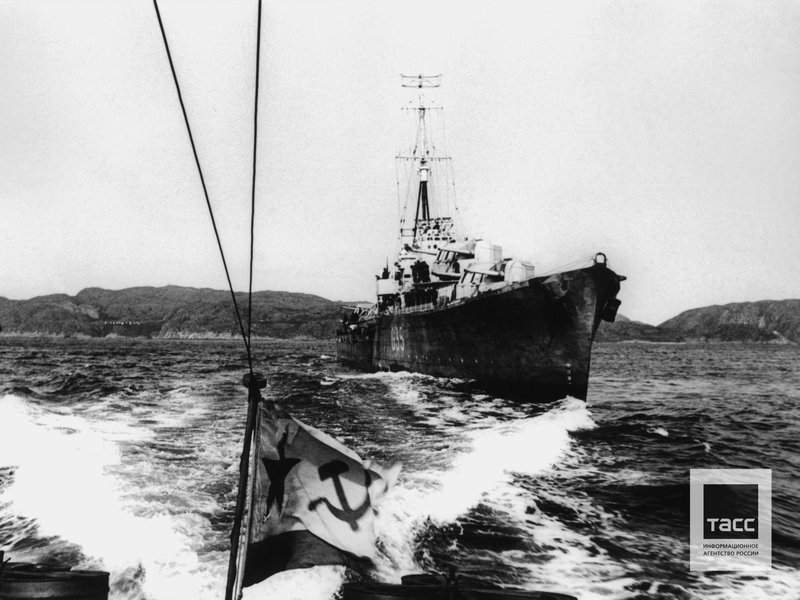
A key area of cooperation was the program of American supplies of ammunition, equipment and strategic raw materials to the USSR (The Lend-Lease). The first protocol was signed on October 1, 1941. There were three key supply routes, through the Pacific, Iran, and the Arctic. The USSR received a lot of equipment and materials during the war, including 22,100 aircrafts, 12,700 tanks, 51,500 cars, 375,800 trucks, and about 32,000 tons of TNT. The total value of the deliveries amounted to 10.8 billion dollars.
The opening of a second front in Europe was the most acute issue in the relations of the Allied Powers. While this was a question of strategic considerations for Great Britain and the United States, the USSR saw it as a way to save millions of lives, since only large-scale military operation in the west could force the Germans to redeploy part of their forces from the eastern front. This issue was raised during the visit of the Soviet Foreign Minister Vyacheslav Molotov to Great Britain and the USA in the summer of 1942. To get there he flew over the front line on a Pe-8 bomber, but the negotiations did not yield any results. Finally Stalin, Churchill and Roosevelt during the Tehran Conference in December 1943 managed to negotiate the opening of a second front in the summer of 1944. The landing of Allied troops in Normandy on June 6, 1944 coincided with the beginning of a major Soviet offensive in Belarus, so the Germans were not able to redeploy their forces from east to west.
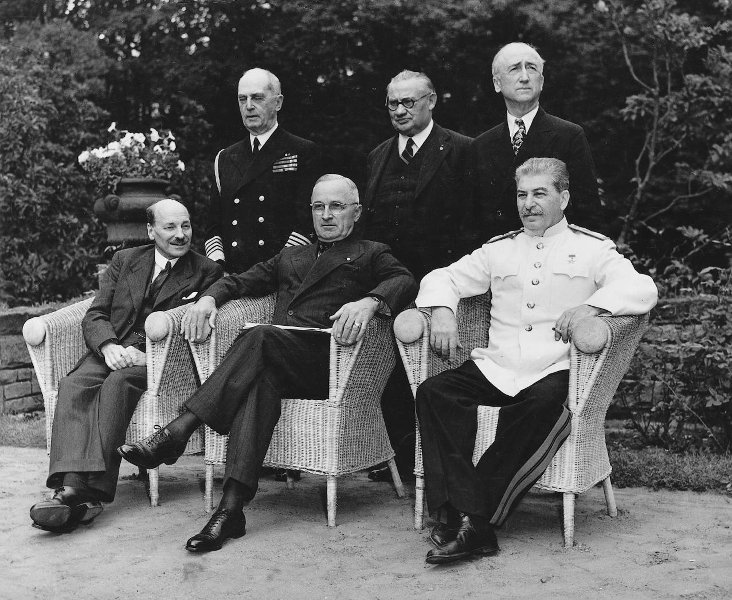
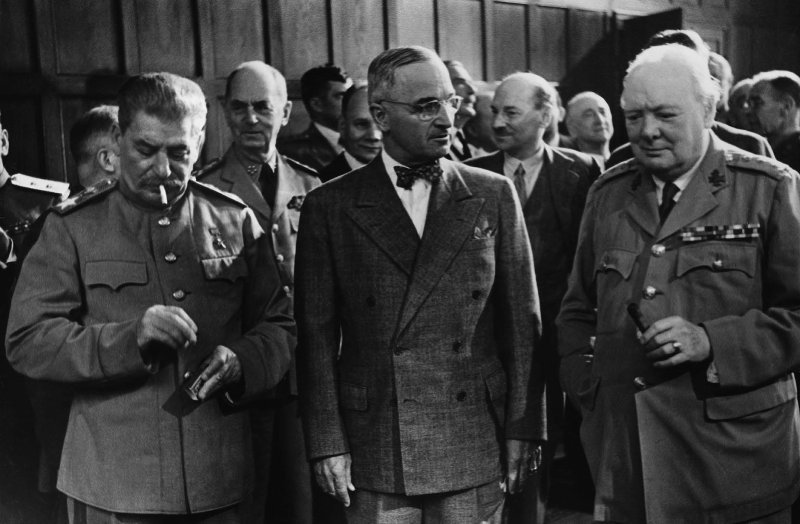
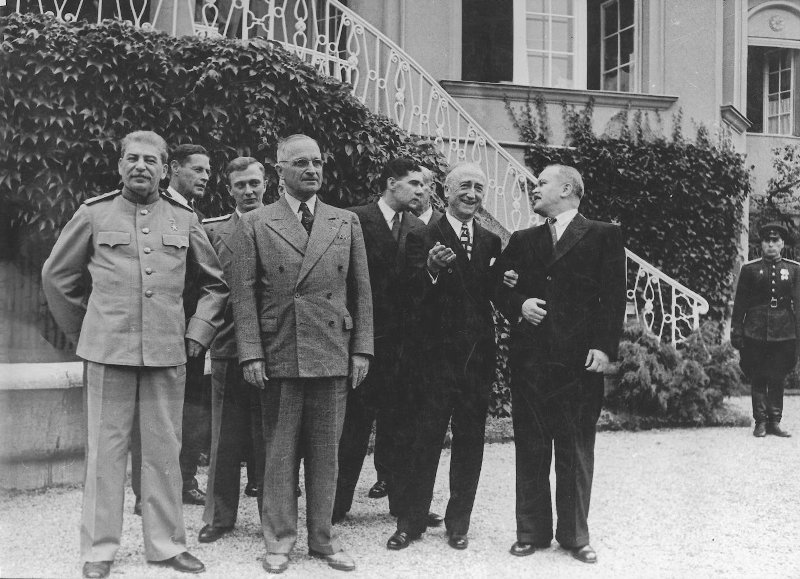
The second front in Europe definitely somewhat relieved the German pressure on the Red Army, but it was opened at a time when the Soviet troops had already firmly seized the strategic initiative. During Churchill’s visit to Moscow in October 1944, the parties agreed to divide their spheres of influence in Europe. In particular, Romania remained in the Soviet sphere, while Stalin withdrew his support of Greek Communists. The basic principles of the future arrangement in Europe were agreed in February 1945 at the Yalta conference, when Stalin, Churchill and Roosevelt met once again, and confirmed at the Potsdam Conference (July 17 – August 2).