Vasilyeva Valentina Fyodorovna
Vasilyeva Valentina Fyodorovna_x000D_
_x000D_
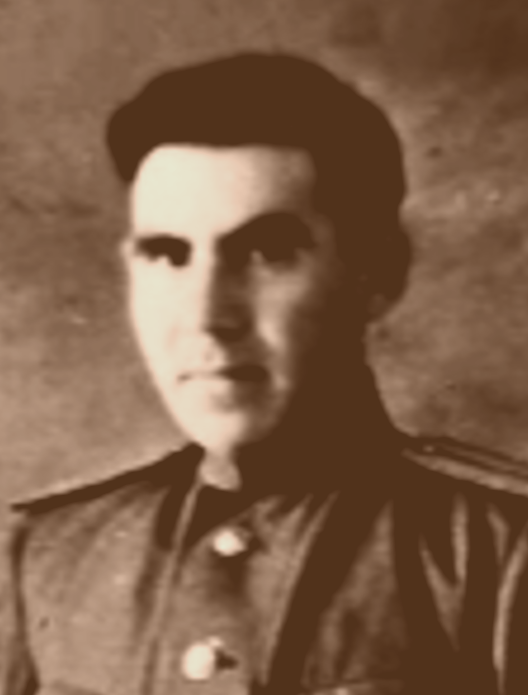
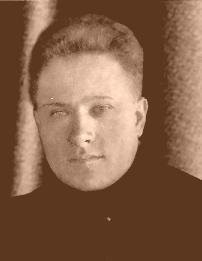
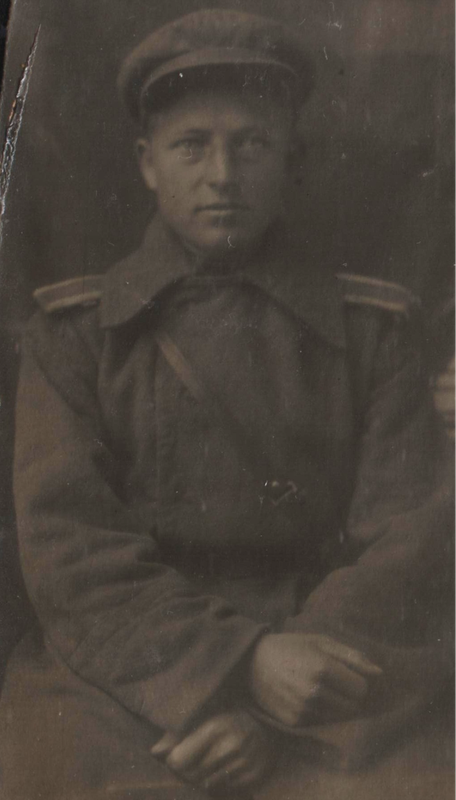
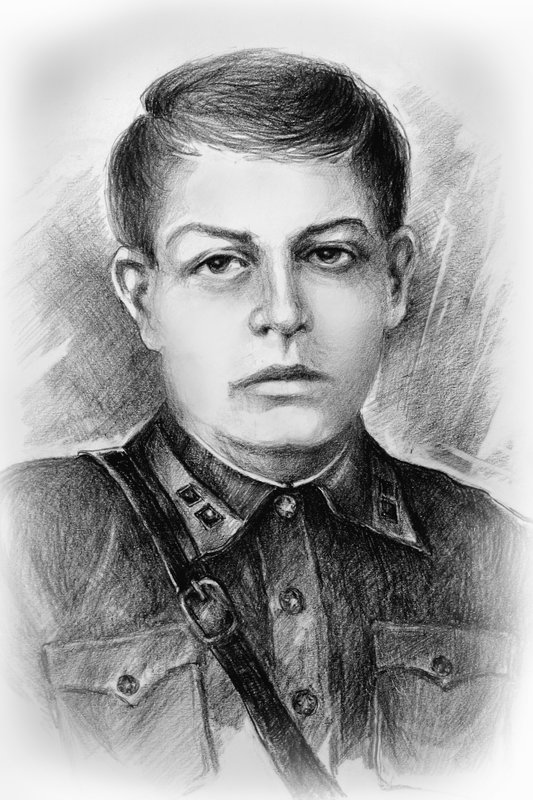
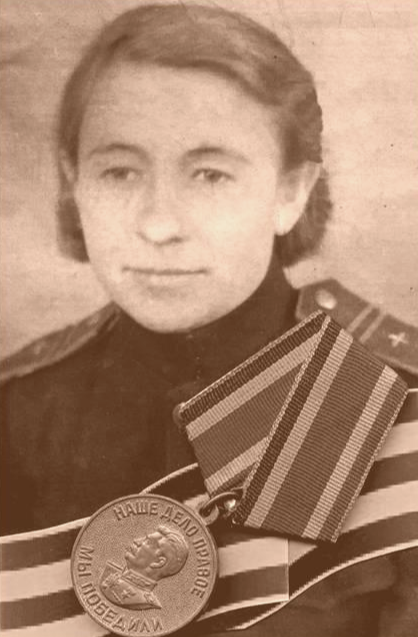
Valentina Vasilyeva was born on November 24th, 1922 in the village of Tashla in the Ileksky district of the Ural region (now Tashlinsky district of the Orenburg region), in a large family of employees. She finished her seven-year course. She entered the Bashkir pedagogical Institute of the city of Ufa. She studied for two years, but the Great Patriotic war began. She had to give up her studies. Valentina Fyodorovna began working at school, and then at the age of 20, she voluntarily went to the front. She graduated from the school of Junior aviation specialists. She was sent to the active army. She served in the 5 guards strike fighter division, as a radio operator-coder at the division headquarters, with the rank of guard Junior Sergeant. After the war, she worked as a Russian language teacher at the school of the state farm named after March 8 in the Yermekeyevsky district of the Bashkir ASSR. In 1950, she entered the Osh teachers ' Institute of the Kyrgyz SSR and graduated with honours. Since 1952, she worked as a headteacher of primary classes in the city of Sulukta. Since 1961, he worked in Nizhnetroitskiy high school Tuimazy district of the Bashkir ASSR. Valentina Fyodorovna has always been the soul of the team. She had a creative approach to any work, helped young teachers. Cheerful, energetic, she carried the love of photography throughout her life. Constantly gave photos to colleagues. Her teaching career is continued by her daughter Olga Pavlovna, who works as a history teacher at our school and is also engaged in photography (the lines below are taken from her essay). "From my mother's diary:" June 22nd, 1941. A terrible word broke into the peaceful life of the Soviet people-War… I had to give up my studies at the pedagogical Institute, as the dormitory was occupied by an evacuated factory. In May 1942, I volunteered for the front. However, the front was still far away. From Ufa, the girls were sent to the Cherdakly station in the Ulyanovsk region to study at the SJAS (school of Junior aviation specialists). We were trained as radio coders for 4 months, and only then were sent to the active army. I became a radio operator-coder in the Weather Bureau at the headquarters of the 5 guards assault air division. We, the radio operators, received encoded weather data from various points of the Soviet Union, even from the occupied territory, decoded it and transmitted it to the weather forecasters. Only after processing this information by weather forecasters, the pilots received orders for combat sorties. The Nazis were very afraid of the Il-2 attack aircraft; they called them the Black Death and flying tanks. In addition, a lot of fascist invaders died from the actions of attack aircraft. We had people of different nationalities in the division. Valery Ryzhkov and Petya Esipov were Russian, Tolya Artemenko and Pyotr Gorobets were Ukrainian, Anvar Usmanov was Tatar, Volodya Fishman and Leva Peida were Jewish, Zhenya Zhibrovsky was Polish, and Boris Shmakov was a Gypsy. But in what friendship and consistency did they fight… How they developed a sense of camaraderie! Once in a heavy, unequal battle, Boris Shmakov's plane was shot down. And then, in an incredibly difficult situation, Anvar Usmanov landed his plane, saved a friend – and they returned safely to their regiment. Although we, the military aviation and were not directly on the front line-but we saw burned, ravaged cities and villages, the corpses of people on the liberated land. In the city of Apostolovo, Rostov region, the Nazis immured in the mines about 3 thousand people of the civilian population: women, the elderly, and children. And then, when this city was liberated, the corpses were removed from the mines. It was impossible to look and think without a shudder: what torments these people endured, whose whole fault was that they were Soviet. How can you forget that? The war of 1941-1945 was endured mainly by the generation of 20-25-year-olds. For young men of that generation, the way ahead was short, sometimes only a few meters to the enemy's dugout, spewing leaden death – and they went forward, fell, died, defending their native land with their breasts. And they wanted to live so much! Even before the most heated battle, they dreamed of a future life, even though they knew that for many this fight would be the last. Konstantin Simonov said: "we, the living, have many human rights. We have the right to work, we have the right to love, we have the right to friendship, we have the right to happiness. But there is one right that we, the living, do not have – and never will. We have no right to forget what our fallen comrades did in the name of Victory, in the name of the Motherland, in the name of life on earth." Now the 60th anniversary has come, when the guns were silenced, machine guns were silenced, and funerals stopped coming to homes. But the eternal call of memory to those who wrote their name in the glorious history of the Fatherland does not cease in the thick of the people. We, the living, bow down before them forever and always. «I read this story in my mother's diary. Unfortunately, she died on December 6th, 2009… Very little did she not live to see the 65th anniversary of the great Victory… I miss her very much... I love her very much!"