Back to
album
album

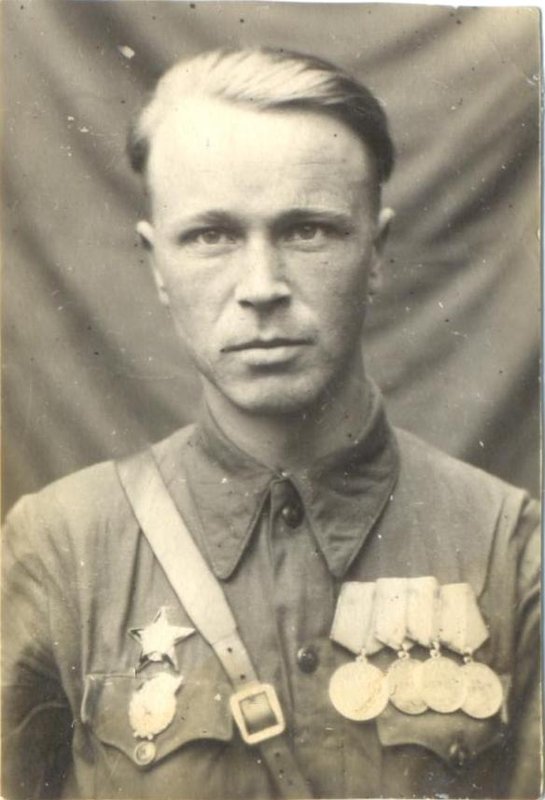
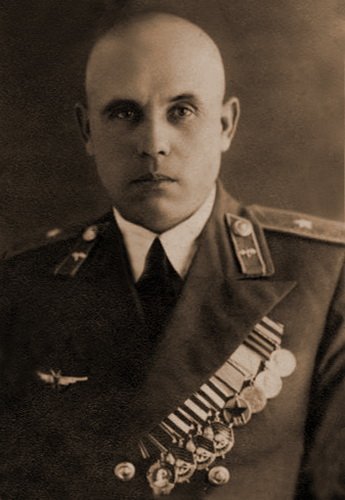
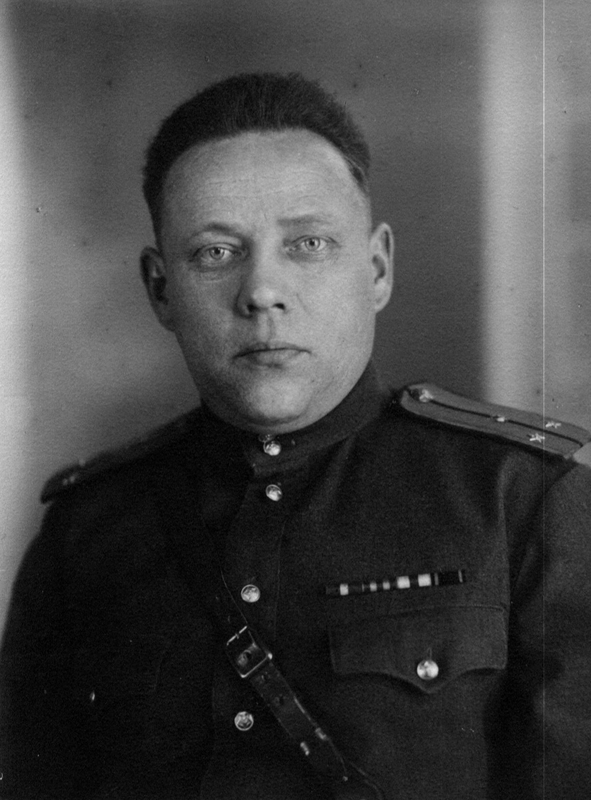

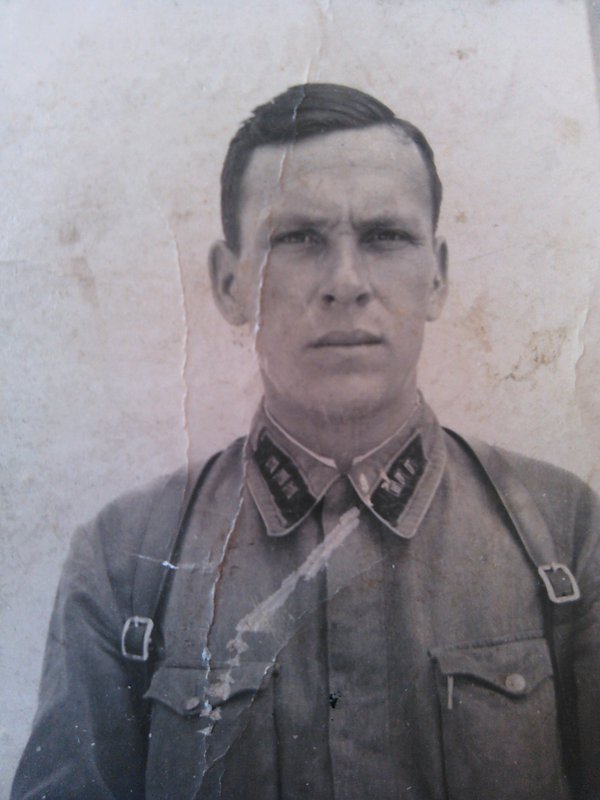
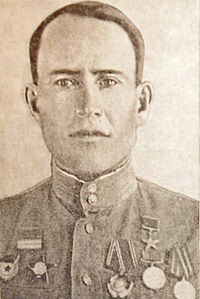
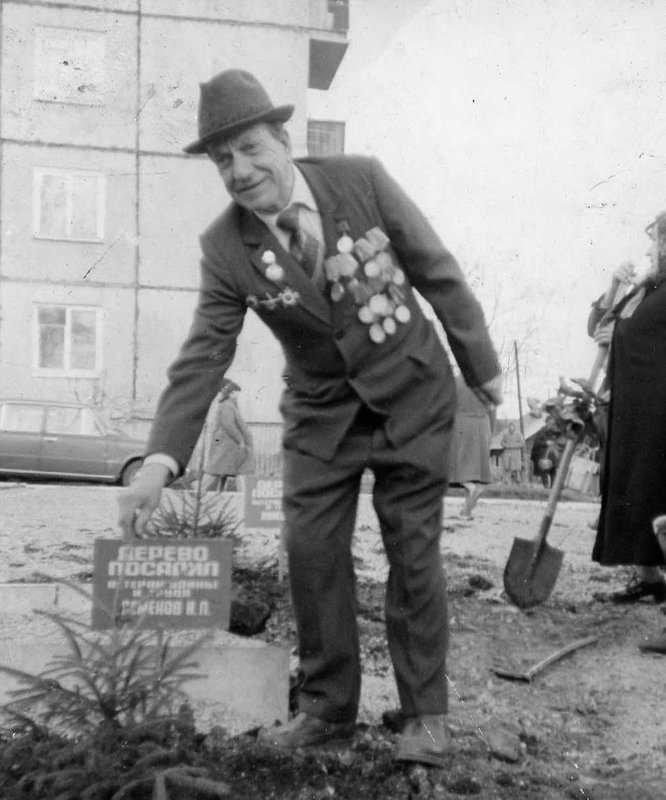
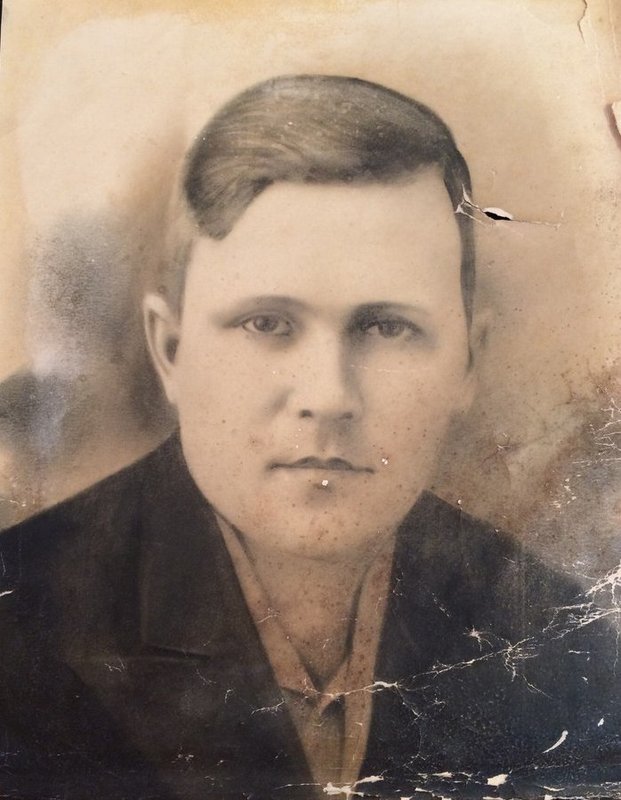
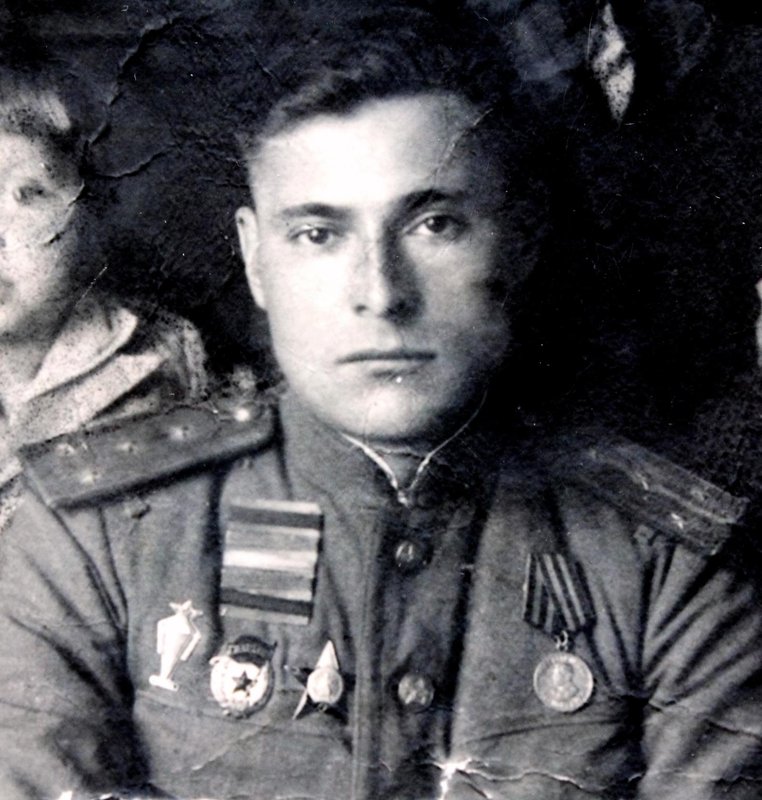

Sakharov Vasily Illarionovich
My grandfather Sakharov Vasily Illarionovich in 1936 entered the Pedagogical Institute, the Physics and Mathematics Faculty in the city of Nikolaev, Ukrainian SSR, from where in December 1936, by special order, he entered the army, and rose to the rank of Political Instructor. By the war he served in the 2nd Separate Railway Regiment in the position of Political Instructor. The regiment was located in the city of Sarny, on the eve of the war arrived in Sarny from Bessarabia, where he participated in the alteration of railway tracks to the Soviet gauge. _x000D_
A few days after the start of the war, one echelon was sent with the wives of the command staff (among them was his wife Olga, with a little daughter and mother-in-law) and the property of the regiment. At first they planned three echelons, but then, due to the complicated situation at the front, they decided to send everyone in a single echelon. On the way, the echelon was repeatedly subjected to air raids. _x000D_
My grandfather, Vasily Illarionovich Sakharov, as part of a group of several units and commanders, set off towards the front to restore the destroyed railway tracks for the delivery of replenishment and ammunition to the front, and back the wounded and property from the abandoned territories. From the command staff with his grandfather there were: _x000D_
1) Captain Sushko. A bridge had to be mined in case the Germans broke through, but for now our echelons were leaving. There were continuous air raids on the bridge. One of the bombs hit the bridge, but fortunately it did not explode, but only damaged truss bridge._x000D_
According to the pre-war standards, the bridge was not subject to operation and remained closed until the repair was completed, but there was no time to wait and Captain Sushko made a quick, albeit risky decision. He removed the entire crew from the locomotive, climbed into the locomotive, he himself was once a machinist, drove through the damaged section twice and allowed to operate the bridge. Then we received a notice that 11 trains were coming to us from the north, from the city of Mozyr in Belarus, mainly with the troops that were cut off from our rear, the enemy tank wedge broke through (the bridge was in the city of Ovruch). _x000D_
2) Junior Political Instructor Katyuzhan of the Brigade. He died during the air a raid from a shrapnel that hit him in the head, 3) Military Technician Grishanok, 4) Volobuev, engineer of the headquarters of the Regiment 5) Senior Lieutenant, Battalion commissar, Senior Political Instructor Sysoev. 6) Medical Instructor Loban Ivan Gerasimovich. _x000D_
At 15 - 20 km from Nizhyn, the detachment halted for the night. In the morning they found out that the road to Nizhyn was cut, and transferred to cars, had moved towards the south of the city of Prilutsk. Captain Sushko (a native of these places), deciding to go on reconnaissance patrol of the further route, took Volobuev with him and another 5—6 soldiers. They sat down in a lorry and went on reconnaissance, and nobody had never seen them again. _x000D_
Moving further, we got to the Grebenki junction station (southern railway on the Kiev-Poltava line), where we met Major Shuboderov. At the meeting, it was decided to organize the defense of the station. We broke the defense into sectors: the company of Senior Lieutenant Bondarenko, the company of Junior Lieutenant Vinnitsky, and the machine gunners of Rozhkov's platoon. _x000D_
After several days at the station, it became clear that we were cut off from the East Front and that the available forces (350 people) could not break through to the East. It was decided to move west to help the defenders in Kiev. _x000D_
A sequence military plan was developed. After leaving a few kilometers from the station, it became known that one company remained at the station, it was the Leiutenant Bondarenko's company. _x000D_
My grandfather, a Political Instructor, and Sysoev went to the station to find out why they stayed. When they arrived at the station, Bondarenko explained that a decision was made at the company meeting, that they his company occupies a perimeter defense and gives battle to the Germans here at the station. _x000D_
At the beginning of October 1941, he was wounded by a mine fragment in the arm and leg, after several days of wandering, he stopped in the village of Zelenyi Gai, Drabovsky district, at Stepan Ivanovich Kuts, (later the Germans would hang him for his connection with the underground and burn his house and shed). _x000D_
On October 10, 1941, when leaving the village of Zeleny Gai, he faced a column of Soviet prisoners of war under escort and was arrested by the Germans and sent in a general column to a field camp for prisoners of war. In the camp, he called himself the maiden name of his wife Naumenko Vasily Ivanovich. In the same camp he met his company Medical Instructor Loban Ivan Gerasimovich. He learned that among the commanders in the camp there was also a Deputy Regiment Commander was Lieutenant Bohan. My grandfather was transferred from camp to camp several times. _x000D_
While escorting through Kiev, he fled, got to his new friend Kuzemka Yevtukh in the village of Pishchiki, where he was registered with the local commandant's office. After all the non-locals were taken to a labor camp. There were several more attempts to escape, but unsuccessful. A successful attempt turned out in late autumn on the territory of Czechoslovakia, where he got to a local forester, and through him the Soviet recons transferred him with a fled comrade across the front line to the front headquarters. _x000D_
There he met his wife Olga, and after 10 days of checks, he and his comrade, through local partisans, were sent back to German captivity for agitation of Soviet citizens. The idea was that the Soviet people would not go west but return to their homeland, (they were scared to be sent to Siberia as traitors). At the end of the winter of 1945, they flee again and fall to the local partisans. _x000D_
After the departure of the Germans, before the arrival of Soviet troops, he was in the people's militia. After that, with a large wagon train of horses, he was sent to the Union, then to Lviv, where he was tested for 6 months. After the end of the special check, I went to my home in Makeevka. _x000D_
In Makeyevka, he got a job at the factory where he worked before. Then he moved to Belaya Kalitva, Rostov Region and was engaged in the electrification of the area. He had 5 children: 4 daughters and 1 son.
Sakharov Vasily Illarionovich
My grandfather Sakharov Vasily Illarionovich in 1936 entered the Pedagogical Institute, the Physics and Mathematics Faculty in the city of Nikolaev, Ukrainian SSR, from where in December 1936, by special order, he entered the army, and rose to the rank of Political Instructor. By the war he served in the 2nd Separate Railway Regiment in the position of Political Instructor. The regiment was located in the city of Sarny, on the eve of the war arrived in Sarny from Bessarabia, where he participated in the alteration of railway tracks to the Soviet gauge. _x000D_
A few days after the start of the war, one echelon was sent with the wives of the command staff (among them was his wife Olga, with a little daughter and mother-in-law) and the property of the regiment. At first they planned three echelons, but then, due to the complicated situation at the front, they decided to send everyone in a single echelon. On the way, the echelon was repeatedly subjected to air raids. _x000D_
My grandfather, Vasily Illarionovich Sakharov, as part of a group of several units and commanders, set off towards the front to restore the destroyed railway tracks for the delivery of replenishment and ammunition to the front, and back the wounded and property from the abandoned territories. From the command staff with his grandfather there were: _x000D_
1) Captain Sushko. A bridge had to be mined in case the Germans broke through, but for now our echelons were leaving. There were continuous air raids on the bridge. One of the bombs hit the bridge, but fortunately it did not explode, but only damaged truss bridge._x000D_
According to the pre-war standards, the bridge was not subject to operation and remained closed until the repair was completed, but there was no time to wait and Captain Sushko made a quick, albeit risky decision. He removed the entire crew from the locomotive, climbed into the locomotive, he himself was once a machinist, drove through the damaged section twice and allowed to operate the bridge. Then we received a notice that 11 trains were coming to us from the north, from the city of Mozyr in Belarus, mainly with the troops that were cut off from our rear, the enemy tank wedge broke through (the bridge was in the city of Ovruch). _x000D_
2) Junior Political Instructor Katyuzhan of the Brigade. He died during the air a raid from a shrapnel that hit him in the head, 3) Military Technician Grishanok, 4) Volobuev, engineer of the headquarters of the Regiment 5) Senior Lieutenant, Battalion commissar, Senior Political Instructor Sysoev. 6) Medical Instructor Loban Ivan Gerasimovich. _x000D_
At 15 - 20 km from Nizhyn, the detachment halted for the night. In the morning they found out that the road to Nizhyn was cut, and transferred to cars, had moved towards the south of the city of Prilutsk. Captain Sushko (a native of these places), deciding to go on reconnaissance patrol of the further route, took Volobuev with him and another 5—6 soldiers. They sat down in a lorry and went on reconnaissance, and nobody had never seen them again. _x000D_
Moving further, we got to the Grebenki junction station (southern railway on the Kiev-Poltava line), where we met Major Shuboderov. At the meeting, it was decided to organize the defense of the station. We broke the defense into sectors: the company of Senior Lieutenant Bondarenko, the company of Junior Lieutenant Vinnitsky, and the machine gunners of Rozhkov's platoon. _x000D_
After several days at the station, it became clear that we were cut off from the East Front and that the available forces (350 people) could not break through to the East. It was decided to move west to help the defenders in Kiev. _x000D_
A sequence military plan was developed. After leaving a few kilometers from the station, it became known that one company remained at the station, it was the Leiutenant Bondarenko's company. _x000D_
My grandfather, a Political Instructor, and Sysoev went to the station to find out why they stayed. When they arrived at the station, Bondarenko explained that a decision was made at the company meeting, that they his company occupies a perimeter defense and gives battle to the Germans here at the station. _x000D_
At the beginning of October 1941, he was wounded by a mine fragment in the arm and leg, after several days of wandering, he stopped in the village of Zelenyi Gai, Drabovsky district, at Stepan Ivanovich Kuts, (later the Germans would hang him for his connection with the underground and burn his house and shed). _x000D_
On October 10, 1941, when leaving the village of Zeleny Gai, he faced a column of Soviet prisoners of war under escort and was arrested by the Germans and sent in a general column to a field camp for prisoners of war. In the camp, he called himself the maiden name of his wife Naumenko Vasily Ivanovich. In the same camp he met his company Medical Instructor Loban Ivan Gerasimovich. He learned that among the commanders in the camp there was also a Deputy Regiment Commander was Lieutenant Bohan. My grandfather was transferred from camp to camp several times. _x000D_
While escorting through Kiev, he fled, got to his new friend Kuzemka Yevtukh in the village of Pishchiki, where he was registered with the local commandant's office. After all the non-locals were taken to a labor camp. There were several more attempts to escape, but unsuccessful. A successful attempt turned out in late autumn on the territory of Czechoslovakia, where he got to a local forester, and through him the Soviet recons transferred him with a fled comrade across the front line to the front headquarters. _x000D_
There he met his wife Olga, and after 10 days of checks, he and his comrade, through local partisans, were sent back to German captivity for agitation of Soviet citizens. The idea was that the Soviet people would not go west but return to their homeland, (they were scared to be sent to Siberia as traitors). At the end of the winter of 1945, they flee again and fall to the local partisans. _x000D_
After the departure of the Germans, before the arrival of Soviet troops, he was in the people's militia. After that, with a large wagon train of horses, he was sent to the Union, then to Lviv, where he was tested for 6 months. After the end of the special check, I went to my home in Makeevka. _x000D_
In Makeyevka, he got a job at the factory where he worked before. Then he moved to Belaya Kalitva, Rostov Region and was engaged in the electrification of the area. He had 5 children: 4 daughters and 1 son.
0 comment




2026 © Russian Military Historical Society Developed by Jetmix