Back to
album
album
Olga Stepchenkova
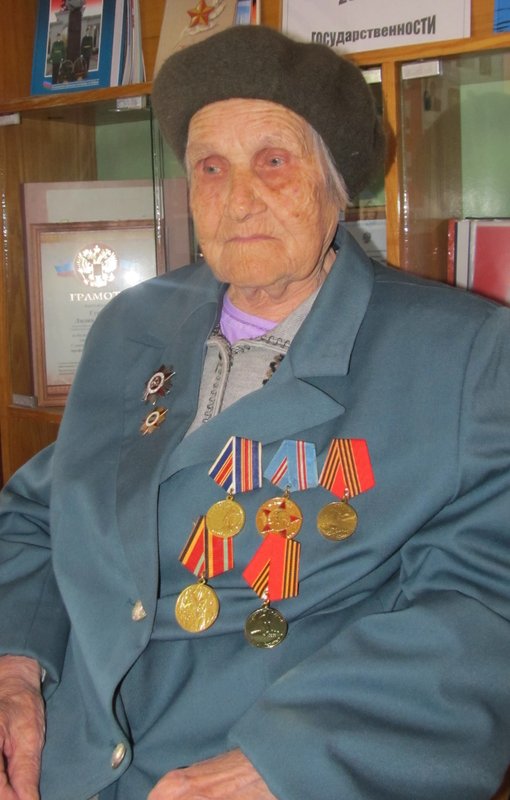
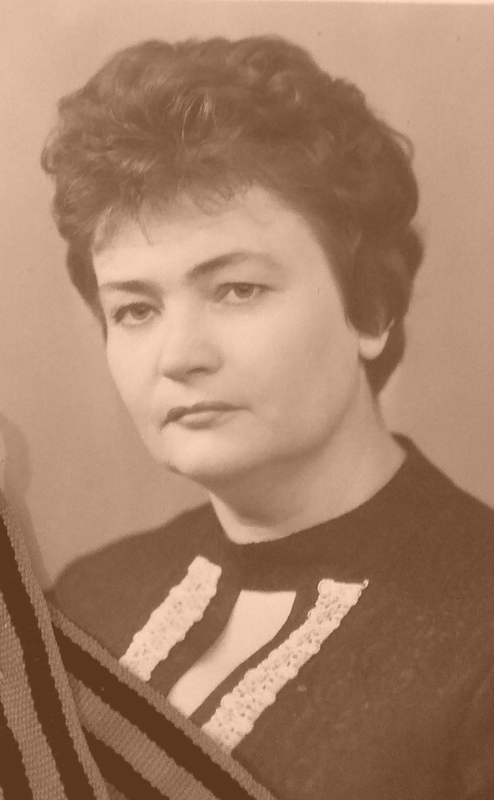
Olga Stepchenkova was born on June 11, 1923 in the Urals city of Alapaevsk. From the age of 18, she worked as an assistant accountant on a collective farm. In 1942, she received a summons to the front. But the Chairman of the collective farm did not let her go. In 1943, a second summons came, and Olga voluntarily went to the front._x000D_
All conscripts from Alapaevsk were brought by freight train to Leningrad. There, a young girl Olya became a minesweeper. The first time she was doing all the work that had accumulated in the city. Later, on assignment, she went closer to the shores of the Gulf of Finland and was engaged in bomb clearance there. It was a very dangerous business, and the Chief of the unit forbade doing it manually._x000D_
Olga together with other girls had to sort out the destroyed houses, any buildings. One of the important tasks was to destroy the documents of the destroyed enterprises._x000D_
After the end of the war in 1945, she returned to her native Alapaevsk with awards. She started to work there as a senior accountant. Here Olga met her future husband. He was also a military man, three years older than Olga. After living together for 20 years, they had to move because of their husband's health condition_x000D_
They moved to the village Chernoerkovskoye in Kuban Region to their relatives. Later, they bought an apartment in Slavyansk-on-Kuban with their earned money and moved there. By that time, Olga's husband was already retired, and she still worked for three years as a chief accountant_x000D_
From the "Book of Memory" collected by students of the Lyceum #4 in Slavyansk-on-Kuban, as part of the "Blue handkerchief", "My countrymen – heroes of the Russian Land" campaigns for the 70th anniversary of the Great Victory.
Olga Stepchenkova
Olga Stepchenkova was born on June 11, 1923 in the Urals city of Alapaevsk. From the age of 18, she worked as an assistant accountant on a collective farm. In 1942, she received a summons to the front. But the Chairman of the collective farm did not let her go. In 1943, a second summons came, and Olga voluntarily went to the front._x000D_
All conscripts from Alapaevsk were brought by freight train to Leningrad. There, a young girl Olya became a minesweeper. The first time she was doing all the work that had accumulated in the city. Later, on assignment, she went closer to the shores of the Gulf of Finland and was engaged in bomb clearance there. It was a very dangerous business, and the Chief of the unit forbade doing it manually._x000D_
Olga together with other girls had to sort out the destroyed houses, any buildings. One of the important tasks was to destroy the documents of the destroyed enterprises._x000D_
After the end of the war in 1945, she returned to her native Alapaevsk with awards. She started to work there as a senior accountant. Here Olga met her future husband. He was also a military man, three years older than Olga. After living together for 20 years, they had to move because of their husband's health condition_x000D_
They moved to the village Chernoerkovskoye in Kuban Region to their relatives. Later, they bought an apartment in Slavyansk-on-Kuban with their earned money and moved there. By that time, Olga's husband was already retired, and she still worked for three years as a chief accountant_x000D_
From the "Book of Memory" collected by students of the Lyceum #4 in Slavyansk-on-Kuban, as part of the "Blue handkerchief", "My countrymen – heroes of the Russian Land" campaigns for the 70th anniversary of the Great Victory.
0 comment




2026 © Russian Military Historical Society Developed by Jetmix