Back to
album
album






Dubinin (Slavinsky) Ivan
Dubinin (Slavinsky) Ivan_x000D_
_x000D_
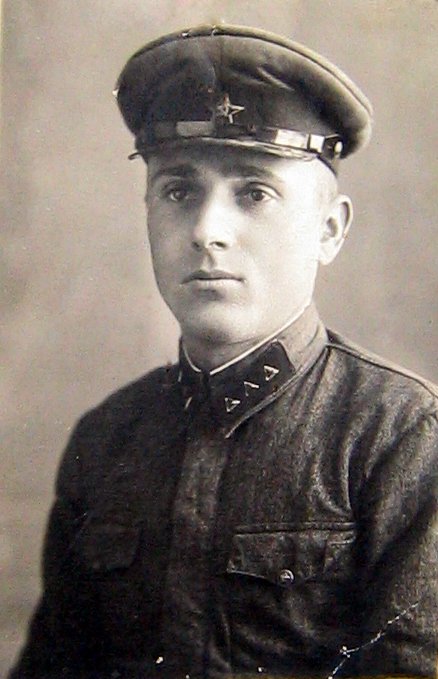
Rank: Second Lieutenant. Type of troops: Armored and mechanized troops. The soldier's real name is Ivan Vladimirovich Slavinsky. In his youth, he was stripped of his rights and sentenced to exile to the North as a member of the kulak family of the second category. Data from the book "History of dekulakization": "on January 30, 1930, the Politburo of the Central Committee of the CPSU (b) adopted a resolution "on measures to eliminate kulak farms in areas of continuous collectivization". According to the decree, fists were divided into three categories: 1. The counter-revolutionary Aktiv, the organizers of terrorist acts and revolts. 2. The rest of the counter-revolutionary asset consists of the wealthiest kulaks and half-cashiers. 3. The remaining fists. Heads of kulak families of the first category were arrested, and cases of their actions were referred to special committees consisting of representatives of the OGPU, regional committees (kraikoms) VKP (b) and the Prosecutor's office. Family members of kulaks of the first category and kulaks of the second category were subject to eviction to remote areas of the USSR or remote areas of the region, territory, Republic for special settlement. Kulaks, of the third category, settled within the district on specially allocated land for them." Fleeing from exile, Ivan took the surname Dubinin. Under this name, since 1935, he studied at a tank school in the West of the USSR. From the first days of the war, as a second Lieutenant, Ivan fought on the border. During the following months, he led a tank platoon of the 30th tank brigade. In the battle of Uman, he fought against the mountain division "Edelweiss". Once in the Uman cauldron, he was captured along with 100,000 Soviet prisoners of war. The tanker's parents were notified that he was missing. At this time, Ivan was in a concentration camp for prisoners of war in Moscow. Vladimir-Volynsky. In the camp, prisoners were not given food, and Ivan's colleagues and friends died one by one. Ivan held out for almost a year, and died of starvation a week before the prisoners were released to the city for work, which meant salvation from starvation. Before his 30th birthday, the officer did not live only 6 days... In captivity, Ivan Dubinin-Slavinsky showed real heroism: despite the repressions directed against him in his youth by the Soviet authorities, the officer remained faithful to the oath, and, refusing to be recruited into the Cossack units of the Wehrmacht, preferred death by starvation.
Dubinin (Slavinsky) Ivan
Dubinin (Slavinsky) Ivan_x000D_
_x000D_
Rank: Second Lieutenant. Type of troops: Armored and mechanized troops. The soldier's real name is Ivan Vladimirovich Slavinsky. In his youth, he was stripped of his rights and sentenced to exile to the North as a member of the kulak family of the second category. Data from the book "History of dekulakization": "on January 30, 1930, the Politburo of the Central Committee of the CPSU (b) adopted a resolution "on measures to eliminate kulak farms in areas of continuous collectivization". According to the decree, fists were divided into three categories: 1. The counter-revolutionary Aktiv, the organizers of terrorist acts and revolts. 2. The rest of the counter-revolutionary asset consists of the wealthiest kulaks and half-cashiers. 3. The remaining fists. Heads of kulak families of the first category were arrested, and cases of their actions were referred to special committees consisting of representatives of the OGPU, regional committees (kraikoms) VKP (b) and the Prosecutor's office. Family members of kulaks of the first category and kulaks of the second category were subject to eviction to remote areas of the USSR or remote areas of the region, territory, Republic for special settlement. Kulaks, of the third category, settled within the district on specially allocated land for them." Fleeing from exile, Ivan took the surname Dubinin. Under this name, since 1935, he studied at a tank school in the West of the USSR. From the first days of the war, as a second Lieutenant, Ivan fought on the border. During the following months, he led a tank platoon of the 30th tank brigade. In the battle of Uman, he fought against the mountain division "Edelweiss". Once in the Uman cauldron, he was captured along with 100,000 Soviet prisoners of war. The tanker's parents were notified that he was missing. At this time, Ivan was in a concentration camp for prisoners of war in Moscow. Vladimir-Volynsky. In the camp, prisoners were not given food, and Ivan's colleagues and friends died one by one. Ivan held out for almost a year, and died of starvation a week before the prisoners were released to the city for work, which meant salvation from starvation. Before his 30th birthday, the officer did not live only 6 days... In captivity, Ivan Dubinin-Slavinsky showed real heroism: despite the repressions directed against him in his youth by the Soviet authorities, the officer remained faithful to the oath, and, refusing to be recruited into the Cossack units of the Wehrmacht, preferred death by starvation.
0 comment




2026 © Russian Military Historical Society Developed by Jetmix