Dadashov Jacob Bentsionovich
Dadashov Jacob Bentsionovich_x000D_
_x000D_
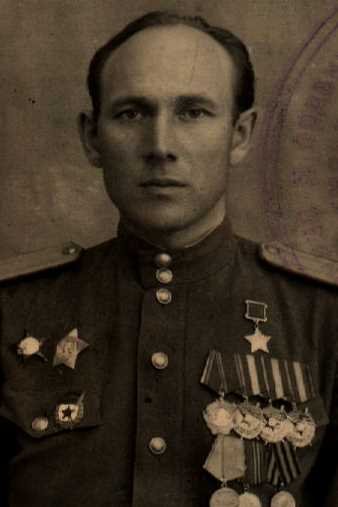
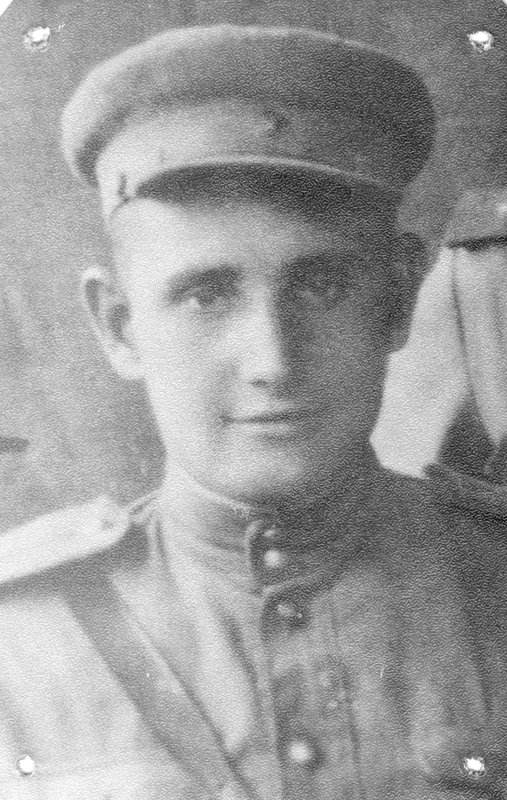
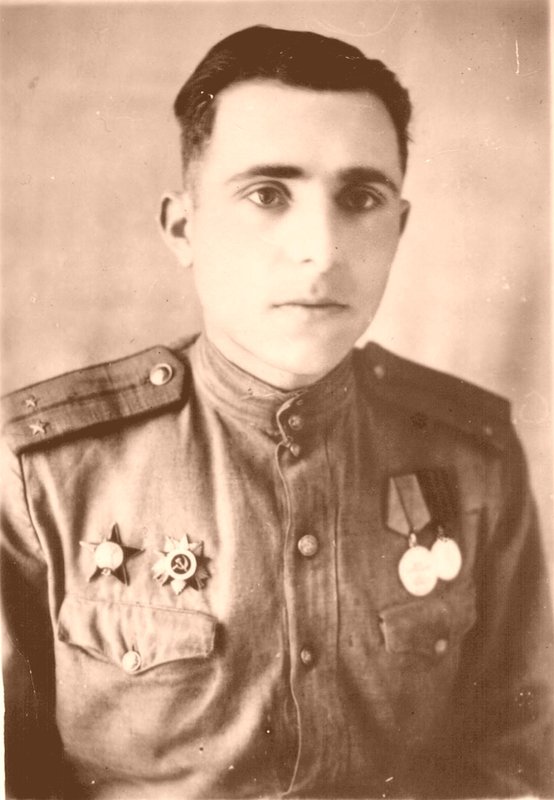
Jacob bentsionovich Dadashov was born on 11 July 1922 in the city of Derbent. On June 21, 1941, he and his classmates were awarded their school graduation certificates. Happy graduates, inspired with hopes for a bright future, met the dawn on the shore of the Caspian sea.... But with the dawn of June 22, the threatening black clouds of war were moving over the country. The very next day, Yakov and his classmates were at the recruitment center of the Derbent District Commissariat. Full of a sincere desire to protect their families and country, they asked to send them immediately to the front as volunteers. But most of yesterday's graduates had to go through army training first. Yakov was also in this group. He was drafted into the red Army and sent to study at the higher artillery school in Tbilisi, after which in may 1942 he began his long military journey along the roads of war. Extract from the personal file of Lieutenant ya. b. Dadashev, commander of the fire platoon of the 687th artillery regiment, 236th rifle Dnepropetrovsk red banner order of Suvorov division: 01.05.1942-11.09.1943-Transcaucasian front. 11.09.1943-13.11.1943-treatment in hospital No. 1710. 13.11.1943 – 21.02.1944 – 3-th Ukrainian Front. 21.02.1944-19.03.1944-treatment in the infirmary. 19.03. 1944 – 30.01.1945 – 3-y Ukrainian front. 30.01.1945-seriously wounded, left for treatment in a hospital in Yugoslavia. In the photo taken in may 1945 in Budapest, on the chest of officer Yakov Dadashev, on the right side – two orders: the order of the Patriotic war and the Order of the red Star, and on the left – two medals: "for bravery" and "for the liberation of Belgrade". Each of these awards could have cost him his life. From premium sheet: Dadashev B. Ya. awarded the medal "for bravery" 14.10.43 for the following feat: "During the fighting at s. Taranovka Taranovsky district of Kharkiv region from 6 to 12.09.43 proved to be a persistent and responsible officer. A platoon under his command, reflecting the enemy's counterattacks, knocked out an enemy tank of the T - IV type. 16.09.43 in a battle near the village of lozovoe, Kegichevsky district, Kharkiv region, tov. Dadashev was wounded, but did not leave the battlefield until the combat mission was completed. For steadfastness and skilful command of a platoon in battles with the German-fascist invaders, Lieutenant Dadashev is presented to the government award." Order of the Patriotic war I degree awarded in February 1945. From the application for the award: "in the battles with the German-fascist invaders on 30.01.45 in the area of the village of Adand (Hungary-approx. 2) on the Northern Bank of the Yelusha canal, the enemy launched a counteroffensive, throwing up to 30 armored units at the battery. Leading the battle with a numerically superior enemy, Lieutenant Dadashev was at the direct-fire gun. A personal example of bravery, despising death, he opened fire on tanks. Enemy tanks began to withdraw, firing heavily, surrounding the battery. Having got into difficult conditions, Lieutenant Dadashev encouraged his subordinates with his courage and, despite being seriously wounded, continued to command without leaving the battlefield. The guns of his platoon hit 3 tanks and 2 armored personnel carriers." And again, after treatment at the hospital Jacob bentsionovich insisted on returning to his unit. He did not want, but simply could not, this brave Lieutenant to leave his comrades alone, without his reliable commander and friendly shoulder next to them, risking their lives in battles with the enemy. And there was another Order of the red Star, which Jacob bentsionovich was awarded for the successful execution of command assignments behind enemy lines. And there was the medal "for the liberation of Belgrade". And it was the long-awaited Victory Day – the "joy with tears in your eyes"! This great day he met in a small town in the vicinity of Vienna, through which lay his way from another hospital to his military unit. On the eighth of may, at about eleven o'clock in the evening, the local military commandant's office sent him and another officer to spend the night with a local German woman. We got there and went to bed after midnight. No sooner had they fallen asleep than they heard the numerous sounds of gunfire from the street. The first thing that came to mind – "really fascists"? Hastily dressed, they ran out into the street ready to resist the enemy. But they were their own-our soldiers fired into the air and shouts of "Victory" along with automatic bursts exploded and deafened the night silence.... It was an unspeakable surge of joy and all sorts of emotions! The war was over-there were peaceful days ahead. In November 1948, Yakov married a nice girl from Buinaksk, Babaeva Rebekah. Together they raised three daughters. And the great Victory Day was celebrated in the family of Yakov and Rebekah with special attention and joy, in the family circle-children, grandchildren ,great-grandchildren, relatives. In their family album there is a wonderful photo of Yakov in a military uniform, which is already 75 years old! In may 1945, returning home on the roads of Europe, a young officer decided to take a photo for memory. It was in Budapest. The photographer could not immediately produce a photo, and Yakov Bencionovich could not wait for it – he was not yet demobilized and had to follow the instructions of the command. He left his home address to the photographer. And imagine, a few months later, in Derbent, to the address of his home, Kandelaki street, 8, came this photo! You can tell a lot about Yakov's work biography in bright colors! In all the places and posts where he exerted his strength and skill, he was respected and highly valued! And it is not for nothing that Yakov bencionovich ended his working career, having worked for 16 years as the Chairman of the Voluntary Fire Society of Dagestan. Yakov benzionovich throughout his life has earned deep respect not only from relatives and friends, but also from everyone with whom he had to communicate on the long path of life! His life can not be called boring-in addition to the military military, family and labor trends of his fate, he had and still has many Hobbies! The main one is chess battles. There was a time when he won a lot of victories not only in games with friends, but also participating in chess Championships. From a letter from the writer Mikhail Dadashev to Yakov Dadashev: "I must admit that your unexpected call from far away America (Yakov benzionovich now lives in the United States) brought me such joy that it is simply impossible to convey. Thank you very much for being alive and well, for the joy of all of us - your relatives. This call evoked a flood of memories in me: we are at the chessboard in Izberga, at the championship between Derbent and Izberbash...". In this family branch of the mighty ancient family tree of the Dadashevs, there were still participants in this great war, those who "brought victory as close As they could"! Yaakov's father, Benzion Dadashev Rubinovich, went to war against the Nazi enemy in July 1941. He was no longer young, but for some time participated in heavy fighting as a Rifleman of the 131st separate rifle battalion. Then, as a medic, he carried the soldiers out of the battlefield, giving them first aid. In addition, Ben Tzion Rubinovich, in the days of war had to work on a military field kitchen. He was discharged only on January 13, 1946. Mother of Jacob, Avgol, during the war almost all the time worked in the hospital as a nurse that has been deployed in Derbent. Before the war, she was in charge of the health center of a garment factory. Sometimes she would run home only to bring food rations to the younger children, daughter rose and sons, Hanukh and Ruvin. Yakov's older brother, Emmanuel benzionovich, was drafted into the Red Army in 1940 and served most of the great Patriotic War in the far East. There was some important fortified area against the Japanese militarists. For a time, he studied (and then taught) at the military infantry school. In 1943, while already in the European part of the theater of operations as a commander of a small machine-gun squad, Emmanuel benzionovich was wounded. After the hospital, with the rank of senior Sergeant, he served in a training rifle regiment, and then as the head of the food echelon that supplied our combat units in Yugoslavia and Hungary. Emmanuel bencionovich was demobilized at the end of September 1945.