Liberation of Moldova
The Jassy-Kishinev Operation of the Red Army against the German Army Group South Ukraine, one of the most prominent military operations of the Great Patriotic War was launched on August 20, 1944. This brilliant strategic offensive conducted by the 2nd and 3rd Ukrainian Fronts in association with the Black Sea Fleet and the Danube Military Flotilla was named “Jassy-Kishinev Cannes”.
The goal of the Red Army was to defeat the Jassy-Kishinev group of German forces, to liberate the Moldavian SSR and to force Romania, the German ally to withdraw from the war.
The offensive of the both fronts was preceded by the heavy artillery bombardment and the airstrikes of the 3rd Ukrainian Front air force. During the first day the troops of the 2nd Ukrainian Front penetrated the enemy’s defense to the full tactical depth and advanced 16 km.
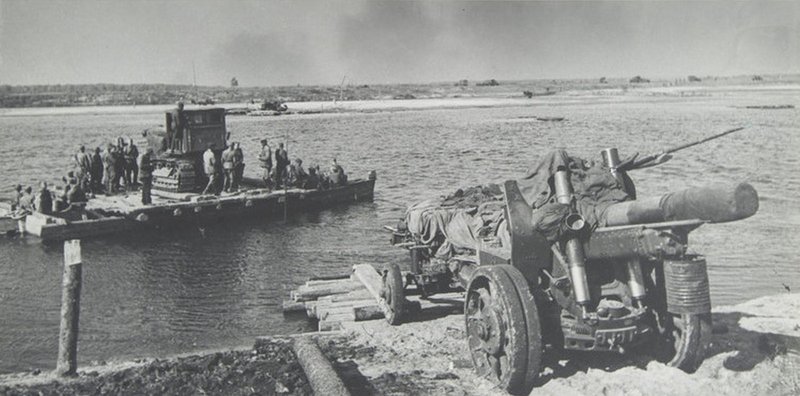
Building on the initial success, the 18th Tank Corps of the 2nd Ukrainian Front advanced to Huși and 7th and 4th Guards Mechanized Corps of the 3rd Ukrainian Front reached the crossings over River Prut near Leuşeni and Leova on August 23. As a result 18 German divisions were encircled around Kishinev. On the same day, the 46th Army crossed Dniester Estuary with the help of Danube Military Flotilla and encircled the 3rd Romanian Army. It ceased to resist the next day. The 5th Shock Army of Colonel General Nikolai Berzarin liberated Kishinev, the capital of Moldavian SSR on August 24.
Within a short time, the Soviet troops destroyed the German Army Group South Ukraine. 22 German divisions and almost all Romanian divisions at the front were annihilated. The German defense on the southern flank of the Soviet-German front totally collapsed. Romania withdrew from the war.
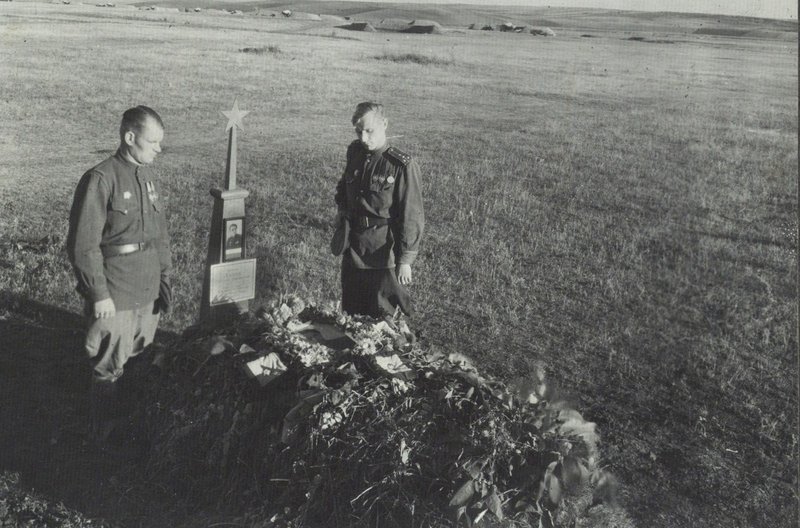
The Moldavian SSR contributed enormously to the victory over the common enemy. More than 250,000 people of the republic volunteered to fight on the front after the liberation. In a fight near the Polish village of Borzysławiec Ion Soltis native of the village of Kuzmin of Camenca district was one of the first to cross the river and to provide covering fire for his company. Wounded, he closed the embrasure of the enemy’s pillbox with his own body. He was posthumously awarded the Hero of the Soviet Union title on April 10, 1945.